
Agriculture
House Moves to Overhaul Livestock Sector, Investigate ₦498.7m Unpaid Poultry Farmers’ Compensation — Wale Raji
By Cyril Ogar
The House of Representatives Committee on Livestock Development has announced plans to overhaul Nigeria’s livestock sector and investigate the Federal Government’s failure to pay ₦498.7 million in compensation to 307 verified poultry farmers affected by bird flu outbreaks between 2021 and 2023..
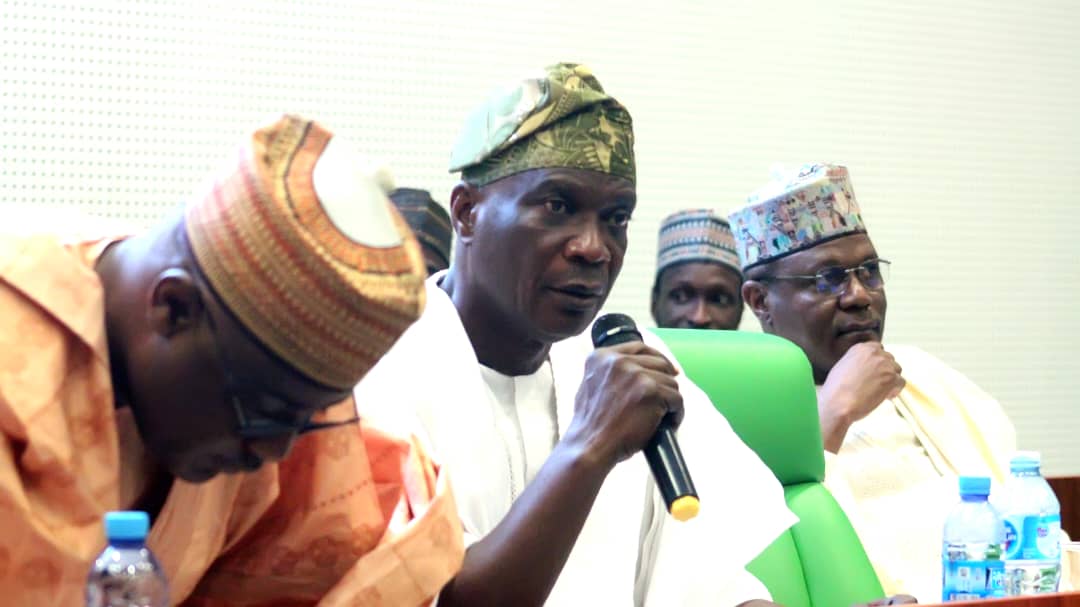
Chairman of the Committee, Hon. Wale Raji, disclosed this on Thursday during a public hearing on six livestock-related bills held at the National Assembly Complex, Abuja. The proposed bills seek to establish livestock colleges and research institutes across the country to promote animal production, veterinary education, and professional training.
Raji explained that the public hearing was convened to enable stakeholders to contribute ideas aimed at strengthening livestock development and resolving the challenges faced by farmers, particularly those impacted by avian influenza.
“This engagement provides stakeholders a platform to make meaningful input that will enhance productivity, create jobs, and promote sustainable livestock growth,” Raji stated.“However, we are deeply concerned about the delay in compensating affected poultry farmers, and we are determined to ensure transparency and accountability in the entire process.”
₦498.7 Million Still Outstanding
Representing the Permanent Secretary of the Federal Ministry of Livestock Development, Dr. Chinyere Akujobi, the Director of Veterinary Services, Dr. Adeniyi Adedoyin, confirmed that ₦498.7 million remains unpaid to 307 poultry farmers whose flocks were destroyed during bird flu outbreaks between 2021 and 2023.
According to him, ₦3.16 billion had earlier been disbursed to 1,055 farmers affected by previous outbreaks, but the latest phase of payments was stalled due to funding shortfalls. He added that a recent outbreak in Wukari, Taraba State, led to the culling of over 2,000 birds, with compensation yet to be processed.
Adedoyin attributed the delay to inadequate budgetary provisions and the absence of an Animal Diseases Contingency or Emergency Fund (ADEF), explaining that no dedicated fund for animal disease response has existed since 2021.
“Most affected farmers also lack insurance coverage as required by law, further complicating the compensation process,” he said.
He noted that in 2022, the Federal Executive Council (FEC) approved a revised compensation formula—50% from the Federal Government, 25% from the state, and 25% from farmers—restricting eligibility to smallholders with flocks under 3,000 birds.
Lawmakers Push Livestock Reform Agenda
Hon. Raji emphasized that the committee’s probe and reform efforts are in line with the National Livestock Transformation Plan (NLTP), which seeks to modernize animal husbandry, enhance veterinary services, and improve productivity across the value chain.
“Our goal is to build a vibrant and sustainable livestock sector that contributes meaningfully to food security, employment generation, and economic diversification,” he said.“We will also work to ensure that farmers receive their compensation and that government creates an emergency response fund to prevent future delays.”
He assured that the committee will pursue full implementation of the hearing’s recommendations to strengthen policy, research, and training in the livestock industry.
Push for New Livestock Institutions
Among the bills under consideration is one sponsored by Hon. Bello Ka’oje (Kebbi State) seeking to establish the Federal College of Animal Husbandry, Ka’oje. The proposed college will serve as a centre for research, training, and innovation in livestock production.
Ka’oje said the institution would improve animal breeding, promote best practices in livestock care, and drive productivity and employment.
“This initiative aims to advance livestock development through professional training and innovation,” he stated.“It will help strengthen food security, create jobs, and raise the standard of animal production in Nigeria.”
He noted that Nigeria continues to trail behind countries such as Egypt, Kenya, and Ethiopia, ranking 94th in global milk production and 33rd in meat production as of 2022, despite its vast agricultural resources.
Commitment to Accountability and Growth
Hon. Wale Raji reaffirmed the House’s commitment to transparency and effective oversight in livestock management.
“We will ensure that every stakeholder in the livestock value chain benefits from government policies and programmes,” he said.“Our ultimate goal is to reposition the livestock industry as a key driver of national growth, rural development, and economic stability.”



Agriculture
PULA Co-founder , Goslinga Urges Flood Insurance Expansion to Safeguard Nigerian Agriculture
Joel Ajayi
For millions of smallholder farmers in Nigeria, a single flood can erase a season of hard work in hours. It is this risk that agricultural insurance firm, Pula, has spent the last 12 years trying to solve across Africa.
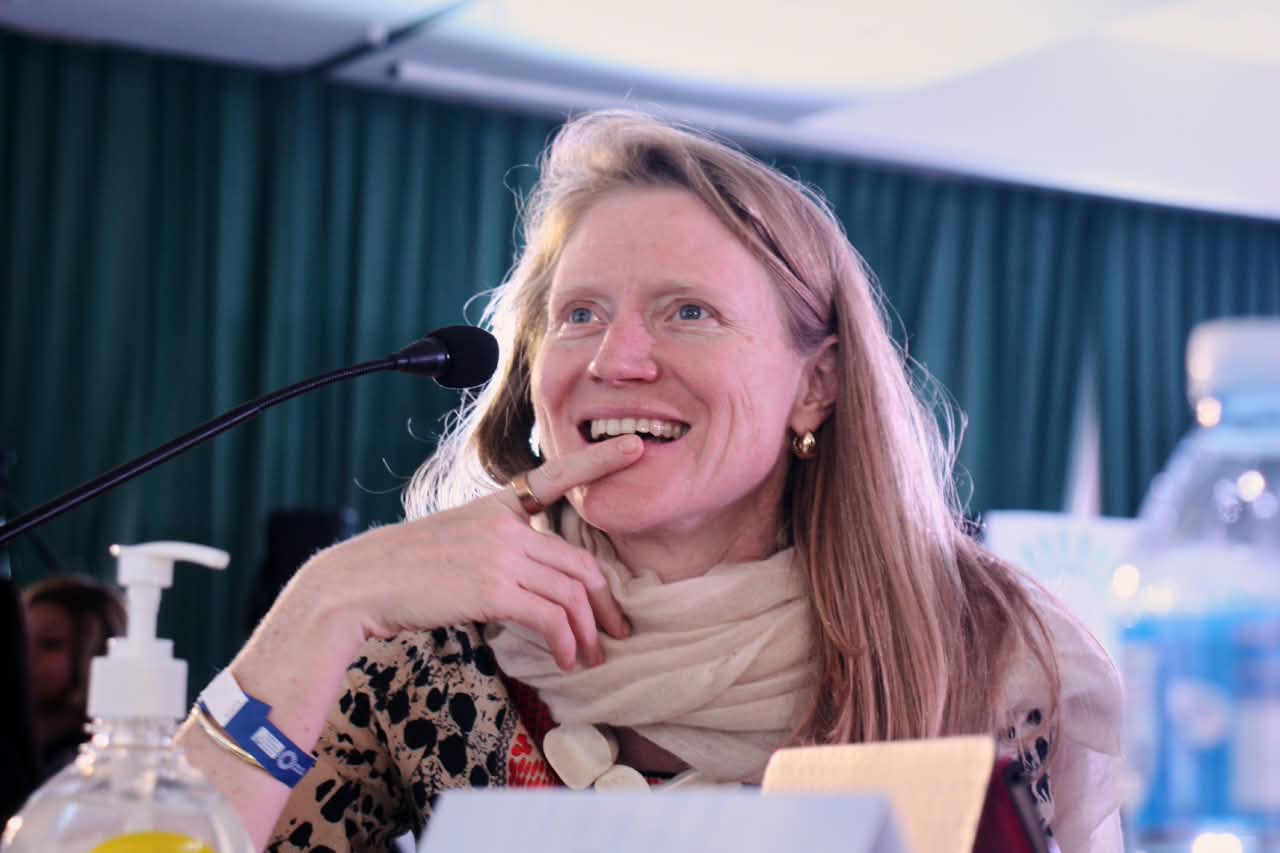
Rose Goslinga, Co-founder and President of Pula, who was in Nigeria this week, says while the company has made inroads, it is barely scratching the surface in a country of over 200 million people.
Speaking in an interview in Abuja, Goslinga traced the genesis of the company to a simple but devastating reality for African farmers.
“So Pula is a company that started about 12 years ago and we started working on a problem of climate risk. So the risk that farmers do plant but at the end of the season, not to any fault of their own, there could be a drought, there could be flooding, like lots of flooding. And you may have done everything right. You may have planted the seed, you may have worked your farm, but if there is a flood you could lose everything,” she said.
She explained that the company’s model is built on data that allows insurers and reinsurers to underwrite those risks.
“We knew that there was enough data to protect those farmers, to get those risks underwritten by insurers and reinsurance companies. And so we started with that idea to ensure those farms,” she said.
According to her, Pula now operates in 13 African markets, and in Nigeria it partners with leading underwriters including Leadway and AXA Mansard to insure farmers against flood and other climate risks and to pay out when losses occur. The company has recently expanded beyond insurance into using its data to give farmers market access, as seen in its work with cocoa farmers in Cross River State.
On the general apathy towards insurance in Nigeria, Goslinga admitted the perception is a major hurdle.
“Farmers will think that insurance is for rich people with cars, right? That’s how they think about insurance – is for people who own a car, people who are better off. We think about insurance as something that farmers may not necessarily want but that they definitely need,” she said.
To overcome this, she said Pula embeds insurance into services farmers already seek out – credit, seeds and fertilizers – through aggregators.
“So we work together with organizations that reach these farmers, whether they are farm aggregators. In Nigeria we work together with Babban Gona, with AFEX, with Thrive Agriculture, those organizations that are giving them loans and we package insurance together with those loans because when the rains come they want seeds, they want fertilizers, they’ll not necessarily ask for insurance but if they lose their crop later on, the people who gave them seeds and fertilizers on credit will want those investments to be protected and so that is how we reach them,” she stated.
She added: “We might also, we work with Bank of Agriculture and with Bank of Agriculture we embed insurance into the credit that Bank of Agriculture gives to farmers and to the aggregators. So we are very much a partnership oriented organization to partner with farmers to do so.”
When asked about the scale of impact in Nigeria, Goslinga was candid about the challenge of size.
“So I would say in Nigeria we’ve probably, it’s still small because you’re a huge country. So even if you reach a million farmers, we’re still been talking about 2-3% of the population, right? It’s a huge country. So I would say we’ve reached about… I think our largest, the most successful year we probably had up to a million farmers or something like that,” she disclosed.
She noted that uptake fluctuates with partnerships and government support for agricultural credit, pointing to renewed momentum this year from institutions like the Bank of Agriculture.
On the company’s new focus on floodplain farming, she said floods, not drought, remain Nigeria’s biggest agricultural threat.
“So we definitely think that in Nigeria the biggest risk is not drought, it’s floods. Floods is the thing that really can wipe away, and quite suddenly also wipe away the benefits, or the work that farmers have done,” she said.
She argued that Nigeria has immense potential in rice, particularly in irrigated areas, but that potential is highly vulnerable.
“We think that there is a lot of potential for this because obviously Nigeria has one of the highest potential yields for rice I’ve seen. Up north in like Kebbi State, people getting 10 metric tons, you know, average in Nigeria is like basically three metric tons, but if you compare it to other African countries it can be as low as one to two, so you are very, very highly productive in the rice space, particularly in some of the irrigated areas. But those farmers at the same time also can really dramatically lose their crop due to floods,” she said.
She therefore called for a national response: “So we think that there is a lot of potential to put together a kind of a national flood insurance program together with organizations like NEMA and the government, because there is a strong role for government. Because as I said, farmers don’t wake up thinking that they want insurance, they think I want to plant, and so you do need that role of the government.”
On climate change awareness, Goslinga said while many farmers may not use the technical term, they feel the impact daily.
“They may not necessarily always have the words for climate change or… but they feel it, right? They feel it. They feel that the rains don’t always come on the 15th of May anymore, right? They are supposed to come in May but then they don’t. So I think they may not have always had the right words, but they certainly feel it and they feel it today,” she said.
She praised the resilience of farmers: “And so I certainly think that farmers also adapt today already because they are very intelligent and they can’t… they don’t have the room to decide that they… they don’t have the wiggle room. Their pockets don’t allow for them to have wiggle room. So they already have to adapt and make those changes.”
On expansion plans, Goslinga said Nigeria remains a priority, with less than 3% of farmers currently covered by insurance.
“So definitely there’s a lot of work in Nigeria in the area of insurance. There’s only, like I said, there’s only like 2 to 3% that we’re currently covering. And I would say that, so going deeper, making sure that there are more farmers (are covered),” she said.
-
 Featured7 years ago
Lampard Names New Chelsea Manager
-
 Featured7 years ago
FG To Extends Lockdown In FCT, Lagos Ogun states For 7days
-
 Featured7 years ago
Children Custody: Court Adjourns Mike Ezuruonye, Wife’s Case To April 7
-
 Featured7 years ago
NYSC Dismisses Report Of DG’s Plan To Islamize Benue Orientation Camp
-

 Featured5 years ago
Transfer Saga: How Mikel Obi Refused to compensate me After I Linked Him Worth $4m Deal In Kuwait SC – Okafor
-
Featured7 years ago
Board urges FG to establish one-stop rehabilitation centres in 6 geopolitical zones
-
Sports4 years ago
TINUBU LAMBAST DELE MOMODU
-

 News2 years ago
Zulu to Super Eagles B team, President Tinubu is happy with you













