
Agriculture
House Moves to Overhaul Livestock Sector, Investigate ₦498.7m Unpaid Poultry Farmers’ Compensation — Wale Raji
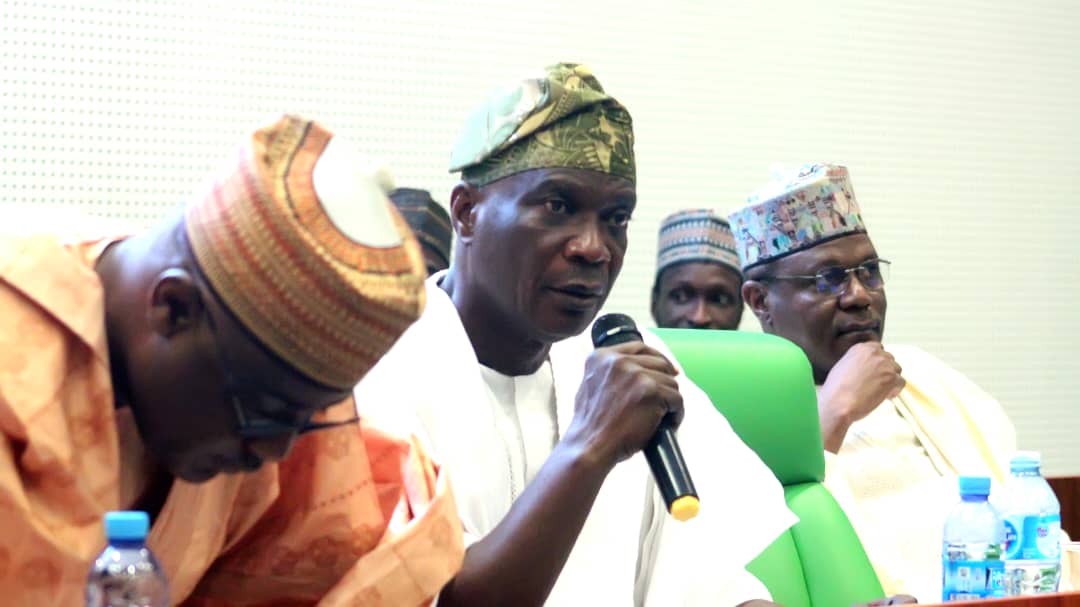
By Cyril Ogar
The House of Representatives Committee on Livestock Development has announced plans to overhaul Nigeria’s livestock sector and investigate the Federal Government’s failure to pay ₦498.7 million in compensation to 307 verified poultry farmers affected by bird flu outbreaks between 2021 and 2023..
Chairman of the Committee, Hon. Wale Raji, disclosed this on Thursday during a public hearing on six livestock-related bills held at the National Assembly Complex, Abuja. The proposed bills seek to establish livestock colleges and research institutes across the country to promote animal production, veterinary education, and professional training.
Raji explained that the public hearing was convened to enable stakeholders to contribute ideas aimed at strengthening livestock development and resolving the challenges faced by farmers, particularly those impacted by avian influenza.
“This engagement provides stakeholders a platform to make meaningful input that will enhance productivity, create jobs, and promote sustainable livestock growth,” Raji stated.“However, we are deeply concerned about the delay in compensating affected poultry farmers, and we are determined to ensure transparency and accountability in the entire process.”
₦498.7 Million Still Outstanding
Representing the Permanent Secretary of the Federal Ministry of Livestock Development, Dr. Chinyere Akujobi, the Director of Veterinary Services, Dr. Adeniyi Adedoyin, confirmed that ₦498.7 million remains unpaid to 307 poultry farmers whose flocks were destroyed during bird flu outbreaks between 2021 and 2023.
According to him, ₦3.16 billion had earlier been disbursed to 1,055 farmers affected by previous outbreaks, but the latest phase of payments was stalled due to funding shortfalls. He added that a recent outbreak in Wukari, Taraba State, led to the culling of over 2,000 birds, with compensation yet to be processed.
Adedoyin attributed the delay to inadequate budgetary provisions and the absence of an Animal Diseases Contingency or Emergency Fund (ADEF), explaining that no dedicated fund for animal disease response has existed since 2021.
“Most affected farmers also lack insurance coverage as required by law, further complicating the compensation process,” he said.
He noted that in 2022, the Federal Executive Council (FEC) approved a revised compensation formula—50% from the Federal Government, 25% from the state, and 25% from farmers—restricting eligibility to smallholders with flocks under 3,000 birds.
Lawmakers Push Livestock Reform Agenda
Hon. Raji emphasized that the committee’s probe and reform efforts are in line with the National Livestock Transformation Plan (NLTP), which seeks to modernize animal husbandry, enhance veterinary services, and improve productivity across the value chain.
“Our goal is to build a vibrant and sustainable livestock sector that contributes meaningfully to food security, employment generation, and economic diversification,” he said.“We will also work to ensure that farmers receive their compensation and that government creates an emergency response fund to prevent future delays.”
He assured that the committee will pursue full implementation of the hearing’s recommendations to strengthen policy, research, and training in the livestock industry.
Push for New Livestock Institutions
Among the bills under consideration is one sponsored by Hon. Bello Ka’oje (Kebbi State) seeking to establish the Federal College of Animal Husbandry, Ka’oje. The proposed college will serve as a centre for research, training, and innovation in livestock production.
Ka’oje said the institution would improve animal breeding, promote best practices in livestock care, and drive productivity and employment.
“This initiative aims to advance livestock development through professional training and innovation,” he stated.“It will help strengthen food security, create jobs, and raise the standard of animal production in Nigeria.”
He noted that Nigeria continues to trail behind countries such as Egypt, Kenya, and Ethiopia, ranking 94th in global milk production and 33rd in meat production as of 2022, despite its vast agricultural resources.
Commitment to Accountability and Growth
Hon. Wale Raji reaffirmed the House’s commitment to transparency and effective oversight in livestock management.
“We will ensure that every stakeholder in the livestock value chain benefits from government policies and programmes,” he said.“Our ultimate goal is to reposition the livestock industry as a key driver of national growth, rural development, and economic stability.”



Agriculture
ARCN Executive Secretary Dabbán Earns Double Recognition for Excellence
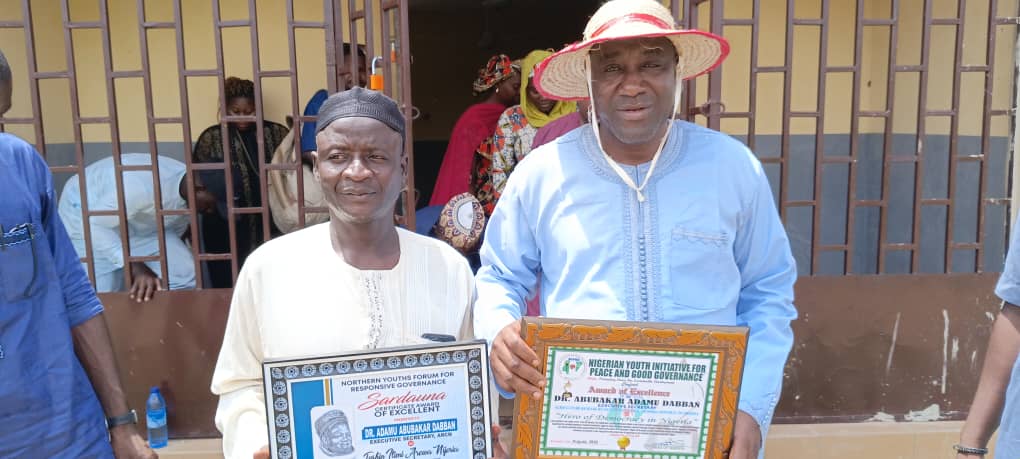
Joel Ajayi
The Executive Secretary of the Agricultural Research Council of Nigeria (ARCN), Dr. Adamu Abubakar Dabban, has been honoured with a Double Award of Excellence by two youth-focused organisations for his leadership, commitment to good governance and contributions to the development of Nigeria’s agricultural sector.
In a statement signed on Tuesday by the ANIPR PRO, Agricultural Research Council of Nigeria Khadijat Ameen in Abuja stated that the honours were conferred on Dr. Dabban by the Nigeria Youth Initiative for Peace and Good Governance and the Northern Youth Forum for Responsive Governance.
The organisations recognised the ARCN Executive Secretary for what they described as his outstanding leadership and dedication to good governance, as well as his efforts toward advancing agricultural development in Nigeria.
The double recognition highlights the growing attention being given to leadership and institutional efforts aimed at strengthening Nigeria’s agricultural research and development ecosystem.
Receiving the honours, Dr. Dabban expressed appreciation to the organisations for the recognition, noting that such awards serve as encouragement to remain committed to the responsibilities entrusted to him and to the broader goal of advancing agricultural development.
The recognition comes as the ARCN continues its mandate of coordinating and promoting agricultural research and development in support of Nigeria’s food and agricultural priorities.
Congratulations to the Executive Secretary, Dr. Adamu Abubakar Dabban, on this distinguished double honour.
-
 Featured7 years ago
Lampard Names New Chelsea Manager
-
 Featured7 years ago
FG To Extends Lockdown In FCT, Lagos Ogun states For 7days
-
 Featured7 years ago
Children Custody: Court Adjourns Mike Ezuruonye, Wife’s Case To April 7
-
 Featured7 years ago
NYSC Dismisses Report Of DG’s Plan To Islamize Benue Orientation Camp
-

 Featured5 years ago
Transfer Saga: How Mikel Obi Refused to compensate me After I Linked Him Worth $4m Deal In Kuwait SC – Okafor
-
Featured7 years ago
Board urges FG to establish one-stop rehabilitation centres in 6 geopolitical zones
-
Sports4 years ago
TINUBU LAMBAST DELE MOMODU
-

 News2 years ago
Zulu to Super Eagles B team, President Tinubu is happy with you