
News
How Uba Maigari Ahmadu is transforming Nigeria’s Metallurgical and Steel Sectors
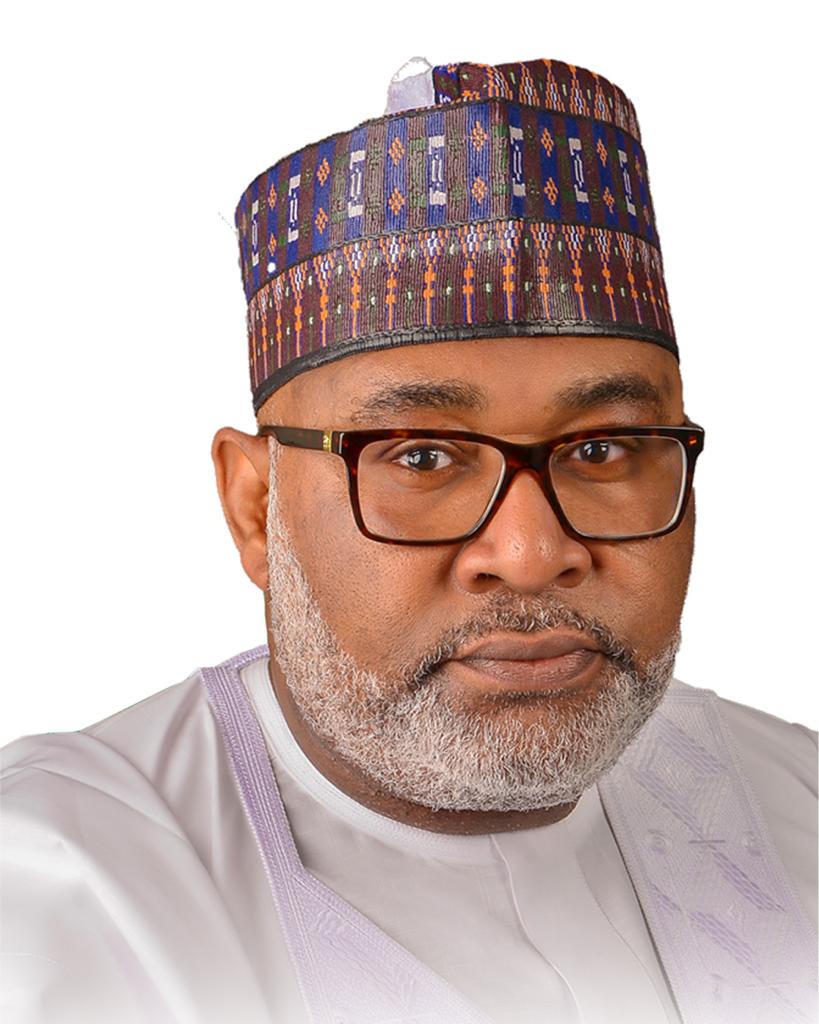
By Abubakar Yerima
In a resounding testament to the commitment to revitalizing Nigeria’s metallurgical and steel sectors, Minister of State for Steel Development Uba Maigari Ahmadu has orchestrated a series of transformative initiatives aimed at driving economic growth, job creation, and poverty eradication.
Under his visionary leadership, the National Metallurgical Training Institute (NMTI) in Onitsha was established to create a pool of indigenous technical workforce that can erect, commission, operate and maintain the steel and allied industries all on their own, and drastically cut down on Nigeria’s dependence on foreign technical training; and to develop highly skilled, practical and production oriented low and middle-level skilled manpower who will effectively maintain the steel and allied sectors including oil and gas sectors of the economy is undergoing a remarkable reorientation and revival, with a strategic focus on training at least 100,000 individuals annually, with 35% being women, thus creating a skilled workforce to meet the industry’s demands and bolstering President Tinubu’s Renewed Hope Agenda.
The Minister’s unwavering dedication has also extended to the revival of the National Steel Raw Materials Exploration Agency (NSRMEA) in Kaduna, positioning it as a geo-scientific information center for investors and researchers in the solid minerals sector. This strategic move has not only enhanced the agency’s capabilities but has also created an enabling environment for the exploration and development of Nigeria’s rich mineral resources, further reinforcing the nation’s position as an attractive destination for investment in the sector.
Crucially, these achievements have been made possible through the collective efforts of a well-trained, dedicated, and motivated workforce that is technologically driven and focused. Honourable Minister Uba Maigari Ahmadu’s emphasis on capacity building and the adoption of modern exploration techniques has been instrumental in positioning Nigeria as a hub for cutting-edge research and development in the metallurgical and steel sectors, thereby attracting significant interest from domestic and international stakeholders.
In a landmark development, the collaborative efforts of the Ministry of Steel Development and the Nigerian Investment Promotion Commission (NIPC) have culminated in the facilitation of a groundbreaking $300 million investment in the steel sector by Niger Extraction Company Ltd. This substantial investment not only underscores the confidence of the private sector in Nigeria’s steel industry but also heralds a new era of growth, innovation, and technological advancement in the sector.
Moreover, Mr. Uba Maigari Ahmadu’s multilayered policy approach inclusive of establishing a technical working relationship with the Federal Ministry of Innovation, Science and Technology for the promotion of its welding policy and support for the Technology Innovation Centres across the country, the Nigerian Investment Promotion Commission (NIPC), Small and Medium Enterprises Development Agency (SMEDAN), National Agency for Science and Engineering Infrastructure (NASENI) the Metallurgical Training Institute and the National Steel Raw Materials Exploration Agency are being rejigged and repositioned to carry out their core functions of providing high-quality training, promote research and development, offer consultancy services, enhance capacity building, and foster collaboration to support the growth, development, and sustainability of the metallurgical and mining sectors in Nigeria.
His proactive engagement with various stakeholders, both domestically and internationally, has been pivotal in promoting the steel sector and attracting much-needed foreign direct investment (FDI) to Nigeria. Through targeted outreach programs, industry roundtables, and investor forums, the Minister is effectively positioning Nigeria as a prime investment destination, fostering partnerships that are poised to drive sustainable economic development and prosperity in the country.
In furtherance to the above, the Minister is working on the optimization of revenues from the metals sector. This is because the contribution of this sector to the GDP has been very low due to low capacity utilization, underreporting of the contributions from the sector, as well as dumping of imported sub-standard metal products amongst other factors. A mechanism is being established to sensitize the MSMEs in the sector on proper reporting of their contributions.
He has scheduled a nationwide facility inspection to establish and address the root causes of low capacity utilization. The Minister is also synergizing with relevant stakeholders like the Standards Organization of Nigeria (SON) to curb the incidences of dumping of imported sub-standard metal products into the country to protect local producers. The overall target is to ensure that the sector records over 5% contribution to GDP before the end of the current administration.
As Nigeria’s metallurgical and steel sectors undergo a period of transformative change, the achievements of Honourable Minister Uba Maigari Ahmadu stand as a testament to the potential for sustainable growth and prosperity in the industry. With a renewed focus on collaboration, innovation, and investment, the Minister’s leadership has set the stage for a vibrant and competitive steel industry that holds promise for economic advancement and progress in Nigeria.
Abubakar Yerima is the Coordinating Special Adviser to the Honourable Minister of State for Steel Development.



News
AWESSA 2026: Customs Assures Border Cooperation for Women Entrepreneurs
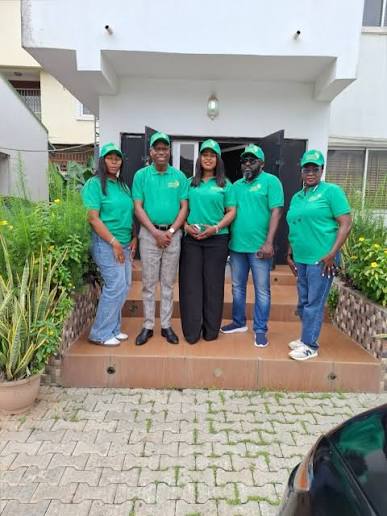
By James Samuel, Abuja
The Nigeria Customs Service has said the nation’s borders must become gateways of opportunity for African women entrepreneurs, not obstacles that kill their businesses.
This was disclosed at the African Women’s Economic Sovereignty Summit and Awards (AWESSA) 2026 held at the Customs House, corporate headquarters of the Nigeria Customs Service in Abuja.
Representing the Comptroller-General of Customs, Bashir Adewale Adeniyi, MFR, his representative, an Assistant Controller, said hosting the summit inside Customs premises was deliberate.
“That this summit holds within the Customs premises is no accident. It is a statement of intent,” he said.
“The border is where the promise of every African trader either comes alive or dies quietly. And the men and women of this Service have resolved that for every woman entrepreneur of this continent, that promise will never die.”
He said women account for an estimated 70% of informal cross-border trade in Africa and over half of agricultural labour, yet they face documentation, standards, finance and harassment challenges.
“Too often she meets the border as an obstacle rather than a gateway. Because she trades in small volumes, in cash, in informality without formal papers, capable business women are now trapped in informality, invisible to trade statistics,” he noted.
He added: “AfCFTA will not be delivered by treaties alone. It will be delivered at border posts, in conference halls, and in market stores.”
Also speaking, the Executive Director of the Nigerian Export Promotion Council, Mrs. Nonye Ayeni, represented by a Director, said women are central to Nigeria’s non-oil export sector.
According to her, NEPC’s focus is now on building export- ready competitive enterprises through programmes like the Women in Export Initiative, Export Clinic, and Zero to Export.
“Our focus is no longer on encouraging exports alone, it is on building competitive export-ready enterprises. We are supporting women to move beyond production into value addition, quality assurance, standard compliance, branding and market positioning,” she said.
She said AfCFTA offers a market of over one billion people, but women need knowledge, certifications and institutional support.
“Empowering women economically is one of the most effective tools for achieving poverty reduction, food security, job creation and inclusive growth,” she stated.
The Convener, Helen Okon, who is the Publisher of Business Review Africa & Africa Today Magazine, as well as representatives of NAFDAC DG and NEXIM Bank MD, reaffirmed commitment to supporting women-owned businesses access standards, certification and finance.
The summit, with the theme of positioning women as drivers of trade and sustainable development, is part of activities marking the International Year of the Women Farmer.
-
 Featured7 years ago
Lampard Names New Chelsea Manager
-
 Featured7 years ago
FG To Extends Lockdown In FCT, Lagos Ogun states For 7days
-
 Featured7 years ago
Children Custody: Court Adjourns Mike Ezuruonye, Wife’s Case To April 7
-
 Featured7 years ago
NYSC Dismisses Report Of DG’s Plan To Islamize Benue Orientation Camp
-

 Featured5 years ago
Transfer Saga: How Mikel Obi Refused to compensate me After I Linked Him Worth $4m Deal In Kuwait SC – Okafor
-
Featured7 years ago
Board urges FG to establish one-stop rehabilitation centres in 6 geopolitical zones
-
Sports4 years ago
TINUBU LAMBAST DELE MOMODU
-

 News2 years ago
Zulu to Super Eagles B team, President Tinubu is happy with you