
Featured
Huawei, Partners Release White Paper On Deterministic Networking

Huawei, alongside industry partners, has jointly released the Future Network White Paper on Deterministic Networking Technologies.
The white paper details ways in which deterministic networking technologies can be leveraged to build future-oriented networks; it also introduces ways in which deterministic networks will help vertical industries to become digital, intelligent, and linked together in the information age.
Transcending the limits of conventional networks, deterministic networks can set an ultra-low maximum limit for latency, jitter, and the packet loss rate; flexibly control the ranges of uplink and downlink bandwidth; and establish an ultra-high lower limit for service reliability, guaranteeing the quality of communication for industry-specific services.
Companies who participated in releasing the White Paper at the recent 5th Future Network Development Conference include Purple Mountain Laboratories (PML), Beijing University of Posts and Telecommunications (BUPT), 5G Deterministic Networking Alliance (5GDNA), Jiangsu Hengtong Optic-Electric Co., Ltd., and Jiangsu Future Networks Innovation Institute.
Several notable guests attended the release ceremony, including Liu Yunjie, Academician of the Chinese Academy of Engineering and Director of PML; Jason Dai, President of Huawei Cloud Core Network Strategy & Business Development Department and Chairman of 5GDNA; Xuan Chuanwu, Deputy General Manager of Jiangsu Hengtong Optic-Electric Co., Ltd.; and Huang Tao, Professor of BUPT and Director of the Future Network Center of PML.
The released white paper specifies deterministic networking as the evolution target of the next-generation network. Deterministic networking technologies can enable existing networks to be reshaped to provide real-time, high-quality, and highly reliable services, which will fuel the digital transformation of industries and deliver a premier user experience.
The Internet has unlocked a plethora of innovative services, including voice calling, e-commerce, and video conferencing. However, the “best-effort” Internet cannot provide the deterministic ultra-low latency, ultra-low jitter, and ultra-high reliability needed for the emerging systems of the primary, secondary, and tertiary industries.
These systems include smart manufacturing, unmanned transportation, ultra-remote control, intelligent decision-making, telemedicine, smart agriculture, and e-sports.
The white paper also explains the development, standardization, application, features, and requirements of different deterministic networking technologies, including Time-Sensitive Networking (TSN), Flexible Ethernet (FlexE), Deterministic Networking (DetNet), Deterministic IP (DIP), Deterministic Wi-Fi (DetWiFi), and 5G Deterministic Networking (5GDN). On top of this, the white paper offers suggestions on how these technologies can be leveraged by different industries.
Deterministic networking technologies are enabling more and more industry-specific applications, which, in turn, promote the development of technologies. Recent years have witnessed the rapid commercialization of 5G and its increasing contribution in digitizing industries.
Driven by such a trend and the continuous promotion by 5GDNA, deterministic networking has been commercially used in a wide array of industries, including industrial IoT, the Internet of Energy, smart transportation, Internet of Healthcare, and multimedia.
The 5GDN-enabled Smart Campus at Hengtong Optic-Electric Co., Ltd. is an example of one of the practices. During this process, 5GDNA has been devoted to consolidating the industry consensus, piloting projects, and fostering a sustainable ecosystem with industry partners. These efforts are ascending 5G and deterministic networking technologies to new heights.
.



Featured
Alake Inaugurates Nigeria-US Solid Minerals Committee, Dismisses $700bn Claim, Says No Assets Sold
Joel Ajayi
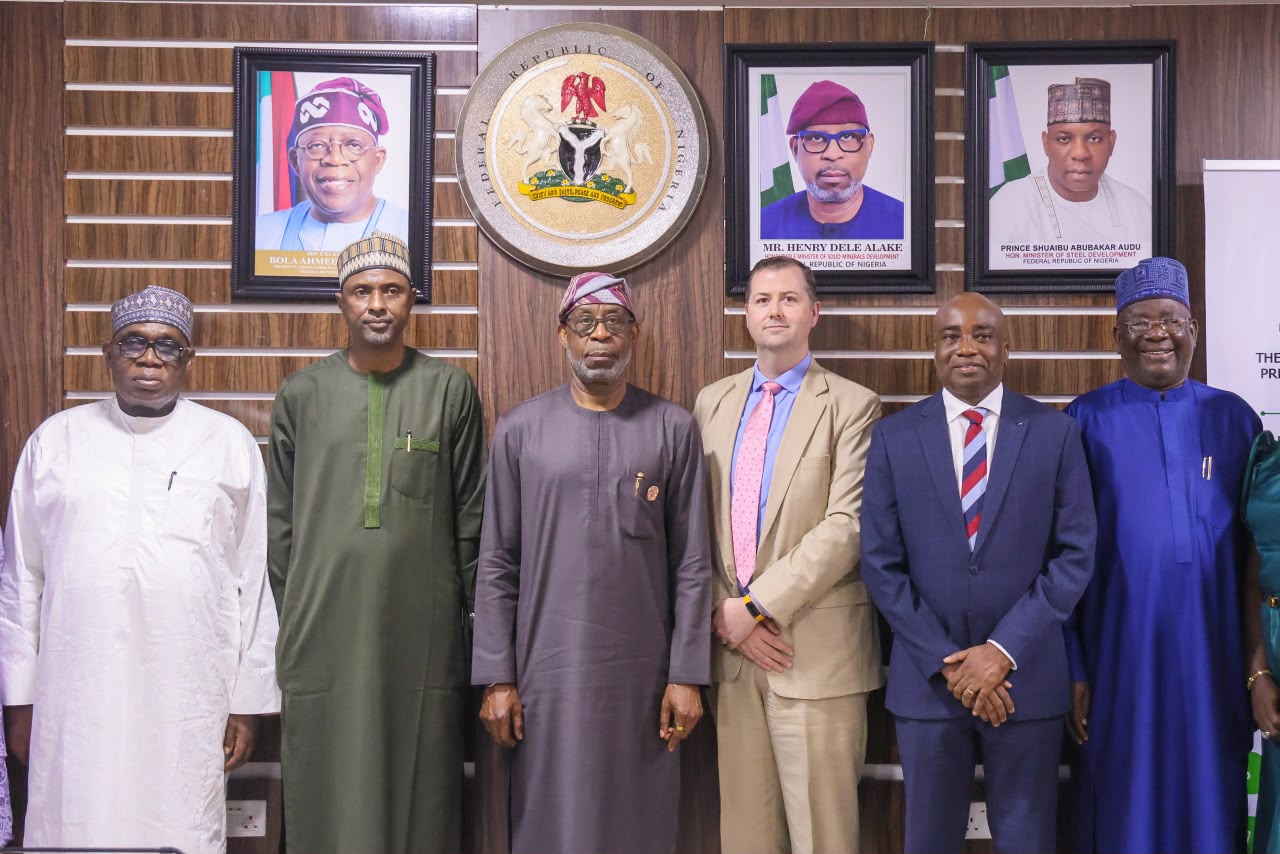
The Minister of Solid Minerals Development, Dr. Dele Alake, on Tuesday inaugurated the Nigeria-United States Committee on Strategic Cooperation in the Solid Minerals Sector in Abuja, dismissing reports that Nigeria sold $700 billion worth of solid minerals to the US.
The inauguration followed the strategic cooperation framework established between Nigeria and the United States during the 81st United Nations General Assembly in New York.
In a statement issued on Wednesday by the Head PRESS and Public Relations Department Mrs. Kania Maliki Andeyaba stated that, Alake in the Memorandum of Understanding, MoU, signed with the US is a government-to-government platform to facilitate business-to-business engagements between American investors and Nigerian local operators, not a sale of assets.
Harping on the importance of the solid minerals sector to President Bola Ahmed Tinubu’s economic diversification agenda, he noted that the administration was committed to reducing dependence on a mono-product economy through the sustainable development of Nigeria’s vast mineral resources.
According to him, the Nigeria–US partnership as a strategic initiative to attract investment, promote technology transfer, strengthen local mineral processing and create employment opportunities.
“There is no sale of any Nigerian asset. There’s nothing exchanging hands,” Alake declared.
“We created a platform to facilitate mingling of US investment ventures with Nigeria’s local operators. It is in the public domain. We signed it in public and published it in four or five national newspapers.”
The Minister said reports claiming the US was coming to take over Nigeria’s minerals and security architecture were untrue at best and products of riotous imagination at worst.
Explaining the policy thrust, Alake said Africa has historically held the short end of the stick in global economic transactions, and Nigeria is determined to change that model.
“We have the resources, the critical elements the world needs to transit to clean energy. So we are creating a new paradigm — you bring your capital, expertise and technology, to match with our natural resources and create a win-win situation . The investor gains, Nigeria gains.’’he said.
Nigeria, he stressed, had operated a mono-cultural economy dependent on oil, while solid minerals were exploited informally — with ores taken “from pit to port” without value addition.
Alake said government has now made local processing mandatory, refusing to grant mineral titles to investors without a clear pathway to processing in Nigeria.
He said the policy led to the springing up of processing factories, including the largest lithium processing plant in West Africa commissioned recently in Nasarawa by the Vice President, and informed the formation of the African Minerals Strategy Group.
Alake noted that investor confidence has returned due to macro-economic reforms by President Bola Tinubu that guarantee security of tenure and repatriation of profits.
He charged the committee to discharge its assignment responsibly, saying its work is strategic to achieving the President’s $1 trillion economy target.
To this end, he told the Committee to ensure effective coordination, identify investment opportunities and translate the framework into measurable outcomes capable of positioning Nigeria as a competitive player in the global solid minerals industry.
In his welcome address, Permanent Secretary of the Ministry, Engr. Faruk Yusuf Yabo, said the inauguration translates growing bilateral engagements into a structured framework for practical cooperation and investment mobilization
Economic Officer at the US Embassy, Jonathan Baas, said President Donald Trump has prioritized three areas for US embassies — energy, artificial intelligence/super intelligence, and critical minerals.
Baas said Washington’s direction is to work with partners to secure critical supply chains while ensuring partners capture value.
“We just signed a contract today on looking into building AI data centres in Nigeria at the Nigerian Economic Summit. That’s the direction Washington wants us to go,” he said.
In his vote of thanks, CEO/Managing Director of Nigeria Solid Minerals Company, NSMC said that the committee
is expected to coordinate implementation, facilitate investment and monitor progress towards achieving the objectives of the Nigeria–US cooperation framework.
The inauguration reinforces the Federal Government’s commitment to repositioning the solid minerals sector as a key driver of economic diversification, industrial development and national prosperity under President Tinubu’s Renewed Hope Agenda.
-
 Featured7 years ago
Lampard Names New Chelsea Manager
-
 Featured7 years ago
FG To Extends Lockdown In FCT, Lagos Ogun states For 7days
-
 Featured7 years ago
Children Custody: Court Adjourns Mike Ezuruonye, Wife’s Case To April 7
-
 Featured7 years ago
NYSC Dismisses Report Of DG’s Plan To Islamize Benue Orientation Camp
-

 Featured5 years ago
Transfer Saga: How Mikel Obi Refused to compensate me After I Linked Him Worth $4m Deal In Kuwait SC – Okafor
-
Featured7 years ago
Board urges FG to establish one-stop rehabilitation centres in 6 geopolitical zones
-
Sports4 years ago
TINUBU LAMBAST DELE MOMODU
-

 News2 years ago
Zulu to Super Eagles B team, President Tinubu is happy with you













