
Sports
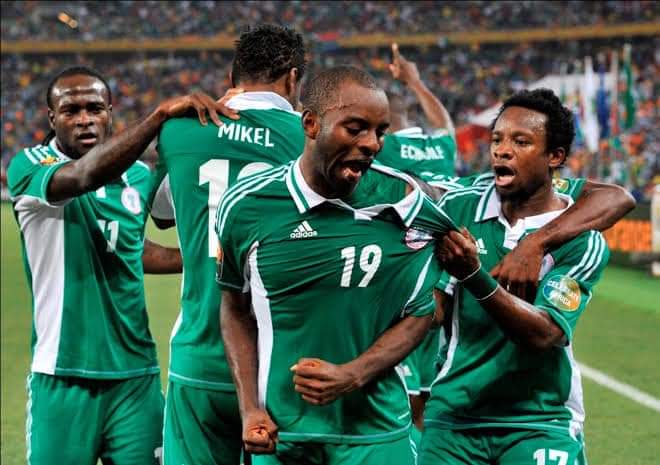
Hurdles the Super Eagles of Nigeria Must Cross Before Winning Nigeria’s Fourth AFCON Title
By Sylvanus Ofekun
The Super Eagles will face strong competition from other top African teams who are also determined to win the AFCON title. Teams like Egypt, Senegal, and Cameroon have proven to be formidable opponents in the past and will present significant challenges.
The Super Eagles must conquer the following hurdles if they must win Nigeria’s Fourth AFCON Title;
- Squad selection and team chemistry: It is important for the Super Eagles to select a well-balanced squad, comprising both experienced and young talented players. Building good team chemistry and cohesion will be crucial in achieving success at the AFCON tournament.
- Coaching and tactics: The Super Eagles Coach, Jose Pesiro must display skills, dexterity and effectively strategize,implement tactics that suit the team’s style of play. A clear game plan and effective communication will be pivotal for the team’s success.
- Mental and physical fitness: The players need to maintain high levels of physical fitness and mental focus throughout the tournament. Avoiding injuries and fatigue will be important factors in maintaining a competitive edge.
- Defensive solidity: The Super Eagles must address their defensive vulnerabilities to compete effectively. Strong defensive organization, solid goalkeeping performances, and disciplined defending will be essential in keeping opposition teams at bay.
- Efficient and clinical finishing: Nigeria will need to improve their attacking prowess and be more clinical in front of goal. Scoring goals consistently will give them an advantage in tight games and could be the difference between winning and losing.
- Maintaining consistency throughout the tournament: The Super Eagles must ensure they remain consistent throughout the tournament, avoiding complacency and taking every match seriously. They should not underestimate any opponent and approach each game with the same determination and focus.
- Effective set-piece execution: Proper execution of set-pieces can be a game-changer in tight contests. The Super Eagles must work on their set-piece routines, both defensively and offensively, to maximize their chances of success.
- Support from fans and public: The Super Eagles will need the support of Nigerians both on and off the pitch. The positive energy from fans, along with the belief and backing from the country, can provide an added boost to the players’ motivation and confidence.
- Managing pressure and expectations: Nigeria is a soccer-loving nation with high expectations for their national team. Handling pressure and managing expectations will be crucial for the Super Eagles to remain focused and perform at their best. They must not let the weight of expectation hinder their performance.
Thankfully, President Bola Tinubu has approved the payment of N12 billion owed to Nigeria’s national teams of various sports, which includes the Super Eagles.
sleekysly5@gmail.com



Sports
A Golden Run: 2025 Rekindles Hope and Pride in Nigerian Sports
Joel Ajayi
In the long and colourful history of Nigerian sports, 2025 will be remembered very fondly for the good memories it delivered. It was a year when promise met planning, talent met opportunity, and belief returned to the heart of the nation’s sporting ecosystem.
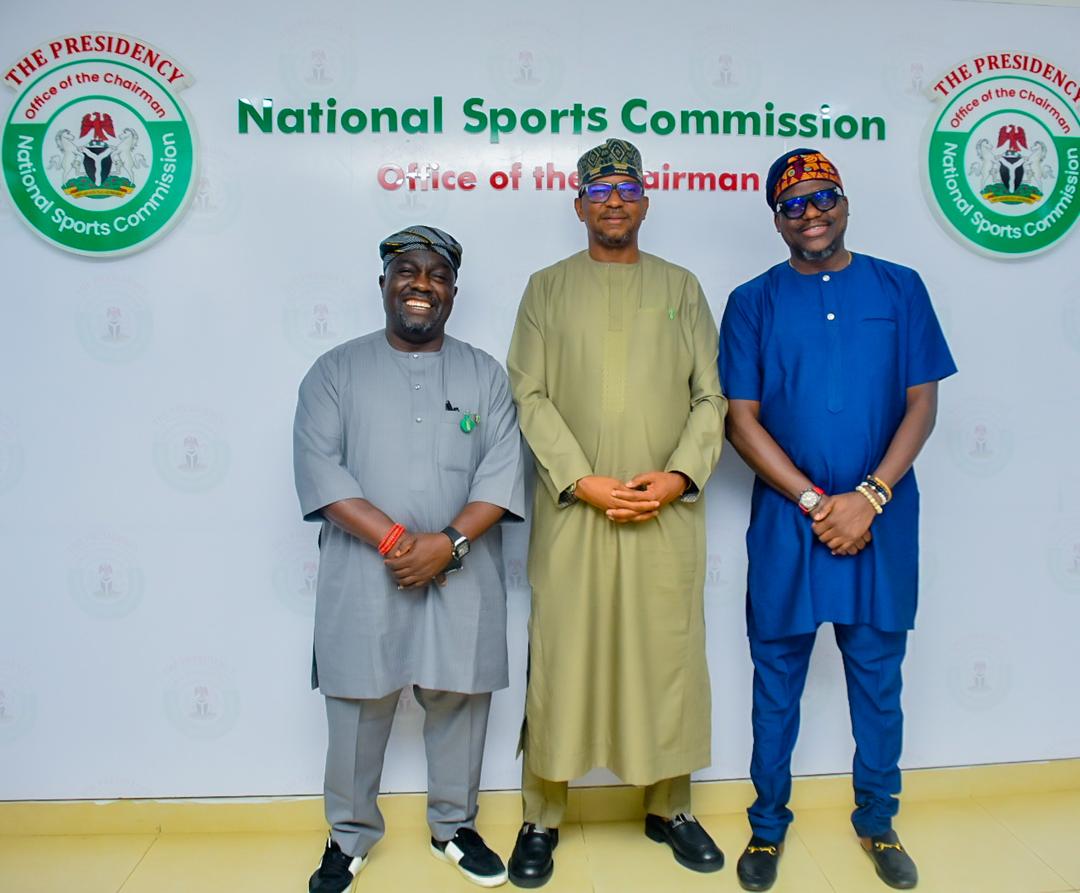
It was a year defined by a change in narrative, driven with clarity and conviction by the National Sports Commission (NSC) under the steady leadership of its Chairman, Mallam Shehu Dikko, and Director General, Honourable Bukola Olopade.
Together, they championed a new era: one rooted in development, transparency, private-sector confidence, and the deliberate nurturing of the next generation.
It was a year of talent discovery and youth emergence, powered by intentional platforms such as the CAA U18/U20 Athletics Championships, the National Youth Games, the Invited Junior Athletes (IJA) initiative at the National Sports Festival, the African School Sports Games, and a busy calendar of international competitions.
From these stages emerged young Nigerians who did more than compete but they announced themselves to the world.
At the African U18 & U20 Championships in Abeokuta, Miracle inspired a stunning Nigerian 1–2–3 sweep in the women’s 100m, winning Nigeria’s first gold medal of the championships in 11.88s (-0.4).
Hot on her heels was her training partner Rosemary Nwankwo, who claimed silver in 11.96s, while Mariam Jegede completed the podium with bronze.
The story grew even sweeter. Just one month after sitting for her WAEC examinations at the Nigerian Tulip International School, Abuja, Miracle became a triple African champion, winning gold in the 100m, 200m, and sprint medley relay. She and Rosemary would later dominate again at the African School Games in Algeria, clinching gold and silver respectively; a proof that Nigeria’s future was not just bright, but blazing.
The wave of youth excellence extended beyond athletics.
In the pool, Abdul Jabar Adama swam into Nigerian history.
At just 17, he became the first Nigerian swimmer ever to win a medal at the World Aquatics Junior Swimming Championships, claiming silver in the men’s 50m butterfly in Romania with a time of 23.64s.
As if that wasn’t enough, Adama shattered two Nigerian records in one day, turning his silver medal into a golden moment for Nigerian swimming and opening new frontiers for aquatic sports in the country.
These achievements were not accidents. They were the fruits of deliberate investment, exposure, and structured support by the National Sports Commission, which ensured young athletes were properly funded and given opportunities to test themselves on the global stage.
Champions at Every Level
While the youth carried the future, Nigeria’s elite athletes ensured the present remained glorious.
The Super Falcons once again reminded Africa who rules women’s football. In Morocco, Nigeria claimed a historic 10th Women’s Africa Cup of Nations title, coming from two goals down to defeat the host nation 3–2 in a thrilling final in Rabat. Led by coach Justine Madugu, the Falcons’ triumph was as dramatic as it was dominant.
Their heroics were rewarded at home, as President Bola Ahmed Tinubu conferred national honours, landed properties, and a $100,000 cash reward on each player and member of the technical crew: a powerful statement on the value of sporting excellence.
In basketball, D’Tigress carved their names deeper into African history, winning a record fifth consecutive FIBA Women’s AfroBasket title in Abidjan.
Coach Rena Wakama’s side overturned an early deficit to defeat Mali 78–64, extending their unbeaten AfroBasket run to 29 games over a decade and becoming the first team ever to win the championship five times in a row.
On the badminton court, Eniola Bolaji continued her trailblazing journey. The first African to win an Olympic medal in badminton, Bolaji built on her 2024 Olympic success by reaching six international finals in 2025, winning five, a remarkable year of consistency and dominance.
Nigeria also maintained its global supremacy in scrabble, remained Africa’s queens in basketball, and celebrated multiple podium finishes across sports by athletes competing proudly in green and white.
A Nation on the Move
Beyond medals, 2025 was transformative in structure and scale.
Nigeria hosted an unprecedented number of international events, including the CAA U18/U20 Athletics Championships, African Cycling Tour, West Africa Para Games, African Arm Wrestling Championship, and many more. In total, 11 international sports events were hosted, directly and indirectly benefiting over 50,000 Nigerians through job creation, SME engagement, and tourism-driven economic activity.
The numbers told a compelling story:
- Over ₦50 billion raised as direct and indirect funding for sports development
- 54 sports federations represented Nigeria internationally
52 federations returned with podium finishes - Nigeria finished eighth overall at the Islamic Solidarity Games in Saudi Arabia, with a record 30-medal haul
From weightlifting to wrestling, athletics to para-powerlifting, Team Nigeria delivered its best-ever performance at the Games, reaffirming the country’s depth across multiple disciplines.
What made 2025 special was not just the medals, but the method. It was a year where vision met execution, where grassroots met global ambition, and where young Nigerians were shown that excellence is achievable when opportunity is intentional.
Under the leadership of Mallam Shehu Dikko and Hon. Bukola Olopade, the National Sports Commission did more than manage sports, it reimagined it, restoring private-sector confidence, empowering federations, and placing athlete welfare and development at the centre.
As the curtain falls on an unforgettable year, one truth stands tall: Nigerian sports did not just win in 2025, it rediscovered itself.
2026, Here’s to greater things to come!
-
 Featured7 years ago
Lampard Names New Chelsea Manager
-
 Featured6 years ago
FG To Extends Lockdown In FCT, Lagos Ogun states For 7days
-
 Featured6 years ago
Children Custody: Court Adjourns Mike Ezuruonye, Wife’s Case To April 7
-
 Featured6 years ago
NYSC Dismisses Report Of DG’s Plan To Islamize Benue Orientation Camp
-

 Featured4 years ago
Transfer Saga: How Mikel Obi Refused to compensate me After I Linked Him Worth $4m Deal In Kuwait SC – Okafor
-
Sports3 years ago
TINUBU LAMBAST DELE MOMODU
-

 News1 year ago
Zulu to Super Eagles B team, President Tinubu is happy with you
-
Featured6 years ago
Board urges FG to establish one-stop rehabilitation centres in 6 geopolitical zones