
News
ICSC’s Reform-Driven Conference to Boost Capacity and Impact of Nigerian Civil Servants – Walson-Jack

By Joel Ajayi
The Head of the Civil Service of the Federation (HCSF), Dr. Didi Esther Walson-Jack, has declared that Nigeria’s civil service must evolve into a bold, innovative, and inclusive institution capable of meeting the complex demands of the 21st century.
She made this assertion on Wednesday at the Maiden International Civil Service Conference, hosted in Abuja by the Federal Government of Nigeria in collaboration with the Global Government Forum (UK).
In her keynote address, Walson-Jack emphasized that the civil service remains one of the most powerful instruments for national development and global stability.
She described the conference as a timely gathering of reformers, policymakers, and practitioners determined to redefine public service delivery across Africa and beyond.
“This conference was born from a shared recognition that, globally and especially in Africa, the civil service is at a crossroads.The systems we inherited were designed for a different era. Yet today, we are called to respond to digital disruption, climate shocks, pandemics, and growing demands for inclusion and equity,” she said.
Walson-Jack stressed that the theme of the conference “Rejuvenate, Innovate, Accelerate” goes beyond a slogan; it is a strategic call to action.
Highlighting recent progress under the Federal Civil Service Strategy and Implementation Plan 2021–2025 (FCSSIP25), she noted several transformative initiatives already underway:
“Digital Transformation: Transitioning to a paperless system via the deployment of the Enterprise Content Management System (ECMS).
“Performance Management: Linking individual Key Performance Indicators (KPIs) with national development goals.
“Capacity Building: Modernizing institutions such as the Public Service Institute of Nigeria and the Administrative Staff College of Nigeria (ASCON) to deliver high-impact, digitally driven training.
“These are not mere aspirations,” Walson-Jack stated. “They are concrete deliverables steering our transformation agenda.”
She outlined five strategic objectives of the maiden conference: “Fostering Global Collaboration: Bringing together civil service leaders, reform advocates, and development partners from Africa, Europe, Asia, and beyond to exchange ideas and forge cross-border partnerships.
“Showcasing Transformational Practices: Featuring successful governance models like Ghana’s citizen-centered e-governance, Kenya’s institutional accountability frameworks, Singapore’s AI-enabled public service, and Morocco’s integrated digital identity reforms.
“Catalyzing Bold, Adaptive Leadership: Equipping participants to lead with creativity and resilience in the face of emerging global challenges such as artificial intelligence, climate change, and agile governance.
“Accelerating Reform Implementation in Nigeria: Serving as a strategic review of FCSSIP25 progress while mapping the road ahead for deeper reforms.
“Forging Enduring Partnerships: Using the platform to establish bilateral and multilateral partnerships through MoUs, roundtables, and networking sessions focused on reform execution, knowledge sharing, and resource mobilization.”
In a passionate appealled to young civil servants and reform-minded leaders, Walson-Jack said: “You are not the future of public service you are its present. Your creativity, courage, and conviction will determine whether we succeed in rejuvenating, innovating, and accelerating the transformation we seek.”
Dr. Walson-Jack concluded by reaffirming the pivotal role of the civil service in shaping Nigeria’s future.
“The civil service is not a relic of the past. It is the engine of our future. But that engine must be powered by bold ideas, diverse minds, and an inclusive purpose.”
She declared that the conference marks a turning point a bold commitment to ending the status quo and embracing reform with urgency and determination.
“This is not just a conference. It is a signal that we are ready to change systems—and change lives,” she said, urging all delegates to leave Abuja with renewed resolve and actionable strategies to drive transformational leadership in public service.
She added that the civil service is not a relic of the past but the engine of Nigeria’s future—a force that must be rebuilt with bold ideas, diverse minds, and inclusive purpose.
“This conference is a declaration that business as usual is no longer acceptable. It is a pledge that we will not walk this path of reform alone. It is a signal that we are ready to rejuvenate, innovate, and accelerate.”
Walson-Jack concluded by welcoming delegates to Abuja and encouraging them to leave the conference not just with new insights but with a renewed mission to drive transformational leadership and public service excellence across the continent.



Foreign news
Algeria’s Glorious Revolution: Embassy Marks 72nd Anniversary in Abuja
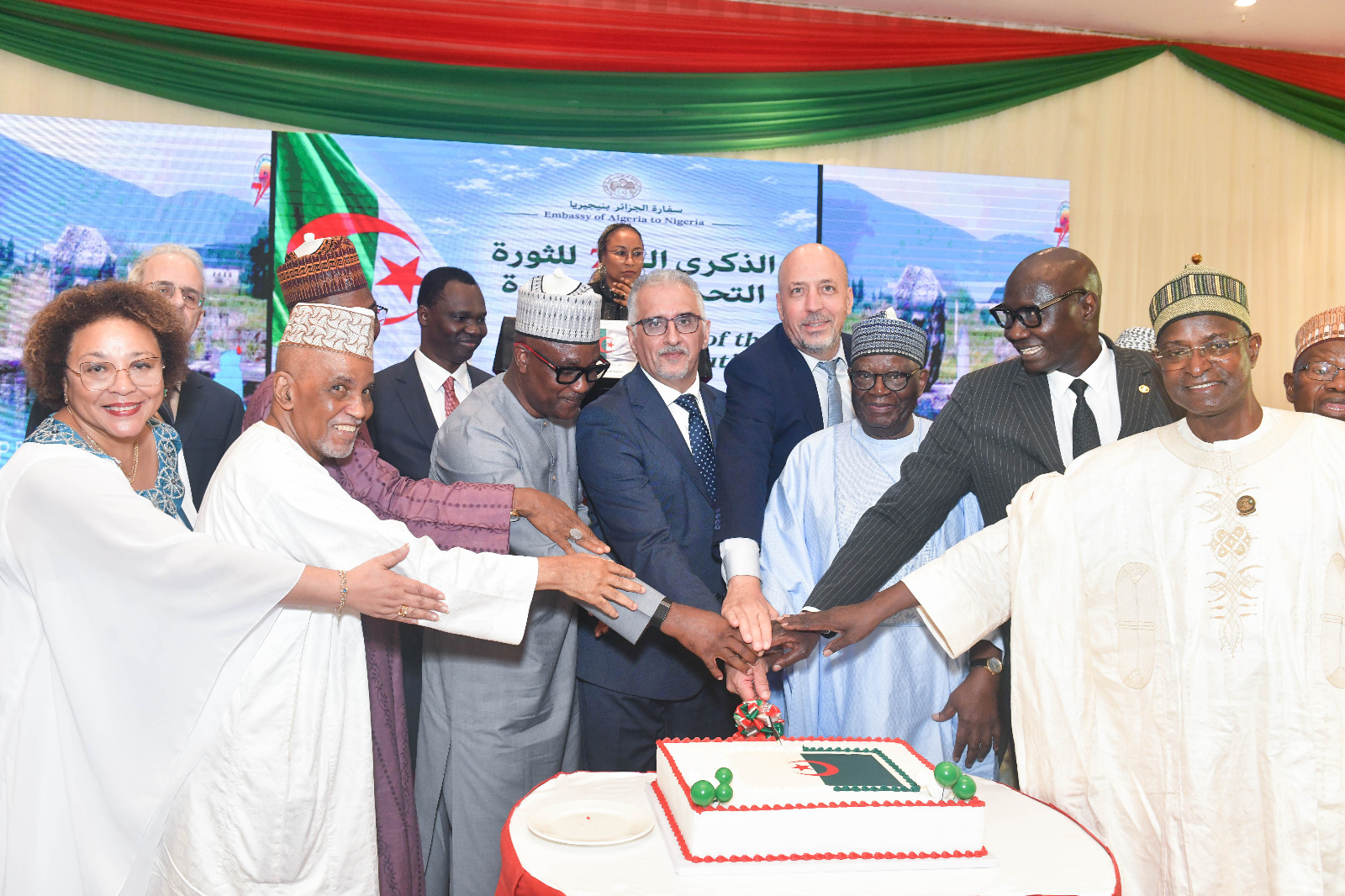
Joel Ajayi
The Embassy of Algeria in Nigeria has commemorated the 72nd anniversary of the country’s Glorious Revolution of November 1, 1954, with a reception in Abuja, highlighting Algeria’s liberation struggle and strengthening diplomatic relations with Nigeria.
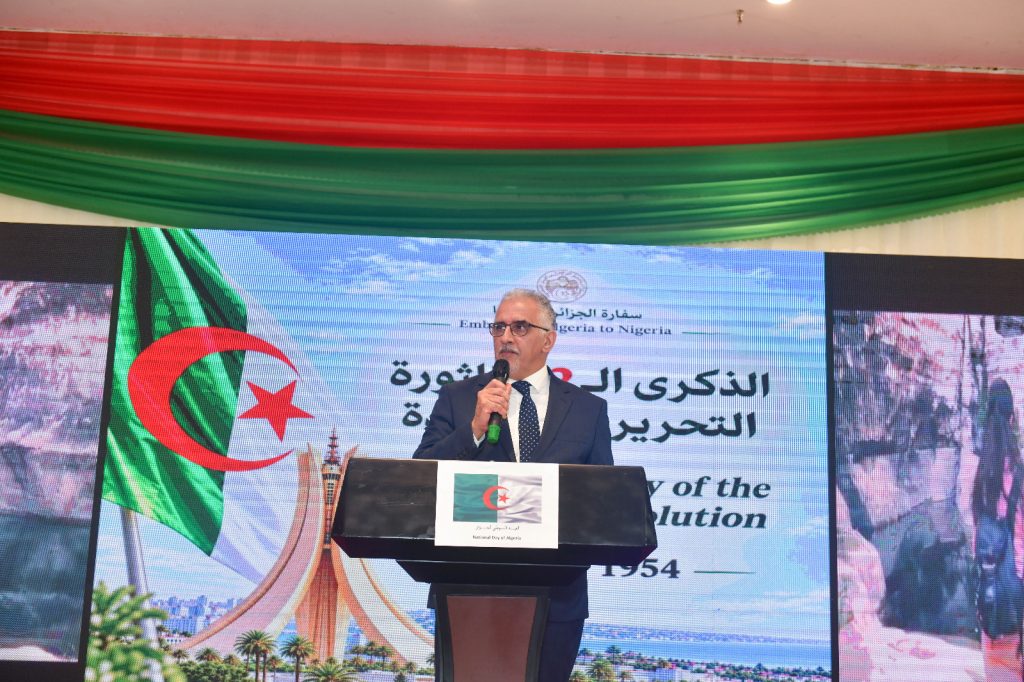
The event, held on November 9, 2026, at Continental Suites Hotel, attracted prominent personalities, including the Speaker of the House of Representatives, Dr Tajudeen Abbas, members of the Federal Government, senior government officials, heads of diplomatic missions and other friends of Algeria.
Speaking at the reception, Algeria’s Ambassador to Nigeria, Hocine Mezoued, welcomed guests and paid tribute to the country’s freedom fighters who sacrificed their lives during the struggle for independence.
He described the November 1, 1954 revolution as the foundation of modern Algeria, noting that the sacrifices of the nation’s martyrs made it possible for the country to reclaim its sovereignty.
On Algeria’s development agenda, Mezoued said President Abdelmadjid Tebboune’s administration had continued to pursue economic reforms, diversification and national development under its New Algeria vision.
He noted that the country was recording progress in non-hydrocarbon exports, while improvements in the business environment had boosted investor confidence and attracted significant foreign investments.
On foreign policy, the ambassador reaffirmed Algeria’s commitment to non-interference, respect for national sovereignty, peaceful conflict resolution and the right of peoples to self-determination.
Addressing security challenges in the Sahel, he stressed that lasting peace could not be achieved through military measures alone, insisting that economic development, inclusive dialogue and peaceful resolution of disputes remained essential.
Turning to Nigeria-Algeria relations, Mezoued described the partnership as one founded on shared values and the commitment of both countries’ leaders to advancing African development.
He identified the Trans-Saharan Highway, Trans-Saharan Gas Pipeline and Trans-Saharan Fibre Optic Backbone as major strategic projects receiving attention from both countries.
The ambassador also disclosed that Algeria had continued to provide scholarships to Nigerian students to strengthen human capital development and capacity building.
He further announced that Air Algérie expanded its Nigerian operations on October 26, 2026, with the introduction of two weekly flights to Lagos, expressing confidence that the service would boost trade and tourism.
Looking ahead, Mezoued said 2027 would offer fresh opportunities to deepen bilateral cooperation, particularly through the fifth Joint High Bi-National Commission scheduled to hold in Abuja.
He expressed optimism that the meeting would provide an opportunity to assess existing partnerships, identify new areas of cooperation and move Nigeria-Algeria relations towards a more practical and results-driven phase.
-
 Featured7 years ago
Lampard Names New Chelsea Manager
-
 Featured7 years ago
FG To Extends Lockdown In FCT, Lagos Ogun states For 7days
-
 Featured7 years ago
Children Custody: Court Adjourns Mike Ezuruonye, Wife’s Case To April 7
-
 Featured7 years ago
NYSC Dismisses Report Of DG’s Plan To Islamize Benue Orientation Camp
-

 Featured5 years ago
Transfer Saga: How Mikel Obi Refused to compensate me After I Linked Him Worth $4m Deal In Kuwait SC – Okafor
-
Featured7 years ago
Board urges FG to establish one-stop rehabilitation centres in 6 geopolitical zones
-
Sports4 years ago
TINUBU LAMBAST DELE MOMODU
-

 News2 years ago
Zulu to Super Eagles B team, President Tinubu is happy with you













