
News
Investment scandal Rocks FCTA as pioneer owners of FCT Park & Pay project demands justice from Tinubu, Wike
President Bola Ahmed Tinubu and the newly appointed Minister of the Federal Capital Territory, Nyesom Wike has been advised to beam a searchlight on the activities of some of the top official of the Federal Capital Territory if they are still desirous in attracting Nigerians in Diaspora to invest in the country particularly in the Capital Territory.
This was the assertion of two aggrieved Nigerians, Otumba Olusegun Olarewanju, CEO platinum parking management, and Iliyasu Abdu, the MD/CEO Integrated Parking Managers who claimed to be the owners and initiators of the recently reintroduced Abuja Park and pay project but were unceremoniously pushed aside in the new arrangement by the Adesola Olusade led leadership of the Federal Capital Territory.
Our correspondent was reliably informed that the immediate past Minister had advised the Permanent Secretary when he was handing over to ensure that the two pioneer companies be given first right of refusal to avoid injustice before awarding the project in order not to exhibit the attitude of impunity thereby causing further anarchy.
But no sooner had the former minister handed over to the Permanent Secretary and his senior civil servant colleagues, they took advantage and was said to have quickly rushed to bring their proxies to snatch the idea and concepts of the original initiators who deserve first right of refusal.
Recall also that there is still a subsisting court judgment mandating FCTA to pay the damage as penalty for illegally truncating the two companies that suffered severe lost of fund due to the abrupt disengagement of the two companies.
Meanwhile, narrating their ordeal in the hands of these top FCTA officials they explained how they were brought back to the country by the then President Olusegun Obasanjo, and how they put all the structure for the On- street parking management in place.
“At the onset of democracy in 1999, the then President Olusegun Obasanjor invited people in Diaspora when we tried to romance with his government. He said we should come back home, bring all our ideas, and come and invest in the country. This gingered us to come back home, and looking at the esthetics, the design, and the road network of Abuja, we came on board that we could do ‘On street Parking management’ on the streets of Abuja in other to generate revenue for the FCT and also to create massive employment for the teaming youths of Nigeria. And we also had it in mind that one day the influx of vehicular movement in Abuja city will be uncontrollable. So, in other to have a plan in place was what necessitated us coming up with ‘On street parking’ project in the street of Abuja.
“And we came with everything, we came with all our technical partners, we set it up, we did everything, and we tendered for the project. The FCT Minister later set up a technical committee to look into the proposal and here we are, we signed an agreement with them in 2010. When we started we put the entire infrastructure in place, all the street infrastructure we put in place, synergies or what have you. We did all the line marking in all the roads of Abuja. I and my PPMS went back abroad and brought technical partners to set up all these infrastructures. We engaged thousands of Nigerians. My company engaged over four hundred and fifty of direct and indirect labour to start the project, same with my friend. We brought state-of-the-art applications to manage the projects and start setting everything up, until one day we saw two companies that took over the street of Abuja saying the Minister said they should drive us away from the streets.
“And then these people took over the streets, and then mayhem started; chaos, and pandemonium on the streets of Abuja. This was what led to Justice Peter Afe to place a suspension on the project abi nitio, because people sued us to court, they sued one of the illegal operators in court. And when they suspended us they told FCT to go and get a proper traffic law to support the project,” Otumba Olarewanju said.
On what really is their demand from the Federal Capital Territory Authorities leadership, the second partner, Iliyasu said, “Our demand is that first and foremost our original spots, which mine was zone A should be given back to me while PPMS is their zone B. Our next demand is that our arbitration judiciary award should be paid because we have debtors on our neck, most of the money we used in rolling out; this is almost ten years now. The money has not been serviced, debtors are on our neck. So, we needed money to pay them, and the remaining one we can reinvest back on the street of Abuja.
“This is because as pioneers, and in the agreement we had with FCDA we have the right of first refusal. It’s in the agreement, and that agreement has been certified by a court of competent jurisdiction, so our agreement is valid and subsisting and anything contrary to that is against the law. And number two, the arbitrary award is a legal thing that nobody can wish away except the court of competent jurisdiction. Since they have gone to the High Court, the high court could not set it aside; the Court of Appeal court did not set it aside, and even the Supreme Court will not set it aside because arbitration has a time limit. If you cannot do anything within those ninety days that means it’s only God that can intervene,” he stated.



News
HOW FATE AND TRAVAIL BROUGHT CHRISTIAN EDOSA AGHEDO TO IRELAND
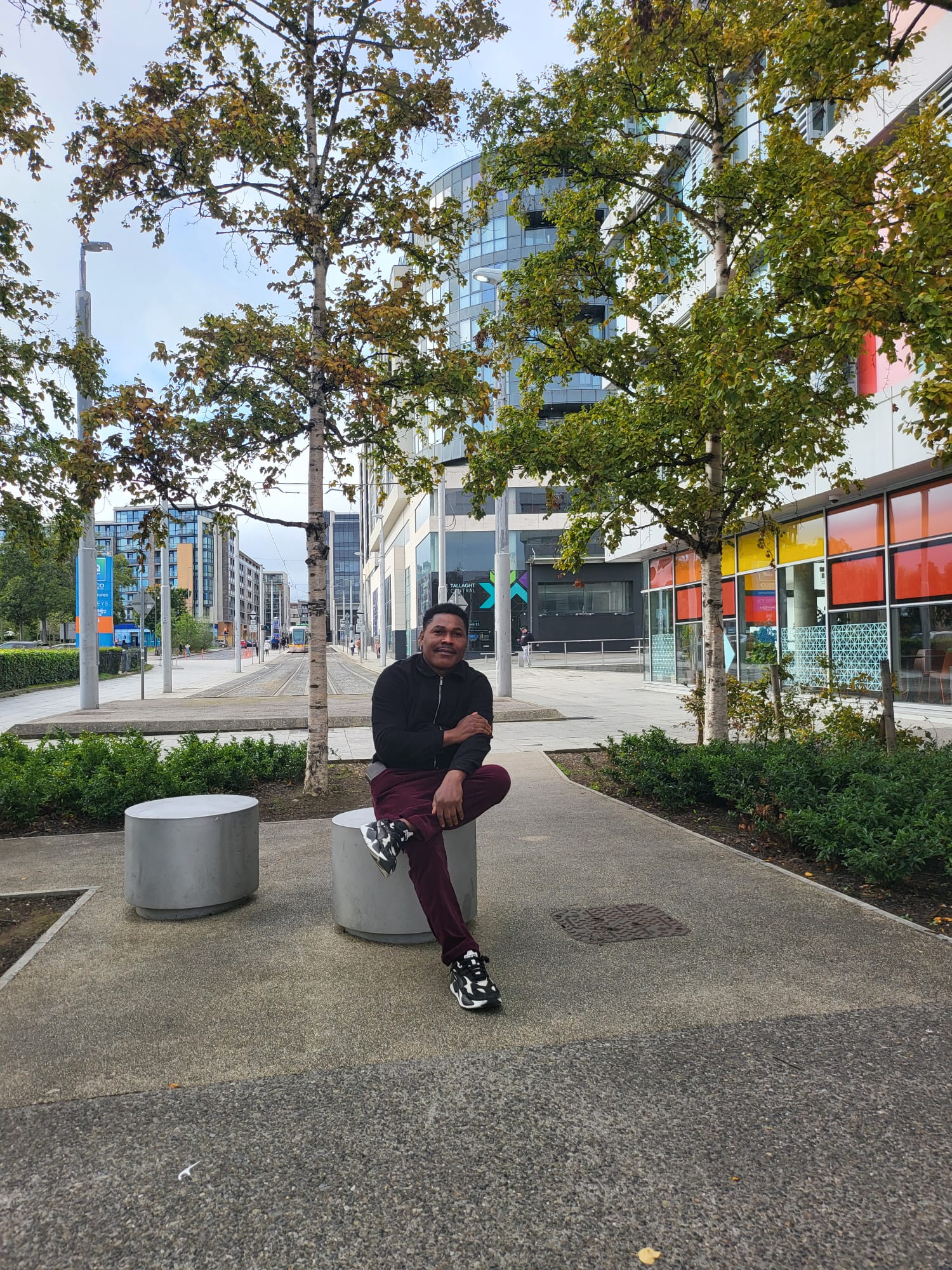
“A Survivor’s Story of Banditry, Family Tragedy, Displacement and the Search for Safety”
The growing insecurity in Nigeria, particularly the increasing incidents of banditry, armed attacks and killings across different parts of the country, has continued to devastate communities, displace innocent citizens and leave countless families homeless. These persistent attacks have created an atmosphere of fear, uncertainty and insecurity among ordinary Nigerians, particularly those living in vulnerable rural communities.
The activities of armed bandits have left painful and lasting scars on the lives of many innocent people. Families have been destroyed, communities have been deserted, and individuals have been forced to abandon their ancestral homes in search of safety. In many cases, victims have suffered killings, abductions, destruction of property and threats to their lives.
One of the families profoundly affected by this violence was the Aghedo family of Jattu, Auchi, in Edo State, Nigeria.
In a conversation with his cousin, Osaze Unuigbe, who narrated his ordeal, Christian Edosa Aghedo recounted the tragic circumstances that forced him to flee his homeland and eventually seek protection in the Republic of Ireland.
THE TRAGIC ATTACK THAT DESTROYED HIS FAMILY
For Christian Edosa Aghedo, 9 June 2026 remains a date permanently etched in his memory. On that day, armed bandits reportedly attacked his community in Jattu, Auchi, Edo State, unleashing violence that changed his life forever.
During the attack, his father, mother and two other relatives were brutally killed. Christian, who was hiding nearby, witnessed the horrifying events and saw his parents being murdered.
The experience left him devastated, traumatised and emotionally shattered. He described the incident as one of the most painful experiences anyone could endure, explaining that witnessing the brutal deaths of his parents has continued to haunt him.
Speaking about the tragedy, Christian said that the memories of that dreadful day remain fresh in his mind. The loss of his entire immediate family and the circumstances surrounding their deaths have left him living with profound emotional pain, constant fear and insecurity.
FEAR AND THE WARNING THAT FORCED HIM TO FLEE
On 10 June 2026, the day after the attack, Christian reportedly approached a nearby police station to report the incident and seek assistance.
Although the police indicated that they would pursue the perpetrators, Christian’s fear increased when an officer allegedly warned him privately to leave the area and run for his life because the attackers might return to eliminate him.
The warning left him frightened and confused. Having already witnessed the brutal murder of his parents and relatives, he became increasingly convinced that remaining in the community would expose him to further danger.
With no immediate family members left to protect or support him, Christian was confronted with the difficult reality of abandoning the home where he had been born and raised.
In the aftermath of the tragedy, he made arrangements to dispose of his deceased parents’ properties to raise money for his departure from Nigeria.
TWO WEEKS IN AN INTERNALLY DISPLACED PERSONS’ CAMP
On 12 June 2026, Christian relocated to an Internally Displaced Persons (IDP) camp in Auchi, Edo State, where he remained for approximately two weeks.
However, finding temporary shelter did not immediately restore his sense of safety. He continued to experience shock, fear and emotional distress, constantly worrying that the bandits could return and attack again.
His stay at the camp was marked by uncertainty and painful memories of the incident that had destroyed his family.
Eventually, after making the necessary arrangements to leave Nigeria, Christian received his visa on 5 July 2026. Five days later, on 10 July 2026, he departed Nigeria for the United Kingdom through Ethiopian Airlines, arriving at Manchester Airport.
A NEW COUNTRY, BUT NO FAMILY OR SUPPORT SYSTEM
Christian arrived in the United Kingdom without relatives, friends or an established support network. Although he had escaped the immediate danger he feared in Nigeria, he found himself facing another difficult chapter of his life.
He had lost his parents and other close relatives, abandoned his ancestral home and left behind the childhood memories associated with the community where he had grown up.
With no stable accommodation or immediate support, his circumstances became increasingly difficult. At different points, he relied on churches and mosques for temporary shelter, sometimes sleeping in their premises because he had nowhere else to go.
Despite the hardships, he remained determined to survive and rebuild his life.
ANOTHER DISTRESSING EXPERIENCE IN THE UNITED KINGDOM
On 16 August 2026, Christian experienced another distressing incident while sleeping in a place where he had been seeking temporary shelter.
According to his account, a group of young men attacked him and stole his international passport and wristwatch.
The incident left him helpless and deeply distressed. While he was crying and struggling to come to terms with what had happened, a woman approached him and asked about his situation.
Christian explained his circumstances as best he could, recounting the tragic loss of his family in Nigeria, his displacement and the difficulties he had encountered since arriving in the United Kingdom.
Touched by his story, the woman and her husband took an interest in his welfare. They subsequently offered him assistance, including food, clothing and shelter.
Their intervention provided him with temporary relief at a time when he was particularly vulnerable and had very limited support.
THE JOURNEY TOWARDS SAFETY IN THE REPUBLIC OF IRELAND
On 20 September 2026, the woman’s husband informed Christian about the possibility of seeking international protection in the Republic of Ireland.
Following their discussions, Christian began considering the option of seeking protection in Ireland, hoping to find a safer environment where he could begin rebuilding his life after the devastating experiences he had endured.
By 28 September 2026, he had arrived in the Republic of Ireland, marking another significant chapter in his search for safety and stability.
THE PAIN OF A SURVIVOR AND THE FEAR OF RETURN
Despite being physically away from the community where the tragedy occurred, Christian maintains that the emotional consequences of the attack have continued to affect him.
The brutal deaths of his father, mother and two other relatives remain painful memories that he struggles to overcome. Having witnessed his parents being murdered, he continues to fear that returning to Nigeria could expose him to the same armed bandits who destroyed his family.
He maintains that the insecurity and threats that forced him to abandon his home have not been resolved from his perspective. He fears that the perpetrators could attack again and that he could become their next victim.
For Christian Edosa Aghedo, leaving Nigeria was never simply a decision to seek a better life abroad. It was a desperate response to the loss of his family, the fear of further attacks and the urgent need to preserve his own life.
His story is one of profound personal tragedy, displacement and survival. From witnessing the destruction of his family in Jattu, Auchi, to enduring homelessness and insecurity in the United Kingdom, his experiences have shaped a painful journey that ultimately brought him to the Republic of Ireland in search of protection and a chance to live without fear.
For a man who lost almost everything in one tragic day, the greatest hope is simply to find a place where he can feel safe, recover from his trauma and rebuild his life.
-
 Featured7 years ago
Lampard Names New Chelsea Manager
-
 Featured7 years ago
FG To Extends Lockdown In FCT, Lagos Ogun states For 7days
-
 Featured7 years ago
Children Custody: Court Adjourns Mike Ezuruonye, Wife’s Case To April 7
-
 Featured7 years ago
NYSC Dismisses Report Of DG’s Plan To Islamize Benue Orientation Camp
-

 Featured5 years ago
Transfer Saga: How Mikel Obi Refused to compensate me After I Linked Him Worth $4m Deal In Kuwait SC – Okafor
-
Featured7 years ago
Board urges FG to establish one-stop rehabilitation centres in 6 geopolitical zones
-
Sports4 years ago
TINUBU LAMBAST DELE MOMODU
-

 News2 years ago
Zulu to Super Eagles B team, President Tinubu is happy with you













