
Foreign news
Italy–Africa “Cultures in Play” Summit Ends in Rome with Strong Push for Sports Cooperation, Mariabenedicta Chigbolu Among Panelists
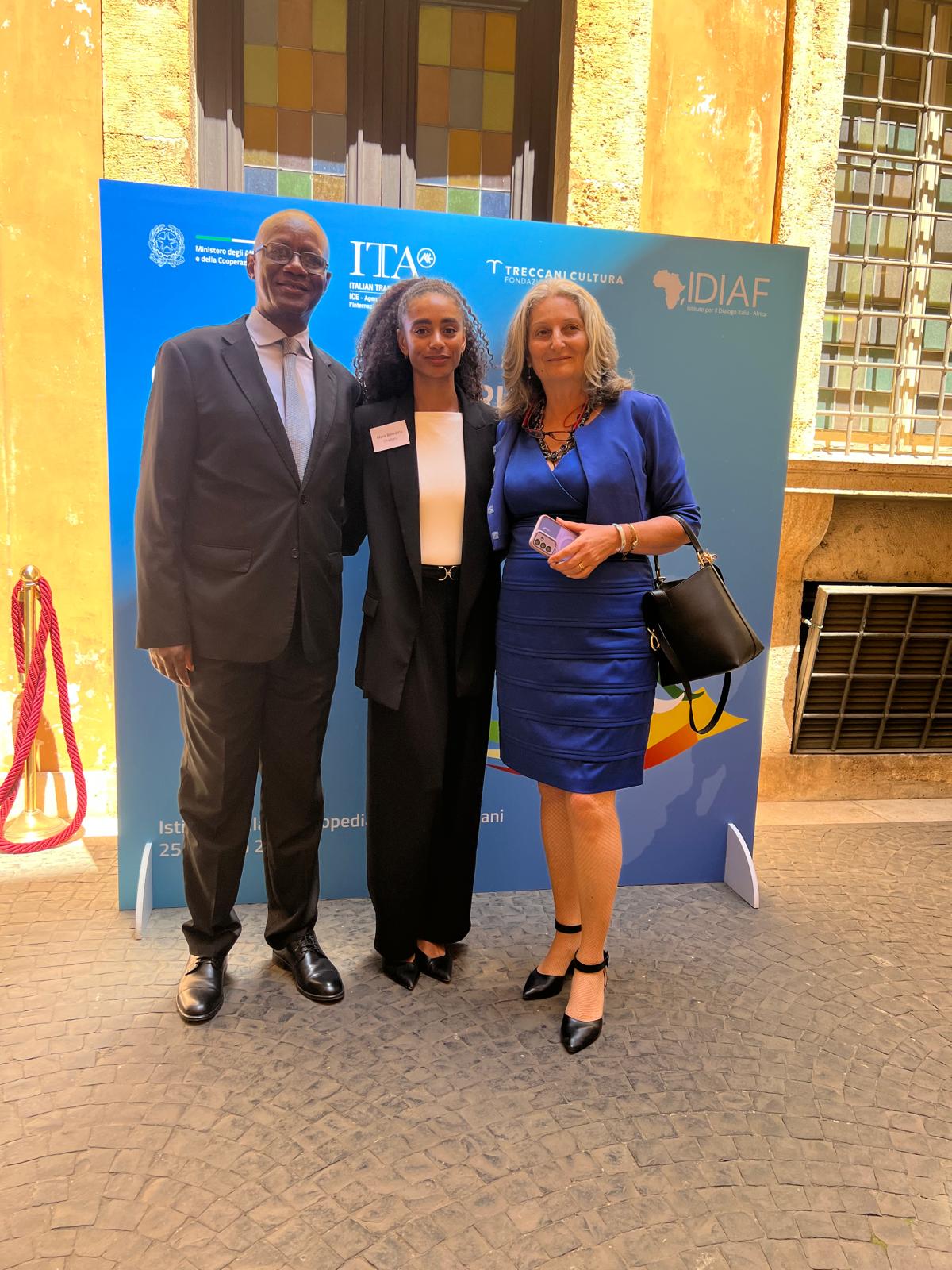
The “Italy–Africa: Cultures in Play” summit concluded in Rome on Monday with renewed commitments to deepen cooperation between Italy and African nations through sports, cultural exchange, youth empowerment and sustainable development.
The event, held at the Istituto della Enciclopedia Italiana Treccani to mark Africa Day 2026, brought together diplomats, government officials, athletes, academics, sports administrators and business leaders from both regions under the theme: “Sport as a Platform for Encounter, Dialogue, Identity and Sustainable Growth.”
One of the highlights of the summit was the participation of Mariabenedicta Chigbolu, daughter of the First Vice President of the Nigeria Archery Federation, Augustine Chigbolu, who joined global panelists in discussions focused on sports diplomacy, intercultural dialogue and youth development.
The summit was organised by the Institute for Italy–Africa Dialogue (IDIAF) and positioned sports as a universal language capable of fostering inclusion, peace, cooperation and economic growth between continents.
Opening the event, Prof. Carlo Ossola welcomed participants, while Ambassador Vincenza Lomonaco stressed the importance of stronger institutional and cultural partnerships between Italy and Africa.
Italy’s Deputy Prime Minister and Minister of Foreign Affairs and International Cooperation, Antonio Tajani, addressed the gathering alongside Eritrea’s Ambassador to Italy and Dean of the African Diplomatic Corps, Fessahazion Pietros Menghistu.
Also speaking were Luciano Buonfiglio, and Firmin Edouard Matoko, who highlighted sports as a strategic tool for diplomacy, education and sustainable development.
During the first major panel session titled “Sport as Shared Heritage: Identity, Memory and Intercultural Dialogue,” Mariabenedicta Chigbolu joined other international speakers in discussions on how sports can combat stereotypes, promote gender equality and encourage youth leadership across societies.
Other contributors at the session included Daisy Osakue, Filomeno Lopes and Burundian Olympic champion Vénuste Niyongabo.
Additional sessions focused on sports and education, youth mobility programmes, technical training, leadership development and academic partnerships between Italian and African institutions.
Participants also examined the growing economic impact of sports through infrastructure development, tourism, branding, entrepreneurship and sports management opportunities.
The summit came at a symbolic moment for global sports in 2026, following the Milan-Cortina Winter Olympic Games in Italy and ahead of the Dakar Youth Olympic Games in Senegal, which will become the first Olympic event hosted on African soil.
At the close of the summit, organisers reaffirmed plans to establish a long-term platform for cultural exchange, institutional collaboration and knowledge sharing between Italy and African countries, with sports serving as a bridge for future cooperation and opportunities for young people across both regions.



Foreign news
Court of Arbitration Declares Indus Waters Treaty Fully Operational Rejects India’s ‘Abeyance’
Cyril Ogar
The Court of Arbitration has unanimously reaffirmed that the Indus Waters Treaty (IWT) remains fully in force, ruling that India cannot unilaterally place the 1960 agreement in “abeyance” or suspend its obligations under the treaty.
The decision represents a significant legal development in the longstanding dispute between India and Pakistan over the management and use of the Indus river system.
The Court’s finding addresses a fundamental issue at the heart of the dispute: whether either party can unilaterally suspend the treaty outside the legal framework agreed by both countries.
In its unanimous determination, the Court made clear that the IWT continues to bind both India and Pakistan and that its obligations cannot be set aside through a unilateral political declaration.
The ruling means India remains subject to the treaty provisions governing the use of the Western Rivers, including requirements relating to the design and operation of hydroelectric projects, as well as the dispute-resolution mechanisms established under the agreement.
The Court has also ordered interim measures concerning the Ratle Hydroelectric Plant, restricting specified construction activities while the broader dispute remains under consideration.
The measures are aimed at preserving the effectiveness of the arbitration process and preventing developments that could prejudice the outcome of the proceedings.
For Pakistan, the decision represents significant legal validation of its longstanding position that the IWT is a binding international agreement and contains no provision allowing either party to unilaterally place it in abeyance.
Pakistan has consistently maintained that disagreements over the treaty should be addressed through the institutional mechanisms established by the agreement, rather than through unilateral action.
The IWT provides a structured framework for resolving disputes through mechanisms including the Permanent Indus Commission, Neutral Expert and Court of Arbitration processes.
The latest ruling therefore reinforces the principle that treaty obligations cannot simply be disregarded because of deteriorating political relations between signatories.
The significance of the decision extends beyond the India-Pakistan dispute. It underscores the broader international-law principle that agreements governing shared rivers and other transboundary resources must be respected and disputes resolved through established legal and institutional channels.
The Indus river system supports agriculture, livelihoods, food security and communities across the region, making the stability of the treaty particularly important.
The ruling also highlights the distinction between seeking to amend an international agreement through mutually agreed procedures and attempting to alter its obligations unilaterally.
The IWT has endured wars, prolonged diplomatic tensions and periods of limited bilateral engagement. Its continued operation demonstrates the importance of rules-based mechanisms in managing shared resources when relations between neighbouring states become strained.
For Pakistan, the outcome provides an opportunity to frame the decision not merely as a bilateral legal victory, but as an affirmation of international law, treaty compliance and peaceful dispute resolution.
The central message from the ruling is clear: the Indus Waters Treaty remains in force, its obligations continue to bind both parties, and disputes concerning shared waters must be addressed through the legal mechanisms agreed by India and Pakistan.
-
 Featured7 years ago
Lampard Names New Chelsea Manager
-
 Featured7 years ago
FG To Extends Lockdown In FCT, Lagos Ogun states For 7days
-
 Featured7 years ago
Children Custody: Court Adjourns Mike Ezuruonye, Wife’s Case To April 7
-
 Featured7 years ago
NYSC Dismisses Report Of DG’s Plan To Islamize Benue Orientation Camp
-

 Featured5 years ago
Transfer Saga: How Mikel Obi Refused to compensate me After I Linked Him Worth $4m Deal In Kuwait SC – Okafor
-
Featured7 years ago
Board urges FG to establish one-stop rehabilitation centres in 6 geopolitical zones
-
Sports4 years ago
TINUBU LAMBAST DELE MOMODU
-

 News2 years ago
Zulu to Super Eagles B team, President Tinubu is happy with you