
Featured
ITF Unveils 2022 – 2025 Strategic Policy Direction
Joel Ajayi
… Unveils Plan For Vocational Skills Program
The Industrial Training Fund formally unveil our strategic policy direction for 2022 – 2025.
This is contained in a statement issued to Journalists by the Director-general/Chief Executive of the Industrial Training Fund, Sir Joseph Ari, at a media briefing in Jos, Monday.

According to the ITF Boss, “This Strategic Policy Direction is the third of such plans by the incumbent administration in the Industrial Training Fund (ITF). You will recall that on assumption of office in 2016, we unveiled the ITF Reviewed Vision: Strategies for Mandate Actualization.”
“The plan, which was initially slated to terminate in 2022, was, however, reviewed in 2020 to address gaps that were identified in the course of its implementation, and for us to appropriately respond to the negative impact of the COVID-19 Pandemic on our numerous clients.”
He reiterated that, ”While it lasted, the plan enabled the ITF to aggressively address service challenges by computerizing our operations, tackling infrastructural challenges to expand access to Nigerians desirous of acquiring skills, and generally address a gamut of other strictures that were impinging on our ability to effectively discharge our mandate for National economic growth and development and the general good of the Nigerian people.”
He however, lamented that, “Despite the numerous achievements recorded by the Fund on account of these initiatives, we have realized that more needs to be done if we must fully tackle the numerous socio-economic problems that are bedevilling us as a Nation.”
He further stated that, “given the nature of your profession, you should be acutely aware that unemployment in Nigeria today is at over 33% as over 23 million Nigerians that are desirous to work cannot find jobs, mostly because of the absence of requisite skills.
“Poverty is equally on the rise with some estimates placing the number of Nigerians that are living in poverty to be over 90 million. In the face of all these, our population has continued to soar with the World Bank estimating that Nigeria might hit 216 million by the end of this year.
“Equally worrisome is the spectre of the Out of School Children, which according to the United Nations Children Fund (UNICEF) is projected to be over 18.5 million.”
“It is based on the above and in line with our mandate of Developing a vast pool of skilled manpower sufficient to meet the needs of the public and private sectors of the national economy coupled with resolutions at the recently concluded ITF National Skills Summit in Abuja that we found it imperative to review and refocus our strategies to address the above challenges and to meet the skills requirement of the nation in line with global best practices.
“In arriving at our strategies, we considered the need to scale up our activities to address the soaring unemployment and other socio-economic challenges by leveraging on our three Es (Experience, Expertise and Expansive network), deployment of technology for wider coverage and more flexible service delivery.”, Ari explained.
The new policy framework, which has as its theme: Re-Engineering Skills for Sustainable Development according to Ari, has external and internal components;
The ITF Boss further said that, “The internal components of the plan, which entail value reorientation, Industrial Development, Commercialization of ITF Facilities, Alternative Funding Window, Deployment and Promotion, Annual Budget Preparation and, Revenue Generation are intended to drive the external components of the new policy direction, which covers Standardization and Certification, Technical and Vocational Skills Training Programmes, Skills Intervention Programmes, Electronic and Virtual Learning and, Optimal Utilization of Skills Training Centres (STCs) and Vocational Wings (VWs). ”
According to him, he further revealed that, ”Standardization and Certification as the core aspects of the Mandate of the Industrial Training Fund, specifically, Section 2 subsections c and d of the ITF Act 2011, vest the ITF with the responsibility to set training standards in all sectors of the economy and monitor adherence; and evaluate and certify vocational skills acquired by apprentices, craftsmen and technicians in collaboration with relevant organisations.
In this area, the Fund will focus on ensuring full adherence to standards and regulating vocational skills training outfits through the accreditation of skills training centres and certification of all skills training in line with the Act.”
To actualise this, he said that, “the Fund will develop National Occupational Standards (NOS); Evaluate and certify apprentices, technicians and craftsmen; Train and certify learning and development professionals and; Create and maintain a data bank on skills training.”
Another key area of the Fund’s mandate, the ITF Boss said, “is the Technical and Vocational Skills programmes.
”Despite our commendable achievements in this regard, the Fund is set to refocus Technical and Vocational Skills Training for employability and economic growth by facilitating the institutionalization of the National Apprenticeship and Traineeship System (NATS).
”To actualize this, the Fund will collaborate with relevant public and private stakeholders for NATS; appraise and harmonize Apprenticeship programmes in line with set guidelines; conduct monitoring and evaluation and; design and develop technical and vocational skills programmes in line with the needs of the economy.
Saying that, “When fully in place, our plan will ensure a pool of highly skilled indigenous apprentices, technicians and craftsmen as well as an institutionalized National Apprenticeship and Traineeship System (NATS). ”
”Cognisant of the fact that technical skills are integral to the growth and development of societies across the globe, the incumbent management since its assumption of office in 2016, has been committed to equipping Nigerians with technical and vocational skills for employability and entrepreneurship.
”In this regard, to further address the problems of rising unemployment and under-employment, the Fund is re-engineering its skills intervention programmes through National Apprenticeship and Traineeship System (NATS).
”To achieve this, the Fund will register as a super certification centre; extend the duration of skills intervention programmes in line with NATS (six months for traineeship and one year for apprenticeship); procure and provide start-up packs for trainees in the succeeding year; design and develop skills intervention programmes; identify and engage accredited Skills Training Centres and certified craftsmen; implement, monitor and follow up intervention programmes and; evaluate and certify trainees.
“The intended outcome of this strategy is to have at least a total of 27,000 skilled and employable youths (18,000 trained youths under the NATS and 9,000 youth under the NISDP and other intervention programmes) and increased SMEs and Entrepreneurs to meet the Nation’s economic needs.”
“In this area, the Fund will provide the enabling environment to foster creativity, innovation, entrepreneurship and employability through its skills training centres by:
“Upgrading three of its skills training centres to Centres for Advanced Skills Training for Employment (CASTE)
“Embedding production Hubs, Skills/e-Hubs as well as creative and innovative hubs in its Skills training Centres and Vocational wings and,
“Utilizing existing skills training Centres to develop the capacity of technical instructors.
“In this regard, the Fund will equip Training Centres with state-of-the-art facilities, partner with relevant stakeholders for training placement as well as identify the competitive advantage of the centres for production purposes. We will also introduce instructors’ training in three (3) designated Skills Training Centres, advertise and deploy the Centre’s facilities and equipment for commercial use, engage trainees in the design and development of products and establish creative and innovative clinics. In addition, it will develop entrepreneurs and rename all Industrial Skills Training Centres as ITF Skills Training Centres (ITF STCs).
“With this strategy, we will now have three (3) Centres for Advanced Skills Training for Employment (CASTE) in Lagos, Kano and Jos as well as well-equipped training centres and vocational wings; train 450 Instructors annually; maximize investment and improve our revenue base.
“We believe that the new Policy framework if fully implemented will place us in better stead to fully implement our mandate and drive the achievement of Federal Government’s goals with particular reference to unemployment, poverty and their associated consequences.
“Our belief is premised on the fact that countries all over the world that had dealt with and have successfully solved the problems that we are currently confronting today, did it through a greater commitment to skills acquisition.
“For instance, to handle its youth bulge in the 70s and 80s, China under the leadership of Mao Zedong, Hua Guofeng and Zhao Ziyang who ruled the country during that period, invested heavily in the capacity development of its people. The outcome of this investment is evident today as China has moved from near third world to the 2nd largest economy and one of the most industrialised countries on earth.
“In Germany, about two decades ago, there was mass unemployment with roughly five million unemployed people and low employment rates to the extent that it was labelled “the sick man in Europe”.
“Today, nearly two-thirds of young Germans are enrolled in apprenticeships once they leave full-time education using the German Dual Vocational and educational training (DVT), nine out of ten young trainees get a permanent job at the end, with others being offered shorter-term contracts.
“Germany is now dubbed a job wonderland and European champion with regard to its high employment rates. We believe that we can replicate similar successes in Nigeria giving greater commitment to skills acquisition that is considered by many today as the currency of the 21st Century.”



Featured
Alake Inaugurates Nigeria-US Solid Minerals Committee, Dismisses $700bn Claim, Says No Assets Sold
Joel Ajayi
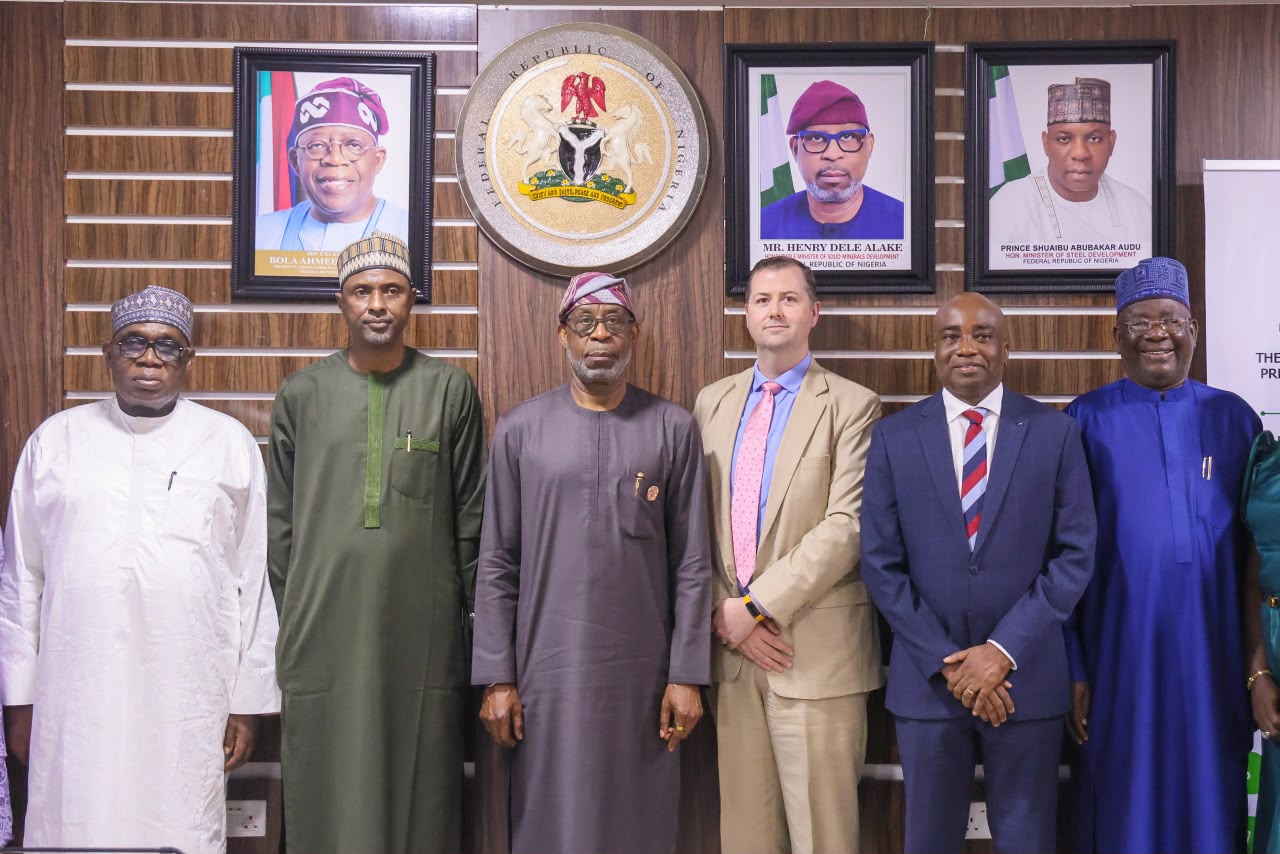
The Minister of Solid Minerals Development, Dr. Dele Alake, on Tuesday inaugurated the Nigeria-United States Committee on Strategic Cooperation in the Solid Minerals Sector in Abuja, dismissing reports that Nigeria sold $700 billion worth of solid minerals to the US.
The inauguration followed the strategic cooperation framework established between Nigeria and the United States during the 81st United Nations General Assembly in New York.
In a statement issued on Wednesday by the Head PRESS and Public Relations Department Mrs. Kania Maliki Andeyaba stated that, Alake in the Memorandum of Understanding, MoU, signed with the US is a government-to-government platform to facilitate business-to-business engagements between American investors and Nigerian local operators, not a sale of assets.
Harping on the importance of the solid minerals sector to President Bola Ahmed Tinubu’s economic diversification agenda, he noted that the administration was committed to reducing dependence on a mono-product economy through the sustainable development of Nigeria’s vast mineral resources.
According to him, the Nigeria–US partnership as a strategic initiative to attract investment, promote technology transfer, strengthen local mineral processing and create employment opportunities.
“There is no sale of any Nigerian asset. There’s nothing exchanging hands,” Alake declared.
“We created a platform to facilitate mingling of US investment ventures with Nigeria’s local operators. It is in the public domain. We signed it in public and published it in four or five national newspapers.”
The Minister said reports claiming the US was coming to take over Nigeria’s minerals and security architecture were untrue at best and products of riotous imagination at worst.
Explaining the policy thrust, Alake said Africa has historically held the short end of the stick in global economic transactions, and Nigeria is determined to change that model.
“We have the resources, the critical elements the world needs to transit to clean energy. So we are creating a new paradigm — you bring your capital, expertise and technology, to match with our natural resources and create a win-win situation . The investor gains, Nigeria gains.’’he said.
Nigeria, he stressed, had operated a mono-cultural economy dependent on oil, while solid minerals were exploited informally — with ores taken “from pit to port” without value addition.
Alake said government has now made local processing mandatory, refusing to grant mineral titles to investors without a clear pathway to processing in Nigeria.
He said the policy led to the springing up of processing factories, including the largest lithium processing plant in West Africa commissioned recently in Nasarawa by the Vice President, and informed the formation of the African Minerals Strategy Group.
Alake noted that investor confidence has returned due to macro-economic reforms by President Bola Tinubu that guarantee security of tenure and repatriation of profits.
He charged the committee to discharge its assignment responsibly, saying its work is strategic to achieving the President’s $1 trillion economy target.
To this end, he told the Committee to ensure effective coordination, identify investment opportunities and translate the framework into measurable outcomes capable of positioning Nigeria as a competitive player in the global solid minerals industry.
In his welcome address, Permanent Secretary of the Ministry, Engr. Faruk Yusuf Yabo, said the inauguration translates growing bilateral engagements into a structured framework for practical cooperation and investment mobilization
Economic Officer at the US Embassy, Jonathan Baas, said President Donald Trump has prioritized three areas for US embassies — energy, artificial intelligence/super intelligence, and critical minerals.
Baas said Washington’s direction is to work with partners to secure critical supply chains while ensuring partners capture value.
“We just signed a contract today on looking into building AI data centres in Nigeria at the Nigerian Economic Summit. That’s the direction Washington wants us to go,” he said.
In his vote of thanks, CEO/Managing Director of Nigeria Solid Minerals Company, NSMC said that the committee
is expected to coordinate implementation, facilitate investment and monitor progress towards achieving the objectives of the Nigeria–US cooperation framework.
The inauguration reinforces the Federal Government’s commitment to repositioning the solid minerals sector as a key driver of economic diversification, industrial development and national prosperity under President Tinubu’s Renewed Hope Agenda.
-
 Featured7 years ago
Lampard Names New Chelsea Manager
-
 Featured7 years ago
FG To Extends Lockdown In FCT, Lagos Ogun states For 7days
-
 Featured7 years ago
Children Custody: Court Adjourns Mike Ezuruonye, Wife’s Case To April 7
-
 Featured7 years ago
NYSC Dismisses Report Of DG’s Plan To Islamize Benue Orientation Camp
-

 Featured5 years ago
Transfer Saga: How Mikel Obi Refused to compensate me After I Linked Him Worth $4m Deal In Kuwait SC – Okafor
-
Featured7 years ago
Board urges FG to establish one-stop rehabilitation centres in 6 geopolitical zones
-
Sports4 years ago
TINUBU LAMBAST DELE MOMODU
-

 News2 years ago
Zulu to Super Eagles B team, President Tinubu is happy with you













