
News
Jigawa Partners PiCNG To Expand Alternative Energy Infrastructure
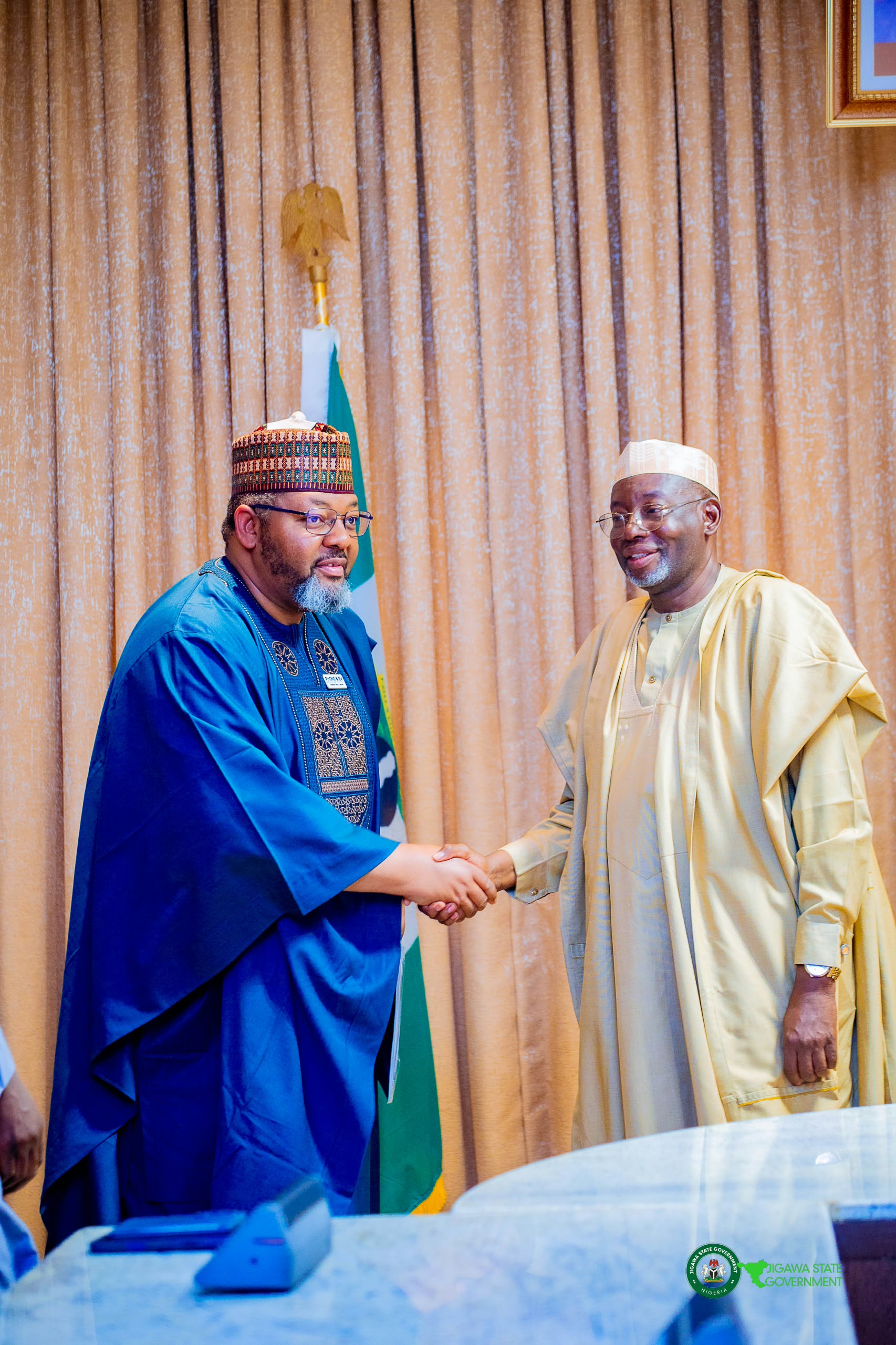
From Abdullahi Idris, Dutse
The Jigawa State Government has pledged to deepen its collaboration with the Presidential Initiative on Compressed Natural Gas and Electric Vehicles (Pi-CNG & EV) to expand alternative energy infrastructure and promote the adoption of compressed natural gas (CNG), particularly in the agricultural sector.
Governor Umar Namadi gave the assurance on Tuesday when the Chairman of the Presidential Initiative, Barrister Ismaeel Ahmed, led a delegation on a courtesy visit to the Governor at Government House, Dutse.
Governor Namadi said the state’s interest in CNG extends beyond its use in transportation, saying that affordable energy for irrigation is critical to reducing farmers’ production costs and sustaining agricultural activities.
He stated that energy costs currently account for more than half of farmers’ operating expenses, a situation he said was discouraging some farmers from returning to their farms.
“As of today, energy costs constitute more than 50% of the operating expenses of our farmers,” the governor said.
He also said that the state had resolved to undertake the conversion of irrigation pumps from conventional energy sources to CNG as part of measures to lower production costs, alongside other subsidies on agricultural inputs.
“On this initiative, the state government is ready to bear the cost of conversion for the targeted farms. For us, going into CNG is a matter of necessity,” he said
The governor said the proposed intervention was particularly important to the state’s dry-season wheat and rice production programmes, as he reiterated Jigawa’s target of cultivating 500,000 hectares of wheat by 2030 and producing four million metric tonnes of rice annually within the same period.
He said the government was ready to provide land and other necessary support to facilitate the initiative, including collaboration with private-sector investors.
Earlier speaking, Barrister Ismaeel Ahmed described Jigawa as an important location for the expansion of CNG infrastructure because of its strategic position between Kano and the Northeast, as well as its land availability and the state government’s interest in alternative energy.
He said the presidential initiative was in discussions with private-sector investors to explore opportunities for establishing a major alternative energy hub in Jigawa, which could serve vehicles and heavy-duty transport operating along major routes.
The chairman also disclosed that the initiative was working towards expanding the number of CNG conversion centres in the state, saying that the target was to have at least 30 centres by December 2026, subject to the willingness of local investors to participate.
He added that the initiative would also explore collaboration with the state government to establish electric vehicle charging infrastructure as part of the wider alternative energy programme.
The governor welcomed the proposals and reaffirmed Jigawa State’s readiness to work with the Presidential Initiative, investors, and other relevant partners to advance the development of alternative energy infrastructure.
He said the proposed collaboration would complement the state’s investments in irrigation and agricultural mechanization while supporting efforts to reduce the cost of food production and improve farmers’ livelihoods.



News
Civil Society Coalition Kicks Against Proposed 20% Deduction from NCDMB
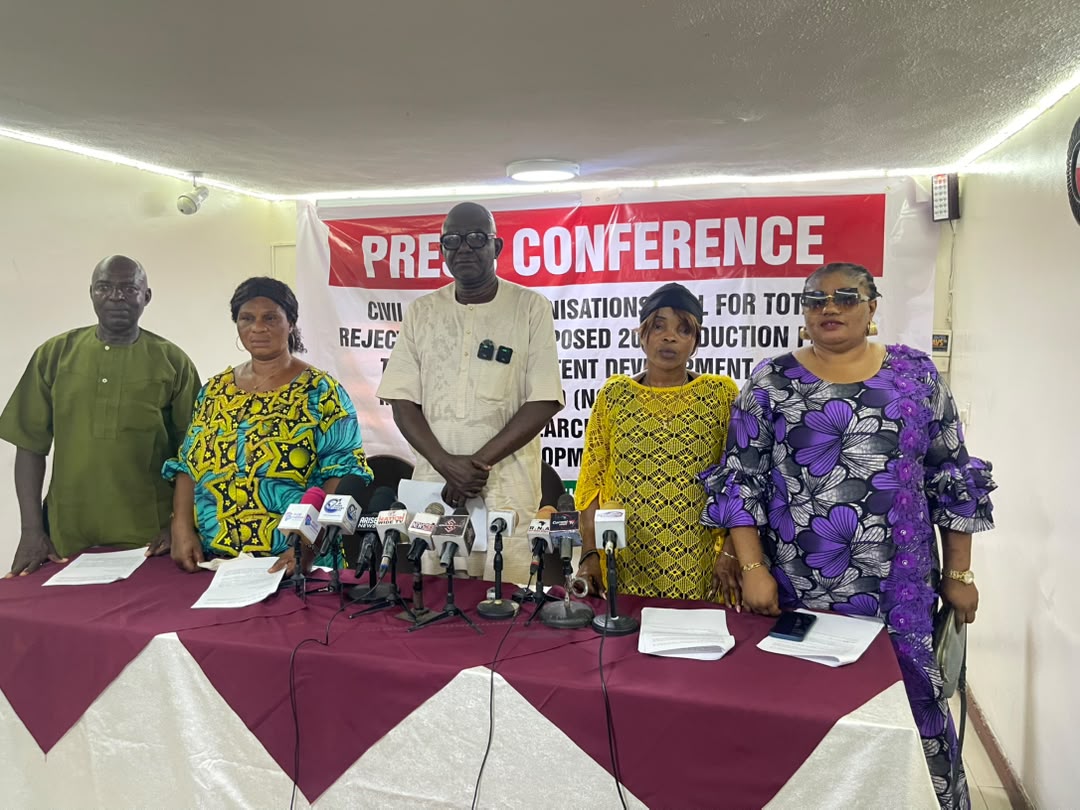
The Coalition of Civil Society Organisations in Nigeria (COCSON) has rejected a proposed 20 per cent deduction from the Nigerian Content Development and Monitoring Board (NCDMB) to finance the proposed National Research and Innovation Development Fund.
The coalition described the proposed funding arrangement as unacceptable, warning that it could undermine the development of indigenous capacity and local value addition in Nigeria’s oil and gas industry.
Speaking at a press conference in Abuja on Thursday, November 26, 2026, COCSON spokesperson, Tabuko Kennedy, said the coalition was not opposed to the establishment of a national research and innovation fund but strongly objected to the proposed funding mechanism.
Kennedy argued that funds allocated to the NCDMB were specifically meant to develop local capacity, support indigenous companies, train Nigerian engineers and promote value addition within the oil and gas sector.
He warned that diverting 20 per cent of the board’s revenue to finance another institution could weaken its ability to fulfil its statutory responsibilities.
According to him, the funds domiciled with the NCDMB are not surplus government revenue but contributions from companies operating in the oil and gas industry, specifically earmarked for local content development.
He maintained that diverting such funds without the consent of industry stakeholders would amount to a breach of trust and undermine the original purpose for which the resources were collected.
The coalition also warned that the proposed deduction could establish a dangerous precedent where financially viable government agencies would have portions of their revenues diverted to fund newly established institutions.
Kennedy questioned what would prevent similar deductions from other specialised intervention funds, including the Tertiary Education Trust Fund, the Universal Service Provision Fund and the Police Trust Fund.
He said such a practice could discourage revenue-generating agencies from improving their financial performance, create inter-agency rivalry and undermine long-term institutional planning.
COCSON further argued that the proposed deduction could violate the Nigerian Oil and Gas Industry Content Development Act, which provides the legal framework for the management and utilisation of funds accruing to the NCDMB.
The coalition maintained that the legislation did not envisage using the board’s resources to finance an unrelated research and innovation institution, describing the proposed diversion as inconsistent with the original statutory purpose of the funds.
Consequently, COCSON called on the leadership of the National Assembly, relevant committees and the Federal Executive Council to reject the proposed 20 per cent deduction.
It also appealed to President Bola Tinubu not to assent to the bill if the controversial funding provision remains in it.
The coalition disclosed that it had mobilised organised labour, pressure groups, religious organisations and other civil society groups to resist the proposed legislation.
It, however, stressed that it was not against research, innovation or the establishment of a national research funding institution, urging the government and lawmakers to explore alternative funding arrangements that would not undermine existing development agencies.
COCSON also called on Nigerians and industry stakeholders to oppose what it described as a legislative overreach, insisting that the country’s local content development programme should not be weakened to finance a new institution.
-
 Featured7 years ago
Lampard Names New Chelsea Manager
-
 Featured7 years ago
FG To Extends Lockdown In FCT, Lagos Ogun states For 7days
-
 Featured7 years ago
Children Custody: Court Adjourns Mike Ezuruonye, Wife’s Case To April 7
-
 Featured7 years ago
NYSC Dismisses Report Of DG’s Plan To Islamize Benue Orientation Camp
-

 Featured5 years ago
Transfer Saga: How Mikel Obi Refused to compensate me After I Linked Him Worth $4m Deal In Kuwait SC – Okafor
-
Featured7 years ago
Board urges FG to establish one-stop rehabilitation centres in 6 geopolitical zones
-

 News2 years ago
Zulu to Super Eagles B team, President Tinubu is happy with you
-
Sports4 years ago
TINUBU LAMBAST DELE MOMODU