
Sports
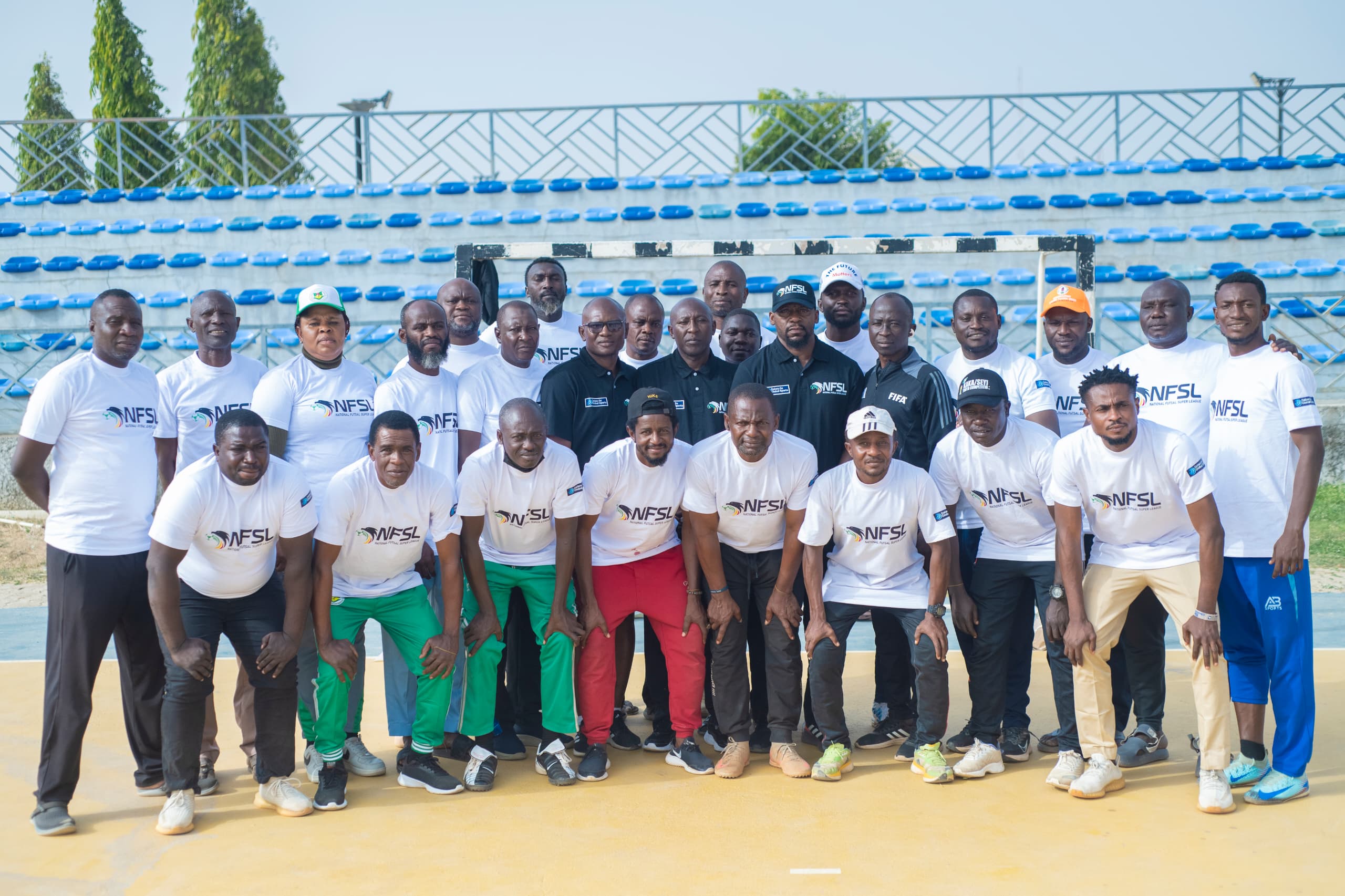
Kaduna Records Massive Turnout as 32 Teams Participate in Futsal Training
Cyril Ogar
Ahead of the maiden kickoff of the National Futsal Super League, organisers have conducted training for the 32 teams slated to participate in the league.
The one day training exercise was held in a high brow hotel in Kaduna with all the 32 clubs in attendance.
The training exercise was supervised by Mr Musa Dung Davou, a CAF and FIFA accredited Futsal referee.
The organizers of the seminar, Galaxy 5s Global Sports led by its CEO Shamsudeen Tijanni Yusuf kept the coaches, players and referees abreast with the latest rules of the game, laws and general organizations.
According to Yusuf, “Knowledge is key and very paramount for our coaches to catch up with the modern game of Futsal. The game is evolving. We want to make sure that we organize a top- notch league devoid of crisis and that’s why we invited Mr. Musa Davou to come and imparts knowledge to the participants and keeps them abreast of the laws of the game.
One of the participants praised the organizers for a thorough exercise. I’m highly impressed with the lectures, highlights and latest laws governing Futsal , it will really help my team when the league gets underway.
Davou was one of the CAF referees in the last Futsal Africa Cup of Nations in Morocco in 2024.
The tournament is set to kick off on January 26th till February 1st, in Kaduna.



Sports
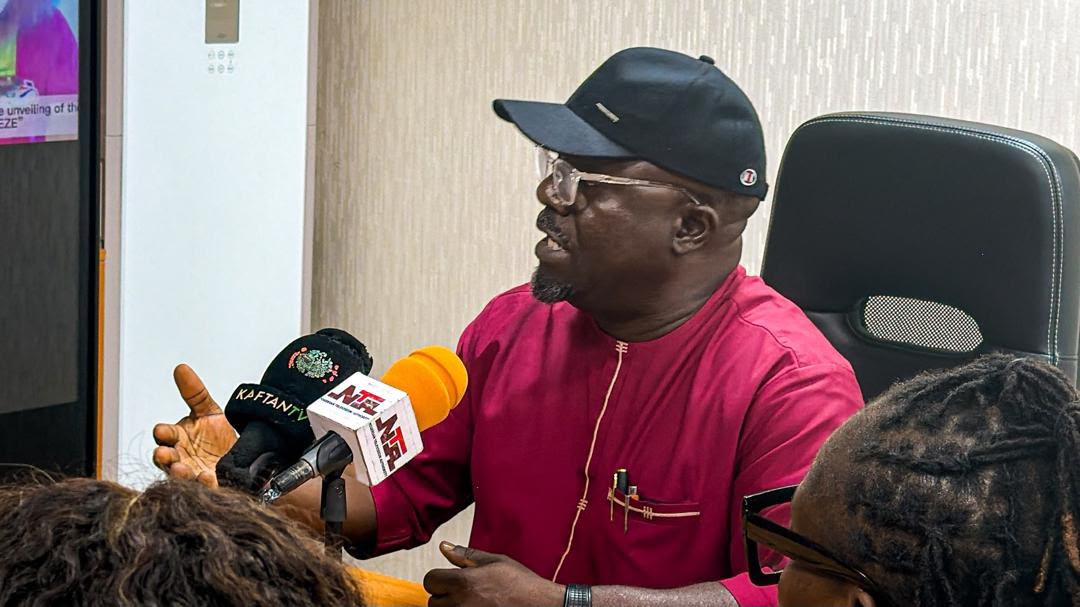
NSC Intentionally Committed to Driving Major Sports Infrastructure Revolution Across Nigeria – DG, Hon. Olopade
Joel Ajayi
Nigeria’s sports infrastructure is undergoing a major transformation, with the National Sports Commission (NSC) driving an ambitious nationwide investment programme aimed at restoring ageing facilities, developing new sporting centres and repositioning sports as a viable contributor to the country’s economy.
From the redevelopment of the historic Mudashiru Lawal Stadium in Abeokuta to the construction of a world-class Olympic-size swimming pool in Enugu and a comprehensive overhaul of the Moshood Abiola National Stadium in Abuja, the Commission’s infrastructure agenda represents one of the most extensive interventions in Nigerian sports facilities in recent years.
The scale of these investments reflects the determination of the NSC leadership, under Chairman Mallam Shehu Dikko and Director General, Hon. Bukola Olopade, to address decades of infrastructure deficits that have limited athlete development, undermined international competitiveness and weakened Nigeria’s capacity to host major sporting events.
Speaking on the Commission’s infrastructure drive, Hon. Olopade acknowledged that significant investments were being made across the country but noted that many Nigerians remained unaware of the scale of the ongoing interventions.
Among the flagship projects is the revitalisation of the Mudashiru Lawal Stadium in Abeokuta, Ogun State, valued at approximately ₦2.5 billion. The project is designed to restore the facility to modern sporting standards, including the installation of new tartan tracks and the rehabilitation of existing infrastructure.
The stadium, named after one of Nigeria’s most celebrated football legends, represents an important investment in restoring sporting heritage while providing a modern facility for the next generation of athletes.
In Enugu State, the Commission is also supporting the development of a world-class Olympic-size swimming pool as part of a broader infrastructure intervention. The project, alongside upgrades to the state’s indoor sports hall and rehabilitation of athletes’ hostels, is expected to strengthen aquatic sports development and improve the state’s capacity to host major national and international competitions.
However, one of the most ambitious component of the infrastructure renewal programme is the comprehensive redevelopment of the Moshood Abiola National Stadium in Abuja.
For years, the condition of the stadium’s playing surface and other critical facilities has attracted criticism, with the deteriorating pitch limiting its use by Nigeria’s national football teams. The new intervention is expected to change that narrative.
The Federal Government has approved a complete revamp of the main pitch and tartan tracks, alongside extensive upgrades to the dressing rooms, media centre, VIP seating, corporate suites, public address systems, security infrastructure, climate-control systems and the stadium’s roof membrane.
The stadium will also benefit from internationally compliant floodlighting, electronic advertising boards, Video Assistant Referee (VAR) technology and a protective pitch cover that will allow the facility to host major concerts and other commercial events without compromising the playing surface.
Beyond the main stadium, approvals have also been granted for the establishment of a High Performance Centre, the redevelopment of the existing 200-bed athletes’ hostel into a modern hotel open to the public, rehabilitation of the Package B swimming pool and construction of two additional training pitches.
The High Performance Centre is particularly significant as it will provide a dedicated environment for elite athlete preparation, sports science, performance monitoring and other specialised support services required to compete at the highest international level.
The conversion of the athletes’ hostel into a public-facing hotel also introduces an important commercial dimension to the project, creating an opportunity for the stadium complex to generate revenue and support its long-term maintenance.
But the Commission’s infrastructure vision extends beyond the country’s major stadiums.
As part of efforts to rebuild sports from the grassroots, approvals have been granted for the establishment of sports centres across 15 tertiary institutions nationwide, covering Nigeria’s six geopolitical zones. Another 20 mini sports centres and mini stadiums are planned for communities across the country to expand access to sporting facilities, encourage youth participation and strengthen talent identification.
Other major projects include the ongoing redevelopment of Ahmadu Bello Stadium in Kaduna through a partnership with the Kaduna State Government, with completion expected in 2027, and the construction of the new Bichi Stadium in Kano through collaboration between the Commission and the National Assembly.
Plans are also at an advanced stage for the redevelopment of the National Stadium in Lagos through government and private-sector investment, as well as the Obafemi Awolowo Stadium in Ibadan through a partnership between the NSC and the Oyo State Government.
Importantly, the infrastructure programme is not limited to constructing and rehabilitating facilities. It is also built around the need to ensure that sports infrastructure becomes sustainable, commercially viable and capable of delivering long-term value.
This explains the significance of the National Sports Infrastructure Development Bond approved by President Bola Ahmed Tinubu to provide a sustainable funding mechanism for the rehabilitation, redevelopment and maintenance of critical sports facilities across the country.
The initiative aligns with the Renewed Hope Initiative for Nigeria Sports Economy (RHINSE), through which the Federal Government is seeking to reposition sports beyond recreation and competition into a strategic contributor to economic growth, youth empowerment, job creation and national development.
For Dikko and Olopade, the ambition is to build more than stadiums. It is to establish a functional sports ecosystem where modern infrastructure supports talent discovery, elite performance, grassroots participation, sports tourism and private-sector investment.
Hon,. Olopade emphasized that, the objective goes beyond infrastructure renewal. It is about creating an ecosystem that supports athlete development, job creation and global competitiveness.
With projects spreading across states, tertiary institutions and communities, the NSC’s infrastructure drive is giving concrete expression to a broader vision for Nigerian sports: one in which the quality of facilities matches the country’s enormous sporting potential and where investment in infrastructure translates into opportunities for athletes, young people, businesses and the wider economy.
-
 Featured7 years ago
Lampard Names New Chelsea Manager
-
 Featured7 years ago
FG To Extends Lockdown In FCT, Lagos Ogun states For 7days
-
 Featured7 years ago
Children Custody: Court Adjourns Mike Ezuruonye, Wife’s Case To April 7
-
 Featured7 years ago
NYSC Dismisses Report Of DG’s Plan To Islamize Benue Orientation Camp
-

 Featured5 years ago
Transfer Saga: How Mikel Obi Refused to compensate me After I Linked Him Worth $4m Deal In Kuwait SC – Okafor
-
Featured7 years ago
Board urges FG to establish one-stop rehabilitation centres in 6 geopolitical zones
-

 News2 years ago
Zulu to Super Eagles B team, President Tinubu is happy with you
-
Sports4 years ago
TINUBU LAMBAST DELE MOMODU