
Sports
Kwale Stadium, Lokoja Township stadium, 6 others Ready for NLO Division Three Games

….as hostilities start May 24th
Editor
Kwale township stadium Lokoja Township stadium and six other football venues from across the Federation will host the 2021 Nationwide League One (NLO), Division Three league games beginning from May 24 – 30 of the same month.
This was disclosed by Mohammed Alkali, chairman of NLO, as he revealed that the league body has done everything to ensure smooth sailing football season at the lowest cadre of the cradle of Nigeria football league.
“We are glad to let the football stakeholders administering the affairs of football at the NLO division three clubs know that all is set for the league season at the division three,” Alkali told the media on Friday.

“We expects the clubs to adhere strictly to the rules and regulations guiding the administration of games across the various league centres in the federation,” he added.
“And above all, we want to appeal to the clubs to ensure peace and tranquility at all the league venues throughout the duration of the season in division three.
“We hope that football fans will have lots to cheer as they troop in to these eight football league venues approved for the division three league season in Nigeria,” he said.
The photo above shows the names of the eight football venues ready to set the ball rolling for the hostilities in NLO division three league games.



Sports
SWAN President Calls for Gender-Fair Reporting in Sports Journalism
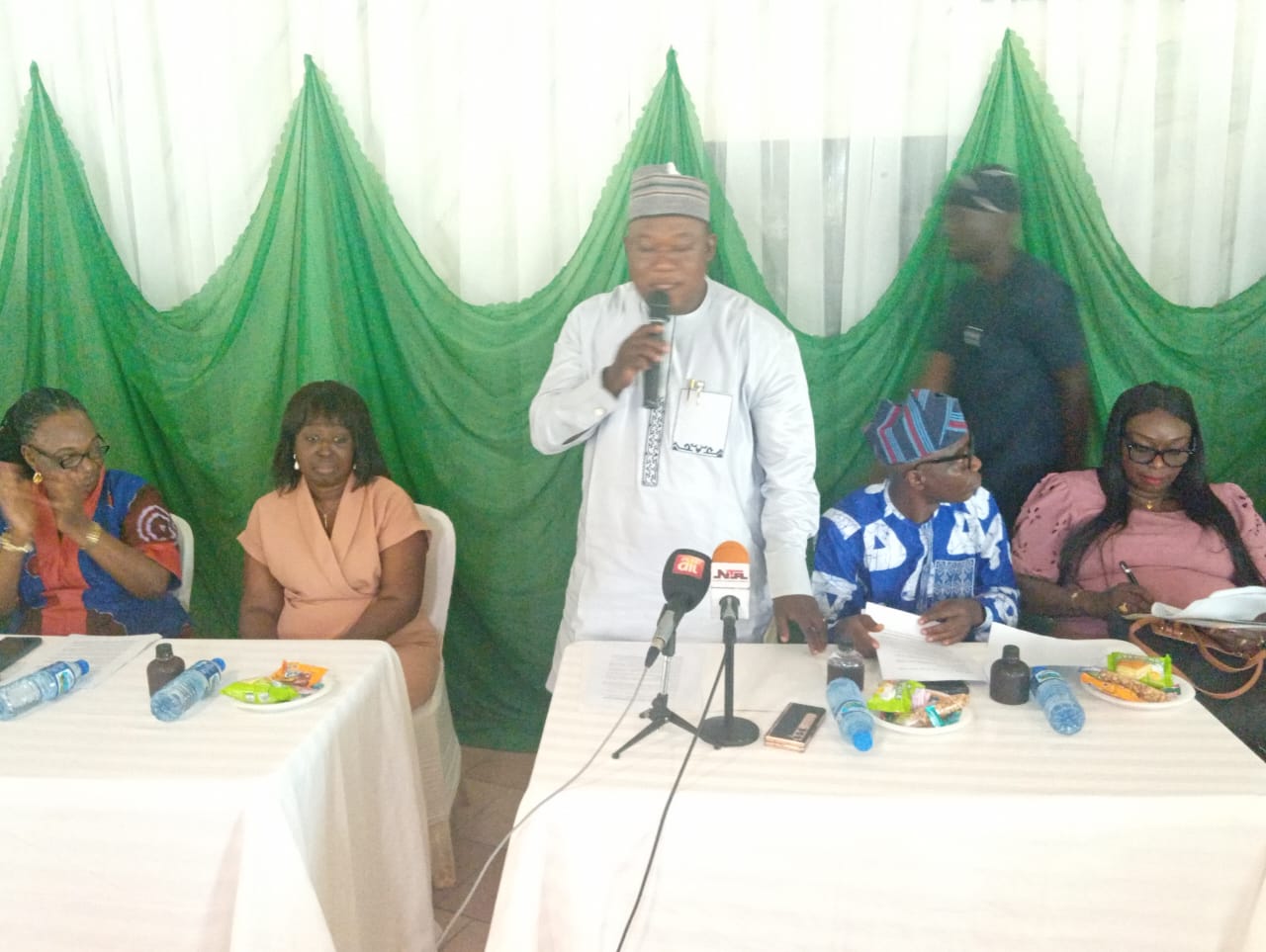
By Joel Ajayi
The President of the Sports Writers Association of Nigeria (SWAN), Isaiah Kemje Benjamin, has urged sports journalists to eliminate gender stereotypes and bias in their reports to promote fairness, inclusion and greater visibility for women in sports.
Benjamin made the call on Monday in Abuja while delivering a presentation titled “Gender-Sensitive Journalism: Removing Gender Stereotypes and Bias in Sports Reporting” at the Annual Women in Sports Leadership Training/Seminar for Journalists, organised by the Women Commission of the Nigeria Olympic Committee (NOC).
He said sports journalists play a critical role in shaping public opinion, influencing athletes’ visibility and determining which achievements receive recognition, sponsorship and investment.
According to him, the way the media reports women in sports can either reinforce existing barriers or help dismantle them.
Benjamin explained that gender-sensitive journalism requires fairness, accuracy, equality and inclusion, stressing that it does not mean giving female athletes favourable coverage or shielding them from legitimate criticism.
He identified common forms of bias in sports reporting, including giving men’s competitions greater prominence, focusing on female athletes’ appearance rather than performance, defining women by their marital or family status, and questioning their competence in leadership positions.
The SWAN president urged journalists to adopt respectful language, apply consistent professional standards and extend coverage beyond national teams to domestic leagues, grassroots competitions, female coaches, referees and sports administrators.
Using Nigeria’s sporting landscape as an example, he said the achievements of the Super Falcons deserved sustained analysis beyond match results, including discussions on investment, player development, professional leagues and grassroots structures.
He also noted that digital platforms offered opportunities to expand coverage of women’s sports but warned journalists against sensationalism, online harassment and sexist commentary.
Benjamin proposed seven measures, including gender-sensitive editorial guidelines, regular coverage audits, diversified sources, professional development, stronger grassroots reporting and measurable progress.
He called on SWAN to collaborate with the NOC, sports federations, leagues and clubs to improve access to information and strengthen women’s visibility in sports.
He urged journalists to ensure that athletes are judged by their performances and achievements rather than gender stereotypes.
“Gender-sensitive journalism must be fair, not favourable,” he said, emphasising that responsibility for change rests with reporters, editors, broadcasters, photographers and digital publishers.
-
 Featured7 years ago
Lampard Names New Chelsea Manager
-
 Featured7 years ago
FG To Extends Lockdown In FCT, Lagos Ogun states For 7days
-
 Featured7 years ago
Children Custody: Court Adjourns Mike Ezuruonye, Wife’s Case To April 7
-
 Featured7 years ago
NYSC Dismisses Report Of DG’s Plan To Islamize Benue Orientation Camp
-

 Featured5 years ago
Transfer Saga: How Mikel Obi Refused to compensate me After I Linked Him Worth $4m Deal In Kuwait SC – Okafor
-
Featured7 years ago
Board urges FG to establish one-stop rehabilitation centres in 6 geopolitical zones
-
Sports4 years ago
TINUBU LAMBAST DELE MOMODU
-

 News2 years ago
Zulu to Super Eagles B team, President Tinubu is happy with you













