
Featured
Lagos in 2025: Sanwoolu turning Vision, Reform, and Discipline into Tangible Progress for Africa’s Largest City
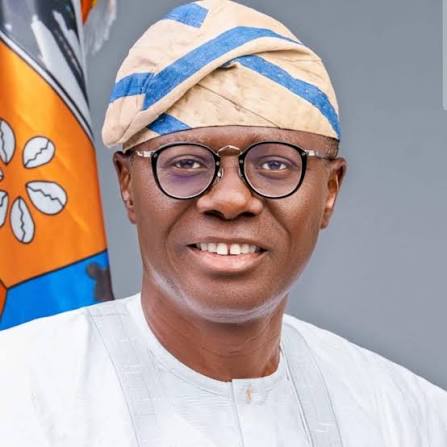
By Dr Dayo Israel
National Youth Leader, All Progressives Congress (APC)
There are years that pass quietly in governance, and there are years that redefine trajectory. For Lagos State, 2025 belongs firmly in the latter category. It is a year that demonstrated clearly and convincingly what focused leadership can achieve when policy is anchored on vision, discipline, and delivery.
This year, despite economic uncertainties and urban pressure, Lagos has charted a remarkable path of progress under the leadership of Governor Babajide Sanwoolu. From the bustling streets of Ikeja to the serene waterways of Eko Atlantic, citizens have experienced the tangible impact of landmark reforms, completed projects, and ambitious initiatives. Sanwoolu’s 2025 agenda has not only focused on generating revenue but also on translating it into visible improvements in the daily lives of Lagosians.
Under the leadership of Governor Babajide Olusola Sanwo-Olu, Lagos has not merely expanded its economy; it has reordered its priorities, accelerated long delayed projects, and laid foundations whose impact will be felt well beyond the present political cycle. This year, Lagos moved decisively from planning to performance, from announcements to outcomes.
This is not accidental progress. It is intentional governance. Governor Sanwoolu has moved Lagos From Revenue to Results, Turning Capacity into Capability
Lagos remains Nigeria’s economic nerve centre, contributing a significant share of national non oil GDP and sustaining one of the highest internally generated revenues in subSaharan Africa. But the defining feature of 2025 is not how much Lagos earned, it is how wisely that capacity was translated into outcomes.
Governor Sanwoolu’s administration made a deliberate choice to convert fiscal strength into visible, life improving infrastructure, while maintaining macro stability, institutional continuity, and social inclusion.
Across transportation, housing, health, education, energy, food systems, culture, and youth development, the story of 2025 is one of completion, consolidation, and courageous expansion. A story of Rail Revolution, Redefining Urban Mobility in Africa’s fastest growing megacity.
Perhaps no sector better illustrates Lagos’ longterm thinking than rail transportation. In 2025, Lagos continued to consolidate gains from its rail investments while accelerating work on new rail corridors designed to fundamentally change how millions move across our city.
Our reality is that rail is no longer theoretical in Lagos, it is functional.
The Lagos Blue Line has now firmly established itself as a backbone of west – east mass transit, easing pressure on road networks, reducing commute times, and improving productivity for workers and businesses. It has moved firmly into operational normalcy, transporting thousands of commuters daily between Marina and Mile 2. For residents along this corridor, commute times that once stretched into hours have been significantly reduced.
Beyond passenger movement, the Blue Line has decongested major road arteries such as Lagos – Badagry Expressway, Improved productivity for workers and traders, Reduced fuel consumption and emissions.
The Red Line project running along the Agbado –Oyingbo axis and integrated strategically with the Lagos – Ibadan railway corridor has advanced significantly, connecting densely populated areas and integrating Lagos’ transport ecosystem with national rail infrastructure. The Red Line now move hundreds of thousands of passengers daily, reducing logistics costs, and unlocking new residential and commercial clusters along its route. It has recorded major milestones in 2025, serving densely populated mainland communities.
Passenger adoption has grown steadily, validating the state’s longterm bet on rail as the most sustainable solution to Lagos’ mobility challenge.
But that’s not all. Beyond these, planning and early works on additional rail lines such as the Green Line including corridors linking emerging growth centres signal a government not reacting to congestion, but anticipating population growth decades ahead.
The economic impact is clear: reduced transport costs, increased labour mobility, lower carbon emissions, and higher urban efficiency. Transportation policy under Sanwo-Olu is no longer about managing chaos, it is about designing order.
Sanwoolu is investing in Roads, Bridges, and Urban Renewal, Infrastructure That Solves Problems. 2025 also marked the completion and commissioning of several critical road and bridge projects, alongside aggressive rehabilitation of inner city and arterial roads across Lagos’ five divisions. Importantly, these projects were executed alongside aggressive drainage expansion, addressing perennial flooding and protecting homes, markets, and businesses.
This Drainage upgrades, flood control projects, and urban regeneration initiatives have helped mitigate the effects of climate related flooding, an existential issue for a coastal megacity like Lagos.
These are not cosmetic interventions. They are risk-reduction investments, protecting lives, assets, and longterm economic value.
Governor Sanwoolu continued delivery under the Lagos State Affordable Housing Programme, completing and allocating housing units in multiple locations including Odo-Onosa/Ayandelu, Ibeshe, Sangotedo and Epe axis developments is worth commending. These estates are not merely buildings; they are integrated communities with supporting infrastructure, easing housing pressure and supporting urban expansion in a planned manner.
In 2025, Lagos deepened investments in healthcare through Upgrading of General Hospitals and Primary Health Centre, Expansion of diagnostic and specialist capacity, and Continued strengthening of the Lagos State Health Insurance Scheme (ILERA EKO). The focus has been on access, affordability, and quality, ensuring that health outcomes improve across income levels. His continued investments in diagnostic capacity and specialist care has reduced the need for outbound medical tourism and improving access for ordinary citizens.
In education, school rehabilitation, teacher capacity development, digital learning initiatives, improved learning environments across primary and secondary levels and curriculum support reinforced the state’s belief that human capital is the ultimate infrastructure. Governor Sanwo-Olu’s approach treats education as economic infrastructure, recognising its central role in productivity, innovation, and social mobility.
These investments may not always trend on social media, but they compound quietly and powerfully over time.
In 2025, Sanwoolu expanded Lagos capacity to Power Productivity. Lagos’ energy strategy this year continued to focus on decentralised power solutions, embedded generation, and public – private collaboration to improve electricity access for households, MSMEs, markets, and industrial clusters. Reliable power remains one of the strongest enablers of job creation and business competitiveness. By prioritising energy reforms, the Sanwoolu administration strengthened Lagos’ position as Nigeria’s most business friendly state.
For thousands of MSMEs, the engine room of Lagos’ economy, unreliable electricity is often the single greatest cost driver. By expanding power access through embedded systems and partnerships, the Sanwo-Olu administration has helped Reduce energy-related operating costs, Improve business uptime and productivity, Enhance competitiveness for Lagos-based enterprises
This is not abstract reform; it is felt directly in markets, workshops, factories, and offices. Building on the passage of the Electricity Act, Lagos has taken concrete steps to assert sub national leadership in power regulation and market development.
In 2025, the state accelerated work on establishing a structured Lagos electricity market, laying the groundwork for Independent power producers, Competitive distribution models and Private investment in generation and distribution infrastructure.
This reform oriented approach positions Lagos to attract longterm capital into power generation and distribution, critical for sustaining a megacity economy.
In agriculture, the Lagos deepened its focus on food security and value chain development, supporting local production, aggregation, processing, and distribution. Strategic investments in rice, poultry, aquaculture, and vegetable production combined with logistics and market access have helped stabilise food supply and create jobs, particularly for young people. In a volatile global food environment, these policies are not optional; they are economic insurance.
Governor Sanwoolu’s administration has been unapologetic about positioning Lagos as Africa’s creative and cultural capital.
In 2025, Lagos strengthened its global brand through Investment in creative infrastructure, Support for festivals, museums, and cultural districts, Tourism promotion and destination marketing, and Strategic partnerships with global cultural institutions.
The result is a sector that generates billions annually, employs hundreds of thousands mostly young people and projects Lagos’ identity confidently to the world.
This is soft power with hard economic returns.
As National Youth Leader, I have also been excited about Governor Sanwoolu’s Youth Development and Sports Initiatives, his effort in Preparing Tomorrow’s Leaders Today. Youth focused programmes in skills acquisition, entrepreneurship, digital economy training, and sports development expanded significantly in 2025.
Sports infrastructure upgrades and talent development pipelines reinforced Lagos’ status as Nigeria’s leading sports hub while youth empowerment initiatives focused on capability building, not tokenism.
I see firsthand how these investments translate into confidence, competence, and civic engagement among young Lagosians.
One of the most underappreciated aspects of Governor Sanwoolu’s leadership is his strategic international engagement. Throughout 2025, the governor held high level meetings with foreign governments, development finance institutions, global investors, and multilateral partners. These engagements yielded Memoranda of Understanding (MOUs) spanning Infrastructure financing, Transport and urban planning, Energy transition and renewables, Technology and innovation, Housing and urban development, Climate adaptation and resilience.
While MOUs are not ends in themselves, they represent access, credibility, and optionality positioning Lagos to attract longterm capital, technical expertise, and global best practices. In a competitive global economy, cities not countries are increasingly the units of growth. Lagos is clearly playing that game with seriousness and sophistication.
The Sanwo-Olu administration has continued to strengthen the Lagos civil service through capacity building, welfare improvements, digitisation, and institutional reform ensuring continuity beyond personalities.
Equally important is the governor’s ability to manage politics without derailing governance carrying along stakeholders, maintaining party cohesion, and fostering stability. Development thrives where politics is predictable. Governor Sanwoolu is arguably the biggest financial supporter of the party in Southwest Nigeria, with the exception of our Father, the President.
Governor Sanwoolu’s consistent alignment with President Bola Ahmed Tinubu and the ideals of the All Progressives Congress has ensured synergy between state and federal initiatives. This loyalty is rooted in shared philosophy, not convenience. It has enabled policy coherence, infrastructural alignment, and institutional respect benefiting Lagosians directly.
The recently presented 2026 Lagos State budget is bold, forward looking, and unmistakably legacy driven. With strong emphasis on infrastructure, transportation, human capital, climate resilience, and economic competitiveness, the budget signals a government preparing Lagos not just for the next election but for the next generation.
For Lagosians, 2025 is A Year That Changed the Curve. 2025 will be remembered as the year Lagos chose long-term impact over short term applause.
Let me also use the opportunity to commend Deputy Governor Femi Hamzat who has been a steadfast partner to Governor Sanwoolu, providing unwavering loyalty, strategic counsel, and hands-on leadership across the administration’s ambitious agenda. Dr Hamzat has consistently reinforced the governor’s vision, ensuring that policies translate into tangible results for Lagosians. His dedication, professionalism, and alignment with Governor Sanwoolu’s goals exemplify the kind of teamwork that has powered Lagos’s remarkable progress in 2025, making him not just a deputy but a trusted pillar of the administration.
Governor Babajide Sanwoolu’s has demonstrated that leadership is about Completing what others abandoned, Starting what the future demands, Governing with discipline, humility, and purpose.
Lagos is not perfect. No megacity is. But Lagos is working, learning, and building with clarity about where it is going. That is what leadership looks like. And that is why 2025 stands as a landmark year for Lagos State.
As Lagos closes out a year of visible delivery, 2026 is shaping up to be the moment when progress becomes part of everyday life for more people. With the rail system moving from early success to wider coverage and efficiency, Lagosians should expect shorter commutes, less pressure on major roads, and a transport network that increasingly works to the rhythm of the city. In energy, the expansion of embedded power projects across markets, hospitals, and business clusters will continue to ease daily frustrations, helping traders, artisans, and small businesses stay open longer and operate at lower cost.
Infrastructure and housing is expected to remain front and centre in the year ahead. Ongoing road, drainage, and flood control projects are expected to reach completion in more communities, improving safety and liveability, especially during the rainy season. At the same time, additional homes under the state’s affordable housing programme will come on stream, opening new, well planned neighbourhoods and easing pressure on overcrowded areas of the city.
Perhaps most importantly, Lagosians should expect greater stability and continuity. Many of the partnerships and investment commitments secured in 2025 are expected to translate into real projects on the ground in 2026, creating jobs, strengthening public services, and positioning Lagos for longterm growth.
The direction is clear: a government focused not on noise, but on results that touch daily life and endure beyond the moment.
Dr Dayo Israel, the National Youth Leader of the All Progressives Congress writes from Kano Street, Ebute Metta, Lagos.



Business
Turning Africa’s Raw Materials Into Wealth: The ARMS 2026 Industrial Agenda
By Joel Ajayi
For decades, Africa’s vast natural resources have powered industries and economies far beyond the continent, while many African countries have remained largely exporters of unprocessed commodities and importers of finished products.
That familiar pattern is now coming under renewed scrutiny as policymakers, researchers, investors and industrialists seek to change the direction of Africa’s resource economy.
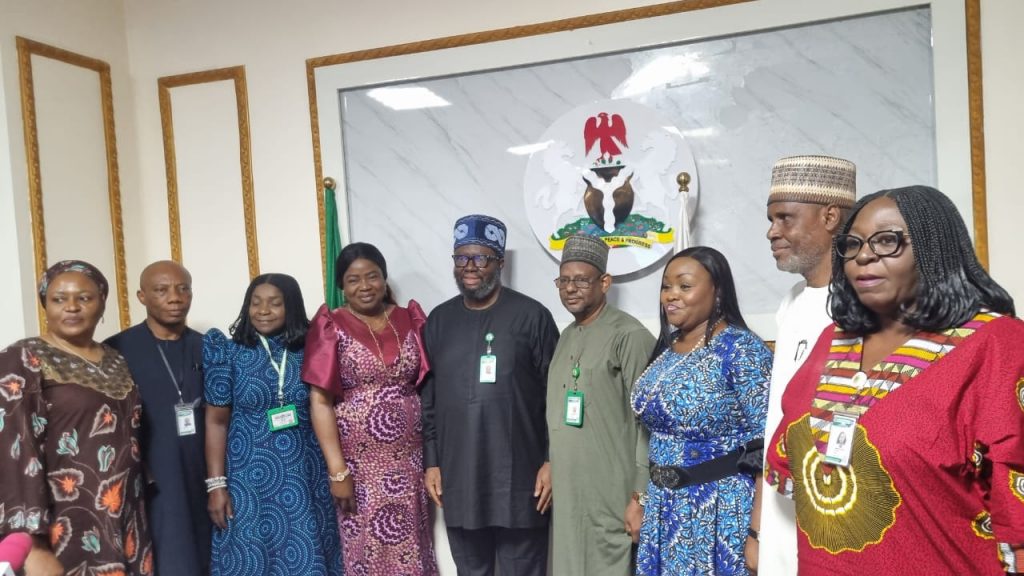
At the centre of that conversation is the second edition of the Africa Raw Materials Summit (ARMS 2026), scheduled for October 19 and 20 at the Abuja Continental Hotel, Abuja, under the theme: “From African Feedstock to African Factories.”
Organised by the Raw Materials Research and Development Council (RMRDC), the summit is being positioned as more than another gathering of policymakers and industry stakeholders. It is intended to provide a platform for confronting the structural challenges that have kept African raw materials largely disconnected from local manufacturing.
Africa has for years operated largely within a “pit-to-port” economic model, exporting raw materials while importing expensive finished products.
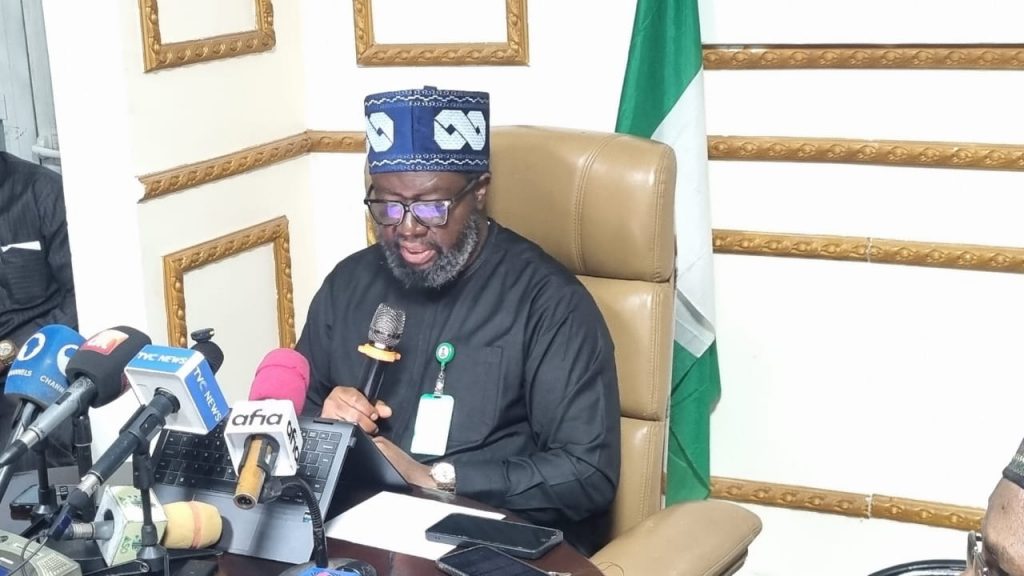
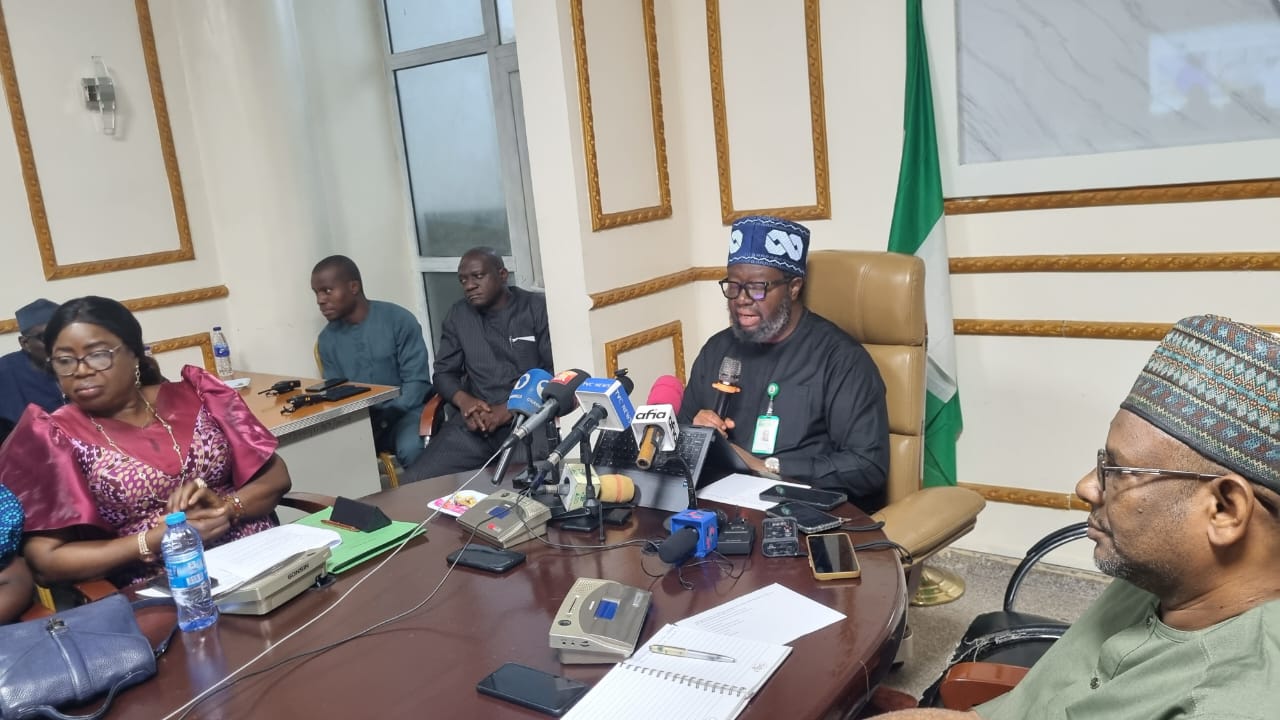
Speaking at a press conference ahead of the summit on Tuesday in Abuja, the Director-General and Chief Executive Officer of RMRDC, Prof. Nnanyelugo Martin Ike-Muonso, said the event would bring together policymakers, investors, researchers, technology providers and industrialists to develop practical strategies for transforming Africa’s abundant natural resources into industrial wealth.
The challenge, therefore, is not simply the abundance of resources, but the continent’s ability to transform those resources into industrial value, employment, technology and wealth within Africa.
Nigeria alone, according to the RMRDC, has more than $582.4 billion in documented non-renewable natural resources, while the wider continent possesses substantial deposits of critical minerals, agricultural raw materials and industrial feedstock.
Yet, the benefits of this resource endowment have often been constrained by inadequate processing capacity, weak infrastructure, limited technology, financing gaps and fragmented regional value chains.
From Dialogue to Industrial Action
ARMS 2026 builds on the maiden edition held in May 2025, which attracted more than 1,000 delegates from across the world.
The inaugural summit also witnessed the unveiling of the Ten-Year Raw Materials Transformation Roadmap (2025–2034) by the Minister of State for Industry, Senator John Owen Enoh.
The roadmap was designed around areas including technological capability, climate-resilient processing and backward integration, establishing a policy framework for greater domestic utilisation of Africa’s raw materials.
The second edition is expected to move the conversation further by bringing policy, capital, technology and industrial stakeholders around practical mechanisms for turning raw materials into locally manufactured products.
One of the major proposals highlighted by the RMRDC is the 30 per cent Mandatory Value Addition Bill, which seeks to establish a statutory minimum level of value addition to Nigerian raw materials before export.
The Council says the proposed framework could support job creation, import substitution, foreign-exchange conservation and increased manufacturing contribution to the economy.
Building the Infrastructure for Value Addition
The industrial transformation envisaged by ARMS 2026 goes beyond legislation.
A major concern is the “missing middle” between where raw materials are produced and where factories are located.
Poor transportation networks, inadequate cold-chain facilities, weak rural roads, limited testing and certification infrastructure and border-related delays can make locally sourced materials more expensive and less competitive.
Consequently, logistics and infrastructure constitute one of the five principal pillars of the summit.
The objective is to develop more reliable corridors connecting farms and mines with processing centres and manufacturing facilities, thereby reducing losses and improving the movement of industrial inputs.
The Digital Dimension
Technology is also becoming an important part of the Council’s strategy.
The RMRDC says it has developed the Nigeria Integrated Information Statistical System for Raw Materials and Products (NISSRAMP), described as a digital repository containing information on feedstock deposits, specifications, production outputs and industrial absorption rates.
The Council has also highlighted its transition towards paperless operations and its certification as a Data Controller/Processor of Major Importance by the Nigeria Data Protection Commission.
Such digital infrastructure could provide investors and manufacturers with better information about the availability and characteristics of raw materials while supporting more informed industrial planning.
Turning Waste Into Industrial Inputs
Another major component of ARMS 2026 is the proposed expansion of the circular economy.
The summit will examine how agricultural by-products, mine tailings, scrap metals and biomass can be recovered and reused as inputs for new production processes rather than being treated simply as waste.
The RMRDC argues that such an approach could lower raw-material costs while supporting more sustainable and climate-resilient manufacturing systems.
For Africa, where industrial expansion must increasingly balance economic development with environmental considerations, waste industrialisation could become an important part of the continent’s manufacturing conversation.
From National Production to African Value Chains
The African Continental Free Trade Area is another important element of the summit’s agenda.
The RMRDC sees AfCFTA as an opportunity to create regional value chains in which raw materials sourced in one African country can be processed and supplied to manufacturers in another.
Under such a model, Africa would move beyond simply exporting commodities to external markets and develop stronger internal networks for supplying chemicals, refined minerals, agricultural inputs and other industrial materials across national borders.
This approach places regional integration at the heart of Africa’s industrialisation strategy.
Bridging Research and Capital
A recurring weakness in many developing economies is the gap between research and commercialisation.
Innovations may emerge from universities, research institutions and laboratories without receiving the financing, equipment or market connections required to become commercially viable.
ARMS 2026 intends to address that gap through technology commercialisation and capital linkages, connecting research outputs with investors, development finance institutions and industrial off-takers.
The RMRDC has also cited partnerships with the Bank of Industry for commercial-scale post-harvest processing and a South-South technology-transfer partnership with the National Innovation Centre par Excellence in Shanghai, China.
A Larger Industrial Conversation
The scale of ARMS 2026 is expected to be significantly larger than the maiden edition.
The organisers project more than 1,800 delegates from all 54 African countries and global industrial partners.
The programme will feature high-level policy dialogues, technical panels, an advanced raw materials and technology exhibition, industrial site visits and the African Raw Materials Industry Awards.
The exhibition, in particular, is expected to showcase locally fabricated processing machinery, advanced domestic materials, green chemicals and engineered commercial inputs.
Beyond the speeches and exhibitions, however, the real significance of ARMS 2026 will ultimately depend on what happens after the summit.
Africa’s challenge has never been a shortage of raw materials. The more difficult question has been how to transform those resources into factories, products, skilled employment, technology and sustainable economic opportunities.
For Nigeria and the rest of the continent, the proposed shift from “pit-to-port” to “feedstock-to-factory” therefore represents a broader debate about the future structure of African economies.
ARMS 2026 seeks to place that debate firmly on the industrial agenda — with value addition, technology, finance, infrastructure, circular production and regional trade at the centre.
If the commitments and partnerships generated by the summit translate into measurable industrial activity, the event could provide another platform for Africa to examine how its enormous resource base can support stronger domestic manufacturing.
The message from the organisers is clear: the continent’s raw materials should not only leave African soil as commodities; they should increasingly become the foundation for African industrial production
-
 Featured7 years ago
Lampard Names New Chelsea Manager
-
 Featured7 years ago
FG To Extends Lockdown In FCT, Lagos Ogun states For 7days
-
 Featured7 years ago
Children Custody: Court Adjourns Mike Ezuruonye, Wife’s Case To April 7
-
 Featured7 years ago
NYSC Dismisses Report Of DG’s Plan To Islamize Benue Orientation Camp
-

 Featured5 years ago
Transfer Saga: How Mikel Obi Refused to compensate me After I Linked Him Worth $4m Deal In Kuwait SC – Okafor
-
Featured7 years ago
Board urges FG to establish one-stop rehabilitation centres in 6 geopolitical zones
-
Sports4 years ago
TINUBU LAMBAST DELE MOMODU
-

 News2 years ago
Zulu to Super Eagles B team, President Tinubu is happy with you