
Featured
Major General Ibrahim Transformational Leadership in NYSC

Emeka-Rems Mgbemena, an Abuja-based public affairs analyst
Wikipedia describes transformational leadership as a theory of leadership where a leader works with teams or followers beyond their immediate self interests, to identify needed change, thus, creating a vision to guide the change through influence, inspiration, among others.
Therefore, a transformational leader serves as a role model who inspires confidence in his team, he is proactive and leads from the front.
That is the man, Major General Shuaibu Ibrahim, the 18th Chief Executive of the National Youth Sevice Corps who assumed duty as Director-General of the foremost youth — mobilisation agency in the country on 10th May, 2019.
He came prepared for the task ahead, therefore wasted no time in rolling out a five – point agenda that gave a clearcut direction on the perspective of his administration in May, 2019.
Ibrahim in unmistakable terms demystiied the airs, opulence and all the glamour associated with high office in Nigeria, making himself accessible and available, not only to NYSC staff members and Corps Members whom he prioritised their welfare, but to the media and other stakeholders as well.
Interestingly, before the drop of the hat, he has given out his personal telephone number on request, and personally picks his calls.
He is a man that I have known and observed in the past twenty — six years, and worked closely with him in the last three years.
He has never ceased to amaze me at the amount of energy and passion he puts in the discharge of his duties. Gen Shuaibu Ibrahim is a transformational leader that is proactively proactive and consistently consistent, all shrouded in humility in his interpersonal relationships, that sometimes make people to ask if he is truly a military man, for the military are known in so many climes for quick temper and authoritarianism, resulting from their hard training.
One of the critical issues that he did on assumption of office was to bring sanity to the NYSC mobilisation process which hitherto suffered so much assault from unscrupulous officers in some Corps Producing Institutions, particularly those in the West Africa sub-region who fraudulently forward names of unqualified people for mobilisation.
He called a meeting of the Registrars of the institutions in Abuja in a bid to get their buy — in towards sanitising the mobilisation process. That singular action yielded great dividends. Some of the unscrupulous officers were sanctioned, while some of the institutions implicated in the fraudulent practice were shutdown by their respective governments.
Internal cleansing mechanism put in place by the Scheme also saw to the dismissal of some erring officers from service.
In addition to that, he introduced the screening of foreign – trained Prospective Corps Members, particularly those that graduated from the universities in the West Africa sub-region.
Quoting the astute and pragmatic administrator, the result of the screening has “been mind-boggling. Some of the supposed graduates parading bogus degree certificates, with second class upper division could not write their names correctly, let alone make correct sentence during the screening exercise which has been institutionalised.”
The soft – looking, but no-nonsense general who loathes unpatriotic acts and circumvention of law and order vowed never to mobilise unqualified people for service.
Some of those caught parading bogus and unearned certificates have equally been prosecuted and jailed to serve as a deterrent to others.
Frighteningly, if those characters had not been detected through the doggedness of the Director-General, many of them would have found their ways to both the public and private sectors to debase the institutions.
Ibrahim believes so much in forging worthy partnerships with both public and private institutions of like minds. In particular, the robust collaboration with Nigeria Centre for Disease Control resulted in early and safe return of the Corps to the Orientation camps, under the supervision of the NCDC.
He ensured that willing Corps Members, Prospective Corps Members, as well as serving Corps Members and staff members got vaccinated against COVID-19.
Gratifyingly, the data generated on COVID-19 tests at the Orientation camps helps the NCDC in tracking the rate of infection in the country.
He is a man that believes so much in the utilisation of Corps potentials for national development.
He is detribalised, humane and blind to people’s religious persuasions.
Though a devout Muslim, he believes that true religion is the pursuit of people’s welfare and happiness; and would always speak to people about the ephemeral nature of human existence. He is always concerned with touching lives, and leaving worthy legacies for which posterity will remember him when he has gone to be with his Maker.
No wonder he has continued to pay the school fees of some less privileged students, cutting across tribe and religion, which he has done from his days as a young officer of the Education Corps.
Yes, he believes so much in the utilisation of Corps potentials for national development like I had earlier stated. This conviction prompted him to challenge the creative ingenuity of Corps Members at the outbreak of COVID-19 pandemic in Nigeria.
That challenge yielded so many inventions by the Corps Members, ranging from body temperature reading devices to automated sanitiser machines, as well as liquid soap — water — sanitiser — dispensing machines, among others.
Corps Members were amongst the first set of Nigerians to produce liquid soap, sanitiser and facemasks which were donated to Nigerians, free of charge.
He established NYSC National Troupe, revitalised NYSC Musical Band, so as to showcase the musical skills of Corps Members.
The first NYSC Film, titled: A Call To Service, featuring some Corps Members and Nollywood stars such as Pete Edochie was premiered last year. The film has introduced Corps Members with budding talents to the vast opportunities in the Nollywood industry which some of them have embraced.
Under his watch, the NYSC Farms have been resuscitated, notably: the rice farm in Kebbi State, cassava farm in Oyo State, maize farm in Bauchi State, cassava, rice and poultry farms in the FCT. Beniseed is also cultivated in the farm.
In 2021, he was able to recover 52 acres of land allocated to the NYSC Secretariat Ebonyi as farmland by the State Government. The land was left uncultivated for so many years, resulting in the State taking back the land.
Through his doggedness, the land was given back to the Scheme. It is now a large rice farm which was cultivated in partnership with NALDA. Plans have also reached advanced stage to secure land in Bayelsa State for cultivation.
The same applies to other NYSC ventures such as the water factory, bakery and garment industries, all of which have been revitalised and are operated by Corps Members under the supervision of relevant NYSC staff members.
Recently, the Executive Governor of Nasarawa State commissioned another NYSC water factory in Keffi, as well as NYSC garment factory, built in collaboration with the private sector. These ventures generate revenue which are paid into government coffers.
Indeed, I was amazed when the Director-General announced that the Scheme for the first time in history contributed about Two Hundred and Eighty- One Naira to the national coffers from internally – generated funds which is unprecedented in the annals of the NYSC. As at date, over one billion Naira has been generated and paid into government coffers by the Scheme.
The Director-General has pioneered the construction of an ICT centre which according a senior member of staff of the institution thought was not possible. From every indication, the edifice will be commissioned within the year.
As an outstanding academic, a Josite, a historian — Associate Professor of Military History, he edited and co-edited nine books on the Scheme — covering areas such as NYSC and National Development; NYSC and National Integration; NYSC and COVID-19; NYSC and CDS; NYSC and National Elections among others. The nine books unveiled June last year are researcher’s delight.
The General, a Fellow, Historical Society of Nigeria and Member Teachers Registration Council of Nigeria has equally established NYSC Museum which is named: NYSC Museum of Dynamic History which, I stand to be corrected is the biggest museum in Abuja. The museum is a centre of learning.
To give the Scheme a strong voice in the media space, he established NYSC Radio and Television Stations which were commissioned in April this year by the former Head of State, Gen Yakubu Gowon. The television transmits on TStv Channel 365 and the radio station on 88.3 FM.
The Director-General ensured an upward review of Corps Members allowances by the Federal Government which is a great morale booster to Corps Members, in addition to the decentralisation of NYSC Administration through the establishment of NYSC Area Offices, domiciled in each of the six geopolitical zones of the country, manned by substantive directors.
The Area Òffices have brought administration closer to the grassroots, while also opening up space for the career advancement of staff.
In January this year, NYSC mega printing press, Kaduna was commissioned. The press prints both for the Scheme and outsiders at a competitive cost. It equally serves as a training ground for Corps Members that desire to go into printing business at the end of service.
There is no gainsaying the fact that capturing all that the DG has achieved within three years in this single write-up would seem like a fruitless effort at reciting an unending litany.
I am not hesitant to posit without equivocation that he is a shinning star in the present Administration of President Muhammadu Buhari. He has reinvigorated the National Youth Sevice Corps, making Corps Members and staff welfare key priority, making the Corps central to national development and stability.
To further prioritise Corps Members’ welfare, especially in the area of empowerment, under the platform of Skill Acquisition and Entrepreneurship Development programme, he canvassed the establishment of skill acquisition centres in six of the geopolitical zones. Some have been commissioned.
He has championed the establishment of National Youth Service Corps Trust Fund ( NYSCTF) which promises to be a game changer for the Corps.
The fund when established will not only address the infrastructural deficits of the Scheme as explained by the DG, but will be a pool of funds to be advanced to willing Corps Members to pursue their skill acquisition initiatives.
The benefits derivable from this proposed trust fund cannot be over-emphasised. When approved and implemented, it will lift millions of Nigerians, especially the youths out of poverty.
I feel that there will not be hesitancy by both the Executive and Legislative arms of Government in passing the bill into law in order to achieve the lofty dreams of the DG.
At this point, I am persuaded to enjoin you to please, tune to NTA International, Channel 251 every Wednesday at 7.30 pm and see the wonders NYSC has been doing in the area of youth empowerment, under the skill acquisition programme, national unity and integration.
It is an interesting documentary programme which should be a must watch for every patriotic Nigerian.
These achievements as earlier captured are by no means exhaustive of his contributions in furthering the course of the National Youth Service Corps which is a pivot of national unity, national integration and youth development.
He has within three years transformed the Corps so much so that whoever that comes after him when he concludes his tour duty will find very big shoes left behind.
The National Directorate Headquarters of the Scheme in Abuja has been given a face-lift which makes it so befitting and great morale booster for staff.
Doubtlessly, at the end of his tenure of office in the Scheme, like Julius Caesar said in a letter to the Roman Senate around 47 BC after he had achieved a victory in a short war against the Pharnaces 1 at the battle of Zela as recorded by Wikipedia: Veni Vidi Vici, translated: I came I saw I conquered. He has done very well for the NYSC in three years of his purposeful leadership.
Like the youngsters would say, let us give three big gbosas to Maj Gen Shuaibu Ibrahim.



Featured
How Ogundiya Folarin Oladapo Crossed The Border For Safety
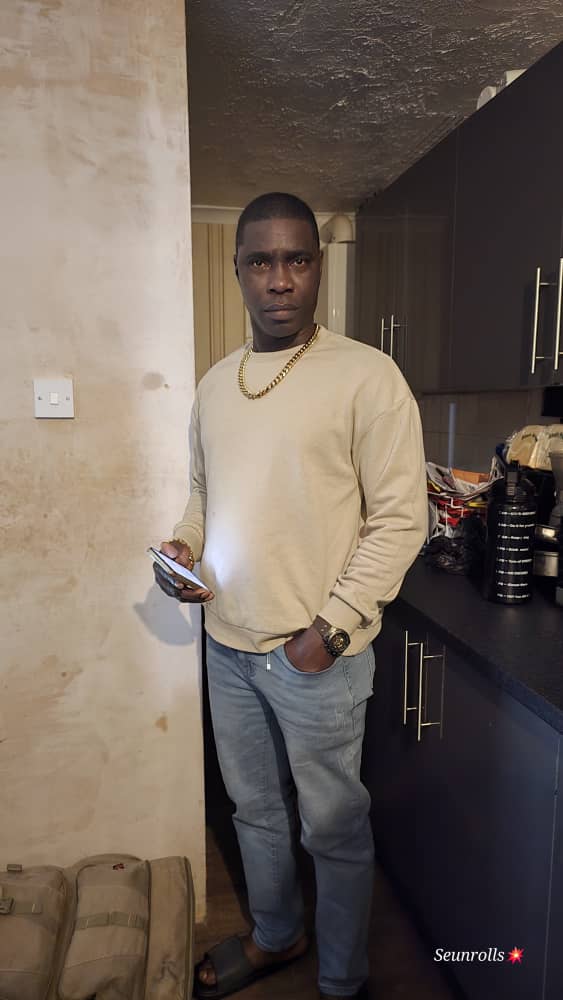
Ogundiya Folarin Oladapo. Is a Nigerian citizen from Ijebu North Local Government Area of Ogun State. Ago Iwoye, a relative, spoke to our reporter extensively about the whereabouts of Ogundiya and the circumstances that compelled him to flee the country and why he may be scared to return.
According to Mr Iwoye, Ogundiya was faced with persecution and threats to his life owing to his sexual orientation. He was born and raised in Ogun State, Nigeria. He grew up in an environment where family, community, culture and religious beliefs played important roles in everyday life. Ogundiya had always considered his hometown a place of belonging. His family, childhood experiences, friendships and memories were all connected to that environment.
Ogundiya is a quiet, simple and easy-going person. He had never been someone who enjoys conflict or confrontation. His greatest desire was to live an ordinary life, maintain meaningful relationships and build a future for himself.
However, there is a deeply personal aspect of his identity that has made living in Nigeria extremely difficult for him. He is a bisexual. Yes! I don’t think he chose to be so. And it is not something he can simply change because of the expectations of society. His sexual orientation is part of who he is.
Growing up in Nigeria, he understood that same-sex relationships were strongly condemned by many people. He knew that being identified as a gay or a bisexual could result in discrimination, rejection, humiliation, violence and serious legal consequences.
For these reasons, Ogundiya, I presumed, kept his sexuality private. He did not feel safe openly discussing his feelings or relationships. He was constantly conscious of the possible consequences if people discover this aspect of his life.
He was not hiding because he was ashamed of being human. He was hiding because he was afraid of what people might do if they found out.
On 21st September 2026, his life took a frightening turn. His mobile phone was faulty and he needed to make some important calls, so he took his younger brother’s phone, to make a call to his work place, but unfortunately the first message that popped in was that of his partner who had been worried for not reaching him for some days and wanted to pass an important message to him, his brother saw the message first and all the doubt about his sexually orientation was cleared as he has been so suspicious of Ogundiya for some time because of his closeness to his partner whom they always disguised as friends. He immediately reported to other members of his family. Part of the message read:
“Guy, we are in big trouble. Our romantic secret is now public. Someone was monitoring us. Please, stay in the dark for now.”
When he received and understood the seriousness of that message, he became extremely worried. It suggested that someone had been monitoring their private relationship and that information about them had reached other people.
What he had spent a long time keeping private was suddenly exposed.
The discovery also came as a shock to his family because they had not previously known about his bisexuality. He was frightened about their reaction and, more importantly, about the possibility that other people in the community would find out.
The situation quickly escalated, because his brother told one of his friends who also told other people in their small community. Surprisingly, a group of people gathered around his family residence, demanding to see Ogundiya, they were angry about his sexuality and were making threatening statements.
He could hear people saying he is gay and calling for his punishment. Some were demanding that he should be killed through mob justice, while others were threatening to hand him over to the police for prosecution.
At that moment, Ogundiya realised that his life was in danger.
He was terrified when he realised that the people gathering outside were looking for him.
He could not confidently rely on anyone to protect him and he knew that remaining inside the house could expose him to serious harm.
In the confusion, Ogundiya managed to escape through a latrine window and made his way into the nearby alleyways.
He left without shoes and sustained bruises during his escape; no opportunity to collect his belongings or make any proper arrangements. The only important things he managed to take with him were his passport and a small envelope containing some emergency money.
As he moved away from the house, people were shouting accusations and threatening to deal with him because of his sexuality, some of their allegations were that if he is allowed to stay alive that he will influence younger people in the community. “As for me, as his relative, I can’t contribute to harming him because I didn’t create him.” Owoye said.
Ogundiya was deeply frightened. He could not believe that the place where he had grown up and lived with his family had suddenly become somewhere he could no longer feel safe.
He had not committed any act of violence against anybody. He was being threatened because of his sexual orientation and a private relationship. But to be honest, both our tradition and the government law forbid such practices among men. Even women are forbidden to indulge in same sex relations, it is a grievous taboo and it could attract serious consequences such as death, Iwoye said.
“The possibility of being attacked by a mob was particularly frightening because he knew how such situations could become uncontrollable. He was also afraid of being arrested and prosecuted under Nigeria’s laws concerning same-sex relationships.”
But the public may want to know how he fled the country? I can only attribute it to divine powers. Because all of us are sinners. Maybe the Almighty God has not finished with him.
However, Ogundiya told me that initially, he considered relocating to another state in Nigeria. He thought that perhaps moving far away from Ogun State would allow him to start again without the people who had threatened him knowing where he was.
However, the more he considered this option, the more afraid he became.His concern was that the hostility towards people with his sexual orientation was not limited to his hometown. He feared that he could face similar treatment elsewhere if his sexuality became known.
He was also worried about the legal consequences of being identified as bisexual and the possibility of being reported to the authorities.
He did not believe that simply moving to another state would provide lasting protection. He could potentially spend the rest of his life hiding his identity, avoiding relationships and constantly worrying about being discovered.
He, therefore, began looking for a way to leave Nigeria.
His decision was not motivated by a desire to abandon his family, culture or country. He left because he was afraid for his life and believed that remaining in Nigeria would expose him to further persecution.
Because he had limited resources and did not know how to arrange a safe journey out of Nigeria, he began looking for assistance.
During this period, he came into contact with a man named Chinedu, who was from the eastern part of Nigeria.
He told him that he could facilitate his movement across the border into a neighbouring country. He demanded a substantial amount of money for the journey and assured Ogundiya that he could help him get across.
He was desperate to leave Nigeria. He was frightened, vulnerable and had very few alternatives. He eventually paid the amount he requested because he believed that Chinedu would help him reach safely.
Unfortunately, the journey did not turn out as he had expected.
At some point during the journey, he was taken to a rural transit camp. The location was unfamiliar to him and he had limited access to money, communication and independent means of travelling.
Ogundiya became increasingly dependent on Chinedu because he did not know the area or how to continue the journey alone.
It was during this period that Chinedu allegedly began taking advantage of his vulnerability.
He experienced sexual molestation, physical coercion and intimidation. Ogundiya was subjected to unwanted advances and pressure, accompanied by threats that he could be abandoned or handed over to local police or hostile individuals.
He felt completely helpless. The person he had trusted to help him escape danger had become another source of danger.
He was particularly frightened because he had already experienced threats in Nigeria and did not want to find himself in another situation where his sexuality could be used against him.
The experience affected Ogundiya deeply. He felt violated, humiliated and emotionally overwhelmed. He found it difficult to speak about what had happened because of the shame and fear associated with the experience.
He had left his home in search of safety, but he found himself being exploited by someone who knew how desperate he was.
Eventually, he found an opportunity to escape from the transit camp.
He left during the night and began walking along isolated dirt roads. He did not have a reliable means of transportation, and he was uncertain about where the roads would lead.
He continued walking because he was afraid of being discovered and taken back.
After walking for several miles, he eventually reached a major humanitarian post near the border. By then, he was physically exhausted and visibly distressed.
He stopped to rest because he was struggling to continue walking.
He was pale, tired and emotionally drained. He had experienced more than he could easily explain, and he desperately needed assistance.
While he was resting near the humanitarian post, a Nigerian man travelling by car towards the neighbouring country noticed him.
He stopped his vehicle and approached Ogundiya. He introduced himself as Olamide, a Yoruba man from Osun State.
Initially, Ogundiya was afraid to speak to him. After his last experience with Chinedu, he found it difficult to trust another stranger.
However, when he discovered that Olamide was also Yoruba, he became a little more comfortable.
Eventually, he explained what had happened to him to Olamide. He told him about the threats against him in Ogun State, the circumstances surrounding his escape from home, his journey with Chinedu and the exploitation he had experienced at the transit camp.
Ogundiya became emotional while explaining everything because the experience had been extremely traumatic.
Olamide listened to him and appeared deeply affected by his account.
Olamide told Ogundiya that his circumstances reminded him of his younger biological brother, who had reportedly experienced a similar situation after his bisexuality became known.
He explained that his brother had narrowly escaped mob violence and had subsequently been assisted in travelling to Europe because of fears of persecution and prosecution in Nigeria.
Olamide introduced himself as a member of the International Committee of the Red Cross (ICRC) and said he would try to assist Ogundiya in finding safety abroad.
He promised to help arrange his journey to Europe, where he could seek protection and have an opportunity to rebuild his life.
At that point, he was emotionally exhausted and uncertain about what would happen next. However, his offer gave Ogundiya some hope that he might finally escape the circumstances that had placed his life in danger.
A few weeks after meeting Olamide, he fulfilled his promise and arranged for Ogundiya to travel to Dublin, Ireland.
His arrival in Ireland was a significant moment in his life. He had gone through fear, uncertainty, threats, exploitation and a difficult journey before eventually reaching a place where he could seek protection.
He was relieved to have reached Ireland, although the experiences he had gone through continued to affect him emotionally.
He is afraid to return to Nigeria because the circumstances that forced him to leave have not been resolved.
His sexuality was exposed in his community, and he was threatened by people who wanted to punish him because of it.
He fears that if he returns, he could be recognised, exposed again or subjected to further threats and violence.
Ogundiya is also afraid of the possibility of being reported to the police and facing prosecution under the laws criminalising same-sex relationships and conduct.
The experience of escaping from his family home remains deeply distressing. He remembered having to leave through the window, without shoes or belongings, because he feared what the people outside might do to him
He also cannot forget the exploitation he experienced during his journey. He had trusted someone because he was desperate to escape persecution, only to find himself in another frightening situation.
These experiences have made him fearful of returning to the circumstances from which he escaped.
He did not believe that moving to another part of Nigeria would necessarily resolve his difficulties. His concern is that the underlying hostility and legal risks associated with his sexual orientation would remain.
He wanted to live in a place where he could exist without constantly fearing that his identity would become a reason for violence, humiliation or imprisonment.
He did not leave Nigeria because he wanted to abandon his country or because he was looking for an easier life elsewhere.
He left because he was frightened for his safety and believed that he had no realistic way of protecting himself in the circumstances he faced.
He lost the security of his home, became separated from the people and surroundings he had known throughout his life, and experienced further exploitation while trying to escape.
The journey to Ireland was difficult, but it offered him an opportunity to seek protection and live with dignity.
He respectfully asks the Irish authorities to consider his circumstances, the threats he experienced, his sexual orientation, the circumstances of his departure from Nigeria and his genuine fear of returning.
He wanted an opportunity to rebuild his life without having to hide who he is or live under the constant threat of violence and persecution.
What can one do? Here in Nigeria, same sex relationships are prohibited and myself and others of his relatives wish that he lives his life as his God created him. Ogundiya had wanted a simple life without fear or threat of prosecution.
-
 Featured7 years ago
Lampard Names New Chelsea Manager
-
 Featured7 years ago
FG To Extends Lockdown In FCT, Lagos Ogun states For 7days
-
 Featured7 years ago
Children Custody: Court Adjourns Mike Ezuruonye, Wife’s Case To April 7
-
 Featured7 years ago
NYSC Dismisses Report Of DG’s Plan To Islamize Benue Orientation Camp
-

 Featured5 years ago
Transfer Saga: How Mikel Obi Refused to compensate me After I Linked Him Worth $4m Deal In Kuwait SC – Okafor
-
Featured7 years ago
Board urges FG to establish one-stop rehabilitation centres in 6 geopolitical zones
-
Sports4 years ago
TINUBU LAMBAST DELE MOMODU
-

 News2 years ago
Zulu to Super Eagles B team, President Tinubu is happy with you













