
News
NASENI, Foundation Mobilise Youths for Innovation, Global Competitiveness
Joel Ajayi
The National Agency for Science and Engineering Infrastructure (NASENI) has urged Nigerian youths to move beyond consuming technology to becoming creators, innovators and inventors capable of competing on the global stage.
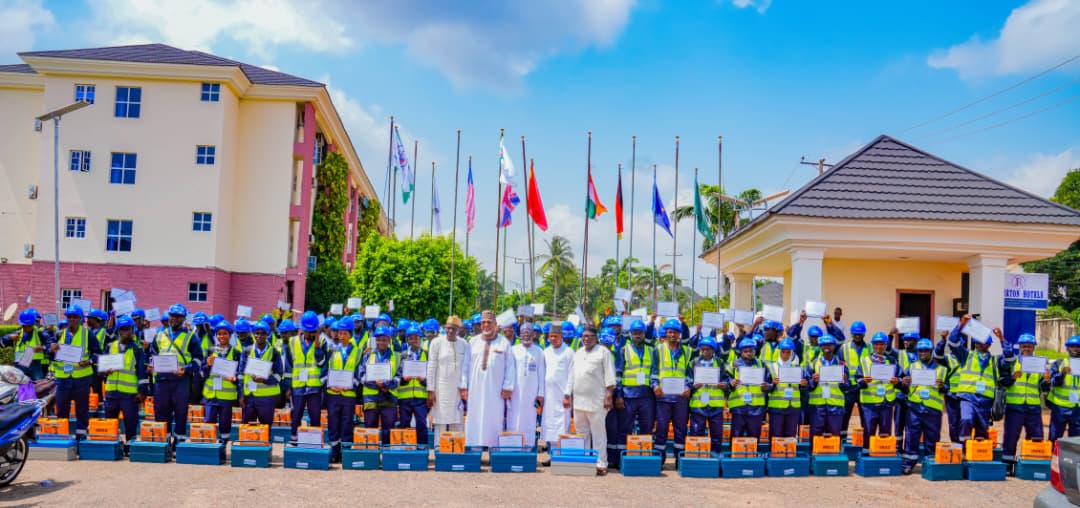
The Executive Vice Chairman of NASENI, Mr Khalil Halilu gave the charge at the 2026 Emerging Youth Leaders Summit, hosted by Gracelink Foundation in Abuja on Monday.The summit which featured no fewer than 1000 young Nigerians, was titled,” Rise, Build, Become”.
The summit is designed to facilitate learning, mentorship and inspiration for youths through engagements with accomplished Nigerians.Halilu Represented by the agency’s acting Director, Research and Laboratory Development, Dr Bakare Hassan, urged the youths to take advantage of NASENI’s Science Kits for Secondary Schools Programme to pursue careers in science, engineering, and technology.
According to him, Nigeria’s future depends on the country’s ability to equip young people with the knowledge, skills, technology and opportunities to solve national challenges.“We want our young people to grow from being consumers of technology into creators, innovators, and inventors who can compete globally.
“We are creating opportunities for young Nigerian innovators to access funding, mentorship, and the support needed to transform promising ideas into viable products and businesses.
“You do not have to wait until you occupy a position of authority before you begin to make a difference. Start by identifying a problem around you, ask questions, learn new skills, collaborate with others, and develop solutions.
“Leadership is not merely about the position you occupy; it is about the problems you solve and the positive impact you make.
“Our message to every young girl is simple; your gender should never limit your ambition, creativity, or contribution to national development.”
The executive vice chairman called on the GraceLink foundation, educational institutions, entrepreneurs, mentors, investors, and young innovators to collaborate with NASENI in advancing science education, engineering development, and entrepreneurship.
In her remarks, the President of GraceLink foundation, Mrs Obioma Levi-Johnson called on the Federal Government to introduce leadership education and mentorship programmes in schools to prepare young Nigerians for future leadership roles.
Levi-Johnson said leadership development should begin in the classroom, emphasising the need to equip teachers with the resources and skills required to nurture responsible and value-driven young people.
According to her, leadership goes beyond occupying political offices; young people can become leaders in various fields, including medicine, engineering, technology and other professions.
“Leadership is not only being the president or being in the senate or even being a governor in the state. Leadership goes beyond that. People can lead in different industries.”
She said that summit was designed to inspire teenagers aged between 13 and 18 through interactions with professionals, innovators and other accomplished individuals.
She noted that mentorship was a critical component of youth development, saying that guidance from experienced professionals could help young people to make informed career choices and avoid mistakes.
The Chairman of the Gracelink foundation, Mr Samuel Ekweghariri, urged youths to assess political candidates based on track records, performance and ability to address societal challenges ahead of the 2027 general elections.
He said that young Nigerian youths must resist monetary inducements and other considerations that could undermine their ability to make informed electoral choices, stressing the need to prioritise candidates with proven records of creating value.
“As we move into the electoral season, I will like young Nigerians to think of what they want to be in five or 10 years because the decisions that our government makes today will impact and affect that future,” he said.
Ekweghariri advised voters against supporting candidates merely because of their appearance, campaign promises or inducement.
The chairman also advised the electorate to examine candidate’s previous performances and contributions to society.
According to him, voters should consider whether candidates have demonstrated the capacity to address existing challenges and provide solutions to emerging needs.
“You do not vote because of how somebody looks or what somebody has said. You vote because of the knowledge you have about their track record and the value they have created in their previous positions or careers.”
Ekweghariri explained that the quality of political leadership had implications for the country’s technological development, infrastructure and economic opportunities.
He said that emerging sectors such as Artificial Intelligence (AI) required reliable electricity and affordable internet connectivity.
He also said voters should therefore consider candidates’ commitment to providing essential infrastructure and creating an enabling environment for innovation and economic growth.
The initiative forms part of NASENI’s broader effort to strengthen Nigeria’s science, engineering and technology ecosystem by identifying innovators early and creating pathways for their ideas to progress from prototypes towards funding, development and eventual commercialisation.
The event was attended by the Managing Director of AEDC, Mr Chijioke Okwuokenye, the Africa Regional Lead, HealthLearn, Dr Obinna Ebirim, the Co-Founder, Buypower Inc., Mr Oladipo Asehinde, the Founder, DVIPC Academy, Ms Onyekachi Eriobu-Aniede, among others



News
Civil Society Coalition Kicks Against Proposed 20% Deduction from NCDMB
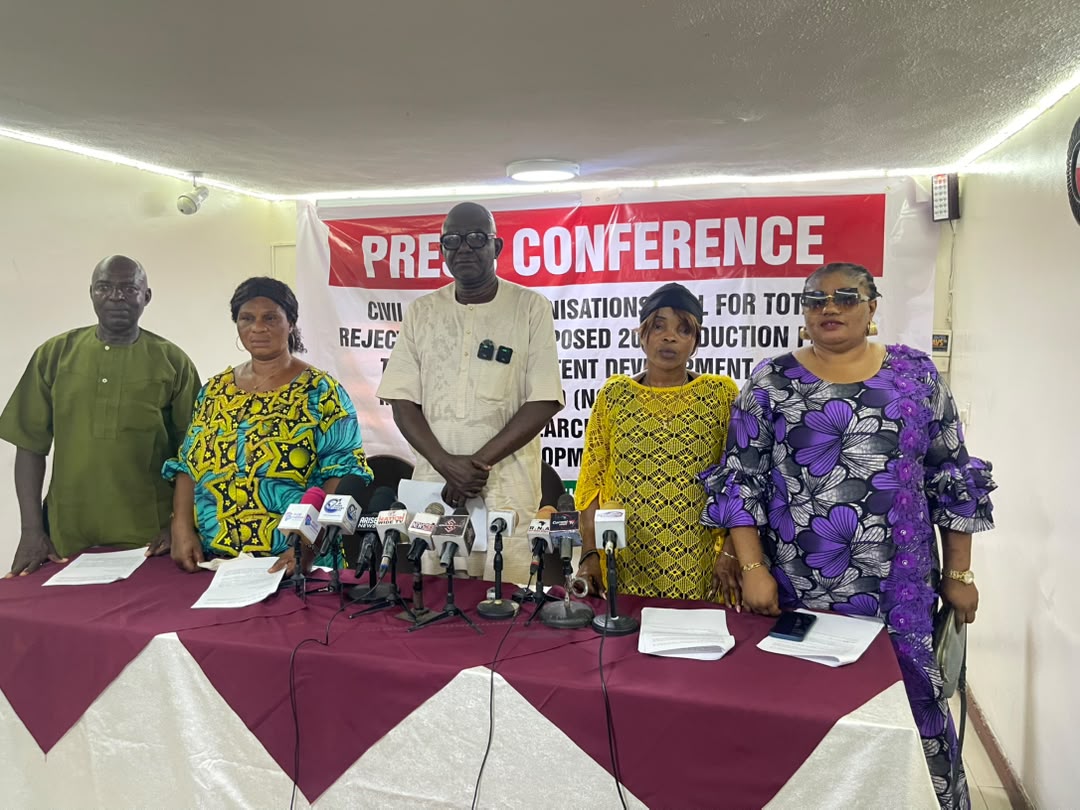
The Coalition of Civil Society Organisations in Nigeria (COCSON) has rejected a proposed 20 per cent deduction from the Nigerian Content Development and Monitoring Board (NCDMB) to finance the proposed National Research and Innovation Development Fund.
The coalition described the proposed funding arrangement as unacceptable, warning that it could undermine the development of indigenous capacity and local value addition in Nigeria’s oil and gas industry.
Speaking at a press conference in Abuja on Thursday, November 26, 2026, COCSON spokesperson, Tabuko Kennedy, said the coalition was not opposed to the establishment of a national research and innovation fund but strongly objected to the proposed funding mechanism.
Kennedy argued that funds allocated to the NCDMB were specifically meant to develop local capacity, support indigenous companies, train Nigerian engineers and promote value addition within the oil and gas sector.
He warned that diverting 20 per cent of the board’s revenue to finance another institution could weaken its ability to fulfil its statutory responsibilities.
According to him, the funds domiciled with the NCDMB are not surplus government revenue but contributions from companies operating in the oil and gas industry, specifically earmarked for local content development.
He maintained that diverting such funds without the consent of industry stakeholders would amount to a breach of trust and undermine the original purpose for which the resources were collected.
The coalition also warned that the proposed deduction could establish a dangerous precedent where financially viable government agencies would have portions of their revenues diverted to fund newly established institutions.
Kennedy questioned what would prevent similar deductions from other specialised intervention funds, including the Tertiary Education Trust Fund, the Universal Service Provision Fund and the Police Trust Fund.
He said such a practice could discourage revenue-generating agencies from improving their financial performance, create inter-agency rivalry and undermine long-term institutional planning.
COCSON further argued that the proposed deduction could violate the Nigerian Oil and Gas Industry Content Development Act, which provides the legal framework for the management and utilisation of funds accruing to the NCDMB.
The coalition maintained that the legislation did not envisage using the board’s resources to finance an unrelated research and innovation institution, describing the proposed diversion as inconsistent with the original statutory purpose of the funds.
Consequently, COCSON called on the leadership of the National Assembly, relevant committees and the Federal Executive Council to reject the proposed 20 per cent deduction.
It also appealed to President Bola Tinubu not to assent to the bill if the controversial funding provision remains in it.
The coalition disclosed that it had mobilised organised labour, pressure groups, religious organisations and other civil society groups to resist the proposed legislation.
It, however, stressed that it was not against research, innovation or the establishment of a national research funding institution, urging the government and lawmakers to explore alternative funding arrangements that would not undermine existing development agencies.
COCSON also called on Nigerians and industry stakeholders to oppose what it described as a legislative overreach, insisting that the country’s local content development programme should not be weakened to finance a new institution.
-
 Featured7 years ago
Lampard Names New Chelsea Manager
-
 Featured7 years ago
FG To Extends Lockdown In FCT, Lagos Ogun states For 7days
-
 Featured7 years ago
Children Custody: Court Adjourns Mike Ezuruonye, Wife’s Case To April 7
-
 Featured7 years ago
NYSC Dismisses Report Of DG’s Plan To Islamize Benue Orientation Camp
-

 Featured5 years ago
Transfer Saga: How Mikel Obi Refused to compensate me After I Linked Him Worth $4m Deal In Kuwait SC – Okafor
-
Featured7 years ago
Board urges FG to establish one-stop rehabilitation centres in 6 geopolitical zones
-

 News2 years ago
Zulu to Super Eagles B team, President Tinubu is happy with you
-
Sports4 years ago
TINUBU LAMBAST DELE MOMODU













