
Featured
National Assembly Scores ITF, Says We Are Not Aware Of Any Corruption In ITF
Joel Ajayi
The joint committee of ministry of industry in the National Assembly has described the allegations of corruption against Dr. Joe Ari, as unfortunate and caution the media against publishing falsehood aimed at pulling down an institutution, like Industrial Training Fund’s Director General, Dr. Joe Ari , who has distinguished himself since he took over the management of the training institution.
“How can an Institution , like ITF, that has come first, in probity and accountability in the ongoing budget performance and review out the over 600 Ministry , Department and Agency, MDA, be accused of corruption?, it is clear they so called Civil Societies were sponsored by those who did not meant well for the institution”
“ Saharareporters, has lost it, how can a self-funding institution be accuse of diverting funds?”
The Senator representing Osun East in the Red Chamber and and House Committee member Senator Fadausi Francis Adenigba in an interview with newsmen said the “The Committee does not respond to blackmail, because the National Assembly is a serious place”
“ If Saharareporters is a serious publication, they should have directed their inquiry to the Public Account Committee, in the Senate and the House, before going to press, but in their desperations, they got the wrong person, Joe Ari, who the Committee, or the Audit report from the Accountant General office, AGF, Auditor General office has not queried since he assumed office.
A Non-governmental Orgnaization, Budget Tracking and monitoring, has also condemned the alleged sponsored publications and protest against the Director General of the industrial Training Funds, ITF, Joe Ari.
“As a registered non-governmental organization, Budget monitoring and accountability, which activities and mandate to ensure the rights of Citizens, budget tracking and constituency projects across the 15 countries , in the west African Continent, our attentions has been drawn to the allegations of an alleged “ illicit transactions” against the Director General of the Industrial Training Fund, ITF by a self-styled Concerned Citizens for Change, Accountability and Probity, and the Joint Civil Society Task Force on anti-corruption The protesters demanded the sack of the ITF’s director, saying this would make good the promises of the government to rid the country of corruption.”
“.As a Non-Governmental organization, Budget Tracking and Monitoring , for the purpose of clarity does not engage in defence of individual, groups or institutions, but rather monitoring and tracking of budgetary allocations and utilizations of same.”
The group explained in a press statement made available to National Assembly Correspondents, signed by Mohammed Abdulrahaman, in Abuja , on Friday.
Our reactions is coming on the heel of the story credited to an online publications, alleging “illicit transactions in ITF”
“For the purpose of clarity, the Budget tracking and monitoring groups for the past one week has been part of the 2021, 2022, Budget Defence in the National Assembly, both at the Senate and the House of Representatives, including the review of the performance of the budgetary allocations to the Industrial Training Fund, ITF.
The report by the online publication, Saharareporters, apart from the fact that is an indictment and a challenge to our organization and the over 200 Journalists who cover both the Senate and the House of Representatives, as it will appears, only Sahara reporters was at the event, is full of fallacy of inconsistency, false equivalence and logic flaw reasoning.
It is suggestive of the fact that every other persons including the lawmakers in the National Assembly , have abdicated their constitutional responsibility to the Civil societies and Saharareporters , as the House Committee rather than stepping down the review would rather applaud the the DG , Joe Ari , and his management in the handling of the ITF.
It is regrettable that a group, a Civil Society they claimed they are throughout their protest and petition, could not substantiate their allegations with facts and figures, but rather present themselves as sponsored group to make a dog breakfast of the achievements of the DG, Joe Ari , as the Lawmakers attested to.
For instance the Eagle eyes Lawmakers throughout the review could not detect any financial infractions in ITF.
Suffice to mention our observations at what transpired at the event
As a way of tackling the rising wave of unemployment among youth in Nigeria, the Industrial Training Fund (ITF) is setting up skills acquisition centres for them across the states of the federation.
This is as members of the Senate Commitee on Industry, made subtle lobby for such centres to be sited in their respective senatorial zones .
Setting up of the centres by ITF, came to the fore during budget defence session the agency had with the Senate Committee on Industry on Tuesday.
In his presentation before the committee, the Director General of ITF, Joseph Ari, said the centres are being created to tackle the problem of unemployment in the country particularly among the youths.
From the centres, thousands of youths he added, will be equipped with required innovative skills that will take them off the streets and make them self employed.
“Setting up of the Industrial Skill Training Centres, is central to the core mandate of ITF, the very reason the agency is very resolute and passionate in putting them in place across the states of the federation,” he said.
Apparently impressed with the move of ITF, some members of the committee like Senators Jibrin Isa (APC Kogi East ), Christopher Ekpeyong (PDP Akwa Ibom North West), Danjumah La’ah ( PDP Kaduna Central) and Muhammad Adamu Bulkachuwa (APC Bauchi North), asked him about locations of the centres in their states.
Senator Jibrin Isa in particular, complained to the DG that records before him show Kogi West and Central as locations of such centres and not Kogi East .
But the ITF DG in his response said locations of the centres across the states are devoid of political affiliation of people in the states or Senatorial zones.
“In establishing the centres, we consult with respective State Governors for the required buy in at that level but with observation made here today , I promise to also carry along distinguished Senators,” he said.
Earlier in his presentation on 2021 budget implementation by the agency and 2022 budgetary proposals, the ITF boss said while a total budgetary vote of N44.5billion was earmarked for the agency in 2021, the projected estimate for 2022 is N42.5billion , which shows difference of N2.1billion.
He said the N2.291billion capital vote for the year has not been expended due to lack of cash backing for projects lined up for execution.
But the Director of Procurement in his explanation, said all the procurement processes delaying execution of capital component of the agency’s 2021 budget have been done, which will make slated contracts to be executed before the end of the year.
In his closing remarks at the session, the Chairman of the committee, Senator Adetokunbo Abiru, said, “ITF is very germane to the economy of the Nation and needs to redouble its effort in the establishment of skills acquisition and vocational centres across the country.
“Since we have moved from the era of Industrial revolution, such centres should be driven more by innovation,” he said. Protesters At National Assembly Demand Probe, Sacking of Director-General of Industrial Training Fund
Industrial Training Fund (ITF) tackles unemployment with industrial skills training centres as Senators lobby for locations
It had been reported that Ari was also accused of awarding fraudulent contracts to family members without recourse to procedure and due process as well as illegally promoting female workers without regard for public service rules.
Within a few years in office, Sir Joseph Ntung Ari has been able to empower a huge number of citizens of the country in diverse disciplines.
when the current management came on board, it met an organization on the cusp of crisis – that manifested in consistent bad press and restiveness amongst the workforce, but he strived to resolve the crises both internal and external and has been able to return the organization on to the path of growth
Our findings has shown that when the current management assumed office , Ari , announced a template that the management will operate- Strategies for Mandate Actualization within six-year plan that was conceived comprised of short term, medium and long term goals.
According to him It commenced in late 2016 to terminate in 2022, saying It was designed to aggressively address service challenges, infrastructure deficits, revenue and a gamut of other strictures impinging the actualization of the Fund’s mandate.
“Barely two years into its implementation, the ITF has trained over 60,000 Nigerians from 2,300 organisations.
‘We. trained over 50,000 youths and other vulnerable groups were equipped with skills for employability and entrepreneurship through programmes including the National Industrial Skills Development Programme, (NISDP), the Women Skills Empowerment Programme (WOSEP), Training on Wheels and the Technical Skills Development Project (TSDP), among several other initiatives.
In all, about 150,000 Nigerians have benefited from ITF training programmes since assumption of the current management”
He emphasied that the ITF implemented numerous technical skills acquisition programmes as well as introduced new initiatives including the National Industrial Skills Development Programme (NISDP), the Women Skills Empowerment Programme (WOSEP) and the Skills Development Programme for Youths in Construction Trade (CONSEP) among several others.
‘The NISDP, our flagship technical vocational skills acquisition programme, which was run twice in 2016, has trained about 30,000 youths drawn from the 36 states of the Federation and the Federal Capital Territory (FCT) between late 2016 to date.
‘In the last phase of the programme, new ideas were introduced. Trade areas were streamlined to three, namely: Welding and Fabrication, Tailoring / Fashion Design, and Plumbing and Pipe Fitting.
‘Another tweak was unlike previous phases where the ITF depended on State governments to provide start-up kits, the ITF provided start-up packs to all the 11,100 beneficiaries of the programme .
He said WOSEP is another skills acquisition programme that was targeted at another vulnerable segment, in this case the women folk. and in the Programme over 500 rural women drawn from 13 states and the FCT were trained across 32 centres
‘ Eleven trade areas were covered, namely: Event Management, Cosmetology, Poultry Farming, Bead Making, Baking and Pastry, Soap/Disinfectant/Detergent Making, Hair Making, Food Processing, Tailoring and Fashion Design, Tie and Dye and Electrical Installations.
‘Passion to profession (training on wheels), over 120 trainees were trained in tailoring and garment making using our mobile training units.
‘The Construction Skills Empowerment Programme, CONSEP was initiated in 2017 with the aim of equipping Nigerians with skills for the construction sector.
‘A total of 1,900 Nigerians from 19 states of the Federation and the FCT were trained in five trade areas namely: Brick Making, Plaster of Paris, Tiling, Electrical Installation and Carpentry. Our commitment is to continue with this programme until Nigerians are equipped with the required skills to stem incidences of building collapse and to supplant the foreigners in this sector.
‘ITF Model Skills Training Centre (MSTC), Abuja, the Management procured the remainder of equipment that had stalled the graduation of trainees of Facility Technology and Mechatronics at the centre. With the installation, trainees of the Mechatronics Department have graduated while Facility Technology trainees will graduate later this year.
“The issue of certification, which was part of the reasons for the delay in graduation has been resolved. Today, a graduate of our MSTC is a proud holder of the National Innovative Diploma Certificate which is equivalent to the National Diploma award by polytechnics and monotechnics.
“Similarly, the Fund retooled and refitted its Industrial Skill Training Centres (ISTCs) in Kano, Ikeja and Lokoja with the state-of-the-art training equipment for them to be able to impart cutting edge skills to Nigerians. These centres have since been chosen by the Federal Government for the N-Power programme’.
.
In keeping faith with ITF enabling Act that every Employer, having either five or more employees in its establishment, OR having less than five employees but with a turnover of fifty million naira (N50m) and above per annum, shall, in respect of each calendar year, or on the prescribed date, contribute to the Fund one percentum (1%) of its total annual payroll; All Employers who pay their annual Training Contribution have a duty to train indigenous staff and shall accept Students on Industrial Attachment.
The Fund paid a total of Six Billion, Four Hundred and Fifty-One Million, Three Hundred and Sixty-Five Thousand, Ninety-Two Naira, Fifty-Six Kobo (N6,451,365,092.56) as training reimbursement to Four Hundred and Thirty (430) companies that met all criteria for such reimbursement.
On the infrastructure deficits in the Fund, he said the management embarked on the completion of Lagos Island, Katsina and Minna Area Offices. All the three Area Offices are at different levels of completion and will be commissioned soon.
‘At the ITF staff School, Management renovated all existing structures, and constructed new classrooms and hostel blocks in order to accommodate more students.
‘It also established a school farm for Agricultural science practicals, and provided and equipped workshops for Technical Science, Home Economics, Chemistry, Physics and Biology subjects. As a result of these developments, the school has now been accredited as a WAEC centre.
The Fund disbursed a total of N199,800,000.00 to 289 staff as housing and car loans.
The intention of the revolving loan scheme is to ensure that staff of the Fund own their own houses and have no transportation problems.
A total of 1,646 members of the Fund’s workforce were sponsored for capacity development.
1,517 were sponsored on short term staff development programmes,
58 were sponsored on professional membership in their various professional fields,
42 benefitted from long term staff development programmes.



Business
Turning Africa’s Raw Materials Into Wealth: The ARMS 2026 Industrial Agenda
By Joel Ajayi
For decades, Africa’s vast natural resources have powered industries and economies far beyond the continent, while many African countries have remained largely exporters of unprocessed commodities and importers of finished products.
That familiar pattern is now coming under renewed scrutiny as policymakers, researchers, investors and industrialists seek to change the direction of Africa’s resource economy.
At the centre of that conversation is the second edition of the Africa Raw Materials Summit (ARMS 2026), scheduled for October 19 and 20 at the Abuja Continental Hotel, Abuja, under the theme: “From African Feedstock to African Factories.”
Organised by the Raw Materials Research and Development Council (RMRDC), the summit is being positioned as more than another gathering of policymakers and industry stakeholders. It is intended to provide a platform for confronting the structural challenges that have kept African raw materials largely disconnected from local manufacturing.
Africa has for years operated largely within a “pit-to-port” economic model, exporting raw materials while importing expensive finished products.
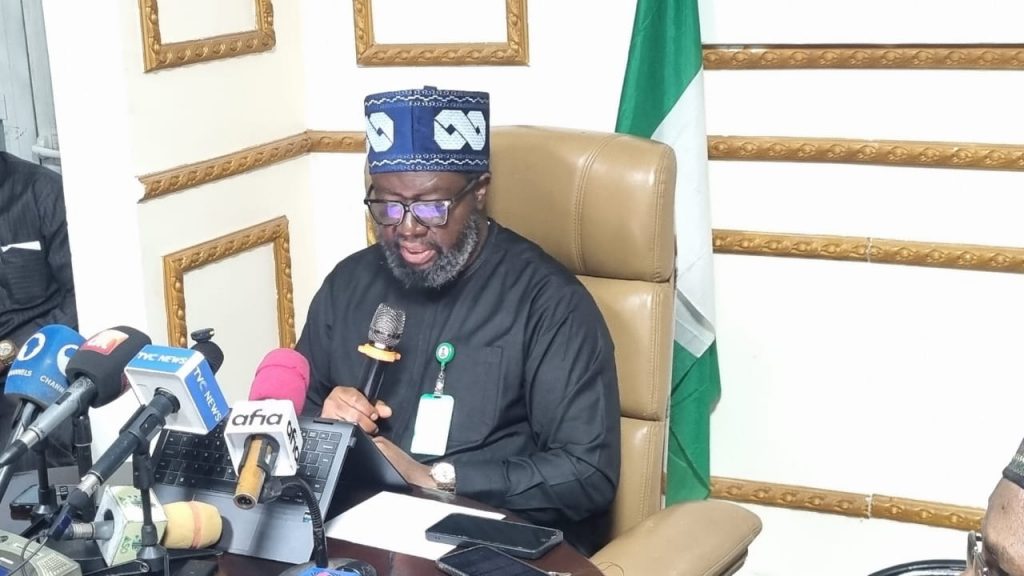
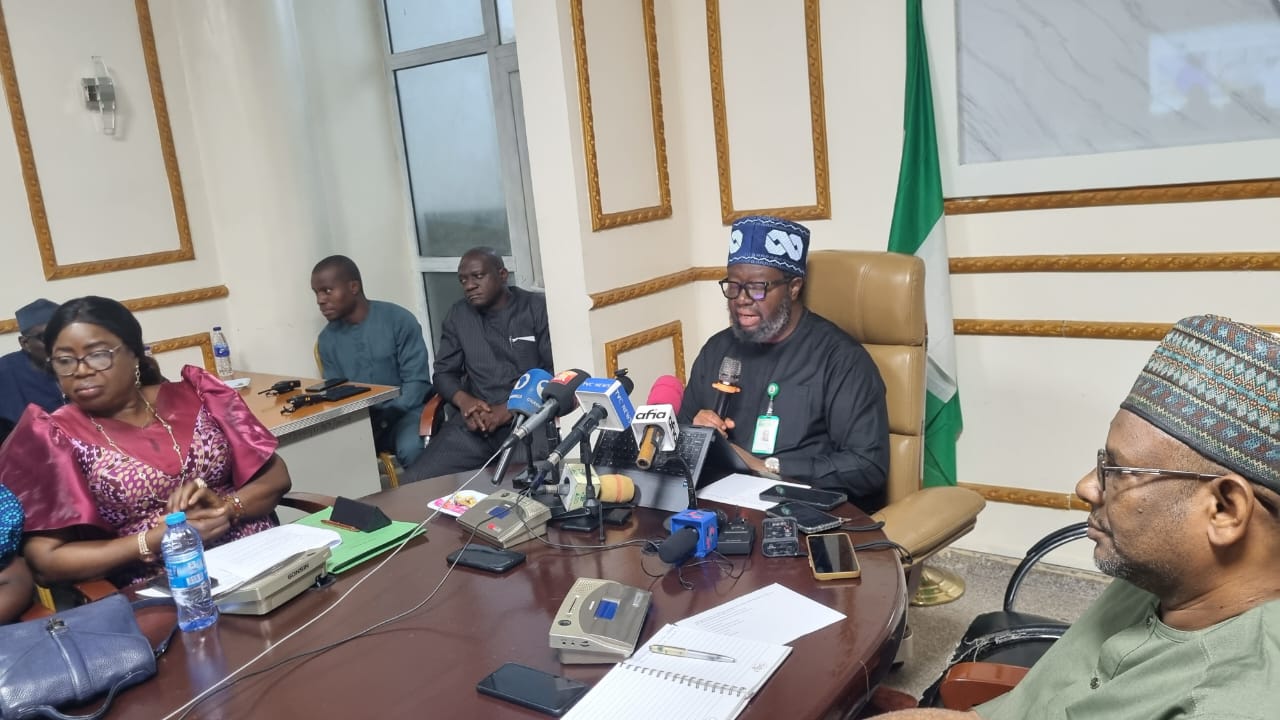
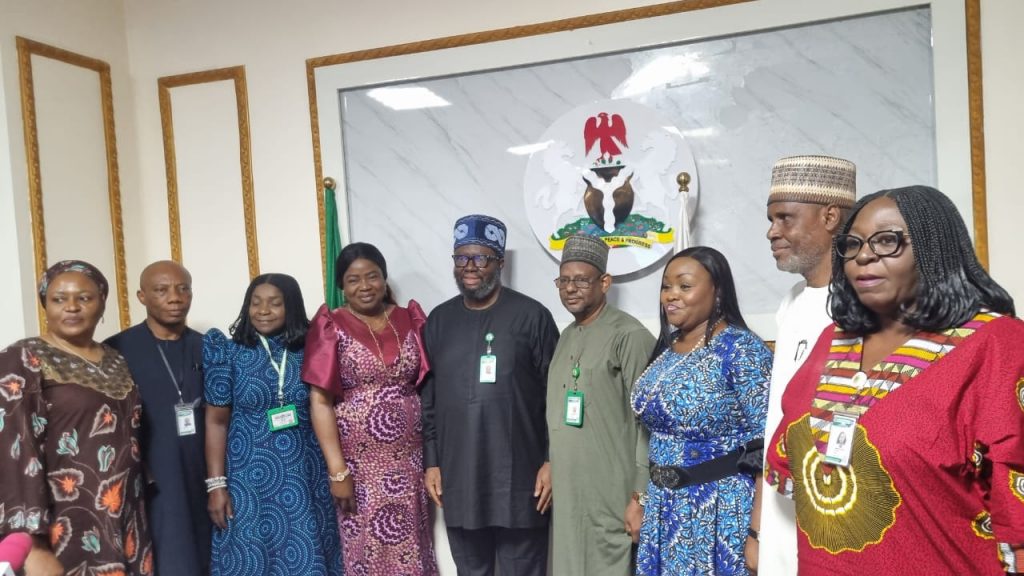
Speaking at a press conference ahead of the summit on Tuesday in Abuja, the Director-General and Chief Executive Officer of RMRDC, Prof. Nnanyelugo Martin Ike-Muonso, said the event would bring together policymakers, investors, researchers, technology providers and industrialists to develop practical strategies for transforming Africa’s abundant natural resources into industrial wealth.
The challenge, therefore, is not simply the abundance of resources, but the continent’s ability to transform those resources into industrial value, employment, technology and wealth within Africa.
Nigeria alone, according to the RMRDC, has more than $582.4 billion in documented non-renewable natural resources, while the wider continent possesses substantial deposits of critical minerals, agricultural raw materials and industrial feedstock.
Yet, the benefits of this resource endowment have often been constrained by inadequate processing capacity, weak infrastructure, limited technology, financing gaps and fragmented regional value chains.
From Dialogue to Industrial Action
ARMS 2026 builds on the maiden edition held in May 2025, which attracted more than 1,000 delegates from across the world.
The inaugural summit also witnessed the unveiling of the Ten-Year Raw Materials Transformation Roadmap (2025–2034) by the Minister of State for Industry, Senator John Owen Enoh.
The roadmap was designed around areas including technological capability, climate-resilient processing and backward integration, establishing a policy framework for greater domestic utilisation of Africa’s raw materials.
The second edition is expected to move the conversation further by bringing policy, capital, technology and industrial stakeholders around practical mechanisms for turning raw materials into locally manufactured products.
One of the major proposals highlighted by the RMRDC is the 30 per cent Mandatory Value Addition Bill, which seeks to establish a statutory minimum level of value addition to Nigerian raw materials before export.
The Council says the proposed framework could support job creation, import substitution, foreign-exchange conservation and increased manufacturing contribution to the economy.
Building the Infrastructure for Value Addition
The industrial transformation envisaged by ARMS 2026 goes beyond legislation.
A major concern is the “missing middle” between where raw materials are produced and where factories are located.
Poor transportation networks, inadequate cold-chain facilities, weak rural roads, limited testing and certification infrastructure and border-related delays can make locally sourced materials more expensive and less competitive.
Consequently, logistics and infrastructure constitute one of the five principal pillars of the summit.
The objective is to develop more reliable corridors connecting farms and mines with processing centres and manufacturing facilities, thereby reducing losses and improving the movement of industrial inputs.
The Digital Dimension
Technology is also becoming an important part of the Council’s strategy.
The RMRDC says it has developed the Nigeria Integrated Information Statistical System for Raw Materials and Products (NISSRAMP), described as a digital repository containing information on feedstock deposits, specifications, production outputs and industrial absorption rates.
The Council has also highlighted its transition towards paperless operations and its certification as a Data Controller/Processor of Major Importance by the Nigeria Data Protection Commission.
Such digital infrastructure could provide investors and manufacturers with better information about the availability and characteristics of raw materials while supporting more informed industrial planning.
Turning Waste Into Industrial Inputs
Another major component of ARMS 2026 is the proposed expansion of the circular economy.
The summit will examine how agricultural by-products, mine tailings, scrap metals and biomass can be recovered and reused as inputs for new production processes rather than being treated simply as waste.
The RMRDC argues that such an approach could lower raw-material costs while supporting more sustainable and climate-resilient manufacturing systems.
For Africa, where industrial expansion must increasingly balance economic development with environmental considerations, waste industrialisation could become an important part of the continent’s manufacturing conversation.
From National Production to African Value Chains
The African Continental Free Trade Area is another important element of the summit’s agenda.
The RMRDC sees AfCFTA as an opportunity to create regional value chains in which raw materials sourced in one African country can be processed and supplied to manufacturers in another.
Under such a model, Africa would move beyond simply exporting commodities to external markets and develop stronger internal networks for supplying chemicals, refined minerals, agricultural inputs and other industrial materials across national borders.
This approach places regional integration at the heart of Africa’s industrialisation strategy.
Bridging Research and Capital
A recurring weakness in many developing economies is the gap between research and commercialisation.
Innovations may emerge from universities, research institutions and laboratories without receiving the financing, equipment or market connections required to become commercially viable.
ARMS 2026 intends to address that gap through technology commercialisation and capital linkages, connecting research outputs with investors, development finance institutions and industrial off-takers.
The RMRDC has also cited partnerships with the Bank of Industry for commercial-scale post-harvest processing and a South-South technology-transfer partnership with the National Innovation Centre par Excellence in Shanghai, China.
A Larger Industrial Conversation
The scale of ARMS 2026 is expected to be significantly larger than the maiden edition.
The organisers project more than 1,800 delegates from all 54 African countries and global industrial partners.
The programme will feature high-level policy dialogues, technical panels, an advanced raw materials and technology exhibition, industrial site visits and the African Raw Materials Industry Awards.
The exhibition, in particular, is expected to showcase locally fabricated processing machinery, advanced domestic materials, green chemicals and engineered commercial inputs.
Beyond the speeches and exhibitions, however, the real significance of ARMS 2026 will ultimately depend on what happens after the summit.
Africa’s challenge has never been a shortage of raw materials. The more difficult question has been how to transform those resources into factories, products, skilled employment, technology and sustainable economic opportunities.
For Nigeria and the rest of the continent, the proposed shift from “pit-to-port” to “feedstock-to-factory” therefore represents a broader debate about the future structure of African economies.
ARMS 2026 seeks to place that debate firmly on the industrial agenda — with value addition, technology, finance, infrastructure, circular production and regional trade at the centre.
If the commitments and partnerships generated by the summit translate into measurable industrial activity, the event could provide another platform for Africa to examine how its enormous resource base can support stronger domestic manufacturing.
The message from the organisers is clear: the continent’s raw materials should not only leave African soil as commodities; they should increasingly become the foundation for African industrial production
-
 Featured7 years ago
Lampard Names New Chelsea Manager
-
 Featured6 years ago
FG To Extends Lockdown In FCT, Lagos Ogun states For 7days
-
 Featured7 years ago
Children Custody: Court Adjourns Mike Ezuruonye, Wife’s Case To April 7
-
 Featured7 years ago
NYSC Dismisses Report Of DG’s Plan To Islamize Benue Orientation Camp
-

 Featured5 years ago
Transfer Saga: How Mikel Obi Refused to compensate me After I Linked Him Worth $4m Deal In Kuwait SC – Okafor
-
Featured7 years ago
Board urges FG to establish one-stop rehabilitation centres in 6 geopolitical zones
-
Sports4 years ago
TINUBU LAMBAST DELE MOMODU
-

 News2 years ago
Zulu to Super Eagles B team, President Tinubu is happy with you