
Basketball
NBBF POLLS: Nigerian Basketball Deserves Fresh Leadership, New Ideas

The 2026 Nigeria Basketball Federation (NBBF) election is more than a contest for an office. It is a defining moment for a sport that has produced remarkable talent but has too often been weighed down by administrative turbulence.
For years, Nigerian basketball has endured factional battles, leadership disputes, competing interests, protests, court proceedings and allegations of interference. Too much energy has been spent fighting over who controls the federation, and too little on building the institution.
Now, as the election approaches, an old argument is returning: that only those deeply embedded in the federation’s traditional structures possess the experience to lead.
That premise deserves to be challenged. It is time for someone who possesses the goodwill, dedication, determination, and capacity to connect with all levels of leadership, both within government and beyond, to step forward and take the system to a better place.
Experience matters. But experience without transformation is simply longevity. Experience without a track record of progress is retrogression. The question is no longer who has spent the longest time inside the system. It is who can take the system somewhere better.
THE “OUTSIDER” LABEL IS NOT A DISQUALIFICATION
Some candidates are being portrayed as “outsiders” because they are relatively new to the internal politics of the federation.
But Nigerian basketball is bigger than its boardroom politics. Being new to a federation structure does not mean being inexperienced in leadership, management, business, institution-building or stakeholder engagement. Modern sports administration demands much more than familiarity with internal networks. It demands the capacity to attract investment, build partnerships, strengthen competitions, deploy modern management systems and inspire confidence.
Indeed, the strongest argument for fresh leadership may be the failures of the old political cycle itself. When an institution repeatedly produces factional disputes, competing claims, protests and litigation, stakeholders are entitled to ask whether simply recycling the same political architecture can produce a different result. To this end, fresh leadership is not necessarily a rejection of experience.
Sometimes, it is the opportunity to free experience from the politics that has constrained it.
ALLEGATIONS MUST NOT BECOME VERDICTS
The election must also rise above the dangerous politics of accusation. Corruption-related claims and other allegations have increasingly become weapons in the contest for public opinion. They must be treated with both seriousness and discipline. A media report is not a conviction. An allegation is not a finding. An investigation is not proof of guilt.
Where a competent court has delivered a final judgment, let the judgment speak. Where a government agency has reached a conclusive finding, let the finding be produced. Where an audit establishes misconduct, let the audit be examined.
But where none of these exists, repetition cannot manufacture a verdict.
THE NBBF NEEDS A NEW ADMINISTRATIVE CULTURE
The greatest challenge may not be any individual. It is the culture of perpetual confrontation that has surrounded the federation. Nigerian basketball cannot continue to spend every election fighting yesterday’s battles. The next administration must be judged by its ability to build a commercially stronger domestic league, attract sustainable sponsorship, strengthen clubs and State associations, expand grassroots development, improve financial transparency and create meaningful pathways for players and coaches.
It must also understand that modern basketball administration requires more than sporting credentials. It requires business development, technology, governance, diplomacy, strategic communication, institutional management and international partnerships.
This is why qualified candidates bringing fresh professional expertise deserve serious consideration. A new entrant into federation politics may possess precisely what an entrenched system often struggles to generate: independence from old factions, freedom from inherited loyalties and the courage to challenge established assumptions.
THE CHOICE IS ABOUT THE FUTURE
The 2026 election should therefore not be reduced to a contest over who has been around the federation longest. It should be a contest of ideas, competence and results.
Every candidate should answer the hard questions: How will the domestic league become sustainable? How will sponsorship grow? How will grassroots basketball be transformed? How will clubs and athletes benefit? How will financial accountability improve? And how will the next administration prevent the federation from returning to the factional conflicts that have repeatedly consumed it? These questions matter more than titles, alliances or years spent inside the system.
Nigerian basketball has the talent to compete with the best. D’Tigress has repeatedly demonstrated the heights Nigerian basketball can reach when talent meets preparation and organisation.
The leadership and stakeholders must now rise to that standard.
The NBBF belongs to Nigerian basketball, not to any individual, faction or generation. While past contributions deserve respect, it must also be noted that respect is not entitlement; longevity is not ownership, and experience is not immunity from scrutiny.
The Congress has an opportunity to choose not just a familiar name, but a new direction. A direction built on professionalism rather than factionalism. One built on accountability rather than accusation and innovation rather than inertia. After years of familiar battles, Nigerian basketball deserves fresh thinking, fresh energy and fresh leadership.
The future should not be another version of the past. It should be a profound expression of capacity, credibility, pure passion and rebirth that would catapult the NBBF to global relevance; to compete competently with basketball federations of other nations.



Basketball
“I Didn’t Falsify Any Document For NBBF Election”….Oyedeji Accuses NBBF Appeals Committee of Procedural Bias
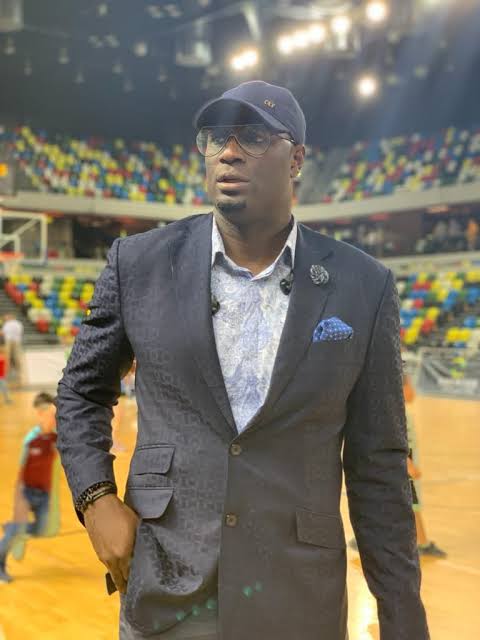
Former Nigeria international basketball star and 2026 Nigeria Basketball Federation (NBBF) presidential candidate, Olumide Oyedeji, has challenged the handling of the federation’s electoral dispute, accusing the Electoral Appeals Committee of introducing procedural barriers capable of denying him a fair hearing.
Oyedeji, who also contested for the South-West Representative position, raised concerns over what he described as procedural irregularities, alleged constitutional breaches and attempts to introduce forgery allegations into the appeal process.
In a detailed response dated October 24, 2026, and addressed to the Chairman of theñ NBBF Electoral Appeals Committee in Abuja, the former D’Tigers captain rejected allegations questioning the authenticity of his tax certificate and a letter bearing the signature of Olumide Bamiduro.
He maintained that his tax certificate was genuine, disclosing that he had made direct enquiries from the relevant Tax Office, which reportedly confirmed its authenticity.
He also said his investigations had revealed no evidence of forgery or criminality concerning the letter bearing Bamiduro’s signature.
Oyedeji questioned why the authenticity of documents already submitted to and accepted by the Electoral Committee, which subsequently cleared his candidacy, was being challenged during the appeal proceedings.
A major issue in Oyedeji’s response was the Electoral Appeals Committee’s decision to give him 24 hours to respond to a query and subsequently indicate that his appeal would no longer be considered because his response was allegedly not received within the stipulated period.
He argued that the 24-hour deadline was not provided for in the NBBF Constitution or applicable Electoral Guidelines.
According to him, the 24-hour provision in the guidelines relates specifically to the period within which an aggrieved candidate may submit an appeal following an election, a requirement he maintained he had already fulfilled.
He also questioned the manner in which the committee communicated its
Oyedeji contrasted this with his approach when submitting his original appeal, saying he personally alerted the committee to expect the time-sensitive document.
He argued that introducing an allegedly unilateral deadline to prevent the consideration of his appeal raised serious questions about procedural fairness, impartiality and his constitutional right to be heard.
Names Eight Allegedly Excluded NBBF Board Members
Addressing the committee’s request for the identities of board members allegedly suspended or illegally excluded from the federation’s activities, Oyedeji listed eight individuals.
They are Olumide Oyedeji (South-West Representative), Suraj Yusuf (North-West Representative), Adamu Deshi (North-Central Representative), Scott Nnaji (Technical Representative), Stanley Gumut (Players’ Representative), Professor Adeyanju (NAWIS Representative), Olumide Bamiduro (NAPHER-SD Representative) and retired Colonel Sam Ahmedu (International Representative).
Oyedeji alleged that the former NBBF President lacked the constitutional authority to suspend or exclude the affected board members without following due process.
He also questioned the validity of decisions taken at board meetings from which the affected members were allegedly excluded, particularly where only four other members reportedly participated.
He further referred to an alleged intervention by the Director-General of the National Sports Commission (NSC), who reportedly met with board members two days before the Yola Congress and informed the former president that he lacked the authority to suspend members in the manner adopted.
According to Oyedeji, the reported intervention and directive for the affected members to be recalled raised fundamental questions about the legality of subsequent board decisions and the electoral process built on them.
Another major issue raised in the response was the Extraordinary Congress held in Yola, Adamawa State, which Oyedeji described as constitutionally compromised.
He alleged that the congress was neither convened by two-thirds of Congress members nor by two-thirds of the NBBF Board, as required by the applicable constitutional provisions.
He further argued that the mandatory 21-day notice requirement was not observed
Oyedeji also questioned the communiqué issued after the congress, which he said reportedly listed 44 members instead of the 50 recognised under the relevant membership structure.
He sought clarification on whether all eligible members and constituent bodies were properly notified
The former basketball international also questioned the alleged removal and replacement of State Basketball Association chairpersons and representatives without adequate justification or compliance with established procedures.
He cited the cases of Kwara, Zamfara and Osun Basketball Associations, alongside representatives from Benue, Ekiti and other states.
Oyedeji specifically questioned a Benue State letter seeking to replace the state’s original representatives to the Yola Extraordinary Congress, identified as Igoche Mark and retired Colonel Sam Ahmedu, with Fanen Iornem and Mathew Shije.
He observed that the replacement letter, signed by the Benue State Commissioner for Sports, was dated August 17, 2026, while the NBBF’s request for states to submit their representatives was dated September 10 and reportedly emailed on September 13.
He described the chronology as requiring clarification, questioning how a replacement letter could have been issued weeks before the official request for the submission of delegates.
He therefore urged the Appeals Committee to investigate the circumstances surrounding the letter, including its date, submission and compliance with the applicable procedures.
Oyedeji also revisited his alleged unjustified omission from the published list of candidates for the South-West Representative position ahead of the October 15 elective congress.
He explained that he submitted his nomination to contest both the South-West Representative position and the NBBF presidency.
According to him, the federation’s constitution requires presidential and vice-presidential aspirants, except eligible incumbents seeking a second term, to first secure positions on the board through their respective constituencies.
However, when the Electoral Committee released its final list of candidates two days before the elective congress, his name was missing from the South-West Representative category.
He questioned the circumstances surrounding the omission, particularly as he claimed the constitution required the publication of candidates’ names 14 days before the election.
Oyedeji also questioned the consistency of the Electoral Committee, chaired by Dr Lanre Glover, pointing out that similar omissions did not occur in the cases of Dr Mustapha Abdullahi, who contested for North-Central Representative and the presidency, and Ugo Udezue, who contested for South-East Representative and the vice-presidency.
Although his name was eventually included as a South-West Representative candidate on the floor of the October 15 congress, Oyedeji argued that the late correction did not completely address the consequences of his earlier exclusion.
He claimed that some of his supporters had switched allegiance to other candidates after believing he was no longer in the race.
He consequently called on the Appeals Committee to investigate the circumstances surrounding his omission and determine whether he was afforded the same opportunity as other candidates throughout the electoral process.
Concluding his response, Oyedeji urged the Electoral Appeals Committee to concentrate on the substantive issues arising from his appeal rather than introduce matters he considered unnecessary distractions.
He insisted that the questions surrounding the exclusion of board members, the legality of the Yola Extraordinary Congress, the replacement of state representatives, his omission from the candidates’ list and the handling of his supporting documents required proper investigation.
The former D’Tigers captain maintained that the validity of any electoral process must be determined by strict adherence to the constitution and established electoral procedures governing the federation.
He appealed to the committee to give his petition impartial consideration and ensure that his right to a fair hearing was protected.
Oyedeji’s response adds another dimension to the controversy surrounding the October 15, 2026 NBBF elective congress, placing the spotlight on the Electoral Appeals Committee and the constitutional questions raised over the conduct of the federation’s electoral process.
-
 Featured7 years ago
Lampard Names New Chelsea Manager
-
 Featured7 years ago
FG To Extends Lockdown In FCT, Lagos Ogun states For 7days
-
 Featured7 years ago
Children Custody: Court Adjourns Mike Ezuruonye, Wife’s Case To April 7
-
 Featured7 years ago
NYSC Dismisses Report Of DG’s Plan To Islamize Benue Orientation Camp
-

 Featured5 years ago
Transfer Saga: How Mikel Obi Refused to compensate me After I Linked Him Worth $4m Deal In Kuwait SC – Okafor
-
Featured7 years ago
Board urges FG to establish one-stop rehabilitation centres in 6 geopolitical zones
-
Sports4 years ago
TINUBU LAMBAST DELE MOMODU
-

 News2 years ago
Zulu to Super Eagles B team, President Tinubu is happy with you













