
News
NEDC Sparks New Era of Growth with Multi-Billion Naira Investments in North-East
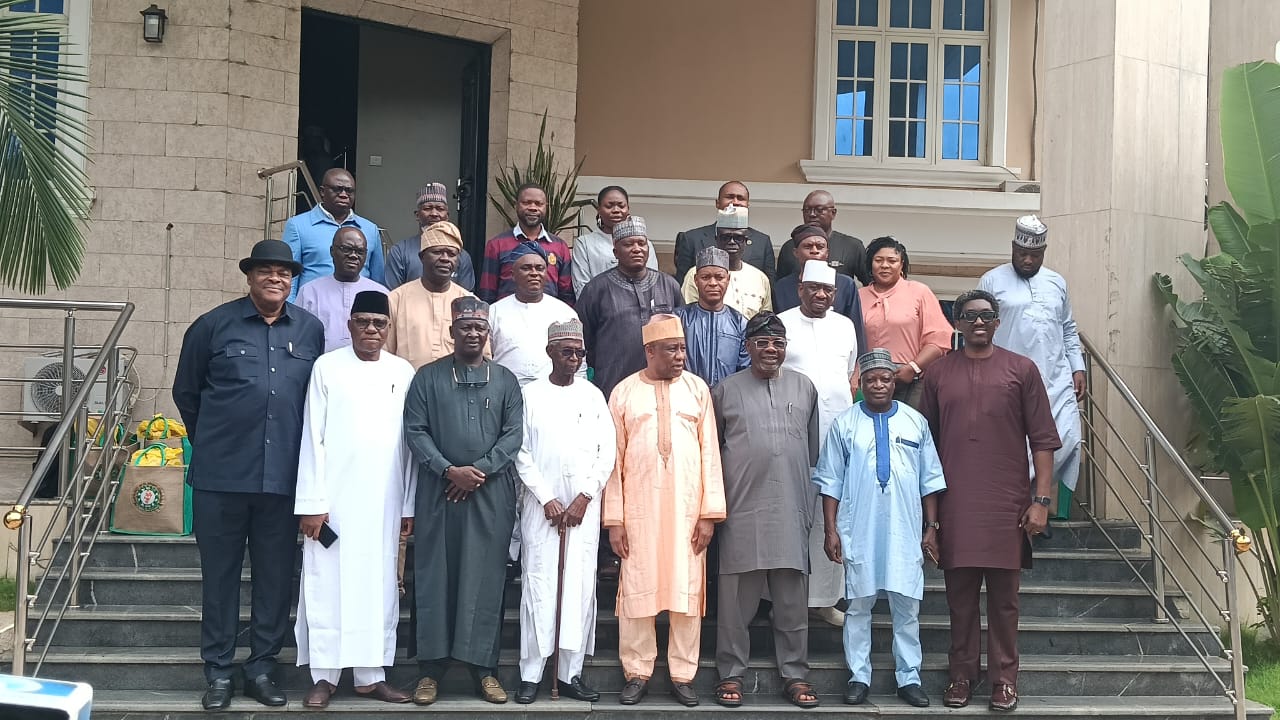
By Joel Ajayi
The North East Development Commission (NEDC) has launched what is arguably the most ambitious development drive in its history, unveiling a multi-billion naira investment package aimed at ushering in a new era of economic growth, industrialisation and sustainable prosperity across Nigeria’s North-East.
The landmark initiatives, approved by the Commission’s Governing Board, signal a major shift from post-insurgency reconstruction to long-term economic transformation, with strategic investments in renewable energy, transportation, healthcare, enterprise development, electric mobility and regional connectivity.
Speaking on Thursday in Abuja during the Governing Board meeting and a press conference on the Commission’s intervention programmes and operations, the Managing Director and Chief Executive Officer of the NEDC, Mohammed Goni Alkali, said the investments mark the beginning of the “Expansion and Sustainable Growth” phase of the North-East Stabilisation and Development Master Plan (NESDMP).
According to him, having spent years rebuilding communities affected by insurgency and humanitarian crises, the Commission is now focused on unlocking the region’s enormous economic potential through strategic infrastructure, industrialisation, private sector participation and job creation.
“The North-East is no longer defined by its past but by the promise of its future,” Alkali declared, adding that the Commission is laying the foundation for a prosperous, investment-friendly and globally competitive region.
Leading the investment package is a ₦100 billion commitment to a 50-megawatt solar mini-grid programme, designed to expand access to reliable electricity for homes, schools, hospitals, markets, agricultural clusters and industries across the North-East.
Alkali said the renewable energy initiative builds on the success of the Commission’s “Light Up the North-East” programme, which has already delivered more than 100,000 solar-powered streetlights, improving public safety and extending economic activities across the region.
To further strengthen regional economic integration, the Governing Board also approved plans to advance the proposed North-East Railway Project, expected to improve freight and passenger transportation, reduce logistics costs, strengthen agricultural value chains and boost regional and cross-border trade.
The Commission also endorsed the establishment of a North-East Regional Airline, which is expected to enhance connectivity, facilitate business travel, promote tourism, improve emergency response and attract greater domestic and foreign investment.
Another major highlight of the investment package is the rollout of the Commission’s flagship Electric Vehicle (EV) Programme, positioning the North-East as a pioneer in Nigeria’s transition to clean and sustainable transportation.
The programme will commence with the deployment of 300 electric taxis, electric minibuses and larger buses as part of a phased rollout of more than 10,000 electric vehicles, supported by charging infrastructure and maintenance facilities.
According to Alkali, the initiative will not only modernise public transportation but also create thousands of green jobs for engineers, technicians, mechanics, ICT professionals and transport operators through technology transfer and local capacity development.
To stimulate entrepreneurship and expand economic opportunities, the Commission approved the establishment of a ₦30 billion NEDC-Bank of Industry (BOI) MSME Development Fund.
The fund will provide affordable financing, business development services and capacity-building support for micro, small and medium-sized enterprises, particularly those owned by youths and women, with the goal of accelerating inclusive economic growth across the region.
Healthcare also received a significant boost, with the Board approving the procurement of eight state-of-the-art 1.5 Tesla Helium-Free MRI machines, alongside CT Scan machines, digital X-ray systems, mammography equipment and dialysis machines for deployment across the six North-East states.
The package also includes the upgrade of the Borno Eye Hospital into a modern ophthalmic centre and the establishment of a fully equipped Fertility Centre at the University of Maiduguri Teaching Hospital, aimed at improving access to specialised healthcare services within the region.
To ensure effective implementation of the projects, the NEDC announced strategic partnerships with the United Nations Industrial Development Organization (UNIDO), the United Nations Development Programme (UNDP) and the Rural Electrification Agency (REA) to support renewable energy, industrialisation, enterprise development and skills acquisition.
Highlighting the Commission’s commitment to excellence, Alkali disclosed that the NEDC has attained five International Organization for Standardization (ISO) certifications, reflecting its adherence to transparency, accountability and globally recognised standards in project delivery.
He described the newly approved investments as one of the most comprehensive development packages ever undertaken by the Commission, noting that they are designed to unlock private investment, create employment, improve productivity and position the North-East as a peaceful, prosperous and competitive economic hub.
Alkali reaffirmed the Commission’s commitment to implementing the North-East Stabilisation and Development Master Plan in line with President Bola Ahmed Tinubu’s Renewed Hope Agenda, expressing confidence that the investments will spark a new era of growth and firmly place the region on the path from recovery to lasting prosperity.



News
DNKI President Champions Humanitarian Service, Sustainable Community Development
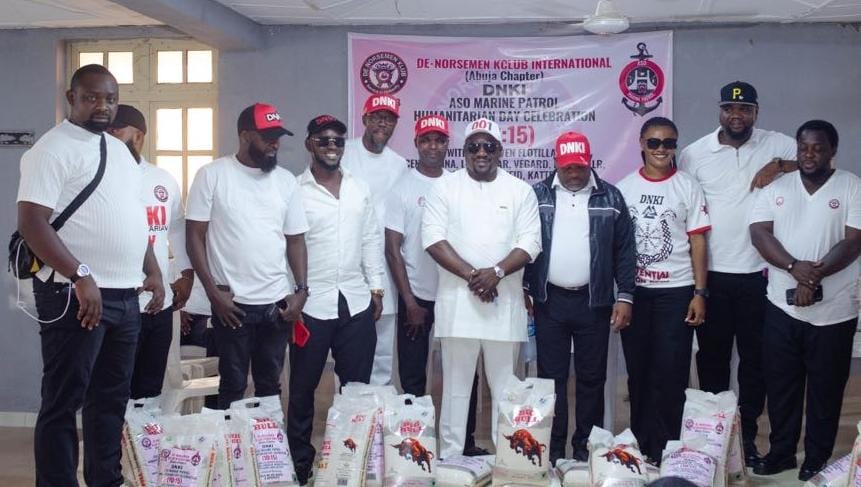
Cyril Samania
The President of De Norsemen Kclub International (DNKI), Chief Oliver Patrick Ityohegh, has reaffirmed the organisation’s commitment to humanitarian service, stressing the importance of supporting vulnerable people and improving community welfare beyond the annual celebration of Humanitarian Day.
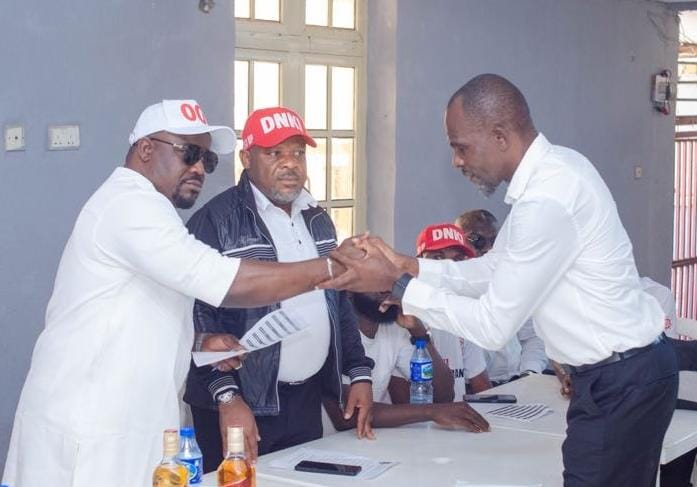
Ityohegh stated this during the organisation’s Cauldron Night and Award Presentation held to commemorate its 2026 Humanitarian Day celebration, theme: “Humanity First: Advancing Hope, Dignity and Community Well-being.” organised by the DNKI Abuja Chapter.
He emphasised that humanitarian service should be a continuous responsibility driven by compassion, solidarity and a commitment to making a meaningful difference in society.
According to him, DNKI’s humanitarian activities reflect its dedication to giving back to society and supporting people in need, while encouraging members to sustain initiatives that promote human dignity and community well-being.
He added that the organisation would continue to strengthen its humanitarian engagements through practical interventions aimed at improving the lives of vulnerable people and promoting community development.
Speaking at the event, the representative of the Abuja Chapter Chairman and Chairman of its Advisory Council, Prince Efiong Okpe, said the organisation’s humanitarian activities extended beyond the annual celebration of Humanitarian Day on October 15.
Okpe explained that DNKI undertook several initiatives throughout the year, including blood donation exercises, visits to hospitals and correctional centres, as well as support for orphanages and other vulnerable groups.
According to him, the organisation also collaborated with humanitarian bodies in the Federal Capital Territory (FCT) to identify areas of need and provide assistance within its available resources.
He described Humanitarian Day as an opportunity for members to renew their commitment to service and demonstrate solidarity with people facing difficult circumstances.
Earlier, the Chairman of the Planning Committee and Coordinator of the DNKI Gwagwalada Zone, Mr Etudaiye Hamzat, disclosed that the chapter had provided financial assistance to some members to help pay their children’s school fees, alongside distributing bags of rice and other relief items to members experiencing hardship.
Hamzat explained that the interventions followed concerns over the difficulties some members faced in meeting their family responsibilities, particularly the rising cost of their children’s education.
He maintained that supporting members in need was consistent with the organisation’s humanitarian principles, adding that DNKI remained committed to extending assistance to non-members and vulnerable communities as part of its commitment to leading by example.
Looking ahead, Hamzat said the Abuja Chapter planned to expand its humanitarian outreach to remote communities within the FCT, with particular attention to orphanages, schools and widows facing difficulties in meeting their family responsibilities.
He also recalled previous interventions for internally displaced persons (IDPs), which included the distribution of food, clothing and educational materials, noting that the chapter intended to scale up such initiatives in the coming year.
The highlight of the event was the presentation of awards to outstanding members and distinguished non-members in recognition of their contributions to humanitarian service.
-
 Featured7 years ago
Lampard Names New Chelsea Manager
-
 Featured7 years ago
FG To Extends Lockdown In FCT, Lagos Ogun states For 7days
-
 Featured7 years ago
Children Custody: Court Adjourns Mike Ezuruonye, Wife’s Case To April 7
-
 Featured7 years ago
NYSC Dismisses Report Of DG’s Plan To Islamize Benue Orientation Camp
-

 Featured5 years ago
Transfer Saga: How Mikel Obi Refused to compensate me After I Linked Him Worth $4m Deal In Kuwait SC – Okafor
-
Featured7 years ago
Board urges FG to establish one-stop rehabilitation centres in 6 geopolitical zones
-
Sports4 years ago
TINUBU LAMBAST DELE MOMODU
-

 News2 years ago
Zulu to Super Eagles B team, President Tinubu is happy with you













