
News
New Social Cohesion Report for Nigeria to Be Released July 3 by API
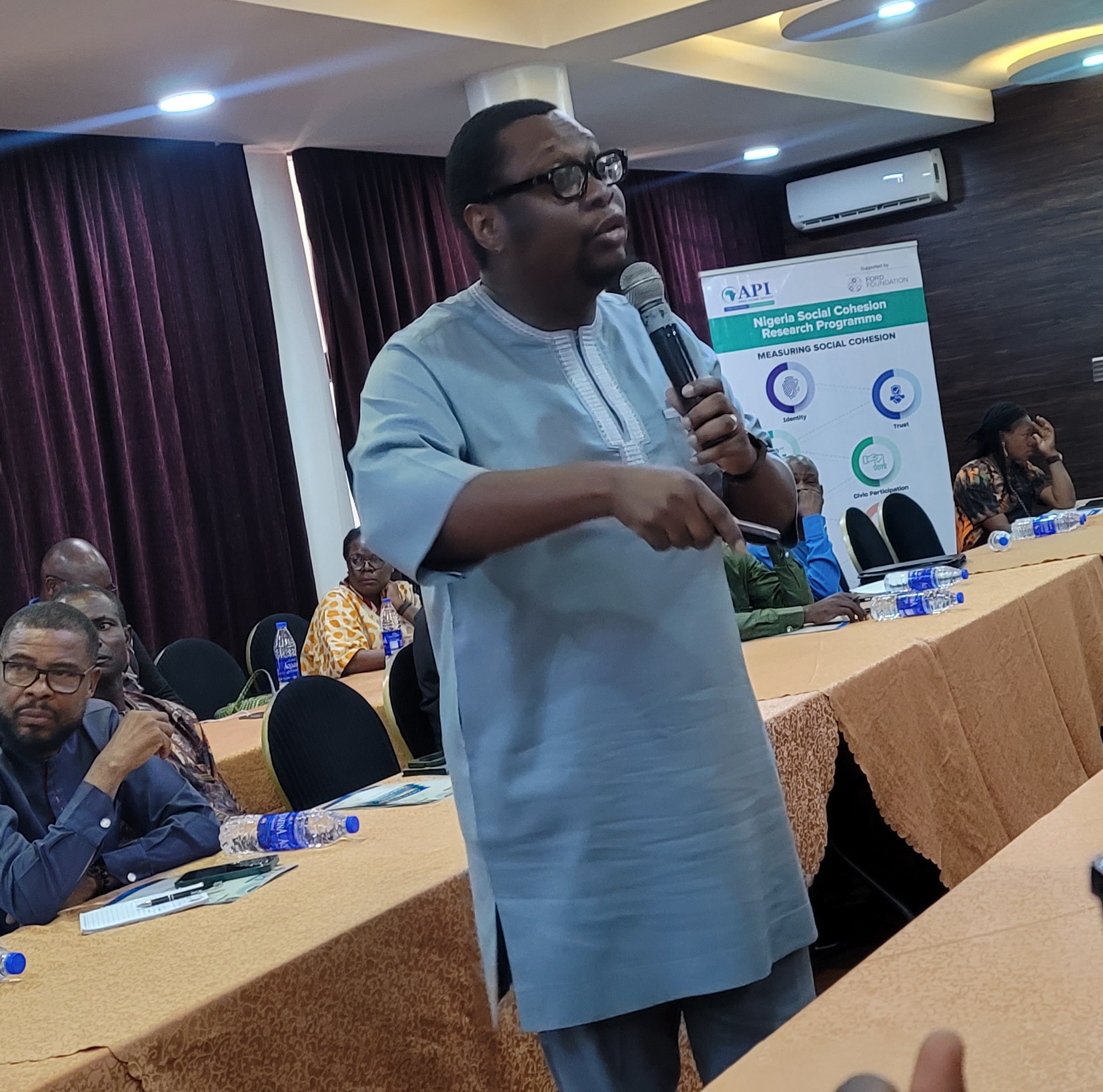
By Joel Ajayi
The Africa Polling Institute (API) has announced the official launch of the 2025 Nigeria Social Cohesion Survey Report, scheduled for July 3, 2025. The report aims to bridge the persistent gap between data availability and its practical application in promoting national unity, peace, and long-term stability.
The Executive Director of API, Prof. Bell Ihua, made the announcement during a one-day capacity-building workshop for journalists held in Abuja, themed: “Promoting Effective Media Reportage Through the Use of Social Cohesion Data.”
The training aimed to equip journalists with the skills to interpret and apply social cohesion data in storytelling, advocacy, and peacebuilding efforts.
Prof. Ihua underscored the importance of the media in shaping public narratives that foster unity. He noted that Nigeria continues to grapple with several social cohesion challenges, including widespread distrust in government, political polarization, and limited access to justice.
“Our findings consistently show that many Nigerians believe justice is not equally accessible. The perception that only the rich and powerful can seek redress feeds into wider disillusionment with the state,” Ihua stated.
He stressed the need for a collective shift in national orientation, urging citizens to embrace a Nigerian identity above ethnic, regional, or religious affiliations.
“We must begin to see ourselves as Nigerians first. This mindset shift is critical to building bridges and strengthening cohesion,” he said.
According to Ihua, the upcoming 2025 survey will be API’s fourth national report on social cohesion. Previous editions have helped define key indicators such as unity, tolerance, trust, civic responsibility, and inclusion across Nigeria’s diverse population.
“Data is more than numbers. It reflects real-life experiences and public attitudes. Our goal is to use these insights to inform policies, support peacebuilding, and drive inclusive development,” he added.
Also speaking at the workshop, Dr. Olusoji Adeniyi, a social policy expert and lead facilitator, described social cohesion as “the strength of relationships and the sense of solidarity within a society.”
He emphasized the critical role of journalists in using data to shape national dialogue and advance democratic governance.
“Nigeria has no shortage of data. The challenge is translating that data into actionable solutions. Journalists must be equipped to connect the dots and tell stories that inspire reform,” he said.
Adeniyi highlighted that API’s surveys continue to reveal deepening divides along religious, ethnic, and political lines, with many policymakers and civic actors yet to harness these findings for effective intervention.
Odoh Okenyodo, founder of Akweya TV and media trainer, charged journalists to approach social cohesion reporting with professionalism, integrity, and a deep sense of civic duty. He noted the risks involved in reporting sensitive identity-related issues, especially in conflict-prone regions.
“The threats are real—from limited access to reliable data, to harassment and lack of institutional support—but journalists must not shy away from the responsibility of reporting the truth,” he said.
He advocated for context-driven, solution-focused journalism that avoids sensationalism and promotes narratives of unity, healing, and inclusion.
Development expert Titilope Ojo also addressed the challenges faced by media professionals working under owners who often prioritize political and economic interests over national development narratives.
“Despite these pressures, journalists must remain committed to advancing the national interest. Nationalism should be at the heart of the stories we tell,” she said.
Journalism scholar Dr. Obiora Chukwumba lamented the declining quality of journalism in Nigeria, citing poor funding and limited reach as key constraints. He called for sustainable business models, investments in investigative journalism, and capacity-building initiatives to elevate standards across the sector.
Meanwhile, Dr. Hamisu Muhammad, Head of Mass Communication at Baze University, delivered a keynote lecture on the complex interplay between identity, nationalism, and media narratives. He attributed Nigeria’s sociopolitical fragmentation to the rise of micro-nationalism—a trend where ethnic and regional loyalties are placed above national identity.
> “Media can either unite or divide us. It all depends on the values we choose to uphold in our editorial decisions,” he said.
Dr. Muhammad concluded by calling for a more inclusive, balanced media approach that respects Nigeria’s diversity but works actively to bridge existing divides.
As API prepares to unveil its 2025 Social Cohesion Survey Report, stakeholders expressed hope that the data will not only inform government policy but also empower journalists and civic actors to tell stories that build trust, promote justice, and inspire national progress.
The workshop ended with a collective call for greater collaboration among media practitioners, researchers, and civil society to transform social cohesion data into a practical tool for peace, equity, and inclusive nation-building.



News
DNKI President Champions Humanitarian Service, Sustainable Community Development
Cyril Samania
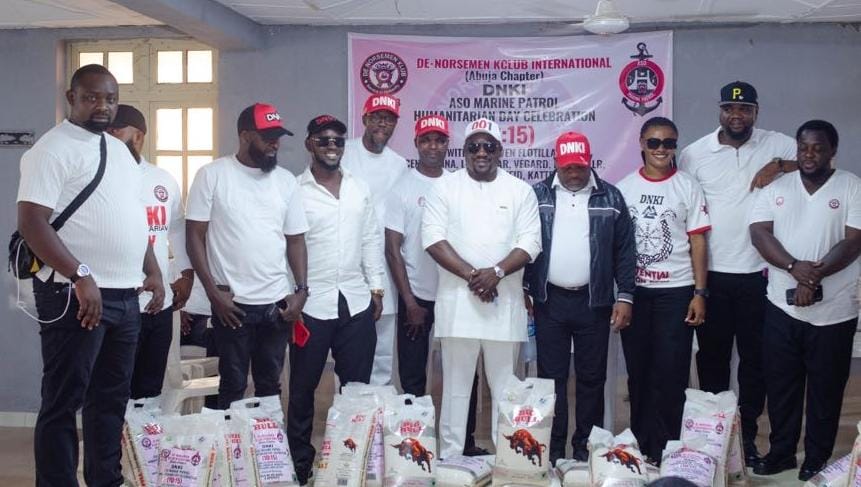
The President of De Norsemen Kclub International (DNKI), Chief Oliver Patrick Ityohegh, has reaffirmed the organisation’s commitment to humanitarian service, stressing the importance of supporting vulnerable people and improving community welfare beyond the annual celebration of Humanitarian Day.
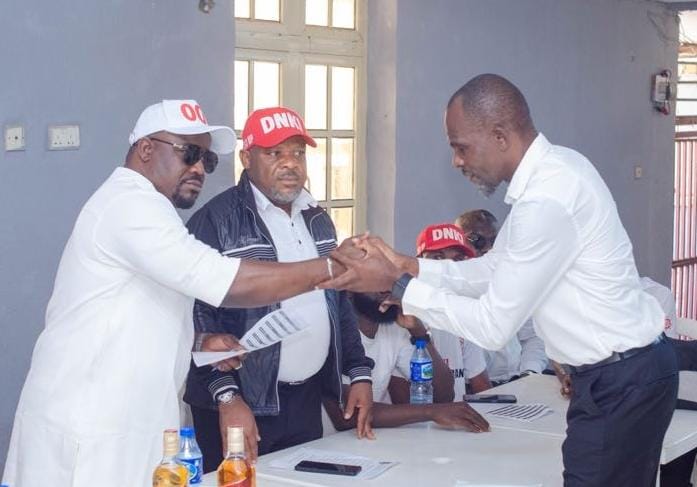
Ityohegh stated this during the organisation’s Cauldron Night and Award Presentation held to commemorate its 2026 Humanitarian Day celebration, theme: “Humanity First: Advancing Hope, Dignity and Community Well-being.” organised by the DNKI Abuja Chapter.
He emphasised that humanitarian service should be a continuous responsibility driven by compassion, solidarity and a commitment to making a meaningful difference in society.
According to him, DNKI’s humanitarian activities reflect its dedication to giving back to society and supporting people in need, while encouraging members to sustain initiatives that promote human dignity and community well-being.
He added that the organisation would continue to strengthen its humanitarian engagements through practical interventions aimed at improving the lives of vulnerable people and promoting community development.
Speaking at the event, the representative of the Abuja Chapter Chairman and Chairman of its Advisory Council, Prince Efiong Okpe, said the organisation’s humanitarian activities extended beyond the annual celebration of Humanitarian Day on October 15.
Okpe explained that DNKI undertook several initiatives throughout the year, including blood donation exercises, visits to hospitals and correctional centres, as well as support for orphanages and other vulnerable groups.
According to him, the organisation also collaborated with humanitarian bodies in the Federal Capital Territory (FCT) to identify areas of need and provide assistance within its available resources.
He described Humanitarian Day as an opportunity for members to renew their commitment to service and demonstrate solidarity with people facing difficult circumstances.
Earlier, the Chairman of the Planning Committee and Coordinator of the DNKI Gwagwalada Zone, Mr Etudaiye Hamzat, disclosed that the chapter had provided financial assistance to some members to help pay their children’s school fees, alongside distributing bags of rice and other relief items to members experiencing hardship.
Hamzat explained that the interventions followed concerns over the difficulties some members faced in meeting their family responsibilities, particularly the rising cost of their children’s education.
He maintained that supporting members in need was consistent with the organisation’s humanitarian principles, adding that DNKI remained committed to extending assistance to non-members and vulnerable communities as part of its commitment to leading by example.
Looking ahead, Hamzat said the Abuja Chapter planned to expand its humanitarian outreach to remote communities within the FCT, with particular attention to orphanages, schools and widows facing difficulties in meeting their family responsibilities.
He also recalled previous interventions for internally displaced persons (IDPs), which included the distribution of food, clothing and educational materials, noting that the chapter intended to scale up such initiatives in the coming year.
The highlight of the event was the presentation of awards to outstanding members and distinguished non-members in recognition of their contributions to humanitarian service.
-
 Featured7 years ago
Lampard Names New Chelsea Manager
-
 Featured7 years ago
FG To Extends Lockdown In FCT, Lagos Ogun states For 7days
-
 Featured7 years ago
Children Custody: Court Adjourns Mike Ezuruonye, Wife’s Case To April 7
-
 Featured7 years ago
NYSC Dismisses Report Of DG’s Plan To Islamize Benue Orientation Camp
-

 Featured5 years ago
Transfer Saga: How Mikel Obi Refused to compensate me After I Linked Him Worth $4m Deal In Kuwait SC – Okafor
-
Featured7 years ago
Board urges FG to establish one-stop rehabilitation centres in 6 geopolitical zones
-
Sports4 years ago
TINUBU LAMBAST DELE MOMODU
-

 News2 years ago
Zulu to Super Eagles B team, President Tinubu is happy with you