
News
NEWOMCII Seeks Stronger Government–CSO Collaboration to Deepen Grassroots Development

Joel Ajayi
In a renewed effort to bridge the gap between policy formulation and grassroots realities, the New Dawn for Women and Community Intervention Initiative (NEWOMCII) has called for stronger collaboration between government institutions and civil society organisations to enhance development delivery across Nigeria.
The call was made during a courtesy visit by the leadership of NEWOMCII to the Chairman/Chief Executive Officer of the Nigerians in Diaspora Commission, Abike Dabiri-Erewa, in Abuja, where the organisation presented its development framework and outlined areas for strategic partnership.
Leading the delegation was the Founder and Chairman of NEWOMCII, Bolaji Raji, alongside the National Coordinator, Sa’adatu Adamu Bokane, and members of the organisation’s national executive team.
Speaking during the visit, Bokane explained that NEWOMCII was established to serve as a bridge between government policies and underserved communities, particularly in rural areas where access to development information and intervention programmes remains limited.
She noted that while government initiatives span critical sectors such as agriculture, education, health, and social welfare, many communities still face challenges in accessing or fully understanding these opportunities due to communication and structural gaps.
According to her, the organisation is designed to complement government efforts by ensuring that development programmes are not only implemented but also effectively communicated and accessed at the grassroots level.
Bokane disclosed that NEWOMCII operates through an extensive nationwide structure, comprising regional coordinators, state executives, and local government focal officers across all 36 states and the Federal Capital Territory, enabling direct engagement with communities.
She further highlighted that the organisation deploys technical officers and consultants across its thematic areas to ensure professionalism, effective monitoring, and alignment with established development standards.
Agriculture, she said, remains a core focus area, alongside support for small businesses, women-led enterprises, skills development, education, healthcare, and community welfare programmes aimed at improving livelihoods.
“With Nigeria’s growing population and expanding development needs, collaboration is no longer optional but essential,” Bokane stated. “Government is doing a lot, but organisations like ours must support these efforts to ensure that no community is left behind.”
Responding, Dabiri-Erewa commended the initiative and underscored the importance of synergy between civil society organisations and government agencies in expanding access to development opportunities.
She emphasised that credible gr
assroots organisations play a crucial role in raising awareness of government programmes and ensuring that interventions reach their intended beneficiaries.
During the meeting, NEWOMCII presented its flagship programmes, including the Women Grow Initiative focused on agricultural support, the Creating the Future Programme for creative enterprise development, the Skills for Life Programme aimed at education and employability, the Care and Dignity Initiative for health and welfare, and the Mobility and Safety Plan designed to enhance community safety.
The organisation also highlighted ongoing interventions across several communities, including support for women in agriculture, provision of processing equipment to boost productivity, and medical outreaches to improve access to basic healthcare services.
In his remarks, Raji said NEWOMCII’s mission is anchored on practical community engagement, with a focus on ensuring that development reaches those at the margins of society.
He added that the organisation’s multi-level coordination system promotes accountability and efficient service delivery across regional, state, and local government structures.
Raji reaffirmed the organisation’s commitment to working with government agencies and development partners to scale up its interventions nationwide.
The delegation described the visit as part of sustained efforts to strengthen institutional partnerships, expressing optimism that closer collaboration with NIDCOM would enhance awareness of development initiatives and improve linkages between Nigerians at home and in the diaspora.
Both parties reiterated the need for continuous cooperation between government institutions and civil society organisations in addressing Nigeria’s development challenges, with NEWOMCII pledging to remain at the forefront of grassroots empowerment and community transformation.



News
HOW FATE AND TRAVAIL BROUGHT CHRISTIAN EDOSA AGHEDO TO IRELAND
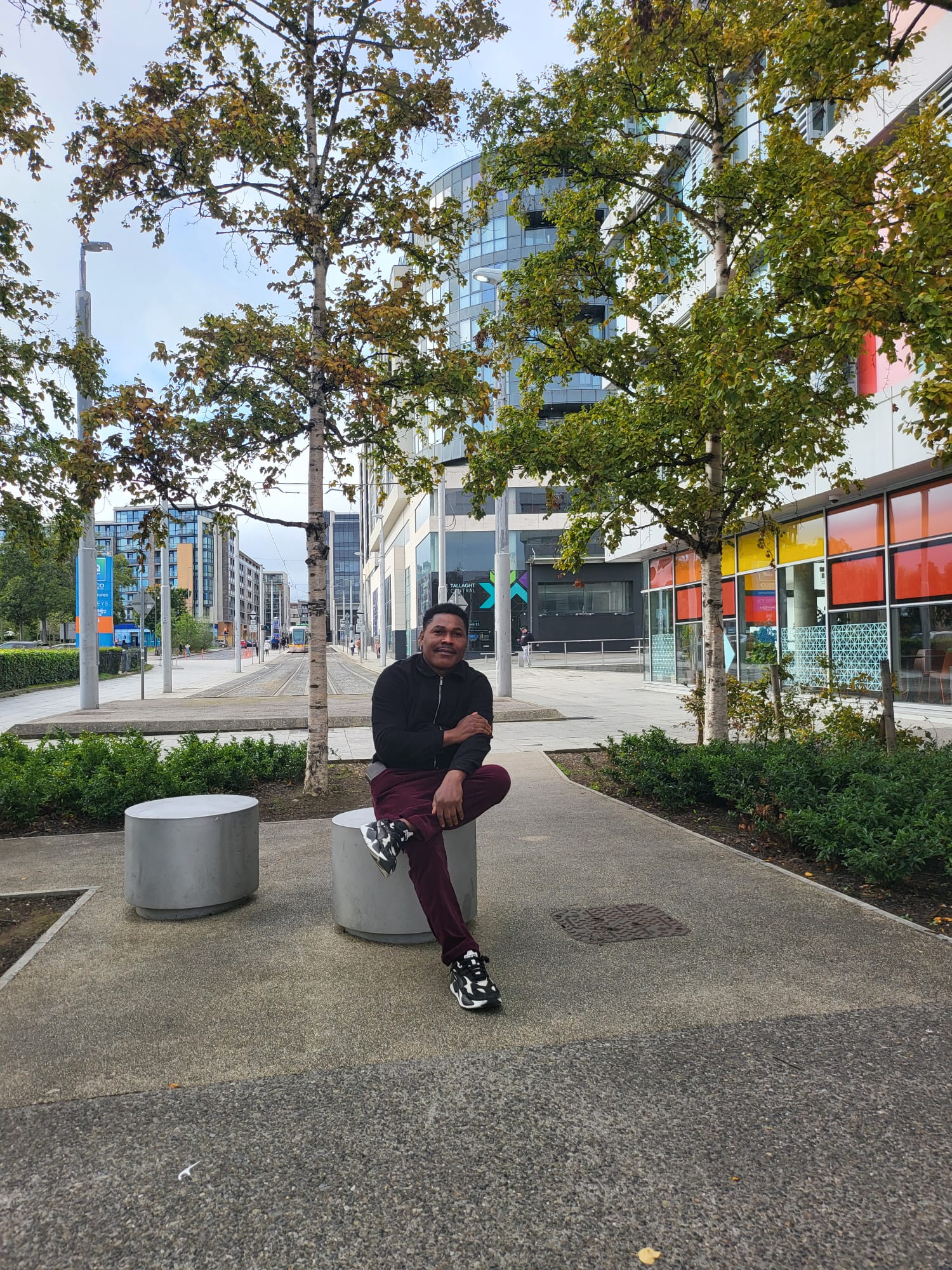
“A Survivor’s Story of Banditry, Family Tragedy, Displacement and the Search for Safety”
The growing insecurity in Nigeria, particularly the increasing incidents of banditry, armed attacks and killings across different parts of the country, has continued to devastate communities, displace innocent citizens and leave countless families homeless. These persistent attacks have created an atmosphere of fear, uncertainty and insecurity among ordinary Nigerians, particularly those living in vulnerable rural communities.
The activities of armed bandits have left painful and lasting scars on the lives of many innocent people. Families have been destroyed, communities have been deserted, and individuals have been forced to abandon their ancestral homes in search of safety. In many cases, victims have suffered killings, abductions, destruction of property and threats to their lives.
One of the families profoundly affected by this violence was the Aghedo family of Jattu, Auchi, in Edo State, Nigeria.
In a conversation with his cousin, Osaze Unuigbe, who narrated his ordeal, Christian Edosa Aghedo recounted the tragic circumstances that forced him to flee his homeland and eventually seek protection in the Republic of Ireland.
THE TRAGIC ATTACK THAT DESTROYED HIS FAMILY
For Christian Edosa Aghedo, 9 June 2026 remains a date permanently etched in his memory. On that day, armed bandits reportedly attacked his community in Jattu, Auchi, Edo State, unleashing violence that changed his life forever.
During the attack, his father, mother and two other relatives were brutally killed. Christian, who was hiding nearby, witnessed the horrifying events and saw his parents being murdered.
The experience left him devastated, traumatised and emotionally shattered. He described the incident as one of the most painful experiences anyone could endure, explaining that witnessing the brutal deaths of his parents has continued to haunt him.
Speaking about the tragedy, Christian said that the memories of that dreadful day remain fresh in his mind. The loss of his entire immediate family and the circumstances surrounding their deaths have left him living with profound emotional pain, constant fear and insecurity.
FEAR AND THE WARNING THAT FORCED HIM TO FLEE
On 10 June 2026, the day after the attack, Christian reportedly approached a nearby police station to report the incident and seek assistance.
Although the police indicated that they would pursue the perpetrators, Christian’s fear increased when an officer allegedly warned him privately to leave the area and run for his life because the attackers might return to eliminate him.
The warning left him frightened and confused. Having already witnessed the brutal murder of his parents and relatives, he became increasingly convinced that remaining in the community would expose him to further danger.
With no immediate family members left to protect or support him, Christian was confronted with the difficult reality of abandoning the home where he had been born and raised.
In the aftermath of the tragedy, he made arrangements to dispose of his deceased parents’ properties to raise money for his departure from Nigeria.
TWO WEEKS IN AN INTERNALLY DISPLACED PERSONS’ CAMP
On 12 June 2026, Christian relocated to an Internally Displaced Persons (IDP) camp in Auchi, Edo State, where he remained for approximately two weeks.
However, finding temporary shelter did not immediately restore his sense of safety. He continued to experience shock, fear and emotional distress, constantly worrying that the bandits could return and attack again.
His stay at the camp was marked by uncertainty and painful memories of the incident that had destroyed his family.
Eventually, after making the necessary arrangements to leave Nigeria, Christian received his visa on 5 July 2026. Five days later, on 10 July 2026, he departed Nigeria for the United Kingdom through Ethiopian Airlines, arriving at Manchester Airport.
A NEW COUNTRY, BUT NO FAMILY OR SUPPORT SYSTEM
Christian arrived in the United Kingdom without relatives, friends or an established support network. Although he had escaped the immediate danger he feared in Nigeria, he found himself facing another difficult chapter of his life.
He had lost his parents and other close relatives, abandoned his ancestral home and left behind the childhood memories associated with the community where he had grown up.
With no stable accommodation or immediate support, his circumstances became increasingly difficult. At different points, he relied on churches and mosques for temporary shelter, sometimes sleeping in their premises because he had nowhere else to go.
Despite the hardships, he remained determined to survive and rebuild his life.
ANOTHER DISTRESSING EXPERIENCE IN THE UNITED KINGDOM
On 16 August 2026, Christian experienced another distressing incident while sleeping in a place where he had been seeking temporary shelter.
According to his account, a group of young men attacked him and stole his international passport and wristwatch.
The incident left him helpless and deeply distressed. While he was crying and struggling to come to terms with what had happened, a woman approached him and asked about his situation.
Christian explained his circumstances as best he could, recounting the tragic loss of his family in Nigeria, his displacement and the difficulties he had encountered since arriving in the United Kingdom.
Touched by his story, the woman and her husband took an interest in his welfare. They subsequently offered him assistance, including food, clothing and shelter.
Their intervention provided him with temporary relief at a time when he was particularly vulnerable and had very limited support.
THE JOURNEY TOWARDS SAFETY IN THE REPUBLIC OF IRELAND
On 20 September 2026, the woman’s husband informed Christian about the possibility of seeking international protection in the Republic of Ireland.
Following their discussions, Christian began considering the option of seeking protection in Ireland, hoping to find a safer environment where he could begin rebuilding his life after the devastating experiences he had endured.
By 28 September 2026, he had arrived in the Republic of Ireland, marking another significant chapter in his search for safety and stability.
THE PAIN OF A SURVIVOR AND THE FEAR OF RETURN
Despite being physically away from the community where the tragedy occurred, Christian maintains that the emotional consequences of the attack have continued to affect him.
The brutal deaths of his father, mother and two other relatives remain painful memories that he struggles to overcome. Having witnessed his parents being murdered, he continues to fear that returning to Nigeria could expose him to the same armed bandits who destroyed his family.
He maintains that the insecurity and threats that forced him to abandon his home have not been resolved from his perspective. He fears that the perpetrators could attack again and that he could become their next victim.
For Christian Edosa Aghedo, leaving Nigeria was never simply a decision to seek a better life abroad. It was a desperate response to the loss of his family, the fear of further attacks and the urgent need to preserve his own life.
His story is one of profound personal tragedy, displacement and survival. From witnessing the destruction of his family in Jattu, Auchi, to enduring homelessness and insecurity in the United Kingdom, his experiences have shaped a painful journey that ultimately brought him to the Republic of Ireland in search of protection and a chance to live without fear.
For a man who lost almost everything in one tragic day, the greatest hope is simply to find a place where he can feel safe, recover from his trauma and rebuild his life.
-
 Featured7 years ago
Lampard Names New Chelsea Manager
-
 Featured7 years ago
FG To Extends Lockdown In FCT, Lagos Ogun states For 7days
-
 Featured7 years ago
Children Custody: Court Adjourns Mike Ezuruonye, Wife’s Case To April 7
-
 Featured7 years ago
NYSC Dismisses Report Of DG’s Plan To Islamize Benue Orientation Camp
-

 Featured5 years ago
Transfer Saga: How Mikel Obi Refused to compensate me After I Linked Him Worth $4m Deal In Kuwait SC – Okafor
-
Featured7 years ago
Board urges FG to establish one-stop rehabilitation centres in 6 geopolitical zones
-
Sports4 years ago
TINUBU LAMBAST DELE MOMODU
-

 News2 years ago
Zulu to Super Eagles B team, President Tinubu is happy with you













