
Health
NGO seeks inclusivity, support for people with autism
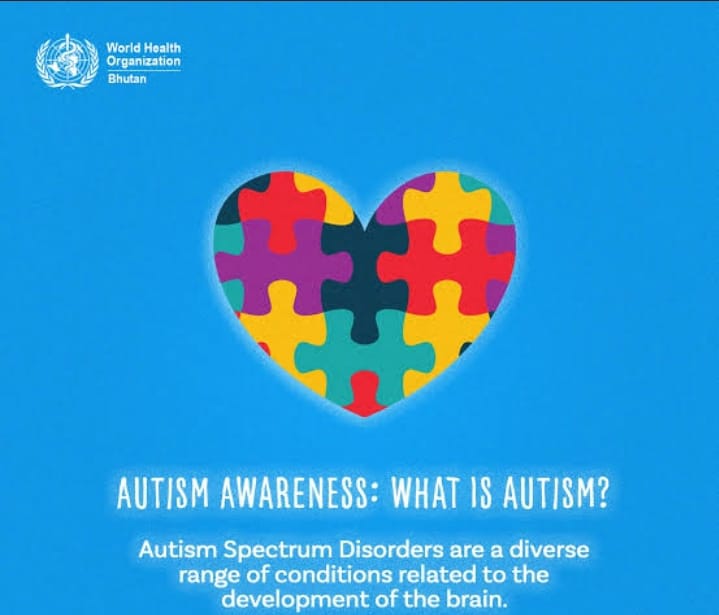
The founder of the Sustainable Development for Africa Youth Initiative (SuDAYI), Victoria Jim, a Non-Governmental Organisation (NGO), is advocating for greater inclusivity and support for individuals with autism spectrum disorder.
Jim made the appeal on Thursday in Abuja during the unveiling of SuDAYI, emphasising the importance of collective efforts in creating a more inclusive society for individuals with autism and their families.
According to Jim, every individual with autism deserves access to quality education, healthcare, and social services that cater to their specific needs.
“Growing up in Africa, I witnessed firsthand the challenges faced by individuals with autism and other disabilities.
“I saw how they were often marginalised, excluded, and denied access to basic rights and opportunities,” she said.
However, Jim also highlighted the potential, talent, and resilience of individuals with autism, noting that with the right support, resources, and opportunities, they could achieve greatness.
Jim stated that SuDAYI was committed to bridging the gap in autism services and support in Nigeria.
“In the next two years, the NGO plans to implement a comprehensive autism management intervention.
“This intervention will focus on providing inclusive education and support to families, caregivers, and healthcare professionals.
“Additionally, SuDAYI aims to establish partnerships with government agencies, NGOs, and community leaders to promote autism awareness and acceptance.”
Rep. Bashiru Dawodu, Chairman of the House of Representatives Committee on Disability Matters, spoke about ongoing efforts to amend the Discrimination Against Persons with Disabilities Prohibition Act 2018.
He noted that the current law did not adequately address the needs of children and women with disabilities.
“We think those areas are specific areas that need to be addressed, including intellectual disabilities and developmental needs for children with cerebral palsy or neurodegenerative conditions,” Dawodu said.
He also emphasised that discrimination against Persons with Disabilities (PwDs) was punishable under the law.
Dr Opiti Chukwunekwu, Associate Director at Health System Consult Limited, discussed the prevalence of autism in Nigeria, which was estimated at 2.1 per cent.
He clarified that autism spectrum disorder (ASD) was not a disease but a developmental disorder that occurred during a child’s development in the womb.
Chukwunekwu explained that autism was a spectrum, with different manifestations across its five elements.
He emphasised the importance of supporting individuals with autism to develop skills and reach their potential.
“Many prominent people have been shown to have traits of autism and still went on to achieve great things,” he said.
Chukwunekwu also stressed that while there was no cure for autism, effective management focused on empowering individuals with the disorder.
“This includes behavioral interventions, speech therapy, occupational therapy, and social skills training, all aimed at improving outcomes for those living with autism.
The News Agency of Nigeria (NAN) reports that SuDAYI’s objective is to empower children and youth with autism and other disabilities, enabling them to participate fully in and contribute to their communities.
(NAN)



Health
Nigerian Scholar Pioneers Plant-Based Nutrition Breakthrough for Elderly Care

Joel Ajayi
A Nigerian academic is making promising strides in global nutrition research, bringing hope for improved dietary care for elderly patients with high cholesterol.
Feyisola Fisayo Ajayi, a lecturer at the Federal University Gashua in Yobe State and a PhD student at the United Arab Emirates University (UAEU), recently completed a research visit to the Department of Food Science at Purdue University in the United States. Her work focuses on developing innovative, plant-based nutritional solutions tailored to the needs of older adults living with hypercholesterolemia.
During her time at Purdue, Ajayi investigated the development of a novel plant protein–derived nutritional hydrogel designed to make cholesterol-lowering nutrients easier and more appealing for elderly patients to consume. Research has shown that many older adults struggle with powdered nutraceuticals due to reduced appetite, diminished taste sensitivity, and a weakened sense of smell. Ajayi’s work offers a practical alternative.
The plant-based hydrogel she is developing has a unique thermo-reversible property: it remains solid at room temperature but melts when exposed to higher temperatures. This makes it an effective and user-friendly vehicle for delivering cholesterol-lowering bioactive compounds.
“This hydrogel is unique because it combines functionality with acceptability,” Ajayi explained. “By incorporating plant proteins into a thermo-reversible structure, we can create a product that is both effective and appealing for elderly patients who need reliable dietary interventions.”
Her research at Purdue includes detailed analyses of the hydrogel’s physicochemical characteristics, stability, and rheological behavior. In addition, in-vitro digestion studies are being conducted to assess how effectively the hydrogel can deliver essential bioactive compounds during digestion.
Ajayi’s work aligns with global efforts to promote sustainable, plant-based, and functional food solutions, particularly for vulnerable populations. Her research contributes to the growing field of functional foods and protein chemistry, with potential applications in clinical nutrition and long-term dietary management.
Beyond the scientific impact, her visit to Purdue University highlights the value of international academic collaboration in addressing complex health and nutrition challenges. As she continues her doctoral research at UAEU, Ajayi hopes to translate her findings into practical nutritional products that can benefit elderly populations in Nigeria, the UAE, and beyond.
Her achievements underscore the power of cross-border research and academic exchange programs in driving innovation. With scholars like Ajayi leading the way, the future of functional, plant-based nutrition solutions looks increasingly bright.
-
 Featured6 years ago
Lampard Names New Chelsea Manager
-
 Featured6 years ago
FG To Extends Lockdown In FCT, Lagos Ogun states For 7days
-
 Featured6 years ago
Children Custody: Court Adjourns Mike Ezuruonye, Wife’s Case To April 7
-
 Featured6 years ago
NYSC Dismisses Report Of DG’s Plan To Islamize Benue Orientation Camp
-

 Featured4 years ago
Transfer Saga: How Mikel Obi Refused to compensate me After I Linked Him Worth $4m Deal In Kuwait SC – Okafor
-
Sports3 years ago
TINUBU LAMBAST DELE MOMODU
-

 News12 months ago
Zulu to Super Eagles B team, President Tinubu is happy with you
-
Featured6 years ago
Board urges FG to establish one-stop rehabilitation centres in 6 geopolitical zones