
Health
NHIA Appoints Theophilus Egwudah as Plateau State Coordinator

Joel Ajayi
The National Health Insurance Authority (NHIA) has appointed Comrade Theophilus Egwudah Ife as its new Plateau State Coordinator, with effect from January 29, 2026.
The appointment was approved by the Director General of NHIA, Dr. Kelechi Ohiri, in recognition of Egwudah’s long-standing service, professionalism and contributions to Nigeria’s health insurance system.
Egwudah, who currently holds the rank of Deputy Director (Programme) at the Federal Capital Territory State Office of the Authority, brings over two decades of experience in health insurance administration, stakeholder engagement and programme coordination to his new role.
Born on March 18, 1973, in Ineme-Ibaji River Line area of Ibaji Local Government Area, present-day Kogi State, Egwudah began his early education in Ottah Ibaji before completing secondary school at St. Peter’s College, Idah. He later gained admission into the University of Jos, Plateau State, where he earned a Bachelor’s degree in Geography and Planning.
He joined the NHIA in 2001 as a fresh graduate and has since served in several departments and state offices. Notably, he played a key role in coordinating the Urban Self-Employed User Group Pilot Social Health Insurance Programme in Aba, Abia State, beginning in 2003, including the Ariaria Market survey. Colleagues and enrollees across the public and organised private sectors have commended his commitment to sensitisation, enrolment advocacy and resolution of healthcare service complaints.
Egwudah also holds a Postgraduate Diploma in Computer Studies from Ebonyi State University, Abakaliki, and is a Chartered member of ANAN. He previously emerged as the unanimous Vice Chairman of the NHIA branch of the Association of Senior Civil Servants of Nigeria.
Reacting to his appointment, Egwudah expressed appreciation to the Director General and management of the Authority for the confidence reposed in him, pledging to deepen access to quality healthcare services and strengthen enrolment across Plateau State.
He is married to Queen Ojochenemi Egwudah.
The NHIA management said the appointment is expected to further enhance the implementation of health insurance programmes in Plateau State, in line with the Authority’s mandate to achieve universal health coverage nationwide.



Health
Football Legends to Light Up Nigeria in NICRAT’s World Soccer Legends Cancer Match
By Joel Ajayi
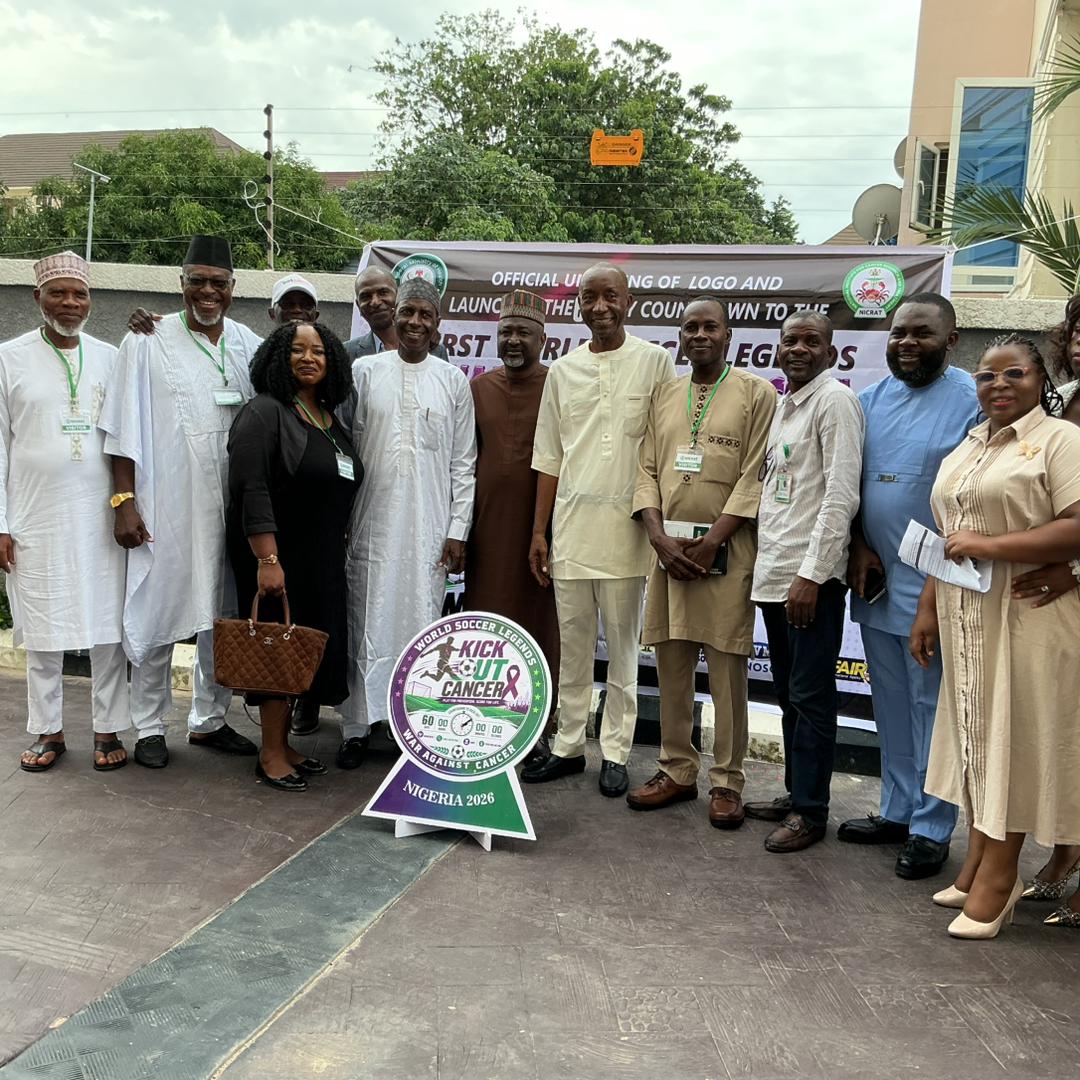
Nigeria is set to witness a football spectacle as some of the world’s greatest football legends converge for the First World Soccer Legends War Against Cancer International Charity Football Match Nigeria 2026.
The star-studded event, backed by the National Institute for Cancer Research and Treatment (NICRAT), is designed to combine football entertainment with a major campaign to raise cancer awareness, promote early detection and mobilise resources for prevention and treatment.
The initiative, themed “Play for Prevention, Score for Life,” was unveiled on Wednesday in Abuja with the official launch of the event logo, kits and a 60-day countdown to the international charity match.
The campaign is expected to feature former international football stars while bringing together cancer advocates, government institutions, corporate organisations, development partners and other stakeholders in a united effort against the disease.
Speaking on behalf of NICRAT Director-General, Prof. Usman Aliyu, Dr Margaret Sawyer said the institute was supporting the initiative because of its potential to take cancer-awareness messages to millions of Nigerians.
She said the campaign would go beyond fundraising by educating Nigerians on cancer prevention, early detection and the need to seek medical attention promptly.
According to her, football offers a unique platform for reaching diverse communities, while the influence of football legends could help deliver important health messages to a wider audience.
Earlier, National Coordinator of the Main Organising Committee (MOC), Mr Jacob Onu, said the event was conceived to transcend the boundaries of sport and evolve into a national and international movement against cancer.
Onu said the participation of former football stars would amplify messages on cancer prevention, screening, treatment, research and support for patients and survivors.
He added that the event would also celebrate life, honour those who had lost their lives to cancer and inspire survivors and people currently battling the disease.
“Together, through football, compassion and collective action, we can win the War Against Cancer,” he said.
Onu called on Nigerians across the 774 local government areas to become ambassadors of the campaign by promoting healthy lifestyles, regular medical checks and early medical intervention.
He also appealed to corporate organisations, philanthropists, international organisations, football stakeholders, media organisations and development partners to support the initiative.
The MOC coordinator commended NICRAT, the Federal Ministry of Health and Social Welfare, the Nigeria Football Federation (NFF), sponsors, partners and other stakeholders for their support.
He assured that the organising committee would deliver an event capable of meeting international standards while creating a lasting legacy in cancer awareness, advocacy, humanitarian support and sports development.
In his goodwill message, President of the Nigeria Olympic Committee (NOC), Engr. Habu Gumel, expressed concern over the rising global cancer burden and called for sustained action beyond the charity match.
Gumel urged the organisers to extend the campaign beyond Abuja to communities across the 36 states, while calling on governments at all levels to strengthen cancer prevention, screening and treatment.
The NOC president pledged his support for the initiative and encouraged Nigerians to make regular cancer screening and periodic health checks a priority.
Also speaking, Director of Cancer Prevention and Control at NICRAT, Dr Usman Mohammed Waziri, reaffirmed the institute’s determination to ensure that the initiative produces a positive and lasting impact on Nigeria’s cancer-control efforts.
With the 60-day countdown officially underway, organisers said the World Soccer Legends Cancer Match would combine the excitement of football with humanitarian action, using the power and influence of football legends to drive a nationwide campaign against cancer.
-
 Featured7 years ago
Lampard Names New Chelsea Manager
-
 Featured7 years ago
FG To Extends Lockdown In FCT, Lagos Ogun states For 7days
-
 Featured7 years ago
Children Custody: Court Adjourns Mike Ezuruonye, Wife’s Case To April 7
-
 Featured7 years ago
NYSC Dismisses Report Of DG’s Plan To Islamize Benue Orientation Camp
-

 Featured5 years ago
Transfer Saga: How Mikel Obi Refused to compensate me After I Linked Him Worth $4m Deal In Kuwait SC – Okafor
-
Featured7 years ago
Board urges FG to establish one-stop rehabilitation centres in 6 geopolitical zones
-
Sports4 years ago
TINUBU LAMBAST DELE MOMODU
-

 News2 years ago
Zulu to Super Eagles B team, President Tinubu is happy with you













