
Creative Industry
Nigeria and UAE Strengthen Ties, Explore New Opportunities in Tourism and Culture

Joel Ajayi
The Minister of Art, Culture, Tourism, and Creative Economy, Hannatu Musa Musawa, has emphasized the importance of empowering Nigeria as a gateway country to the black global community, highlighting the UAE’s support in achieving this goal.
The Minister made this known in Abuja on Wednesday when she met with the United Arab Emirates’ ambassador to Nigeria H.E. Salem Saeed Musabbeh Al Mahyoub Al Shamsi, to discuss ways to strengthen tourism and cultural ties between the two countries.
She congratulated Sheikha, the Secretary-General of the UN Tourism, on her historic appointment as the first female Secretary-General, noting that she is opening doors for women, inclusivity, and the power of the global south.
“It is very important for us now, as a country and as a gateway country to the black global community, to empower ourselves in a way that gives us a certain level of independence. Tourism now is power.
“We all know the importance of Tourism globally but we need to have a more curative relationship with the United Arab Emirates. We want to empower ourselves in a way that gives us a certain level of independence,” Minister Musawa said.
Minister Musawa highlighted Dubai’s success in transforming tourism and the potential for alignment between Nigeria and UAE in tourism and culture.
Earlier, H.E. Salem Saeed Musabbeh Al Mahyoub Al Shamsi welcomed the proposals and expressed commitment to strengthening ties.
“The UAE has become one of the top five industrial countries so let us find a common interest in culture and tourism to build a stronger relationship. I invite the Ministry to Abu Dhabi to see the development in Dubai to explore specific areas of cooperation in tourism and culture,” the Ambassador said.
The discussion also touched on Sheikha’s upcoming visit to Nigeria and potential cooperation in culture, tourism, and creative industries.
The UAE plans to invest in Nigeria’s film, music, and fashion industries. The Minister invited UAE officials to explore cooperation areas and assured them of Nigeria’s commitment to deepening ties.



Creative Industry
Aunty Talatu Reads Foundation Rekindles Children’s Reading Culture With New Book Launch
Joel Ajayi
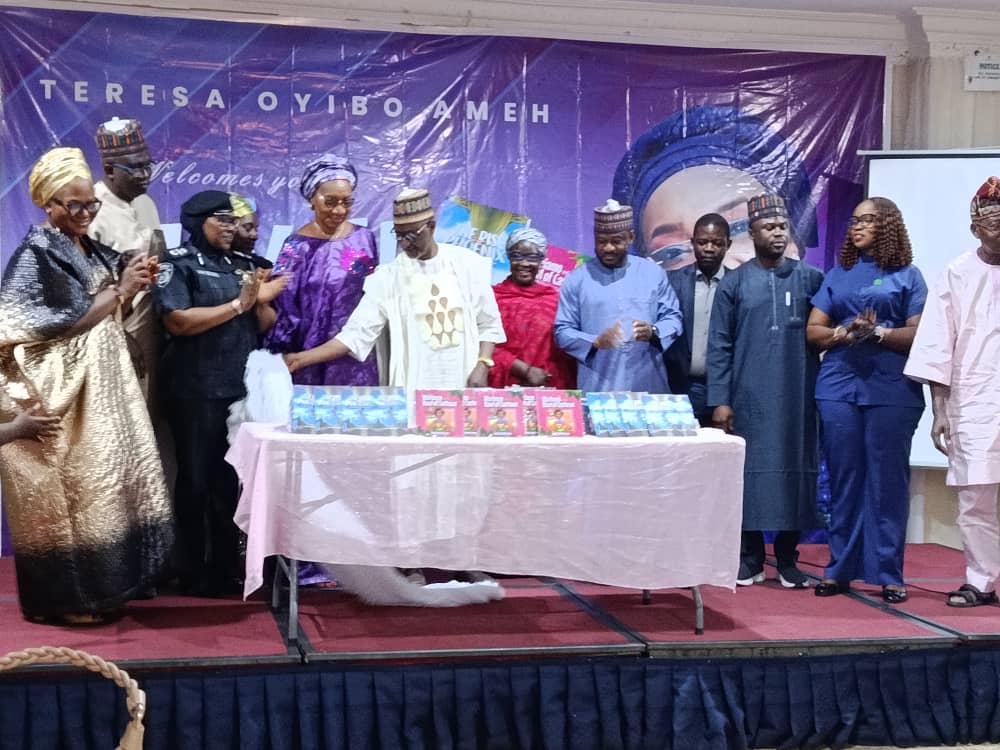
Amid growing digital distractions driven by modern media and lifestyles, the founder of the Aunty Talatu Reads Foundation and patron and trustee of several literary and creative organisations, Mrs. Teresa Oyibo Ameh, has launched two new children’s books aimed at inspiring reading, cultural pride and hope among children.
The newly launched titles — The Rise of the Phoenix and Mariamo and the Bowl of Cashews — address critical social issues affecting children. While The Rise of the Phoenix offers hope and healing to children affected by war and trauma, Mariamo and the Bowl of Cashews tackles violence and emotional pain.
Speaking at the launch of her ninth and tenth children’s books on Monday in Abuja, Ameh explained that her writing philosophy is rooted in a deep understanding of the child’s mind, interests and attention span.
With over 20 years of experience in children’s literature, she said her books are intentionally designed to be colourful, engaging and concise to sustain children’s interest and encourage a love for reading.
“I don’t write for adults; I write for children. Children have short attention spans, so the books must meet their needs. They are colourful, not voluminous, and the size is just right. When people say my books are small, I tell them clearly — they are not meant for adults,” she said.
Ameh attributed her success in children’s writing to her background in child psychology, which she studied as an elective at the University of Nigeria, Nsukka (UNN). According to her, writing for children requires deliberate training, research and sensitivity, not assumptions.
On the declining use of school libraries across the country, the author called for deliberate strategies to revive children’s interest in reading, including stronger collaboration with the media.
She revealed that her books place strong emphasis on Nigerian culture and identity, encouraging children to take pride in their heritage. Ameh cited her book The Freedom Day Party as an example, noting how cultural expression and traditional attire became a source of admiration and opportunity for the characters.
Responding to questions on whether she plans to write for adults, Ameh maintained that her focus remains on children, stressing that adults who do not read today are products of poor reading habits formed in childhood.
On addressing sensitive issues such as trauma and gender-based violence (TBV) through children’s literature, she disclosed that her earlier book The Thorn Petal tackled violence and emotional pain, while The Rise of the Phoenix reinforces hope and healing for children affected by conflict and trauma.
“The message is simple — no matter what you have been through, there is hope. Trauma can destroy a child, but with the right support, that child can still rise and thrive,” she said.
Through the Aunty Talatu Reads Foundation, Ameh has donated libraries to orphanage homes in Gwarimpa, Abuja; awarded scholarships; sponsored reading and spelling competitions; and donated books to schools and book clubs.
In 2025, the Foundation launched the “500 Books for 500 Children” initiative, reaching students at Dominican College, Abuja, and St. Clement College, Lokoja.
A civil servant and Kogi State indigene, Ameh is a former two-term Chairman of the Association of Nigerian Authors (ANA), Abuja Chapter, Nigerian President of the 1000 African Women Network, and a member of the FCT Basketball Caretaker Committee.
She has received numerous awards, including the CSW Award (2023) for promoting gender equality and a Trailblazer Award in Educational Development at the 2025 African Women Conference in Accra, Ghana. She was inducted into the Igala Noble Women Initiative (INWI) Hall of Fame in 2019.
In her address, the Director at the National Commission for Internally Displaced Persons, Refugees and Migrants, Mrs. Fatima Daura, reaffirmed the Commission’s commitment to promoting reading culture and improving access to education among internally displaced children across Nigeria.
She disclosed that the Commission actively supports initiatives that provide books and learning materials for children in Internally Displaced Persons (IDP) camps, noting that such interventions are vital to restoring hope and improving the welfare of vulnerable children, especially the girl-child.
According to her, the Commission established Transitional Learning Centres in 2020 in states with high numbers of displaced persons. The centres are designed to provide accelerated learning programmes that enhance literacy and numeracy skills, while preparing children for integration into formal intervention schools.
“We currently have transitional learning centres in Wasa IDP, Kaduna, Bauchi, Zamfara, Cross River and Imo States, and we hope to expand to more locations as resources become available,” she said.
Daura noted that children’s books written by Nigerian authors play a critical role in shaping positive values and aspirations among displaced children, describing such initiatives as relatable and inspirational.
“This is very important because it is written by a Nigerian author who also works with the refugee commission. It gives our girls a role model — someone they can look up to and say, ‘I can also write for children,’” she stated.
She affirmed the Commission’s readiness to extend similar programmes nationwide to reach displaced persons, refugees and migrants.
“We want to be everywhere there are displaced persons or persons of concern. That is the work we do,” she said.
Addressing concerns about persistent moral decline despite the abundance of children’s books focused on values, Daura stressed that books alone are not sufficient.
“Books are complementary. Reorientation starts from the home. Our family systems need to improve, and religious and traditional leaders must play their roles. Schools and books only support what is already instilled at home,” she said.
She concluded by calling for collective responsibility in rebuilding values, noting that education, supported by strong family and community structures, remains a powerful tool for shaping a better future for displaced children and Nigerian society at large.
-
 Featured6 years ago
Lampard Names New Chelsea Manager
-
 Featured6 years ago
FG To Extends Lockdown In FCT, Lagos Ogun states For 7days
-
 Featured6 years ago
Children Custody: Court Adjourns Mike Ezuruonye, Wife’s Case To April 7
-
 Featured6 years ago
NYSC Dismisses Report Of DG’s Plan To Islamize Benue Orientation Camp
-

 Featured4 years ago
Transfer Saga: How Mikel Obi Refused to compensate me After I Linked Him Worth $4m Deal In Kuwait SC – Okafor
-
Sports3 years ago
TINUBU LAMBAST DELE MOMODU
-

 News12 months ago
Zulu to Super Eagles B team, President Tinubu is happy with you
-
Featured6 years ago
Board urges FG to establish one-stop rehabilitation centres in 6 geopolitical zones