
News
Nigeria Condemns Irregular Migration of Youth, Calls for Stronger Cooperation at First Rabat Process Meeting

Joel Ajayi
Federal government has restated its commitment to promoting safe and innovative migration as a tool for sustainable development, while condemning irregular migration, particularly among youth.
The Minister of Humanitarian Affairs and Poverty Alleviation, Professor Nentawe Yilwatda, made this declaration yesterday in Abuja during the inaugural Thematic Meeting of the Rabat Process—Euro-African Dialogue on Migration and Development—hosted by Nigeria through the National Commission for Refugees, Migrants, and Internally Displaced Persons ,NCFRMI.
The meeting, themed “Youth, Innovation and Education: Driving the Future of Migration”, brought together member countries to chart a progressive path forward on migration issues.
Professor Yilwatda emphasized the need for strengthened cooperation among participating countries to address shared migration challenges and harness the benefits of migration for economic growth and development.
“Nigerians are contributing on the global stage in sports, music, health, and more”, he said, highlighting the role of migration in showcasing national talent and potential.
The Minister called for enhanced policy coordination, data sharing, and joint initiatives to ensure humane and effective migration governance across the Euro-African corridor.
“Youth remain a dynamic and transformative demographic, with enormous potential to drive innovation, economic development, and cross-border collaboration”, he noted.
He added that as migration patterns evolve, so do the opportunities for young people to engage in initiatives that reduce the risks of irregular migration while promoting sustainable alternatives—such as legal migration pathways, skills transfer, and diaspora engagement.
Citing demographic projections, Yilwatda stated, “In less than seven years, Africa will account for 20% of the global population. Over 55% of the continent’s people will be under 20, and 75% of the world’s under-35 population will live in Africa”.
This, he said, presents both opportunities and challenges, particularly the need to create around 20 million jobs annually to accommodate the growing youth population—factors that will drive increased mobility for education and better living conditions.
He further stressed that African youth make up a significant proportion of those migrating to Europe, driven by economic opportunity, education, and the quest for improved livelihoods.
“This meeting aims to explore how the potential of African youth can be maximized as key contributors to development both in their home countries and in host nations”, he added.
He called for strategies to disincentivize irregular migration, which endangers lives and violates human rights, while promoting regular migration, education and training in origin countries, innovation transfer, youth empowerment, and increased diaspora involvement.
This forum offers youth-led organizations a platform to actively engage in migration discussions, explore ways to empower young migrants, and integrate their voices into migration governance”, Yilwatda said.
He urged Rabat Process member states and private sector actors to invest in the initiative to drive economic growth and shared prosperity.
Also speaking at the event, Spain’s Ambassador-at-Large for Migration Affairs and co-chair of the Rabat Process, Pilar Jimenez, commended Nigeria for taking a leadership role.
“With the focus on youth and innovation, this initiative will help young people avoid risky journeys while enabling them to succeed safely,” she said. “We want you safe, and when you are safe, you become an asset to your country”.
in her remarked, Ambassador -at Large- for Migration Affairs of Spain Pilar Jimenez,, said that Spain’s migration policies were designed with active listening to the needs and concerns of African foreigners, their governments, and societies.
She recalled that the Spanish Prime Minister, launched the new Spain-Africa strategy in December 2024.
The agreement, according to her, seeks equal partnership between Spain and Africa, and inspires the entire Europe-Africa relationship.
“The strategy includes promoting regular migration, sustainable development, and shared prosperity,” Jimenez said.
She added that Nigeria’s leadership in the Rabat process, focusing on youth education, innovation, and regular pathways to prevent irregular migration was apt.
Also speaking, Gautier Mignot, Head of European Delegation to Nigeria, said that EU supports awareness-raising campaigns and community-based programmes to inform young Nigerians about the risks of irregular migration.
“EU promotes a comprehensive approach to migration, working with partner countries like Nigeria.
“Also EU is committed to supporting Nigeria in migration management and legal migration processes,” Mignot said.
In his remarks, Hon. Tijani Aliyu, Federal Commissioner of Migrants Affairs at NCFRMI, reiterated Nigeria’s efforts to improve migration governance.
“With the right investment in education and innovation” he said, “migration can become a powerful tool for empowerment and national development”.



Foreign news
Algeria’s Glorious Revolution: Embassy Marks 72nd Anniversary in Abuja
Joel Ajayi
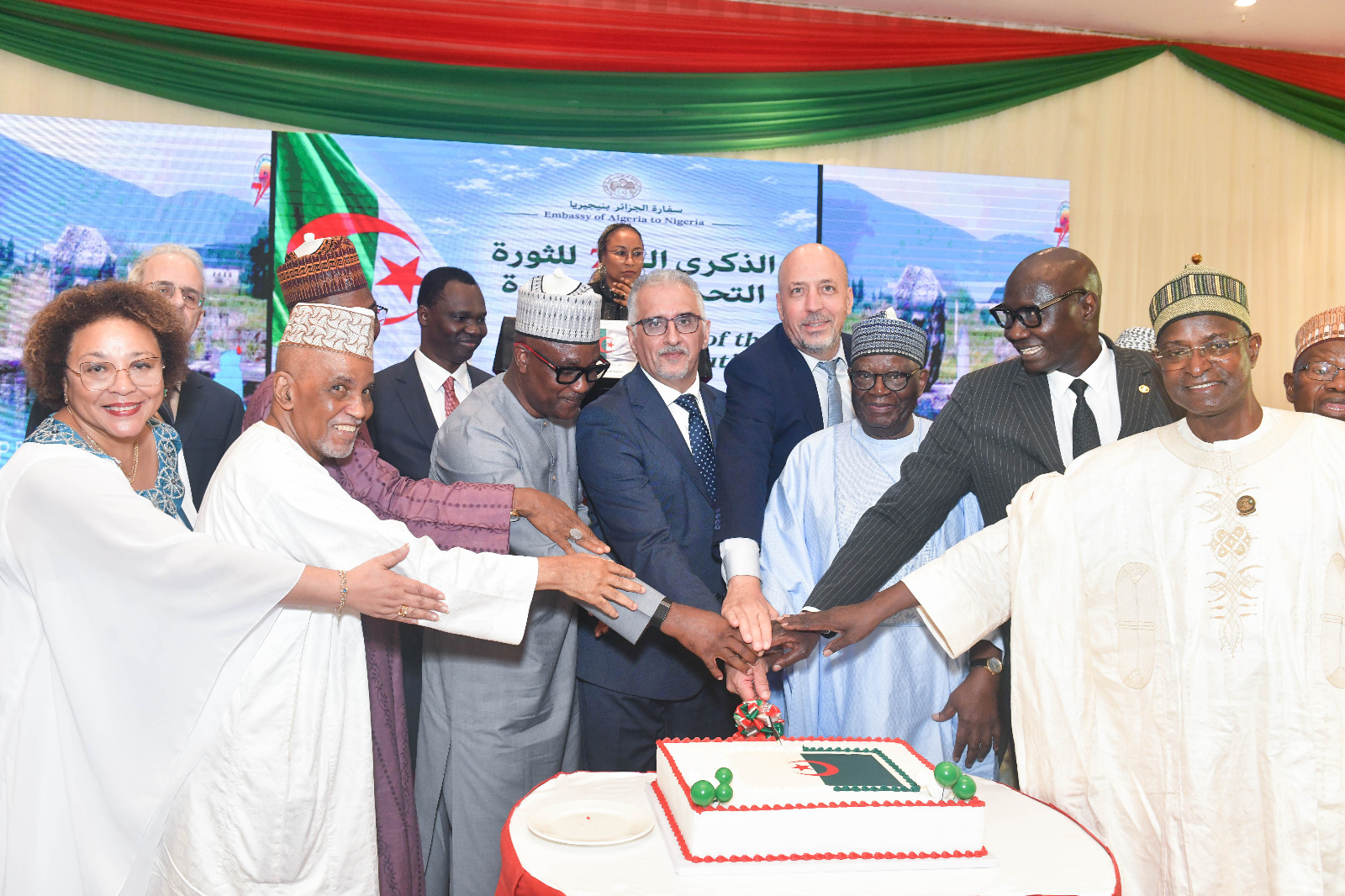
The Embassy of Algeria in Nigeria has commemorated the 72nd anniversary of the country’s Glorious Revolution of November 1, 1954, with a reception in Abuja, highlighting Algeria’s liberation struggle and strengthening diplomatic relations with Nigeria.
The event, held on November 9, 2026, at Continental Suites Hotel, attracted prominent personalities, including the Speaker of the House of Representatives, Dr Tajudeen Abbas, members of the Federal Government, senior government officials, heads of diplomatic missions and other friends of Algeria.
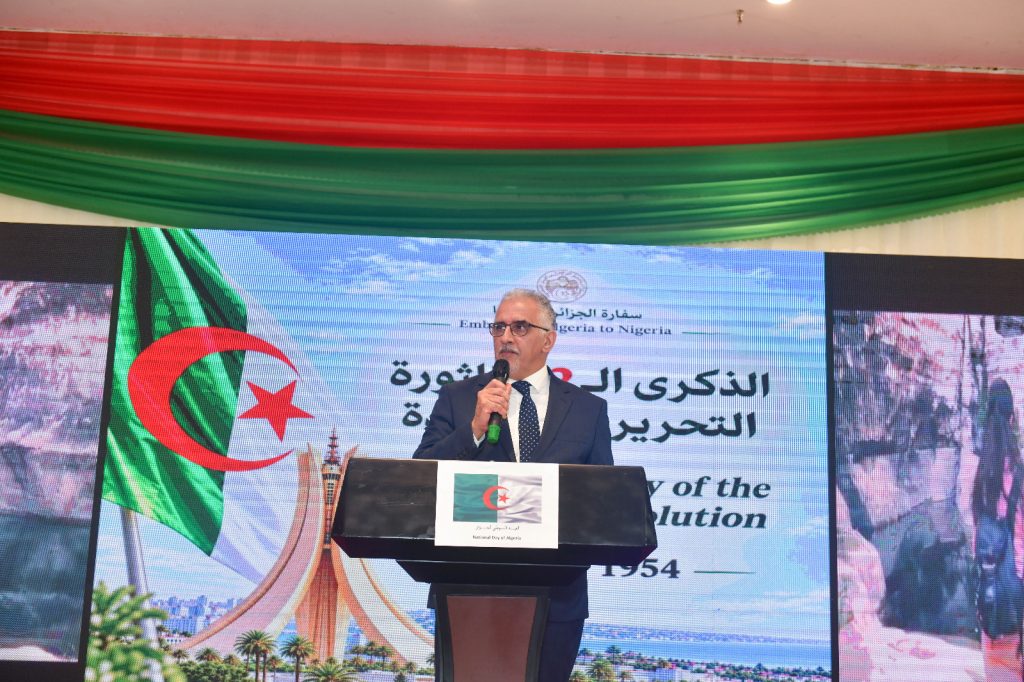
Speaking at the reception, Algeria’s Ambassador to Nigeria, Hocine Mezoued, welcomed guests and paid tribute to the country’s freedom fighters who sacrificed their lives during the struggle for independence.
He described the November 1, 1954 revolution as the foundation of modern Algeria, noting that the sacrifices of the nation’s martyrs made it possible for the country to reclaim its sovereignty.
On Algeria’s development agenda, Mezoued said President Abdelmadjid Tebboune’s administration had continued to pursue economic reforms, diversification and national development under its New Algeria vision.
He noted that the country was recording progress in non-hydrocarbon exports, while improvements in the business environment had boosted investor confidence and attracted significant foreign investments.
On foreign policy, the ambassador reaffirmed Algeria’s commitment to non-interference, respect for national sovereignty, peaceful conflict resolution and the right of peoples to self-determination.
Addressing security challenges in the Sahel, he stressed that lasting peace could not be achieved through military measures alone, insisting that economic development, inclusive dialogue and peaceful resolution of disputes remained essential.
Turning to Nigeria-Algeria relations, Mezoued described the partnership as one founded on shared values and the commitment of both countries’ leaders to advancing African development.
He identified the Trans-Saharan Highway, Trans-Saharan Gas Pipeline and Trans-Saharan Fibre Optic Backbone as major strategic projects receiving attention from both countries.
The ambassador also disclosed that Algeria had continued to provide scholarships to Nigerian students to strengthen human capital development and capacity building.
He further announced that Air Algérie expanded its Nigerian operations on October 26, 2026, with the introduction of two weekly flights to Lagos, expressing confidence that the service would boost trade and tourism.
Looking ahead, Mezoued said 2027 would offer fresh opportunities to deepen bilateral cooperation, particularly through the fifth Joint High Bi-National Commission scheduled to hold in Abuja.
He expressed optimism that the meeting would provide an opportunity to assess existing partnerships, identify new areas of cooperation and move Nigeria-Algeria relations towards a more practical and results-driven phase.
-
 Featured7 years ago
Lampard Names New Chelsea Manager
-
 Featured7 years ago
FG To Extends Lockdown In FCT, Lagos Ogun states For 7days
-
 Featured7 years ago
Children Custody: Court Adjourns Mike Ezuruonye, Wife’s Case To April 7
-
 Featured7 years ago
NYSC Dismisses Report Of DG’s Plan To Islamize Benue Orientation Camp
-

 Featured5 years ago
Transfer Saga: How Mikel Obi Refused to compensate me After I Linked Him Worth $4m Deal In Kuwait SC – Okafor
-
Featured7 years ago
Board urges FG to establish one-stop rehabilitation centres in 6 geopolitical zones
-
Sports4 years ago
TINUBU LAMBAST DELE MOMODU
-

 News2 years ago
Zulu to Super Eagles B team, President Tinubu is happy with you













