
Creative Industry
Nigeria, US Sign Cultural Pack To Reduce Illicit Trafficking of Ancient Arts
Joel Ajayi
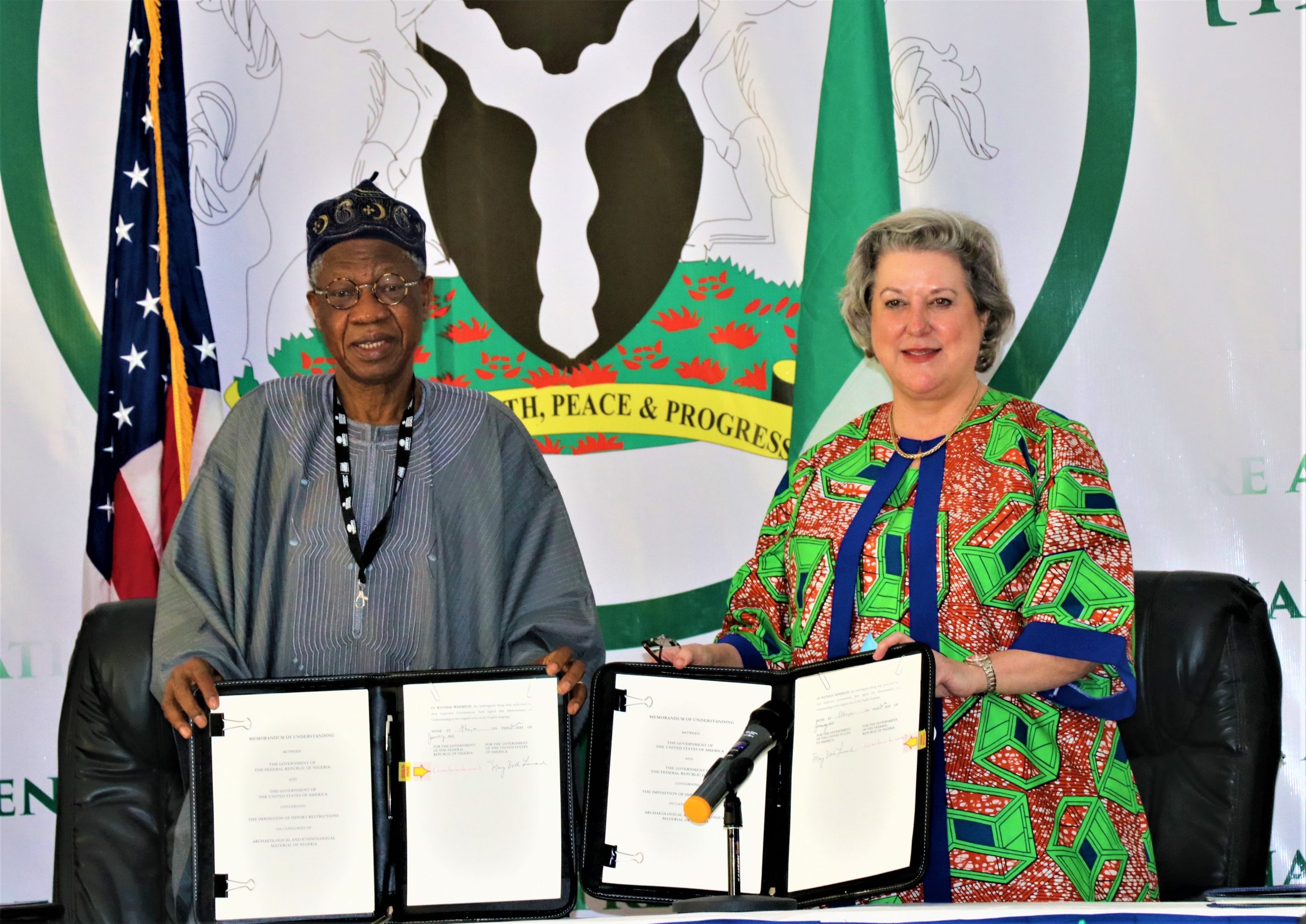
The Minister of Information and Culture, Alhaji Lai Mohammed, has expressed the optimism that the Cultural Property Implementation Act (CPIA) Agreement, which was signed by Nigeria and the United States of America on Thursday, will reduce the pillage of Nigeria’s ancient arts..
The Minister expressed the optimism when he signed a Memorandum of Understanding on the CPIA with the US Ambassador to Nigeria, Mary Beth Leonard, in the presence of the Minister of Foreign Affairs, Mr. Geoffrey Onyeama, in Abuja.
According to him, this legislation was enacted by the United States to restrict the importation into the US of archeological materials ranging in date from 1500 B.C. to A.D. 1770 as well as ethnological materials including those associated with royal activity, religious activity, etc. from nations that have entered into the kind of bilateral initiative that we are signing here with the United States today.
Alhaji Mohammed said on the basis of the agreement, Nigerian antiquities being imported into the United States without the requisite Export Permit will be seized at the border of the United States and returned to Nigeria without the arduous and costly task of going through the labyrinth of judicial and diplomatic processes.
“We are optimistic that this agreement will reduce the pillage of our irreplaceable archeological and ethnological materials, as the market for these materials is being shut in the United States against illicit traffickers.
“The agreement will last for an initial period of five years. If it works well, as we anticipate it will, it shall be renewed for a longer term. We implore other friendly nations to take a cue from the United States of America and join us in finding means to prevent the illegal importation of our antiquities into their countries,” he said.
The Minister said the signing of the MoU became necessary because, despite all efforts by the Ministry of Information and Culture and the National Commission for Museums and Monuments, with the assistance of law enforcement agencies, to prevent illicit export of the nation’s archeological and ethnological materials, widespread looting and illicit excavation of these materials still continue.
He said the stolen artifacts are mostly smuggled to Europe, the United States of America and other places for the benefit of art collectors.
The Minister, who thanked the Government of the United States, in particular the Embassy of the United States in Nigeria, for making the MoU possible, said the Nigerian Government looks forward to a diligent implementation of the landmark agreement, so it can become a game changer in the nation’s efforts to prevent the looting of its priceless ancient works of art.
In her remarks, the US Ambassador to Nigeria, Beth Leonard, said the agreement is aimed at preserving, restoring and protecting Nigeria’s cultural heritage.
“In Nigeria, over the past decade, the U.S Mission has partnered with the Nigerian government and state institutions to preserve cultural landmarks and sites through projects worth over one million dollars and funded by the U.S. Ambassador’s Fund for Cultural Preservation.
“Just last November, I signed a grant award to digitally survey the Busanyin Shrine located within the Osun Osogbo Sacred Grove. That $125,000 grant will help document a series of shrines within the Grove and provide training to local professionals in digital tools and cultural heritage management,” she said.



Creative Industry
Musawa Highlights Art and Culture as Drivers of Public Sector Excellence at Legislative Mentorship Session
Joel Ajayi
The Minister of Art, Culture, Tourism and Creative Economy, Hannatu Musa Musawa, Esq., has emphasized the importance of integrating art and culture into public-sector excellence in Nigeria.
In a statement issued on Thursday in Abuja by the SA Media & Publicity, Office of the Honourable Minister, Federal Ministry of Art, Culture, Tourism and Creative Economy Nneka Ikem Anibeze, Phd.
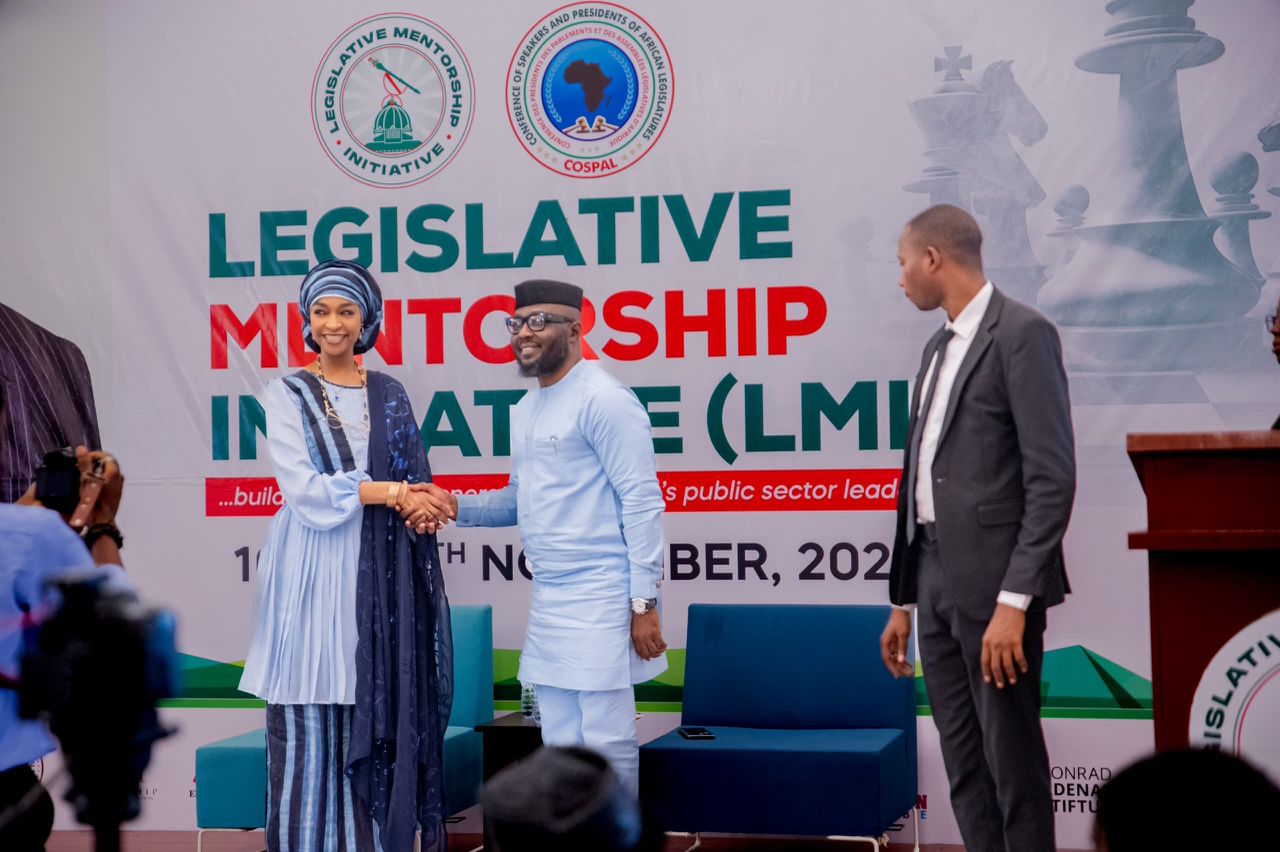
Musawa made this known while addressing trainees at the 4th Legislative Mentorship Initiative (LMI), held at the National Institute For Legislative and Democratic Studies, Abuja on Thursday.
Themed ‘Building the next generation of Public Sector Leaders’, Minister Musawa highlighted art and culture as essential tools for national cohesion and identity, economic development and job creation, innovation and civic engagement, sustainable development, and projecting Nigeria’s soft power and global identity.
She noted that Nigeria’s rich cultural heritage is a unifying force that binds different ethnicities and elaborated on how Art and Culture is key to public-sector excellence in Nigeria.
“First, embracing and promoting art and culture helps to forge national cohesion and shared identity among Nigeria’s diverse populations. Integrating culture into public policy and governance transforms the creative and cultural sectors into engines of economic development, job creation and diversification. Cultural industries including crafts, music, film, design, heritage tourism can generate livelihoods, attract investment, expand exports, and reduce overreliance on a narrow set of economic activities.
“A society that values creativity and cultural expression tends to produce more resourceful citizens, fosters cross-cultural dialogue, and encourages public servants to be more adaptive, empathetic, and culturally aware while prioritizing culture and creative economy in public policy through frameworks, institutions, and infrastructure, demonstrates long-term vision and commitment to sustainable development,” Musawa said.
The Minister called for supportive policies, enabling legislation, and sustained commitment to fulfill this vision, including laws that protect intellectual property, incentivize investment in creative infrastructure, and integrate arts and culture into education and community development.
“Embedding art and culture at the heart of governance and public-sector planning is not a luxury, it is a necessity. It builds unity, drives economic growth, fosters innovation, strengthens institutions, and ensures that development respects and reflects the soul of the nation,” she emphasized.
Musawa thanked the founder of the Legislative Mentorship Initiative (LMI), Rt. Hon. Femi Gbajabiamila, Chief of Staff to the President, Bola Ahmed Tinubu, for his inspiring vision and unwavering commitment to cultivating Nigeria’s future public-service leaders.
Other speakers at the Legislative Mentorship Initiative include the Director General, Centre for Black and African Arts and Civilization Aisha Augie, Nigerian photo-journalist and documentary photographer Bayo Omoboriowo, Amb. Dapo Oyewole, Secretary-General Conference of Speakers and Presidents of African Legislatures amongst others.
-
 Featured6 years ago
Lampard Names New Chelsea Manager
-
 Featured6 years ago
FG To Extends Lockdown In FCT, Lagos Ogun states For 7days
-
 Featured6 years ago
Children Custody: Court Adjourns Mike Ezuruonye, Wife’s Case To April 7
-
 Featured6 years ago
NYSC Dismisses Report Of DG’s Plan To Islamize Benue Orientation Camp
-

 Featured4 years ago
Transfer Saga: How Mikel Obi Refused to compensate me After I Linked Him Worth $4m Deal In Kuwait SC – Okafor
-
Sports3 years ago
TINUBU LAMBAST DELE MOMODU
-

 News11 months ago
Zulu to Super Eagles B team, President Tinubu is happy with you
-
Featured6 years ago
Board urges FG to establish one-stop rehabilitation centres in 6 geopolitical zones