
Creative Industry
NYSC Garment Factory Produces 57,000 Corps Kits In 3-Month
……As DG Advises Corps Members on Dignity of Labour
Joel Ajayi
The Director-General of National Youth Service Corps (NYSC) Brigadier General Shuaibu Ibrahim has revealed that the garment factory put in place some months ago has produced 57,000 corps members’ kits.
To this end, DG enjoined Corps Members to imbibe the dignity of labor and be tenacious in the utilization of vocational skills imparted in them during the service year.

The scheme said within the period, 12,000 khaki suits, 15,000 physical exercise shorts, 15,000 crested vests, and 15,000 plain vests were produced.
Speaking during an inspection visit to the garment factory in Minna, Niger State, the NYSC Director General (DG), Brigadier General Shuaibu Ibrahim in a statement signed by the Director, Press and Public relations, Mrs. Adenike Adeyemi, tasked corps members working in the factory on deploying intellectual prowess in what they do, so as to add value to their fashion design skills.
Director-General also advised them to access the loan facilities made available by financial institutions to enable them to actualize their business plans for self-employment and wealth creation.

While noting the rate of employment in the country and the efforts being made to address this, he added that skill acquisition remains the best solution.
The NYSC boss advised the Corps Members to continue to be of good character and strive to leave legacies in the factory and their host communities.
He equally warned them against acts capable of jeopardizing Management’s efforts towards repositioning the Scheme for enhanced efficiency
Briefing the Director-General, the Head of the Factory, Mr. Aluyor Moses Osikhuemeh, said the Garment Factory, which was established in 1992, had trained thousands of Corps Members thereby making them self-reliant.
He added that the factory would continue to contribute towards the provision of quality Corps kits while also generating revenue for the Scheme.
“The factory has, within three months, produced 12,000 Khaki Suits, 15,000 Physical Exercise Shorts, 15,000 Crested Vests and 15,000 Plain Vests,”



Creative Industry
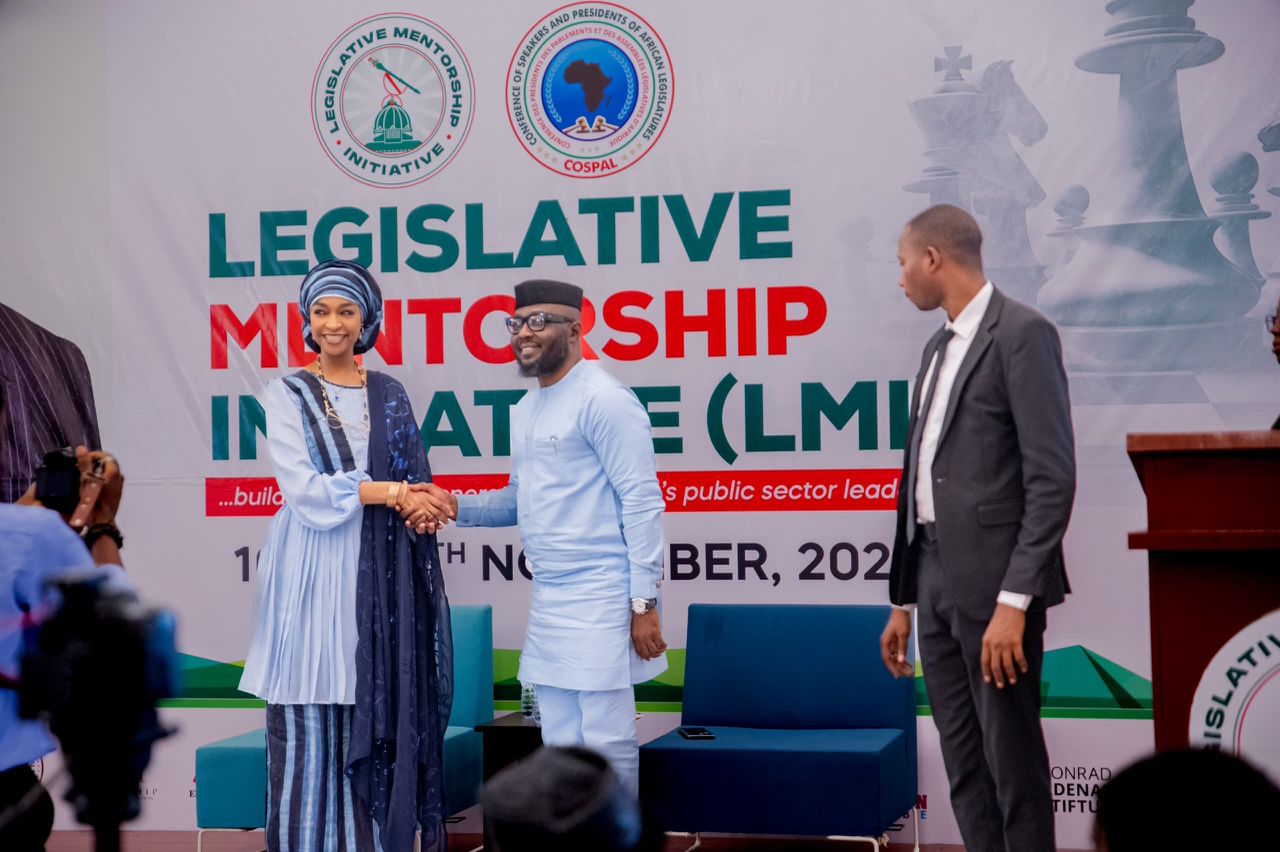
Musawa Highlights Art and Culture as Drivers of Public Sector Excellence at Legislative Mentorship Session
Joel Ajayi
The Minister of Art, Culture, Tourism and Creative Economy, Hannatu Musa Musawa, Esq., has emphasized the importance of integrating art and culture into public-sector excellence in Nigeria.
In a statement issued on Thursday in Abuja by the SA Media & Publicity, Office of the Honourable Minister, Federal Ministry of Art, Culture, Tourism and Creative Economy Nneka Ikem Anibeze, Phd.
Musawa made this known while addressing trainees at the 4th Legislative Mentorship Initiative (LMI), held at the National Institute For Legislative and Democratic Studies, Abuja on Thursday.
Themed ‘Building the next generation of Public Sector Leaders’, Minister Musawa highlighted art and culture as essential tools for national cohesion and identity, economic development and job creation, innovation and civic engagement, sustainable development, and projecting Nigeria’s soft power and global identity.
She noted that Nigeria’s rich cultural heritage is a unifying force that binds different ethnicities and elaborated on how Art and Culture is key to public-sector excellence in Nigeria.
“First, embracing and promoting art and culture helps to forge national cohesion and shared identity among Nigeria’s diverse populations. Integrating culture into public policy and governance transforms the creative and cultural sectors into engines of economic development, job creation and diversification. Cultural industries including crafts, music, film, design, heritage tourism can generate livelihoods, attract investment, expand exports, and reduce overreliance on a narrow set of economic activities.
“A society that values creativity and cultural expression tends to produce more resourceful citizens, fosters cross-cultural dialogue, and encourages public servants to be more adaptive, empathetic, and culturally aware while prioritizing culture and creative economy in public policy through frameworks, institutions, and infrastructure, demonstrates long-term vision and commitment to sustainable development,” Musawa said.
The Minister called for supportive policies, enabling legislation, and sustained commitment to fulfill this vision, including laws that protect intellectual property, incentivize investment in creative infrastructure, and integrate arts and culture into education and community development.
“Embedding art and culture at the heart of governance and public-sector planning is not a luxury, it is a necessity. It builds unity, drives economic growth, fosters innovation, strengthens institutions, and ensures that development respects and reflects the soul of the nation,” she emphasized.
Musawa thanked the founder of the Legislative Mentorship Initiative (LMI), Rt. Hon. Femi Gbajabiamila, Chief of Staff to the President, Bola Ahmed Tinubu, for his inspiring vision and unwavering commitment to cultivating Nigeria’s future public-service leaders.
Other speakers at the Legislative Mentorship Initiative include the Director General, Centre for Black and African Arts and Civilization Aisha Augie, Nigerian photo-journalist and documentary photographer Bayo Omoboriowo, Amb. Dapo Oyewole, Secretary-General Conference of Speakers and Presidents of African Legislatures amongst others.
-
 Featured6 years ago
Lampard Names New Chelsea Manager
-
 Featured6 years ago
FG To Extends Lockdown In FCT, Lagos Ogun states For 7days
-
 Featured6 years ago
Children Custody: Court Adjourns Mike Ezuruonye, Wife’s Case To April 7
-
 Featured6 years ago
NYSC Dismisses Report Of DG’s Plan To Islamize Benue Orientation Camp
-

 Featured4 years ago
Transfer Saga: How Mikel Obi Refused to compensate me After I Linked Him Worth $4m Deal In Kuwait SC – Okafor
-
Sports3 years ago
TINUBU LAMBAST DELE MOMODU
-

 News11 months ago
Zulu to Super Eagles B team, President Tinubu is happy with you
-
Featured6 years ago
Board urges FG to establish one-stop rehabilitation centres in 6 geopolitical zones