
Health
Our Herbs Are A Huge Blessing From God – Dr Ben Anodu
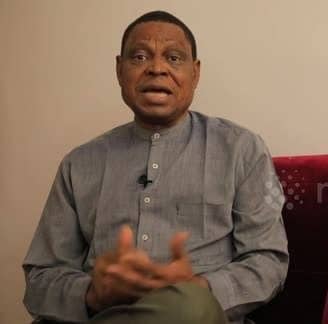
Dr. Benjamin Amodu is an expert in python-medicinal research and is known internationally for his alternative medicine remedies to various diseases. In this interview with newsmen, he expresses his firm belief that with the political will of government, these herbs our country is blessed with can make Nigeria become a hub for pharmaceuticals with most countries of the world coming to us for solutions to many ailments.
As a graduate of Industrial Pharmacy, what motivated you to go into alternative medicine?
I am an industrial pharmacist because I was looking forward to manufacturing my own drugs in the future, and at the time of graduation we heard that the World Health Organisation, WHO, was looking more toward herbal medicine, so the a need to change gear.
Despite having an abundance of natural resources or raw materials for alternative medicine, why do you think Nigeria is still backward in this regard?
Well, we need someone with the political will to make us succeed. You know in every situation, political will is the issue. The manufacturing countries or advanced countries of the world have a way of cowing people into only believing in what they’re doing. I was the first to tell the world through a Guardian newspaper interview in 2003 how I manufacture my cures for most of the illnesses from bitter leaf and about 10, 15 years later we see the United States of America, USA, now manicuring bitter leaf and people are queuing up to buy them in supermarkets and in stores, so that’s the kind of country we have but I think with President Tinubu, it is going to be different.
He looks like a very knowledgeable person to the extent that he saw herbal drugs and made a comment that this would bridge the gap between the dollar and the Naira. That shows the level of intelligence and I think it shows he has the political will to take action in this regard.
I remember you wrote to the Ministry of health and other agencies under it about your cure for COVID-19 even before Nigeria recorded its index case. How far with the clinical trials?
There is no clinical trials because we applied for the trials and paid for it but up till now, we have not heard any response as to go on or not. But the good thing is that we have cured people with the same product and it’s all over the internet and the whole world is aware that Nigeria has the solution for COVID-19: call it long-term COVID, or any strain of COVID, we are specifically into the research for viruses so anyhow the virus changes, we have the solution.
Tell us briefly about your experience with the cure for COVID-19.
Everybody who has come here for issues relating to COVID-19 has had the situation resolved. When they do it in America or in Europe, they make claims of the cures but when we do it here they say we shouldn’t say so. I don’t know why, but this is my intellectual property and as a lawyer, I don’t think anybody can challenge me. I cure those disease conditions and people are on the internet saying it. Can you imagine someone who had prostate enlargement and has been to all the important hospitals in India to no avail, but he took our products and he got relief? He is saying this himself, I am not the one saying it for him. So evidence they say, is the end of the argument.
How would you describe your relationship with, and the acceptance of your work by the government agencies like NIPRD and…
(cuts in) No no no! You know in Nigeria we are always like that; always downplaying our notable and laudable achievements and sweeping them under the carpet but with this new government like I have been saying, we think they mean business so we pray to have a change in the attitude of the government. I don’t want to talk about all those past relationships. Not only myself but others like me are all looking forward to the future and we hope to see many more positive things for herbal medicine.
Where do you see Nigeria in the next 50 years with regard to alternative medicine?
I can see Nigeria in the next 50 years as a hub in pharmaceuticals with most countries of the world coming to us for solutions to many ailments and diseases.
What are some of the diseases that your products cure?
Well, you know before now, diabetes which is an auto-immune disease as well as a hormonal imbalance, can’t be managed but our medication cures it to the extent of reducing the sugar level to normal, and all the adverse effects caused by the modern pills or by the disease itself are completely resolved. Issues like quick ejaculation, generalized pain of the body, and issues of the eyes, legs, and hands are all resolved.
Even cases of diabetic ulcer which is not curable anywhere in the world by orthodox medicine that leads to amputation are resolved without the need to amputate. Can you imagine the reputation this singular cure will create for Nigeria before the whole world, where we cure this without the need for amputation?
Glaucoma which is an increase in the intra-ocular pressure of the eye is resolved here to normal without operative procedure. Or is it cataract that we remove with our treatment without surgical operation?
Or even in the kidney end disease which we resolve without transplant, and without dialysis. With our treatment, the kidneys repair themselves and are rejuvenated back to optimum performance and the patient recovers. What can we say about this cure, with kidney disease having become a major issue across the globe? Or do you talk of Hepatitis A, B, C, D, and E where we are told that about two billion people have been infected with the hepatitis B virus alone, that’s about one out of three persons? That approximately 1.5 million people become newly infected each year; almost 300 million people are chronically infected, yet only about 10% of infected individuals are diagnosed, so it is unknown to about 90% of the sufferers. But we have a cure from herbs that resolve the hepatitis. You can go to my Facebook page and see verifiable testimonies from people we have cured of Hepatitis.
Or is it an issue of HIV/AIDS that the viral load is brought down to nil and the patient does not experience the viral load increasing again, and the CD4 count recovers to about 900 to 1000?
Or is it tuberculosis that we have treated patients with TB and HIV, and in the third week of treatment the TB disappears? This is TB that is treated for 9 months with 9 different chemical cocktails.
In the case of sickle cell anemia, we treated a man who had undergone over four blood transfusions, but since the daughter has been on our treatment, she has not visited any hospital because she has not fallen sick. What about those whose genotype changed from SS to either AS or AA as the case may be? The testimonies are all there for the world to verify. But I want to state here that people’s bodies respond differently: while some respond early, others might have a delayed response. But the most important thing is to continue your medication until God who heals brings your own healing.
Look at the prostrate that killed James Brown in those days. He had to undergo six prostrate operations. In the cases of surgical operations, the prostrate will always grow back, but we have gotten a final hammer on the prostrate that a person who urinates up to 10 times in one night can take our medication and within just two or three days, the urination will come down to only once or twice as the case may be. Is that not a major achievement?
Finally, what is your message to Nigerians?
My message is that let us have a very huge hope in our herbs which God has endowed on us based on our location on the geography of the earth. This is a huge blessing God has given us and some of us have researched into them. It is just left for us to believe in them. So let us join hands with the government and move this country forward and get people all over the world to make Nigeria the destination for medical tourism as we reverse the incessant trips to India, China, Egypt, and all the other destinations.
The End



Health
New Malaria Plan Puts States, Local Data At Centre Of Nigeria’s 2030 Response
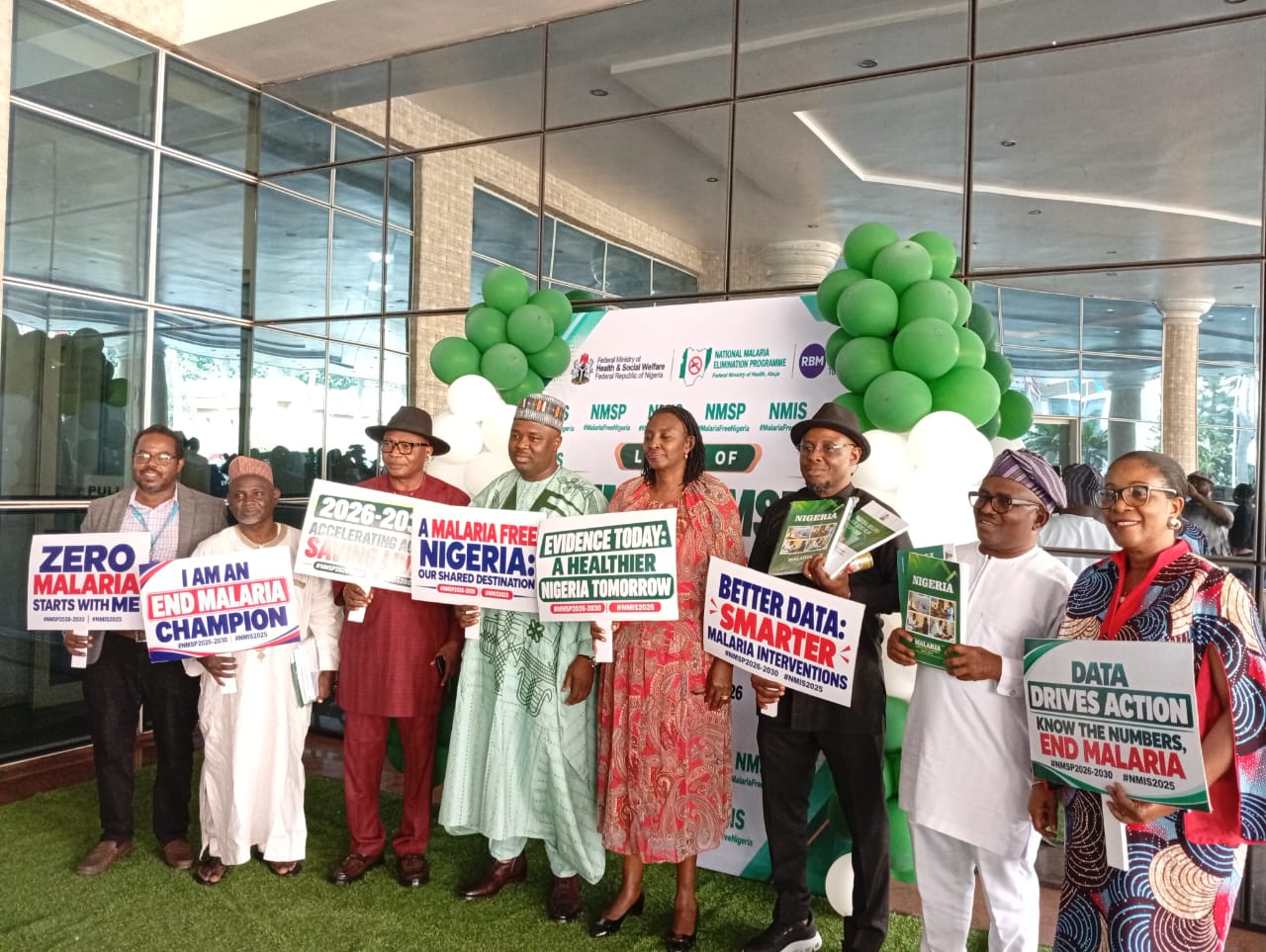
Cyril Ogar
Nigeria’s latest malaria data point to a country making progress overall but facing sharply different disease burdens from one state to another, prompting health authorities to shift emphasis towards locally tailored interventions under a new five-year strategy.
The National Malaria Strategic Plan (NMSP) 2026–2030, launched alongside the 2025 Nigeria Malaria Indicator Survey (NMIS) report, seeks to cut malaria parasite prevalence and deaths by 50 per cent from 2025 levels by 2030.
Rather than applying a uniform national response, the plan prioritises interventions based on local epidemiological evidence, while also calling for stronger domestic financing, improved diagnosis and treatment, better surveillance and clearer accountability.
The Coordinating Minister of Health and Social Welfare, Prof. Muhammad Ali Pate, represented by the ministry’s Permanent Secretary, Mrs Daju Kachallom, presented the government’s position at the joint launch in Abuja.
Pate described the survey and strategic plan as essential tools for identifying weaknesses in malaria control and directing resources towards areas with the greatest need.
He said the survey’s findings on prevalence, prevention, diagnosis and treatment would support policy development, programme implementation, resource allocation and performance assessment.
The minister said the strategic plan was designed to accelerate progress towards a malaria-free Nigeria while remaining consistent with national health priorities and the World Health Organisation’s global malaria strategy.
He commended the National Malaria Elimination Programme (NMEP), the National Population Commission (NPC), development partners and other stakeholders involved in producing the survey and plan.
Pate also called for a shared national effort involving federal and state governments, the private sector, communities and households, stressing that malaria elimination could not be achieved by government alone.
The 2025 NMIS shows that malaria parasite prevalence among children aged six to 59 months, measured through microscopy, fell from 42 per cent in 2010 to 23 per cent in 2018, 22 per cent in 2021 and 15 per cent in 2025.
However, the national improvement masks substantial differences between states. Prevalence among children in the same age group ranged from two per cent in Lagos State to 31 per cent in Ebonyi State.
The figures indicate that progress has not been evenly distributed and that malaria control efforts must be adapted to the conditions in individual states and communities.
Earlier, the National Coordinator of NMEP, Dr Nnenna Ogbulafor, said the NMSP was developed from the 2025 NMIS findings and other programme data.
She said the evidence would help policymakers locate high-burden areas, improve the design of interventions and direct limited resources to communities most in need.
Ogbulafor said the plan was aligned with Nigeria’s health sector priorities and the WHO Global Technical Strategy for Malaria 2016–2030.
She identified policy alignment, state-level leadership, domestic financing, partnerships and accountability as central to implementation.
The national coordinator urged state governments, civil society organisations and development partners to take ownership of the plan and support coordinated, adequately funded malaria programmes.
She said the differences in prevalence across states made subnational planning indispensable to meeting the national targets.
Ogbulafor called on states to develop comprehensive malaria control programmes reflecting local disease burdens, epidemiological evidence and available resources.
She also stressed the need for sustained domestic financing and partnerships to close funding gaps and maintain implementation through 2030.
NMEP, she said, would work with the National Malaria Working Group and international partners to track implementation, assess performance and review results regularly.
The plan aims to raise access to and use of preventive interventions to at least 80 per cent, achieve at least 90 per cent effective coverage of malaria diagnosis and appropriate treatment among at-risk populations, and improve surveillance performance from a baseline of 47 per cent to 70 per cent by 2030.
It also targets stronger governance and organisational capacity, with at least 60 per cent of malaria programme resources expected to come from domestic sources by 2030.
The survey data show that prevention remains uneven. Only 54 per cent of households had at least one insecticide-treated net, while 45 per cent of children under five and 54 per cent of pregnant women aged 15–49 slept under a net on the night before the survey.
Protection during pregnancy was also incomplete. Among women aged 15–49 who had a live birth in the preceding two years, 62 per cent received at least one dose of sulphadoxine-pyrimethamine during their last pregnancy, but only 33 per cent received three or more doses.
The findings point to the need to expand access to insecticide-treated nets and intermittent preventive treatment for pregnant women.
Diagnosis is another major gap. Of children under five who had a fever in the two weeks before the survey, 59 per cent had advice or treatment sought, but only 18 per cent had blood taken for malaria testing.
The strategic plan therefore places emphasis on prompt testing, appropriate treatment, preventive services and public awareness.
In his remarks, the Director-General of NPC, Dr Abubakar Muhammed, pledged the commission’s continued support for credible demographic and health data to guide policymaking and malaria elimination efforts.
Muhammed said the survey reflected the partnership between the Federal Ministry of Health and Social Welfare, through NMEP, and the NPC.
He said the collaboration brought together expertise in malaria control, demographic surveys and data management to produce information for national planning and development.
The NPC director-general said the commission would continue to modernise its survey operations through technologies such as the Global Positioning System (GPS) and spatial techniques.
He urged policymakers, programme managers, researchers and development partners to use the findings to refine strategies, improve implementation and target communities where interventions were most needed.
Muhammed commended the ministry, NMEP, technical consultants, state enumerators and field teams for their roles in conducting the survey.
He said the report would provide a strong evidence base for a coordinated national malaria response.
The launch of the NMIS report and NMSP 2026–2030 places the next phase of Nigeria’s malaria response on a clearer understanding of where the disease remains most entrenched, while challenging states and partners to convert that evidence into measurable local action.
-
 Featured7 years ago
Lampard Names New Chelsea Manager
-
 Featured7 years ago
FG To Extends Lockdown In FCT, Lagos Ogun states For 7days
-
 Featured7 years ago
Children Custody: Court Adjourns Mike Ezuruonye, Wife’s Case To April 7
-
 Featured7 years ago
NYSC Dismisses Report Of DG’s Plan To Islamize Benue Orientation Camp
-

 Featured5 years ago
Transfer Saga: How Mikel Obi Refused to compensate me After I Linked Him Worth $4m Deal In Kuwait SC – Okafor
-
Featured7 years ago
Board urges FG to establish one-stop rehabilitation centres in 6 geopolitical zones
-
Sports4 years ago
TINUBU LAMBAST DELE MOMODU
-

 News2 years ago
Zulu to Super Eagles B team, President Tinubu is happy with you













