
Featured
Over 30,000 Nigerian youths to acquire digital skills – Pantami

No less than 30,000 additional young Nigerians will gain access to digital skills training as part of the benefits of a collaboration between the Federal Ministry of Communication and Digital Economy and Huawei Technologies (Nigeria) Limited.
This was disclosed by the Minister of Communication and Digital Economy, Dr. Isa Ali Ibrahim Pantami during the signing of a Memorandum of Understanding between the two parties aimed at developing the digital literacy of Nigerian talent.
The event also doubled as a presentation ceremony for the Huawei competition national final awards.

“The Memorandum of understanding signing between the Federal Government of Nigeria through the Federal Ministry of Communications and Digital Economy on one hand and Huawei Nigeria, on the other hand, is more on developing the skills of citizens in the country, particularly because the global trend today requires students to have skills with which they can do things practically. That is why we came up with MOU to see how, as part of Huawei’s corporate social responsibility, they can support our students all over the country,” Dr. Pantami said.

“As part of the MOU, a minimum of 30,000 students are going to be trained on digital skills, and also we are going to establish around 300 centers, academies of Huawei in our Universities, Polytechnics, and Colleges of Educations, where our students would be able to get the skills required to face the challenges of today’s labour market particularly at the international stage, not only in Nigeria,” he added.
Speaking also, the President of Huawei Nigeria, Liuyan Trevor stated that their organization is fully committed to the development of the Nigerian Digital Economy through the enhancement of the Digital Literacy and skill of young Nigerians.

Mr. Trevor stated this at the occasion of the signing ceremony of the ICT talent development corporation MOU between Huawei and the Federal Ministry of Communication and Digital economy at which took place in Abuja on Monday.
Speaking further at the occasion, Mr. Trevor noted that they are happy to key into the ministry’s vision to transform Nigeria into a leading digital economy that provides quality life and digital economies for all and sundry which will generate digital innovations and entrepreneurship ecosystem that creates value and prosperity for all.
“Huawei is committed to building a fully connected, intelligent World through a Digital Economy Transformation. One of the eight pillars of Digital Economy Policy is to accelerate the development of the Nigerian Digital Economy by enhancing the Digital Literacy and skills of Nigerians. This Policy will usher a massive training of Nigerians from all works of life in order to enable them to obtain digital literacy and other digital skills.
“Huawei’s desire is to fast-track the development economy in line with the policy. Huawei has developed a digital education curriculum to meet the current and future needs of the Digital Economy.
“Furtherance to Nigeria’s Digital Economy, Huawei is highly committed to developing local talents through various information and communications technology, (ICT), talent training programs.
Huawei Nigeria has also developed a tremendous training curriculum to cater for the needs of both the Telecommunication Industry, the Government Workforce, Youth Development and Education Institutions which covers all major areas in need capacity development,” he concluded.



Featured
Alake Inaugurates Nigeria-US Solid Minerals Committee, Dismisses $700bn Claim, Says No Assets Sold
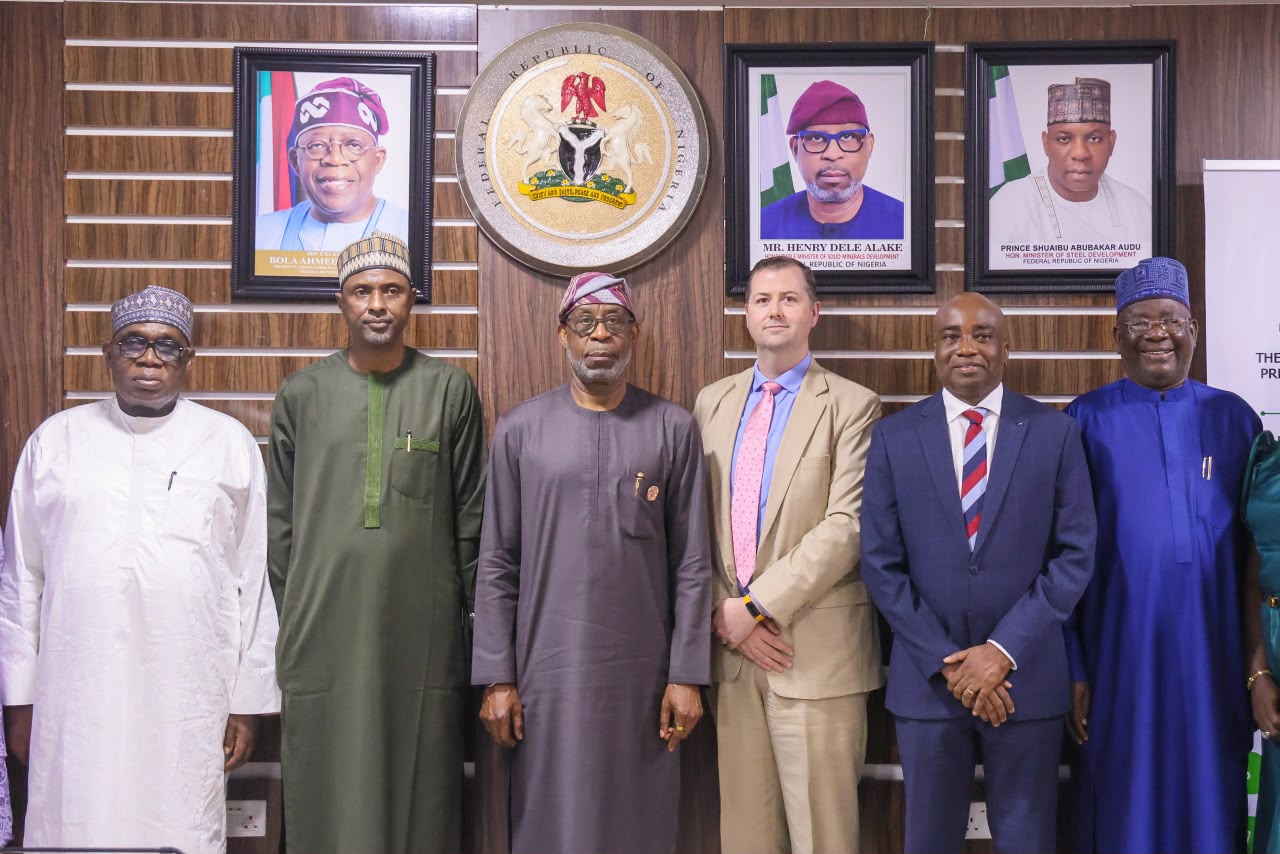
Joel Ajayi
The Minister of Solid Minerals Development, Dr. Dele Alake, on Tuesday inaugurated the Nigeria-United States Committee on Strategic Cooperation in the Solid Minerals Sector in Abuja, dismissing reports that Nigeria sold $700 billion worth of solid minerals to the US.
The inauguration followed the strategic cooperation framework established between Nigeria and the United States during the 81st United Nations General Assembly in New York.
In a statement issued on Wednesday by the Head PRESS and Public Relations Department Mrs. Kania Maliki Andeyaba stated that, Alake in the Memorandum of Understanding, MoU, signed with the US is a government-to-government platform to facilitate business-to-business engagements between American investors and Nigerian local operators, not a sale of assets.
Harping on the importance of the solid minerals sector to President Bola Ahmed Tinubu’s economic diversification agenda, he noted that the administration was committed to reducing dependence on a mono-product economy through the sustainable development of Nigeria’s vast mineral resources.
According to him, the Nigeria–US partnership as a strategic initiative to attract investment, promote technology transfer, strengthen local mineral processing and create employment opportunities.
“There is no sale of any Nigerian asset. There’s nothing exchanging hands,” Alake declared.
“We created a platform to facilitate mingling of US investment ventures with Nigeria’s local operators. It is in the public domain. We signed it in public and published it in four or five national newspapers.”
The Minister said reports claiming the US was coming to take over Nigeria’s minerals and security architecture were untrue at best and products of riotous imagination at worst.
Explaining the policy thrust, Alake said Africa has historically held the short end of the stick in global economic transactions, and Nigeria is determined to change that model.
“We have the resources, the critical elements the world needs to transit to clean energy. So we are creating a new paradigm — you bring your capital, expertise and technology, to match with our natural resources and create a win-win situation . The investor gains, Nigeria gains.’’he said.
Nigeria, he stressed, had operated a mono-cultural economy dependent on oil, while solid minerals were exploited informally — with ores taken “from pit to port” without value addition.
Alake said government has now made local processing mandatory, refusing to grant mineral titles to investors without a clear pathway to processing in Nigeria.
He said the policy led to the springing up of processing factories, including the largest lithium processing plant in West Africa commissioned recently in Nasarawa by the Vice President, and informed the formation of the African Minerals Strategy Group.
Alake noted that investor confidence has returned due to macro-economic reforms by President Bola Tinubu that guarantee security of tenure and repatriation of profits.
He charged the committee to discharge its assignment responsibly, saying its work is strategic to achieving the President’s $1 trillion economy target.
To this end, he told the Committee to ensure effective coordination, identify investment opportunities and translate the framework into measurable outcomes capable of positioning Nigeria as a competitive player in the global solid minerals industry.
In his welcome address, Permanent Secretary of the Ministry, Engr. Faruk Yusuf Yabo, said the inauguration translates growing bilateral engagements into a structured framework for practical cooperation and investment mobilization
Economic Officer at the US Embassy, Jonathan Baas, said President Donald Trump has prioritized three areas for US embassies — energy, artificial intelligence/super intelligence, and critical minerals.
Baas said Washington’s direction is to work with partners to secure critical supply chains while ensuring partners capture value.
“We just signed a contract today on looking into building AI data centres in Nigeria at the Nigerian Economic Summit. That’s the direction Washington wants us to go,” he said.
In his vote of thanks, CEO/Managing Director of Nigeria Solid Minerals Company, NSMC said that the committee
is expected to coordinate implementation, facilitate investment and monitor progress towards achieving the objectives of the Nigeria–US cooperation framework.
The inauguration reinforces the Federal Government’s commitment to repositioning the solid minerals sector as a key driver of economic diversification, industrial development and national prosperity under President Tinubu’s Renewed Hope Agenda.
-
 Featured7 years ago
Lampard Names New Chelsea Manager
-
 Featured7 years ago
FG To Extends Lockdown In FCT, Lagos Ogun states For 7days
-
 Featured7 years ago
Children Custody: Court Adjourns Mike Ezuruonye, Wife’s Case To April 7
-
 Featured7 years ago
NYSC Dismisses Report Of DG’s Plan To Islamize Benue Orientation Camp
-

 Featured5 years ago
Transfer Saga: How Mikel Obi Refused to compensate me After I Linked Him Worth $4m Deal In Kuwait SC – Okafor
-
Featured7 years ago
Board urges FG to establish one-stop rehabilitation centres in 6 geopolitical zones
-
Sports4 years ago
TINUBU LAMBAST DELE MOMODU
-

 News2 years ago
Zulu to Super Eagles B team, President Tinubu is happy with you













