
Featured
Presidency Refutes Afenifere’s Deceitful Statement on President Bola Tinubu’s Midterm:
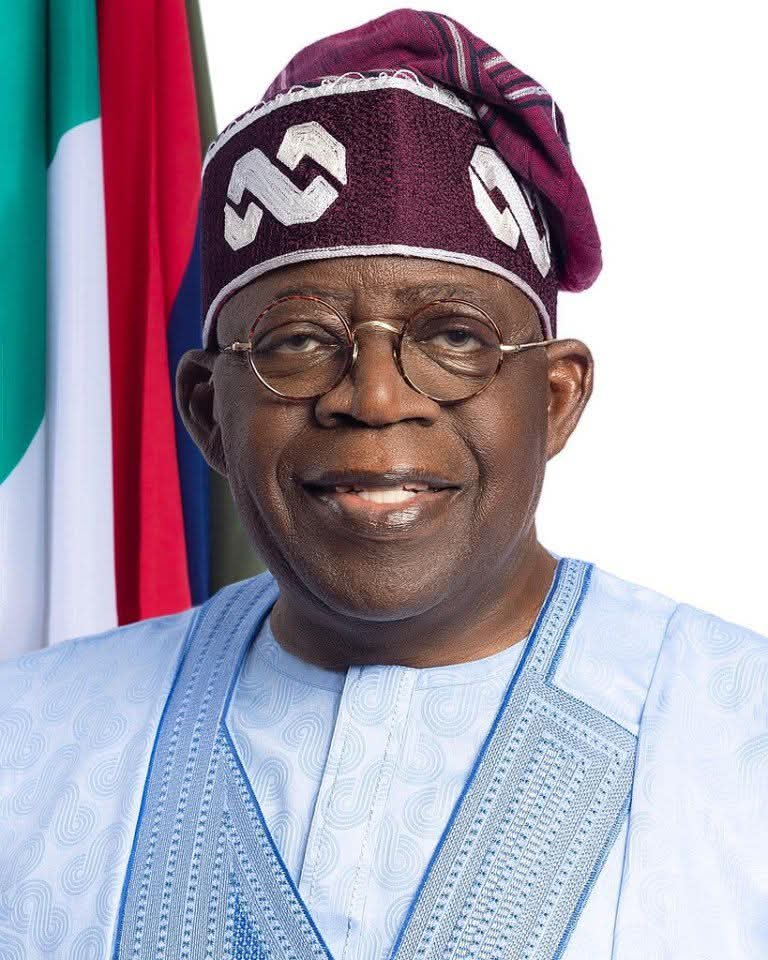
Chief Sunday Dare
The statement from a factional Afenifere group raises serious concerns about a penchant and deliberate attempt to find faults and trade in deceit instead of objectivity. The group has found it challenging to accept that under the Renewed Hope Agenda of President Bola Tinubu, Nigeria’s comeback story is firmly underway.
The rebellious Afenifere claims that President Bola Tinubu’s administration’s performance over the past two years has witnessed a regression in human development, economic mismanagement, and democratic backsliding.
This is a jaundiced view, echoing the view of opposition politicians, one of whom the group supported in the 2023 election.
A balanced assessment based on available data reveals a more objective and progressive picture, with significant achievements amid the challenges expected from a country like Nigeria with decades-old problems.
Beyond its confounding conclusions based on prejudice, the statement raises the following issues. With the ensuing point-by-point clarification, it will become clear that the group’s position is neither grounded in facts nor logic.
- Economic Reforms and Their Impact
The factional Afenifere’s claim that Tinubu’s economic reforms, particularly the removal of fuel subsidy and the floating of the naira, have led to “unmitigated sufferings” and “economic deforms” seeks to draw attention to some of the challenges but overlooks the macroeconomic gains. The removal of the fuel subsidy, announced on May 29, 2023, saved the government over $10 billion in 2023 alone, reducing fiscal strain and redirecting funds to other sectors. Unifying the foreign exchange market and the naira’s floatation aimed to address distortions in the currency market, boosted foreign reserves to $38.1 billion by 2024 and achieved a trade surplus of N18.86 trillion for the country.
Under the Tinubu administration, Nigeria’s annual inflation rate fell to 23.71% in April 2025 from 24.23% in the prior month. Food inflation, the most significant component of the inflation basket, remained elevated but moderated to 21.26% from 21.79%
While these figures indicate stabilisation, the immediate impact on ordinary Nigerians is not lost. The government’s cash transfer programme, which provides funds to the poorest households and benefits over 5.7 million households, is a credible outreach.
However, dismissing the twin policies as “unforced errors” ignores the unsustainable nature of the previous subsidy regime and multiple exchange rate systems, which were draining public finances. A more balanced critique would acknowledge the necessity of reform while emphasising the need for better-targeted social safety nets.
As of today, the Tinubu administration has recorded over 900,000 beneficiaries of the Presidential Loan and Grant Scheme, over 600,000 beneficiaries of the Students’ Loan Scheme, NELFUND, N70,000 minimum wage, NYSC monthly stipend increase from N33,000 to N77,000, Free CNG kits distributed to thousands of commercial drivers across Nigeria with CNG buses rolled out in partnership with state governments, leading to a significant drop in transport costs. The administration also recorded over $10 Billion FX debt cleared, Federal account allocation to states growing by 60%, enabling more local development projects, N50 billion released to end the perennial ASUU strikes, and over 1,000 PHCs revitalised nationwide with an additional 5,500 undergoing upgrades.
The administration also disbursed N75 Billion in palliative funds to states and LGs for food distribution and cash transfers, over 150,000 youths are being trained in software development, tech support and data analysis under the 3 Million Technical Talent (3MTT) project, over 20,000 affordable housing units under construction under the renewed Hope cities program launched across Nigeria, N200 Billion in Loans to farmers and agro-processors. Other gains: over two million Nigerians are now connected to new digital infrastructure and community broadband hubs and public WiFi projects, 3.84% GDP growth in Q4 2024 (highest in 3 years), over $50 Billion in new FDI Commitments, Net Foreign Exchange Reserves up from $3.99 Billion (2023) to $23.11 Billion (2024), over $8 Billion in new oil and gas investments unlocked, and over $800 million realised in processing investments in solid minerals in 2024 and inflation as at April was down to 23.17%.
It is now pertinent to inquire from opposition leaders about alternative strategies they would propose in contrast to this administration’s extensive list of significant achievements currently benefiting Nigerians in real-time.
- Cost of Governance and the Oronsaye Report
The assertion that the Tinubu administration has failed to implement the Oronsaye Report and instead increased governance costs is inaccurate. The Oronsaye Report, which recommends the merger or scrapping of government agencies to reduce expenditure, has not been fully implemented and has drawn criticisms; it must be noted, however, that the administration has made some efforts to improve fiscal discipline. The fiscal deficit was reduced from 5.4% of GDP in 2023 to 3.0% in 2024, and the debt service-to-revenue ratio dropped from nearly 100% in 2022 to under 40% by 2024. The government also recorded over N6 trillion in revenue in Q1 2025, partly due to removing Ways & Means financing and fuel subsidies. These steps demonstrate fiscal prudence and will eventually translate into immediate, tangible relief for citizens. The administration is working earnestly to address these optics and prioritise cost-cutting measures, including implementing the Oronsaye Report, to restore public trust.
- Allegations of Prebendalism and Corruption
Afenifere’s claim that the administration favours “the privileged and connected” through corrupt palliative distribution and mega-project allocations is questionable. Reports of palliatives being mismanaged or distributed through unverified channels have no doubt surfaced, raising concerns about transparency.
The administration has taken steps against corruption, such as suspending Humanitarian Affairs Minister Betta Edu in January 2024 over alleged fund diversion, signalling some commitment to accountability. Critics may argue that more systemic action is needed, but dismissing all the efforts as propaganda overlooks these initial steps.
Without abusing Presidential powers, the administration is working on expediting action on all pending investigations and prosecution of corrupt practices. At the same time, critical agencies are collating credible evidence on ongoing corruption litigations. It must, however, be noted that in 2024, the Economic and Financial Crimes Commission (EFCC) secured a record-breaking 4,111 convictions, marking its most successful year since its inception. They recovered over N364 billion and significant amounts in foreign currencies, including $214.5 Million, $54,318.64, and 31,265 Euros.
The EFCC achieved its single most significant asset recovery in 2025, with the final forfeiture of an Abuja estate measuring 150,500 square meters and containing 725 units of duplexes and other apartments. The EFCC concluded the final forfeiture and handed the estate to the Ministry of Housing in May 2025.
- Democratic Concerns and Centralisation
Afenifere’s accusation that the Tinubu administration is pursuing a “one-party state totalitarianism” and undermining democratic institutions is unsupported and lacks merit. The claim of neutralising the legislature and judiciary is also a false alarm.
The public should note that the Supreme Court has upheld opposition victories in states like Kano, Plateau, and Abia, suggesting judicial independence. The Independent National Electoral Commission (INEC) has faced criticism for allegedly appointing individuals said to be ruling party affiliates, but no evidence confirms these appointees are card-carrying APC members.
The allegation that the Tinubu government cracks down on peaceful protesters is primarily unfounded. It is a regurgitated rhetoric deployed under previous administrations as a reflection of broader challenges in Nigeria’s democratic culture.
The issue of the State Police is more complex than the oversimplified approach of the factional Afenifere’s statement. Every administration policy is subject to security impact assessment before implementation, and there is a difference between the State Police being widely advocated and a Police State that critics may blame the Federal Government for if implemented without caution.
- Security and Social Welfare
Contrary to the impression created, the administration’s security record is impressive. Over 13,500 terrorists, bandits, and insurgents have been neutralised and 7,000 arrested in the past year, though there is still some news of abductions and violent attacks. The administration’s proactive response to security-related matters has paved the way for more farmers to return to their farms, impacting food production and supply.
The administration also embarked on agricultural initiatives, including tractor procurement, fertiliser distribution, and increased mechanisation.
The government has also not relented on its Regional Development drive as the administration succeeded in establishing Development Commissions across 6 Geopolitical zones (South West, North West, North Central. North East, South East and the Niger Delta) to empower communities and accelerate developments.
- Political Climate and 2027 Elections
The claims of government-sponsored conflicts within opposition parties lack concrete evidence and should be ignored.
Economic reforms are undoubtedly laying the foundation for long-term stability, with GDP growth at 4.6% in Q4 2024 and a Fitch B credit rating upgrade as evidence. Moody’s Investors Service’s latest upgrade of Nigeria’s rating from Caa1 to B3, with a Stable Outlook, indicates that the Tinubu administration is on the right path.
The government is not oblivious to some discontent and difficult times among Nigerians. There is an urgency to deliver more tangible results, which is guaranteed given the impressive performance of the administration in just two years.
Afenifere’s statement saw the cup as half empty. On the contrary, it’s half full. Under President Tinubu’s administration, some of Nigeria’s hydra-headed problems are being tackled headlong.
The administration has achieved fiscal improvements, such as reduced deficits and increased revenues, which will eventually translate into meaningful microeconomic relief for most Nigerians in the short term, even as the government moves to address these issues with greater empathy and transparency.
The administration’s demonstrable priorities are securing the nation, fixing the economy, and improving human capital development.
Responsible citizens and political leaders must work collaboratively with the administration to address the challenges and counter disinformation, as highlighted in the admonition against fake news and deceptive AI videos.
Under President Tinubu’s leadership, Nigeria is turning the corner. From stabilising the naira and curbing inflation to reducing debt burdens and
expanding access to education and health, the administration delivers bold reforms with actual results. With improved security, regional inclusion, anti-corruption measures, and institutional rebuilding, Nigeria’s comeback story is not yet complete — but it is firmly underway.
– Sunday Dare is the Special Adviser to Mr. President on Media and Public Communications.



Featured
Strategic Partnerships, Diaspora Investment and Improved Workforce Critical to Industrialization-DG RMRDC
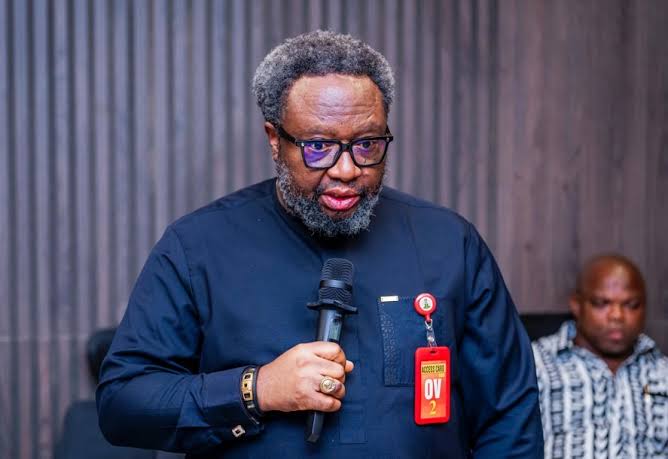
By: Stella Azi and Adaora Adibe
The Director-General/Chief Executive Officer of the Raw Materials Research and Development Council (RMRDC), Prof. Nnanyelugo Ike-Muonso, has called for a strategic shift from the exportation of raw commodities to domestic processing, manufacturing and value addition, declaring that Nigeria possesses enormous untapped raw material resources capable of driving industrialisation, creating jobs and strengthening the country’s economic competitiveness.
Prof. Ike-Muonso made this submission in a lecture titled Unlocking Nigeria’s Raw Material Value Chain for Industrialization, Manufacturing and Competitiveness, where he presented an extensive assessment of Nigeria’s resource endowments, industrial challenges and emerging investment opportunities across agricultural commodities, solid minerals and waste-based raw materials.
The lecture highlighted a combined US$2.65 trillion global market opportunity across 30 major raw material value chains, comprising 12 agricultural value chains valued at US$932 billion, 11 mineral value chains worth US$1.352 trillion and seven circular-economy value chains estimated at US$366 billion.
According to the RMRDC Boss, Nigeria must move beyond the traditional approach of extracting and exporting raw materials to building competitive domestic industries that transform these resources into intermediate products, industrial inputs and finished goods for local consumption and international markets.
He observed that the country’s manufacturing sector has struggled to sustain its 2014 peak, with its contribution to real Gross Domestic Product declining from 9.64 per cent in 2014 to 8.05 per cent in 2025, representing a 16.5 per cent decline. He also drew attention to the increasing cost of raw material imports, which rose to US$20.5 billion in 2025, approximately six times the 2020 level.
He explained that the growing dependence on imported industrial inputs exposes Nigerian manufacturers to foreign exchange volatility, increases production costs and weakens the competitiveness of locally manufactured products.
Prof. ke-Muonso stressed that the solution lies in developing domestic raw material value chains through deliberate investment in processing facilities, research and development, technology, infrastructure and stronger linkages between producers, processors and manufacturers.
He identified agriculture, solid minerals and industrial waste as three major resource platforms for Nigeria’s industrial transformation, stating the country’s significant production capacity and the enormous opportunities available for downstream processing.
Ike-Muonso noted that Nigeria produces over 63 million metric tonnes of cassava annually, making it the world’s largest producer, while also maintaining strong positions in cocoa, cashew, sesame, palm oil and cotton. However, more than 80 per cent of agricultural output leaves farms without adequate processing, resulting in the loss of significant economic value and industrial opportunities.
In the solid minerals sector, he identified more than 44 commercially viable minerals across over 500 locations, including lithium, gold, barite, bitumen, iron ore and high-grade limestone, describing them as strategic resources capable of supporting steel production, energy storage, electrification and advanced manufacturing.
The DG further drew attention to Nigeria’s industrial and agro-waste resources, noting that the country generates over 32 million tonnes of solid waste annually. He explained that agricultural residues, cassava peels, scrap metals, plastics and electronic waste could serve as important feedstock for bio-fertilisers, industrial chemicals, recycled polymers, energy production and other manufacturing applications.
In the agricultural sector, the DG identified cassava and industrial starch, cotton and natural textiles, natural rubber and elastomers, oil palm and oleochemicals, maize derivatives and cocoa processing as priority areas requiring increased investment.
He explained that processing agricultural commodities into industrial starch, sweeteners, textiles, technical rubber, specialty fats and other intermediate products would enable Nigeria to capture more value from its agricultural resources while reducing dependence on imported industrial inputs.
For the minerals sector, he highlighted crude oil-to-olefins and petrochemicals, lithium and energy storage, iron ore and steel, rare earth elements, bauxite and aluminium, and copper and electrification as strategic investment opportunities.
He particularly emphasised the importance of moving beyond mineral extraction into beneficiation, refining, battery precursors, industrial chemicals, metal fabrication and advanced materials production.
On the circular economy, Prof. Ike-Muonso identified electronic waste recovery, scrap metal recycling, plastic waste processing, agro-waste valorisation and battery recycling as emerging industrial opportunities.
He explained that transforming waste into productive industrial feedstock would not only reduce environmental pollution but also create new manufacturing industries, generate employment and reduce the importation of valuable industrial materials.
He noted that to address the structural challenges confronting raw material-based industrialisation, the DG highlighted the strategic interventions of the RMRDC, particularly the proposed 30% Value Addition Bill and the Nigeria Integrated Information Statistical System for Raw Materials and Products (NISSRAMP).
He described the 30% Value Addition Bill as an important policy instrument designed to encourage domestic processing of raw materials before export, strengthen local manufacturing capacity and guarantee access to essential raw materials for Nigerian industries, and NISSRAMP as a critical data infrastructure that would improve access to verified information on the availability, location and quality of raw materials.
According to him, the combination of appropriate policy instruments and reliable resource data would help de-risk investments, improve transparency and strengthen confidence in Nigeria’s raw material sector.
He emphasised the importance of collaboration among government, academia and industry in developing bankable projects, sharing investment risks and accelerating the establishment of processing and manufacturing facilities.
Professor Ike-Muonso called on Nigerians in the diaspora and other local and international investors to take advantage of the opportunities available in Nigeria’s raw material sector.
He identified industrial processing parks, mineral beneficiation and refining, agro-industrial platforms, circular-material processing, industrial input manufacturing and enabling infrastructure as viable investment platforms.
He noted that diaspora investors could contribute beyond financial capital by bringing technology, international business networks, governance standards, technical expertise and access to global markets.
He maintained that Nigeria’s industrial transformation requires coordinated investment across the entire value chain, from raw material sourcing and aggregation to processing, manufacturing, certification and export development.
Professor Ike-Muonso stressed that the country’s industrial future would depend not merely on the volume of raw materials extracted but on the capacity to transform them into competitive products that meet domestic and international market requirements.
He maintained that developing local value chains would stimulate industrial growth, create employment opportunities, diversify exports, conserve foreign exchange and deepen Nigeria’s technological capabilities.
Through its strategic interventions, the RMRDC is positioning itself as a critical bridge between resource availability, investment opportunities and industrial competitiveness, with the ultimate objective of transforming Nigeria from a predominantly raw material exporting economy into a strong manufacturing and value-adding nation.
Ike-Muonso has demonstrated this since assumption of office as the Director General/ CEO RMRDC in the area of capacity building, improved working conditions, promotion of merit, and maintaining a conducive environment that rewards excellence, innovation and dedication. This is evident in his institution of RMRDC training school, reward for winners of the RMRDC innovation challenge among others.
His commitment has brought recognition both nationally and internationally: Al-Jazirah double honour awards as Public Servant /Government Agency of the year 2024-2025 and the recent election as the Sub-Saharan Africa Regional Representative on the Board of the World Association of Industrial and Technological Research Organisations (WAITRO) is a attestation to his commitment.
Concluding the lecture, the DG charged staff, researchers, manufacturers and investors to see themselves as nation builders in the new era of raw materials-led industrialization.
-
 Featured7 years ago
Lampard Names New Chelsea Manager
-
 Featured7 years ago
FG To Extends Lockdown In FCT, Lagos Ogun states For 7days
-
 Featured7 years ago
Children Custody: Court Adjourns Mike Ezuruonye, Wife’s Case To April 7
-
 Featured7 years ago
NYSC Dismisses Report Of DG’s Plan To Islamize Benue Orientation Camp
-

 Featured5 years ago
Transfer Saga: How Mikel Obi Refused to compensate me After I Linked Him Worth $4m Deal In Kuwait SC – Okafor
-
Featured7 years ago
Board urges FG to establish one-stop rehabilitation centres in 6 geopolitical zones
-
Sports4 years ago
TINUBU LAMBAST DELE MOMODU
-

 News2 years ago
Zulu to Super Eagles B team, President Tinubu is happy with you













