
Featured
President Tinubu Celebrates Essiet at 40, Commends Her Service on Road Infrastructure and Community Development

By Joel Ajayi
President Bola Ahmed Tinubu has congratulated Ms. Abiodun Essiet, Senior Special Assistant (SSA) to the President on Community Engagement (North-Central), on the occasion of her 40th birthday, celebrated on January 3.
The President lauded Essiet for her dedication to duty, particularly her active role in community engagement and her consistent participation in road monitoring and supervision exercises across the North-Central geopolitical zone.
In recent times, she has accompanied the Minister of Works, Engr. David Umahi, on inspection tours aimed at assessing progress and ensuring quality delivery of road infrastructure projects across the region.
Essiet, a gender rights activist, community development advocate, and politician, has remained a strong link between the Federal Government and grassroots communities, listening to their concerns and conveying the Renewed Hope agenda to the people at the local level.
President Tinubu described the 40th birthday as a significant milestone, noting that it marks a new phase of greater accomplishments and service. He commended her commitment to engaging communities, fostering inclusion, and promoting development initiatives that directly impact the lives of citizens.
In a statement issued by the Special Adviser to the President on Information and Strategy, Mr. Bayo Onanuga, the President wished Essiet a happy 40th birthday and encouraged her to continue serving with dedication, passion, and an unwavering pursuit of excellence in the discharge of her responsibilities



Featured
Babagana Zulum and the Moral Courage of Rebuilding Borno
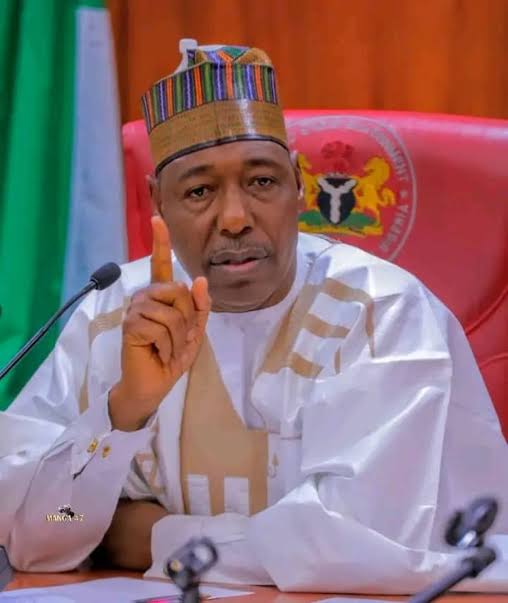
By Dayo Israel, National Youth Leader APC
There are moments in the life of a nation when leadership stops being an abstraction and becomes a living force that people can touch, see, and trust. In Nigeria today, Governor Babagana Umara Zulum represents one of those rare moments. In a country often fatigued by promises, he has chosen the harder road of presence, persistence, and proof. His leadership in Borno State is not merely administrative, it is moral, historical, and deeply human.
Last week, President Bola Ahmed Tinubu returned once again to Borno State to commission projects executed by Governor Zulum. It was the eighth such presidential commissioning in Borno under his watch. That fact alone tells a compelling story. Presidents do not repeatedly travel to commission projects in the same state unless there is something real to see, something concrete to affirm, something consequential to endorse. What President Tinubu witnessed was not a performance of governance, but its substance.
Borno is not an easy place to govern. It is not a state that rewards superficial leadership. It is a territory that has known grief, displacement, loss, and terror. For over a decade, insurgency attempted to break its spirit, scatter its people, and erase its future. Schools were destroyed, communities emptied, livelihoods shattered, and hope placed under siege. To lead such a place requires more than competence. It requires courage that is both physical and moral, and a clarity of purpose that does not retreat in the face of danger.
Governor Zulum understood early that post conflict recovery could not be treated as an emergency response alone. It had to be a long, deliberate rebuilding of society itself. He recognised that security without development would only pause the pain, not end it. He recognised that rebuilding infrastructure without restoring dignity would be incomplete. Most importantly, he recognised that the future of Borno would be decided not only on the battlefield, but in classrooms, farms, hospitals, and resettled communities.
This is why education has become one of the defining pillars of his administration. Governor Zulum has built over one hundred mega schools across Borno State. These are not token structures erected for applause. They are large, modern, well planned educational environments designed to absorb thousands of children who would otherwise be lost to displacement, poverty, or radicalisation. In communities where insurgents once tried to close schools permanently, Zulum responded by building bigger ones. In places where learning was once silenced by fear, he restored it with scale and confidence.
Education in Borno under Zulum is not just about literacy. It is about healing. It is about restoring normalcy to children who have known abnormal lives. It is about giving parents confidence that their children have a future worth staying for. It is about weakening the grip of extremism by strengthening the power of opportunity. Every classroom built is a declaration that terror will not define destiny.
Yet his vision goes far beyond schools. Governor Zulum’s approach to post conflict recovery is holistic, practical, and relentless. He has prioritised the resettlement of internally displaced persons not as a statistic to be managed, but as citizens to be restored. Entire communities have been rebuilt, with housing, water, healthcare facilities, access roads, and security support. He has insisted that people should not remain in camps indefinitely, because dignity cannot thrive in perpetual displacement.
Agriculture, once disrupted by insecurity, has been revived through deliberate investment and protection. Farmers have been supported with inputs, irrigation schemes, and access to land, even in previously inaccessible areas. This is not only about food production, it is about restoring livelihoods and stabilising communities. When people can farm again, trade again, and feed their families again, peace becomes sustainable.
Healthcare delivery has also received focused attention. In a state where conflict stretched already fragile systems, Governor Zulum has rebuilt and equipped health facilities, extended services to rural and conflict affected areas, and invested in primary healthcare as the first line of recovery. Access to clean water, sanitation, and basic services has followed the same logic of inclusion, ensuring that recovery is not confined to urban centres alone.
What truly distinguishes Governor Zulum, however, is not only what he builds, but how he governs. He leads from the front. He shows up personally in frontline communities, often unannounced, listening directly to people whose voices are usually absent from policy discussions. In doing so, he has redefined what it means to be a governor in a post conflict environment. His presence alone sends a message to citizens and adversaries alike, that the state has returned, that leadership is not hiding, and that the people have not been abandoned.
This style of leadership aligns naturally with the broader governance philosophy of President Bola Ahmed Tinubu. President Tinubu believes in building systems, empowering sub national leadership, and rewarding performance. His repeated visits to Borno are therefore not just symbolic gestures. They are acknowledgements of effective leadership and affirmations that the federal government stands with states that demonstrate seriousness of purpose.
Under the Tinubu administration, Nigeria is being encouraged to confront its challenges with courage, reform, and realism. Governor Zulum’s work in Borno fits squarely into this national narrative. It shows that even in the most difficult contexts, progress is possible when leadership is focused and accountable. It proves that development is not a luxury reserved for peaceful places alone, but a necessity precisely where peace has been threatened.
For young Nigerians watching from across the country, especially those of us committed to public service and political leadership, Governor Zulum offers a powerful lesson. Leadership is not about comfort. It is about responsibility. It is not about rhetoric. It is about results. It is not about being seen only when it is safe. It is about standing firm when it is hardest.
As National Youth Leader, I am particularly inspired by what his work means for the next generation. The children filling those mega schools, the young farmers returning to their fields, the youths finding purpose beyond conflict, these are the real dividends of governance. This is how nations are rebuilt, not overnight, but steadily, deliberately, and with compassion.
History will remember Governor Babagana Umara Zulum as more than a governor of a troubled state. It will remember him as a builder in a time of ruins, a leader who chose action over excuses, and a public servant who placed the dignity of his people at the centre of governance. Borno’s recovery story is still being written, but its direction is already clear. It is a story of resilience meeting leadership, of pain transformed into progress, and of hope reclaimed through service.
Nigeria needs more examples like this. More leaders who see office as a duty, not a reward. More leaders who understand that power finds its highest meaning when it is used to lift the most vulnerable. In celebrating Governor Zulum today, we are not only praising an individual, we are affirming a standard. A standard of courage, commitment, and conscience.
Borno is rising again, not by accident, but by design. And at the heart of that design is a governor who refused to accept that tragedy must have the final word.
Dayo Israel, National Youth Leader, APC writes from Lagos
-
 Featured7 years ago
Lampard Names New Chelsea Manager
-
 Featured6 years ago
FG To Extends Lockdown In FCT, Lagos Ogun states For 7days
-
 Featured6 years ago
Children Custody: Court Adjourns Mike Ezuruonye, Wife’s Case To April 7
-
 Featured7 years ago
NYSC Dismisses Report Of DG’s Plan To Islamize Benue Orientation Camp
-

 Featured4 years ago
Transfer Saga: How Mikel Obi Refused to compensate me After I Linked Him Worth $4m Deal In Kuwait SC – Okafor
-
Sports3 years ago
TINUBU LAMBAST DELE MOMODU
-

 News1 year ago
Zulu to Super Eagles B team, President Tinubu is happy with you
-
Featured6 years ago
Board urges FG to establish one-stop rehabilitation centres in 6 geopolitical zones