
Featured
Producer’s Notebook: What life is like in modern-day Xinjiang
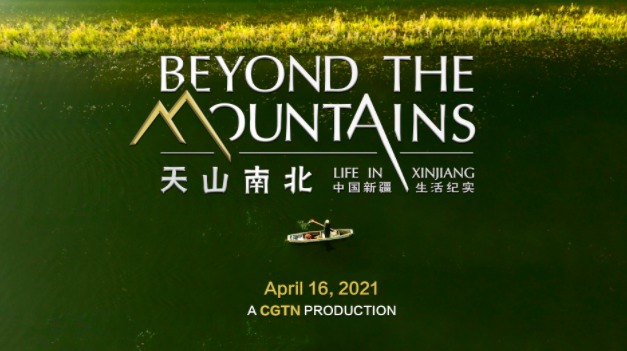
It seems anything about Xinjiang will be criticized by the West now. And anything Chinese media do on Xinjiang will be labeled as propaganda.
That said, the new documentary, “Beyond the Mountains: Life in Xinjiang,” was not commissioned in response to the current rounds of debates, but had been planned for a very long time. It was produced together with “The War in the Shadows: Challenges of Fighting Terrorism in Xinjiang,” starting from the end of August 2020. The same team, two documentaries, and two different images of Xinjiang. It’s all about how you see the region.
Breaking the stereotypes
In 2016, when we were doing a special series “Exploring China’s New Frontier,” we went to the north of Xinjiang’s Zhaosu County, in Ili Kazakh Autonomous Prefecture. It has some of the best grasslands in Xinjiang. We wanted to go back to Zhaosu to tell the story of “Grassland Generations.”
My original thinking was traditional Kazakhs are a nomadic minority, good at singing and riding horses. I called Ili Normal University to find a male student who is majoring in music, whose grandfather lives the traditional herding lifestyle. The university provided four candidates: three music majors, and one dance major. I dismissed the dance major without hesitation, believing ballet and ethnic dancing are for women. But on second thought, I dialed his number to learn more about his story.
The story of Erjanat Nurkidir and his grandfather gave us a surprise. They became the opening story of this documentary. Erjanat’s grandfather once argued with him: “Dancing and dancing will come to nothing.” Erjanat says: “Times have changed and I have my own ideas.” When his grandfather watched him on stage, it was a revelation: “I shouldn’t have said those words.” Stereotypes are often inevitable. Sometimes, they come from ourselves.
Ordinary people with amazing stories
Xinjiang has conflicting images outside China. We try to record this region’s process of change through its people.
My first question to Samira Arkin, a bridal shop owner in Kashgar, made her cry. “What did you want to change when you returned to your hometown after graduation in 2010?”
“I saw many women covered themselves up. All women want to be pretty, so this was hard for me to take. I wanted to change how they dress and how they think about it,” says Samira.
It’s a simple wish, but back in 2010 in Kashgar, it took great courage just to think in that way. When Samira got married, she really wanted a white gown. Her extended family were all against it. When she decided to go into the bridal business in 2014, it was the same. “Many people in the old town believed dressing up and wearing makeup in public wasn’t proper.” Today, Samira says women in Kashgar dare to wear what they like, to accept the white gown and the makeup she puts on them.
This documentary profiles some 20 ordinary people like Samira. They are representatives of today’s life in Xinjiang.
Mardan Ablimit, who runs a coffee shop in Kashgar, wants to embrace modernity and combine it with tradition. “I hope to dispel all those misconceptions held by people who’ve never been here.” Memetjan Metqasim, a musician from Hotan, says his impression of Xinjiang is as richly varied as the rainbow. “The prejudices have grown out of a lack of understanding.” Meng Lulu, a leather artist in Urumqi, says Xinjiang’s ethnic culture itself is such a treasure trove. “Then you will see how different ethnic groups have mingled and lived together.” Tiemerbat Darimzhan, abbot of Balun Kure Monastery in Hejing County, says preserving the water source is as important as their religion. “Water is the milk of Mother Earth.” And Yang Zongzong, a botanist, is on a mission to find and catalogue every species. “With every new discovery, I love this land even more.” …
I think as Xinjiang continues to open up, people from around the world will have more access. The world will see a more balanced and truer picture.
To change with the changes
This documentary is also about the changes and the price of change. It’s how social changes affect the lives of ordinary people, and their efforts to bring new changes in society. Xinjiang is like many other places in China, on a track of fast development. And yet progress often comes at a cost. Many Western countries have had similar experiences that resulted in social changes, too. And the situation in Xinjiang is very complicated, as it involves ethnic, religious and anti-terrorism issues.
The changes are not only for the ethnic Uygur minority. They also affect all other ethnic groups in the region, like the Kazakhs, the Kyrgyz, and the Mongolians. Perhaps the only way to see a true picture is to give up stereotypes and keep up with the changes. As I said in the opening promo:
“Decades of development have taken modern Xinjiang from isolation to economic dynamism.
The Tianshan Mountains are part of that story …
And there are other mountains … many of them in the mind.”
Special thanks
Special thanks go to the China Society for Human Rights Studies, as well various institutions and individuals who have contributed to this program.
I’m extremely grateful to the production team, especially senior international consultant and English script editor Laurie Lew and chief photographer Huang Xiaodong. Our “triangle” produced the previous four documentaries on Xinjiang – “Fighting Terrorism in Xinjiang,” “The Black Hand,” “Tianshan: Still Standing,” and “The War in the Shadows.”



Featured
Alake Inaugurates Nigeria-US Solid Minerals Committee, Dismisses $700bn Claim, Says No Assets Sold
Joel Ajayi
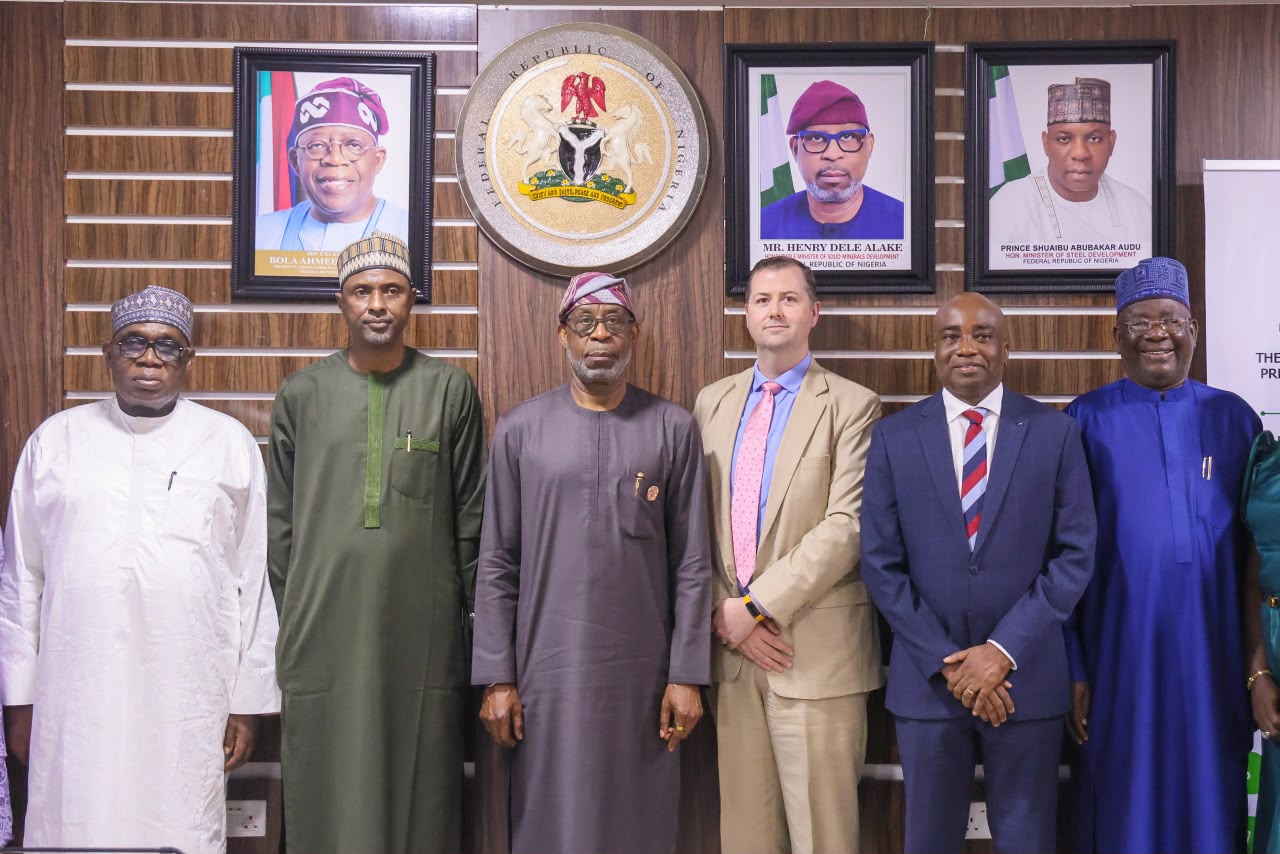
The Minister of Solid Minerals Development, Dr. Dele Alake, on Tuesday inaugurated the Nigeria-United States Committee on Strategic Cooperation in the Solid Minerals Sector in Abuja, dismissing reports that Nigeria sold $700 billion worth of solid minerals to the US.
The inauguration followed the strategic cooperation framework established between Nigeria and the United States during the 81st United Nations General Assembly in New York.
In a statement issued on Wednesday by the Head PRESS and Public Relations Department Mrs. Kania Maliki Andeyaba stated that, Alake in the Memorandum of Understanding, MoU, signed with the US is a government-to-government platform to facilitate business-to-business engagements between American investors and Nigerian local operators, not a sale of assets.
Harping on the importance of the solid minerals sector to President Bola Ahmed Tinubu’s economic diversification agenda, he noted that the administration was committed to reducing dependence on a mono-product economy through the sustainable development of Nigeria’s vast mineral resources.
According to him, the Nigeria–US partnership as a strategic initiative to attract investment, promote technology transfer, strengthen local mineral processing and create employment opportunities.
“There is no sale of any Nigerian asset. There’s nothing exchanging hands,” Alake declared.
“We created a platform to facilitate mingling of US investment ventures with Nigeria’s local operators. It is in the public domain. We signed it in public and published it in four or five national newspapers.”
The Minister said reports claiming the US was coming to take over Nigeria’s minerals and security architecture were untrue at best and products of riotous imagination at worst.
Explaining the policy thrust, Alake said Africa has historically held the short end of the stick in global economic transactions, and Nigeria is determined to change that model.
“We have the resources, the critical elements the world needs to transit to clean energy. So we are creating a new paradigm — you bring your capital, expertise and technology, to match with our natural resources and create a win-win situation . The investor gains, Nigeria gains.’’he said.
Nigeria, he stressed, had operated a mono-cultural economy dependent on oil, while solid minerals were exploited informally — with ores taken “from pit to port” without value addition.
Alake said government has now made local processing mandatory, refusing to grant mineral titles to investors without a clear pathway to processing in Nigeria.
He said the policy led to the springing up of processing factories, including the largest lithium processing plant in West Africa commissioned recently in Nasarawa by the Vice President, and informed the formation of the African Minerals Strategy Group.
Alake noted that investor confidence has returned due to macro-economic reforms by President Bola Tinubu that guarantee security of tenure and repatriation of profits.
He charged the committee to discharge its assignment responsibly, saying its work is strategic to achieving the President’s $1 trillion economy target.
To this end, he told the Committee to ensure effective coordination, identify investment opportunities and translate the framework into measurable outcomes capable of positioning Nigeria as a competitive player in the global solid minerals industry.
In his welcome address, Permanent Secretary of the Ministry, Engr. Faruk Yusuf Yabo, said the inauguration translates growing bilateral engagements into a structured framework for practical cooperation and investment mobilization
Economic Officer at the US Embassy, Jonathan Baas, said President Donald Trump has prioritized three areas for US embassies — energy, artificial intelligence/super intelligence, and critical minerals.
Baas said Washington’s direction is to work with partners to secure critical supply chains while ensuring partners capture value.
“We just signed a contract today on looking into building AI data centres in Nigeria at the Nigerian Economic Summit. That’s the direction Washington wants us to go,” he said.
In his vote of thanks, CEO/Managing Director of Nigeria Solid Minerals Company, NSMC said that the committee
is expected to coordinate implementation, facilitate investment and monitor progress towards achieving the objectives of the Nigeria–US cooperation framework.
The inauguration reinforces the Federal Government’s commitment to repositioning the solid minerals sector as a key driver of economic diversification, industrial development and national prosperity under President Tinubu’s Renewed Hope Agenda.
-
 Featured7 years ago
Lampard Names New Chelsea Manager
-
 Featured7 years ago
FG To Extends Lockdown In FCT, Lagos Ogun states For 7days
-
 Featured7 years ago
Children Custody: Court Adjourns Mike Ezuruonye, Wife’s Case To April 7
-
 Featured7 years ago
NYSC Dismisses Report Of DG’s Plan To Islamize Benue Orientation Camp
-

 Featured5 years ago
Transfer Saga: How Mikel Obi Refused to compensate me After I Linked Him Worth $4m Deal In Kuwait SC – Okafor
-
Featured7 years ago
Board urges FG to establish one-stop rehabilitation centres in 6 geopolitical zones
-
Sports4 years ago
TINUBU LAMBAST DELE MOMODU
-

 News2 years ago
Zulu to Super Eagles B team, President Tinubu is happy with you













