
Featured
Prospective Corps Members To Present Certificate Of Fitness At Orientation Camp

By Joel Ajayi
The National Youth Service Corps has said that every prospective Corps Members will have to present a Certificate of Fitness from recognized public health facilities. Saying a certificate is now a requirement for registration at the orientation camp.
In a statement issued on Tuesday in Abuja by the Director, Press and Public Relations of the Scheme Eddy Megwa, revealed that certificate of fitness is now a requirement for registration at the orientation camp.
According to the statement, In view of the regimentation and physical demands of some activities of the NYSC Orientation programme, the management of the Scheme introduced the presentation of Certificate of Fitness from recognized public health facilities by prospective Corps Members as a requirement for registration at the Orientation Camp.
“The essence was to enable Camp Officials to manage those who are not fit to undertake certain activities in the Camp. This has been largely misunderstood, leading to extortion of some prospective Corps Members by fraudulent individuals in their bid to secure such documents some of which may not stand a test of integrity.
“In order to avail the Scheme credible information on their health status and also protect them from exploitation by unscrupulous persons, prospective Corps Members will henceforth undergo fitness test at the NYSC Clinic at the Orientation Camp with effect from the 2022 Batch ‘C’ Orientation Course.
“It is pertinent to note that the NYSC Orientation Camp Clinics across the nation are managed by the National Health Insurance Authority with the supervision of Consultants from tertiary health institutions.
“Prospective Corps Members should note this information for compliance.”



Featured
How Ogundiya Folarin Oladapo Crossed The Border For Safety
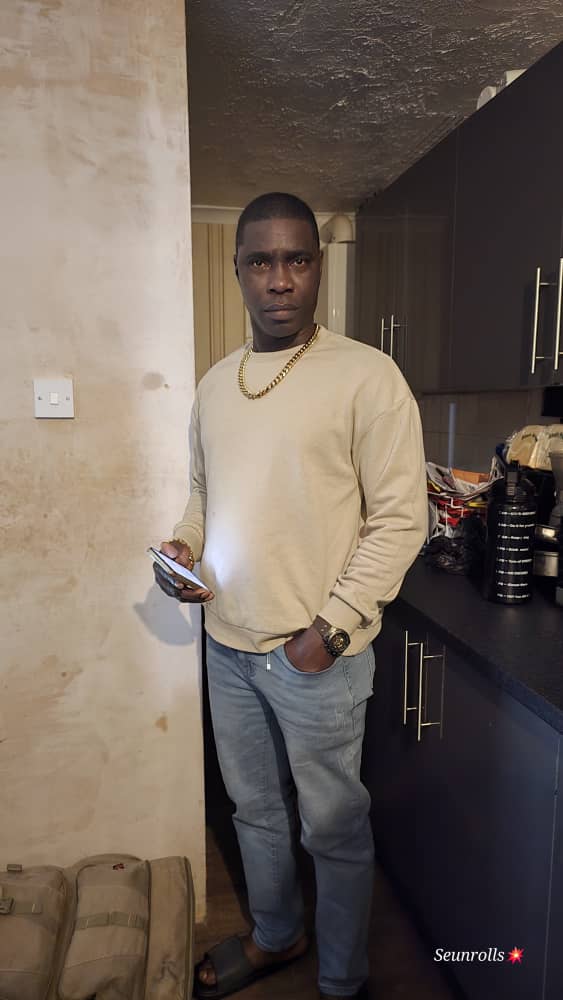
Ogundiya Folarin Oladapo. Is a Nigerian citizen from Ijebu North Local Government Area of Ogun State. Ago Iwoye, a relative, spoke to our reporter extensively about the whereabouts of Ogundiya and the circumstances that compelled him to flee the country and why he may be scared to return.
According to Mr Iwoye, Ogundiya was faced with persecution and threats to his life owing to his sexual orientation. He was born and raised in Ogun State, Nigeria. He grew up in an environment where family, community, culture and religious beliefs played important roles in everyday life. Ogundiya had always considered his hometown a place of belonging. His family, childhood experiences, friendships and memories were all connected to that environment.
Ogundiya is a quiet, simple and easy-going person. He had never been someone who enjoys conflict or confrontation. His greatest desire was to live an ordinary life, maintain meaningful relationships and build a future for himself.
However, there is a deeply personal aspect of his identity that has made living in Nigeria extremely difficult for him. He is a bisexual. Yes! I don’t think he chose to be so. And it is not something he can simply change because of the expectations of society. His sexual orientation is part of who he is.
Growing up in Nigeria, he understood that same-sex relationships were strongly condemned by many people. He knew that being identified as a gay or a bisexual could result in discrimination, rejection, humiliation, violence and serious legal consequences.
For these reasons, Ogundiya, I presumed, kept his sexuality private. He did not feel safe openly discussing his feelings or relationships. He was constantly conscious of the possible consequences if people discover this aspect of his life.
He was not hiding because he was ashamed of being human. He was hiding because he was afraid of what people might do if they found out.
On 21st September 2026, his life took a frightening turn. His mobile phone was faulty and he needed to make some important calls, so he took his younger brother’s phone, to make a call to his work place, but unfortunately the first message that popped in was that of his partner who had been worried for not reaching him for some days and wanted to pass an important message to him, his brother saw the message first and all the doubt about his sexually orientation was cleared as he has been so suspicious of Ogundiya for some time because of his closeness to his partner whom they always disguised as friends. He immediately reported to other members of his family. Part of the message read:
“Guy, we are in big trouble. Our romantic secret is now public. Someone was monitoring us. Please, stay in the dark for now.”
When he received and understood the seriousness of that message, he became extremely worried. It suggested that someone had been monitoring their private relationship and that information about them had reached other people.
What he had spent a long time keeping private was suddenly exposed.
The discovery also came as a shock to his family because they had not previously known about his bisexuality. He was frightened about their reaction and, more importantly, about the possibility that other people in the community would find out.
The situation quickly escalated, because his brother told one of his friends who also told other people in their small community. Surprisingly, a group of people gathered around his family residence, demanding to see Ogundiya, they were angry about his sexuality and were making threatening statements.
He could hear people saying he is gay and calling for his punishment. Some were demanding that he should be killed through mob justice, while others were threatening to hand him over to the police for prosecution.
At that moment, Ogundiya realised that his life was in danger.
He was terrified when he realised that the people gathering outside were looking for him.
He could not confidently rely on anyone to protect him and he knew that remaining inside the house could expose him to serious harm.
In the confusion, Ogundiya managed to escape through a latrine window and made his way into the nearby alleyways.
He left without shoes and sustained bruises during his escape; no opportunity to collect his belongings or make any proper arrangements. The only important things he managed to take with him were his passport and a small envelope containing some emergency money.
As he moved away from the house, people were shouting accusations and threatening to deal with him because of his sexuality, some of their allegations were that if he is allowed to stay alive that he will influence younger people in the community. “As for me, as his relative, I can’t contribute to harming him because I didn’t create him.” Owoye said.
Ogundiya was deeply frightened. He could not believe that the place where he had grown up and lived with his family had suddenly become somewhere he could no longer feel safe.
He had not committed any act of violence against anybody. He was being threatened because of his sexual orientation and a private relationship. But to be honest, both our tradition and the government law forbid such practices among men. Even women are forbidden to indulge in same sex relations, it is a grievous taboo and it could attract serious consequences such as death, Iwoye said.
“The possibility of being attacked by a mob was particularly frightening because he knew how such situations could become uncontrollable. He was also afraid of being arrested and prosecuted under Nigeria’s laws concerning same-sex relationships.”
But the public may want to know how he fled the country? I can only attribute it to divine powers. Because all of us are sinners. Maybe the Almighty God has not finished with him.
However, Ogundiya told me that initially, he considered relocating to another state in Nigeria. He thought that perhaps moving far away from Ogun State would allow him to start again without the people who had threatened him knowing where he was.
However, the more he considered this option, the more afraid he became.His concern was that the hostility towards people with his sexual orientation was not limited to his hometown. He feared that he could face similar treatment elsewhere if his sexuality became known.
He was also worried about the legal consequences of being identified as bisexual and the possibility of being reported to the authorities.
He did not believe that simply moving to another state would provide lasting protection. He could potentially spend the rest of his life hiding his identity, avoiding relationships and constantly worrying about being discovered.
He, therefore, began looking for a way to leave Nigeria.
His decision was not motivated by a desire to abandon his family, culture or country. He left because he was afraid for his life and believed that remaining in Nigeria would expose him to further persecution.
Because he had limited resources and did not know how to arrange a safe journey out of Nigeria, he began looking for assistance.
During this period, he came into contact with a man named Chinedu, who was from the eastern part of Nigeria.
He told him that he could facilitate his movement across the border into a neighbouring country. He demanded a substantial amount of money for the journey and assured Ogundiya that he could help him get across.
He was desperate to leave Nigeria. He was frightened, vulnerable and had very few alternatives. He eventually paid the amount he requested because he believed that Chinedu would help him reach safely.
Unfortunately, the journey did not turn out as he had expected.
At some point during the journey, he was taken to a rural transit camp. The location was unfamiliar to him and he had limited access to money, communication and independent means of travelling.
Ogundiya became increasingly dependent on Chinedu because he did not know the area or how to continue the journey alone.
It was during this period that Chinedu allegedly began taking advantage of his vulnerability.
He experienced sexual molestation, physical coercion and intimidation. Ogundiya was subjected to unwanted advances and pressure, accompanied by threats that he could be abandoned or handed over to local police or hostile individuals.
He felt completely helpless. The person he had trusted to help him escape danger had become another source of danger.
He was particularly frightened because he had already experienced threats in Nigeria and did not want to find himself in another situation where his sexuality could be used against him.
The experience affected Ogundiya deeply. He felt violated, humiliated and emotionally overwhelmed. He found it difficult to speak about what had happened because of the shame and fear associated with the experience.
He had left his home in search of safety, but he found himself being exploited by someone who knew how desperate he was.
Eventually, he found an opportunity to escape from the transit camp.
He left during the night and began walking along isolated dirt roads. He did not have a reliable means of transportation, and he was uncertain about where the roads would lead.
He continued walking because he was afraid of being discovered and taken back.
After walking for several miles, he eventually reached a major humanitarian post near the border. By then, he was physically exhausted and visibly distressed.
He stopped to rest because he was struggling to continue walking.
He was pale, tired and emotionally drained. He had experienced more than he could easily explain, and he desperately needed assistance.
While he was resting near the humanitarian post, a Nigerian man travelling by car towards the neighbouring country noticed him.
He stopped his vehicle and approached Ogundiya. He introduced himself as Olamide, a Yoruba man from Osun State.
Initially, Ogundiya was afraid to speak to him. After his last experience with Chinedu, he found it difficult to trust another stranger.
However, when he discovered that Olamide was also Yoruba, he became a little more comfortable.
Eventually, he explained what had happened to him to Olamide. He told him about the threats against him in Ogun State, the circumstances surrounding his escape from home, his journey with Chinedu and the exploitation he had experienced at the transit camp.
Ogundiya became emotional while explaining everything because the experience had been extremely traumatic.
Olamide listened to him and appeared deeply affected by his account.
Olamide told Ogundiya that his circumstances reminded him of his younger biological brother, who had reportedly experienced a similar situation after his bisexuality became known.
He explained that his brother had narrowly escaped mob violence and had subsequently been assisted in travelling to Europe because of fears of persecution and prosecution in Nigeria.
Olamide introduced himself as a member of the International Committee of the Red Cross (ICRC) and said he would try to assist Ogundiya in finding safety abroad.
He promised to help arrange his journey to Europe, where he could seek protection and have an opportunity to rebuild his life.
At that point, he was emotionally exhausted and uncertain about what would happen next. However, his offer gave Ogundiya some hope that he might finally escape the circumstances that had placed his life in danger.
A few weeks after meeting Olamide, he fulfilled his promise and arranged for Ogundiya to travel to Dublin, Ireland.
His arrival in Ireland was a significant moment in his life. He had gone through fear, uncertainty, threats, exploitation and a difficult journey before eventually reaching a place where he could seek protection.
He was relieved to have reached Ireland, although the experiences he had gone through continued to affect him emotionally.
He is afraid to return to Nigeria because the circumstances that forced him to leave have not been resolved.
His sexuality was exposed in his community, and he was threatened by people who wanted to punish him because of it.
He fears that if he returns, he could be recognised, exposed again or subjected to further threats and violence.
Ogundiya is also afraid of the possibility of being reported to the police and facing prosecution under the laws criminalising same-sex relationships and conduct.
The experience of escaping from his family home remains deeply distressing. He remembered having to leave through the window, without shoes or belongings, because he feared what the people outside might do to him
He also cannot forget the exploitation he experienced during his journey. He had trusted someone because he was desperate to escape persecution, only to find himself in another frightening situation.
These experiences have made him fearful of returning to the circumstances from which he escaped.
He did not believe that moving to another part of Nigeria would necessarily resolve his difficulties. His concern is that the underlying hostility and legal risks associated with his sexual orientation would remain.
He wanted to live in a place where he could exist without constantly fearing that his identity would become a reason for violence, humiliation or imprisonment.
He did not leave Nigeria because he wanted to abandon his country or because he was looking for an easier life elsewhere.
He left because he was frightened for his safety and believed that he had no realistic way of protecting himself in the circumstances he faced.
He lost the security of his home, became separated from the people and surroundings he had known throughout his life, and experienced further exploitation while trying to escape.
The journey to Ireland was difficult, but it offered him an opportunity to seek protection and live with dignity.
He respectfully asks the Irish authorities to consider his circumstances, the threats he experienced, his sexual orientation, the circumstances of his departure from Nigeria and his genuine fear of returning.
He wanted an opportunity to rebuild his life without having to hide who he is or live under the constant threat of violence and persecution.
What can one do? Here in Nigeria, same sex relationships are prohibited and myself and others of his relatives wish that he lives his life as his God created him. Ogundiya had wanted a simple life without fear or threat of prosecution.
-
 Featured7 years ago
Lampard Names New Chelsea Manager
-
 Featured7 years ago
FG To Extends Lockdown In FCT, Lagos Ogun states For 7days
-
 Featured7 years ago
Children Custody: Court Adjourns Mike Ezuruonye, Wife’s Case To April 7
-
 Featured7 years ago
NYSC Dismisses Report Of DG’s Plan To Islamize Benue Orientation Camp
-

 Featured5 years ago
Transfer Saga: How Mikel Obi Refused to compensate me After I Linked Him Worth $4m Deal In Kuwait SC – Okafor
-
Featured7 years ago
Board urges FG to establish one-stop rehabilitation centres in 6 geopolitical zones
-
Sports4 years ago
TINUBU LAMBAST DELE MOMODU
-

 News2 years ago
Zulu to Super Eagles B team, President Tinubu is happy with you













