
News
PSIN Administrator Commends Yobe Government for Championing Leadership Continuity and Institutional Sustainability

Cyril Igele
The Administrator and Chief Executive Officer of the Public Service Institute of Nigeria (PSIN), Barrister Imeh Okon, has applauded the Yobe State Government for its strong commitment to leadership continuity and sustainable governance through strategic investment in human capital development.
Barrister Okon gave the commendation at the opening of a Management Retreat for Yobe State Permanent Secretaries, held at the PSIN headquarters in Abuja.
The retreat, themed “Succession Planning, Leadership Continuity, and Institutional Sustainability in the Yobe State Public Service,” convened senior bureaucrats and resource persons to discuss strategies for strengthening leadership and governance within the state’s civil service.
In her remarks, the PSIN Administrator praised Governor Mai Mala Buni for his foresight and partnership in prioritizing public sector training and capacity development. She described the theme of the retreat as both “timely and visionary,” emphasizing that institutions endure only when leadership is continuous, knowledge is shared, and systems—not individuals—drive performance.
“Institutions thrive not merely on structures or policies, but on the deliberate cultivation of capable leaders who can sustain progress across generations,” she said. “By prioritizing leadership continuity and institutional resilience, Yobe State is leading by example.”
Barrister Okon reiterated PSIN’s mandate to build a competent, ethical, and innovative public service capable of delivering tangible results to citizens. She stressed that effective succession planning must be anchored in continuous training, mentorship, and exposure to emerging governance trends.
Citing best practices from Singapore and the United Kingdom, Okon noted that successful public service systems deliberately identify and nurture potential leaders through structured talent pipelines and transparent career development programmes. According to her, Yobe State’s initiative reflects its readiness to sustain excellence in governance.
She also highlighted PSIN’s flagship programmes—SMART-P, which builds administrative and technical capacity; LEAD-P, designed to groom emerging leaders; and the Exit from Service Masterclass, which prepares officers for life after service. Okon urged the Yobe Government to adopt the Exit Masterclass into its human resource framework to ensure a smooth transition for retirees, preserve institutional knowledge, and promote productivity through entrepreneurship and consultancy.
“Succession planning is not an event but a culture that must be institutionalised at every level of public administration,” she added. “When we prepare successors in advance and invest in continuous learning, we guarantee the sustainability of reforms and consistency in governance.”
Declaring the retreat open, the Acting Head of Service of Yobe State, Alhaji Abdullahi Shehu, reaffirmed Governor Buni’s commitment to building a results-driven and high-performing public service.
Represented by the Permanent Secretary, Public Service, Alhaji Shehu, the Acting Head of Service expressed gratitude to God and lauded PSIN as the “mother institution of public service learning.” He stated that Governor Buni has consistently directed the Office of the Head of Service to promote seamless succession planning and capacity building to enhance efficiency and accountability across government institutions.
“In line with this directive, we have brought the top echelon of the state civil service to PSIN—being the drivers and core implementers of government policies and programmes—to strengthen continuity and sustainability in our reforms,” he said.
He urged participants to fully engage in the retreat, share experiences, and cascade the knowledge gained to officers across ministries, departments, and agencies. The exercise, he explained, forms part of a deliberate strategy to institutionalize effective succession planning within the Yobe State Civil Service, thereby ensuring sustained productivity and improved service delivery to citizens.



Foreign news
Algeria’s Glorious Revolution: Embassy Marks 72nd Anniversary in Abuja
Joel Ajayi
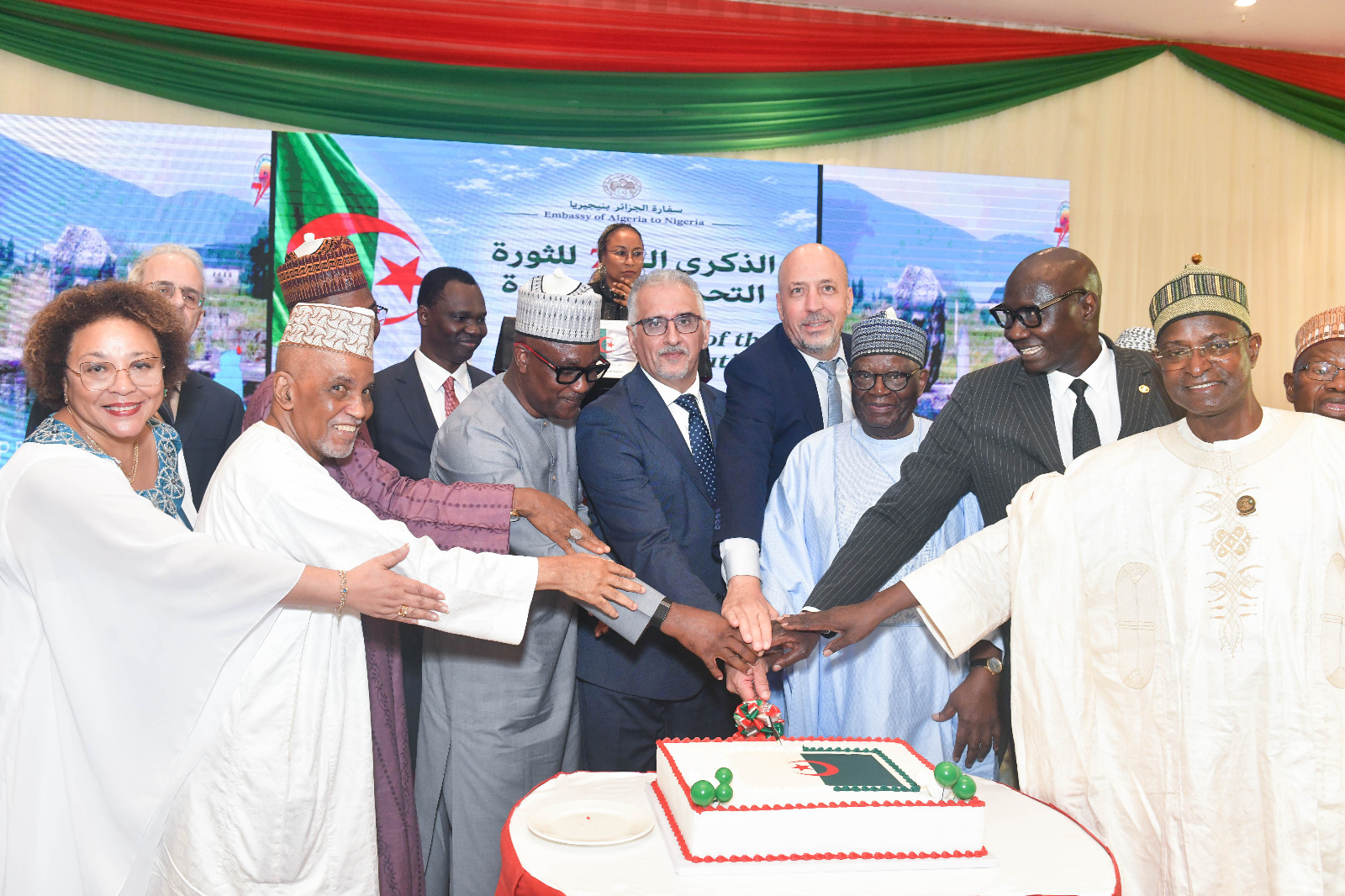
The Embassy of Algeria in Nigeria has commemorated the 72nd anniversary of the country’s Glorious Revolution of November 1, 1954, with a reception in Abuja, highlighting Algeria’s liberation struggle and strengthening diplomatic relations with Nigeria.
The event, held on November 9, 2026, at Continental Suites Hotel, attracted prominent personalities, including the Speaker of the House of Representatives, Dr Tajudeen Abbas, members of the Federal Government, senior government officials, heads of diplomatic missions and other friends of Algeria.
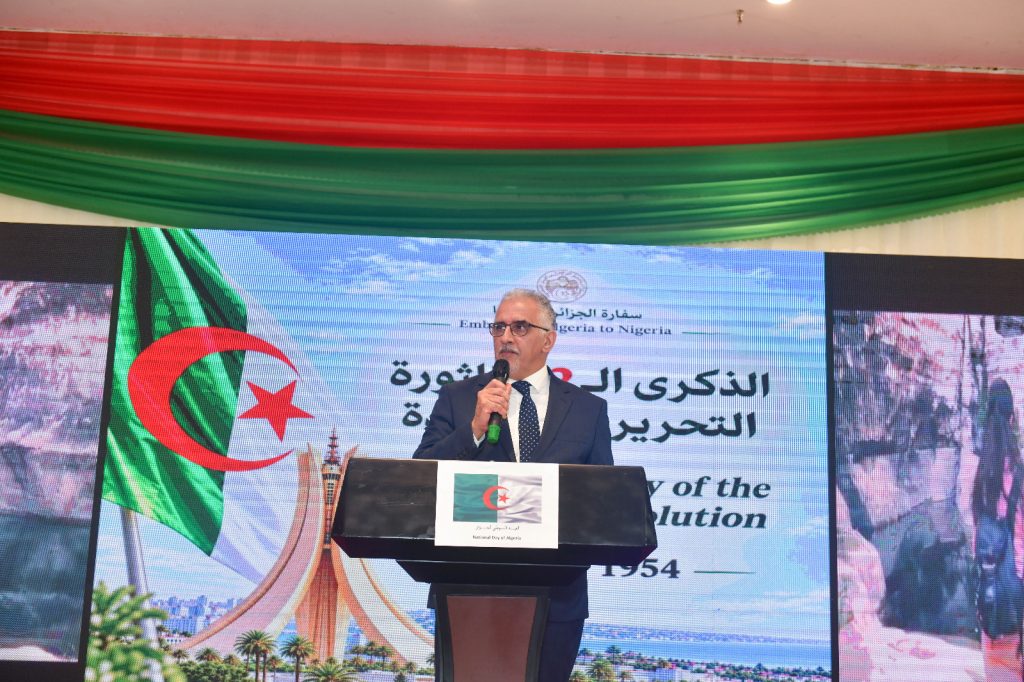
Speaking at the reception, Algeria’s Ambassador to Nigeria, Hocine Mezoued, welcomed guests and paid tribute to the country’s freedom fighters who sacrificed their lives during the struggle for independence.
He described the November 1, 1954 revolution as the foundation of modern Algeria, noting that the sacrifices of the nation’s martyrs made it possible for the country to reclaim its sovereignty.
On Algeria’s development agenda, Mezoued said President Abdelmadjid Tebboune’s administration had continued to pursue economic reforms, diversification and national development under its New Algeria vision.
He noted that the country was recording progress in non-hydrocarbon exports, while improvements in the business environment had boosted investor confidence and attracted significant foreign investments.
On foreign policy, the ambassador reaffirmed Algeria’s commitment to non-interference, respect for national sovereignty, peaceful conflict resolution and the right of peoples to self-determination.
Addressing security challenges in the Sahel, he stressed that lasting peace could not be achieved through military measures alone, insisting that economic development, inclusive dialogue and peaceful resolution of disputes remained essential.
Turning to Nigeria-Algeria relations, Mezoued described the partnership as one founded on shared values and the commitment of both countries’ leaders to advancing African development.
He identified the Trans-Saharan Highway, Trans-Saharan Gas Pipeline and Trans-Saharan Fibre Optic Backbone as major strategic projects receiving attention from both countries.
The ambassador also disclosed that Algeria had continued to provide scholarships to Nigerian students to strengthen human capital development and capacity building.
He further announced that Air Algérie expanded its Nigerian operations on October 26, 2026, with the introduction of two weekly flights to Lagos, expressing confidence that the service would boost trade and tourism.
Looking ahead, Mezoued said 2027 would offer fresh opportunities to deepen bilateral cooperation, particularly through the fifth Joint High Bi-National Commission scheduled to hold in Abuja.
He expressed optimism that the meeting would provide an opportunity to assess existing partnerships, identify new areas of cooperation and move Nigeria-Algeria relations towards a more practical and results-driven phase.
-
 Featured7 years ago
Lampard Names New Chelsea Manager
-
 Featured7 years ago
FG To Extends Lockdown In FCT, Lagos Ogun states For 7days
-
 Featured7 years ago
Children Custody: Court Adjourns Mike Ezuruonye, Wife’s Case To April 7
-
 Featured7 years ago
NYSC Dismisses Report Of DG’s Plan To Islamize Benue Orientation Camp
-

 Featured5 years ago
Transfer Saga: How Mikel Obi Refused to compensate me After I Linked Him Worth $4m Deal In Kuwait SC – Okafor
-
Featured7 years ago
Board urges FG to establish one-stop rehabilitation centres in 6 geopolitical zones
-
Sports4 years ago
TINUBU LAMBAST DELE MOMODU
-

 News2 years ago
Zulu to Super Eagles B team, President Tinubu is happy with you













