
News
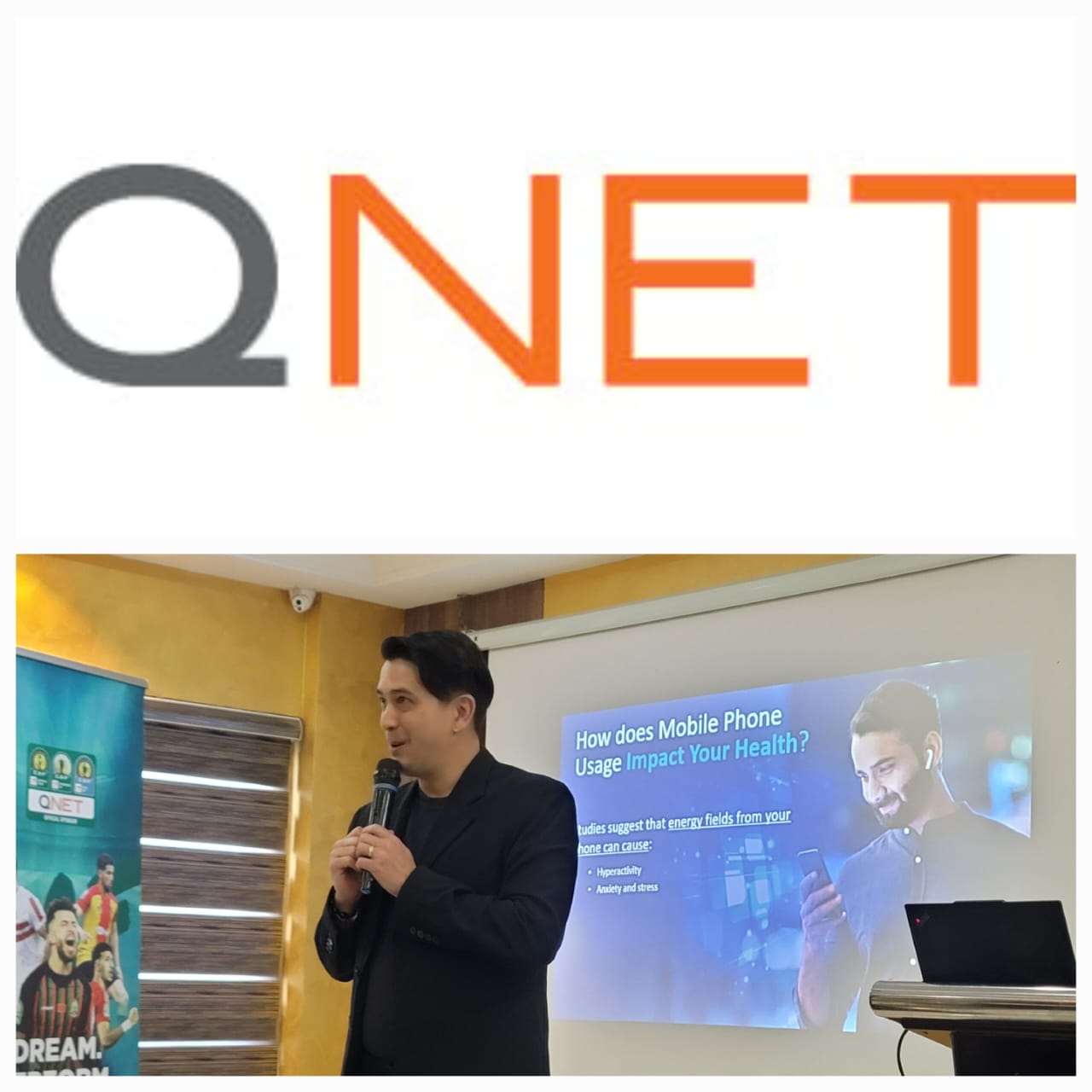
QNET Brings High-Tech 5G Radiation Defenders to Abuja Market
Joel Ajayi
QNET, a global lifestyle and wellness-focused direct-selling leader, on Friday unveiled a suite of innovative products aimed at enhancing well-being and protecting users from electronic and 5G radiation.
At the Amezcua segment of the workshop in Abuja, Regional Strategy Marketing Manager, Bernieg Gaksach, showcased QNET’s latest radiation-protection and wellness technologies, including the Chi-Pendant 4, Bio-Disc 3, and the E-Guard X.
He explained that these products are designed to boost energy levels, strengthen the immune system, and accelerate cellular recovery for users of all ages.
Gaksach raised concerns over the increasing exposure to 5G radiation—classified as an electromagnetic field with carcinogenic potential. As global dependence on digital devices intensifies, he warned of rising health risks associated with everyday gadgets such as mobile phones, Wi-Fi routers, and household electronics.
To address these challenges, QNET introduced the Amezcua E-Guard X, a peel-and-stick chip engineered to transform harmful electromagnetic waves into beneficial ones, helping to reduce stress and fatigue. The device can be attached to commonly used gadgets and offers protection for up to five years.
“With over 15 billion devices connected to the internet, protection is crucial,” Gaksach noted. He clarified that QNET products do not cure medical conditions but support the body’s natural functions, advising individuals with health concerns to seek proper medical attention.
QNET’s General Manager, Ayokunmi Solesi, also spoke at the event, reaffirming the company’s mission to empower Nigerians with world-class lifestyle, health, and wellness solutions—while creating sustainable economic opportunities for the nation’s fast-growing youth population.
“Our aim is for people to truly understand our products and services,” Solesi said. “For us, it’s not just business—it’s a lifestyle.”
He emphasized QNET’s long-term commitment to Nigeria, underscored by its 2022 partnership with Co-Class Group, a reputable indigenous firm specializing in logistics, security, compliance, and customer service. This collaboration ensures that QNET’s global standards of quality, reliability, and transparency are consistently upheld locally.
During the workshop, participants were also introduced to the tremendous potential of the global direct-selling industry—currently valued at about $300 billion. QNET stressed that Nigeria’s vibrant youth population stands to benefit greatly from the sector’s expanding opportunities.
“QNET is creating pathways for young people through entrepreneurship support, capacity-building, and access to innovative wellness and lifestyle products,” a company spokesperson added.
Attendees further experienced QNET’s flagship wellness innovations, such as its highly praised drug-free wellness patch, which contains no stimulants or medication and is considered safe for athletes and active individuals.



News
FCC Strengthens Global Ties with Proposed UAE Digital Investment Deal
Joel Ajayi
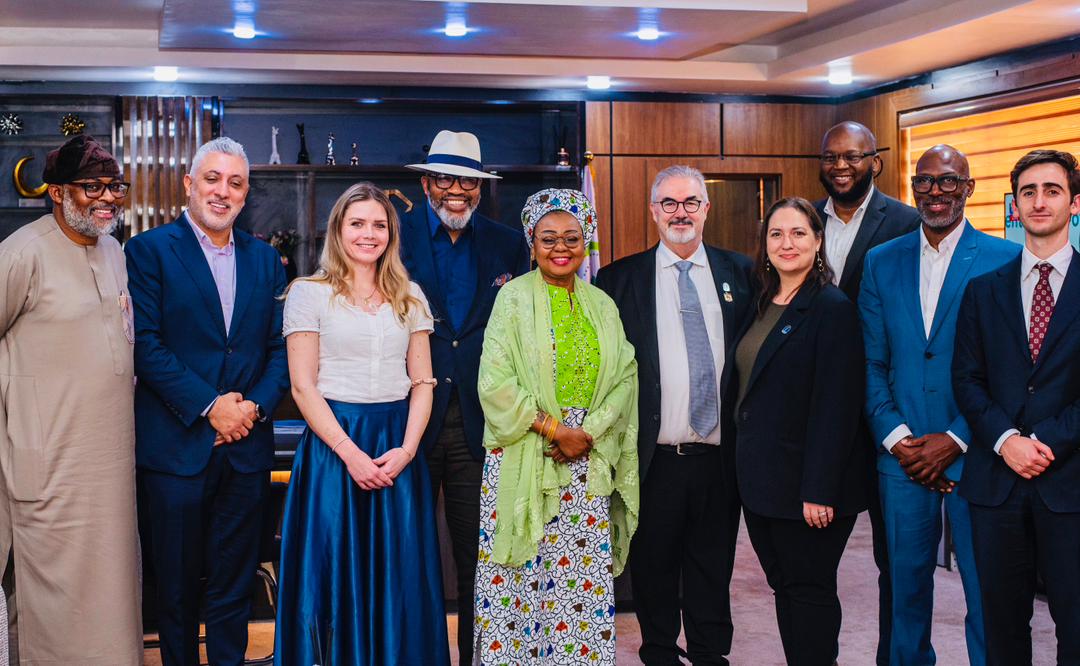
The Federal Character Commission (FCC) has begun discussions with an international investment delegation on possible collaboration to strengthen its digital systems and improve service delivery.
The Executive Chairman of the Commission, Hon. Hulayat Motunrayo Omidiran, received the delegation led by Mr. Michael Gale, Founder and Group CEO of Al Liwan Group Limited, from Abu Dhabi, United Arab Emirates, at the FCC Headquarters in Abuja.
Speaking during the meeting, Hon. Omidiran emphasized that technology is essential to effective governance.
“Strengthening our digital infrastructure will help the Commission improve monitoring, ensure better compliance with the Federal Character principle, and enhance transparency in carrying out our constitutional responsibilities,” she said.
The engagement focused on exploring practical partnership models that could support the Commission’s digital upgrade, institutional efficiency, and improved public service delivery.In his remarks, Mr. Gale commended the Commission’s reform direction.
“Institutions that adopt modern digital systems are better positioned to deliver measurable results. We are encouraged by the Commission’s vision and look forward to exploring areas of sustainable collaboration,” he stated.
The proposed partnership aligns with the Commission’s ongoing efforts to modernize its operations, strengthen accountability, and use technology to support fair and equitable representation across the federation.
-
 Featured7 years ago
Lampard Names New Chelsea Manager
-
 Featured6 years ago
FG To Extends Lockdown In FCT, Lagos Ogun states For 7days
-
 Featured6 years ago
Children Custody: Court Adjourns Mike Ezuruonye, Wife’s Case To April 7
-
 Featured7 years ago
NYSC Dismisses Report Of DG’s Plan To Islamize Benue Orientation Camp
-

 Featured4 years ago
Transfer Saga: How Mikel Obi Refused to compensate me After I Linked Him Worth $4m Deal In Kuwait SC – Okafor
-
Sports3 years ago
TINUBU LAMBAST DELE MOMODU
-

 News1 year ago
Zulu to Super Eagles B team, President Tinubu is happy with you
-
Featured6 years ago
Board urges FG to establish one-stop rehabilitation centres in 6 geopolitical zones