
News
Raw Materials Submit To Showcase Africa’s Natural Endowments—FG
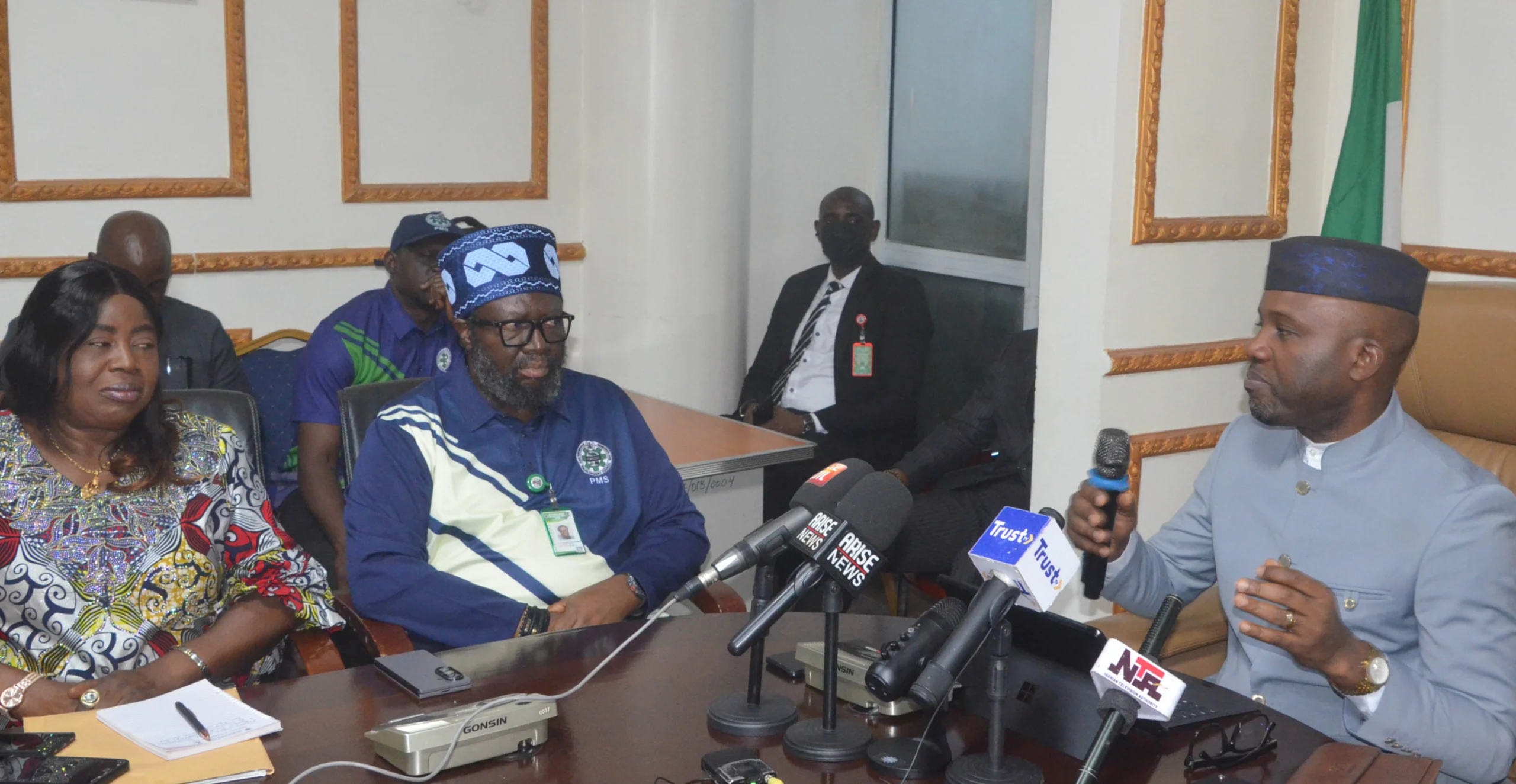
By Joel Ajayi
The Federal Government of Nigeria (FG) has announced that the upcoming Africa Raw Materials Summit (ARMS 2026) will serve as a premier platform to showcase and maximize the value of Africa’s vast natural endowments, strengthen Africa’s Science, Technology, and Innovation ecosystem.
Addressing newsmen in Abuja on Thursday ahead of the summit, the Minister of Innovation, Science and Technology, Dr Kingsley Udeh, said the platform would also be used to showcase Africa’s raw materials potential.
He said that the development of the continent’s raw materials sector was central to Africa’s overall economic transformation.
He emphasised that ARMS 2026 was designed as an indigenous forum for collaboration, coordination, and sharing of ideas across the continent.
“This summit is about identifying shared challenges, agreeing on practical solutions, reviewing progress, measuring impact, and clearly mapping out the gaps we must collectively address,” he said.
He said that Nigeria was actively building strong partnerships across the continent.
“We are networking with other African countries so that successful approaches can be replicated, and emerging technologies can be adapted within our African raw materials ecosystem for the benefit of all.
“One key focus of Nigeria’s presentation will be showcasing the country’s growing achievements in the sector,” he said.
The minister stressed the Federal Government’s clear vision was that the country would no longer export its resources merely as a raw commodity.
“We are determined to process them right here and export finished products instead,” he said.
He highlighted the urgent need to bridge the gap between research and the marketplace.
“ We must ensure that our research outputs are commercialised; the great ideas from in our laboratories should become products that serve our people and our industries,” he said.
The Minister said Raw Materials Research and Development Council, RMRDC, has projected that the proposed 30 per cent mandatory value addition to Nigerian raw materials before export could generate more than 1.2 million skilled jobs within five years.
The minister stressed that the proposed measure would also promote import substitution, conserve foreign exchange and strengthen local manufacturing.
The minister also said that the proposed bill mandating a minimum of 30 percent value addition to all exportable raw materials will boost Nigeria’s industrialization drive and economic growth stressing that the bill, initiated by the Council shortly after he assumed office, is currently receiving attention from the National Assembly, the Federal Ministry of Justice and the Presidency.
He expressed confidence that once the bill is accented to by the President after the rigorous work by the lawmakers, Nigeria’s industrialization will be accelerated in line with the Renewed Hope Agenda of President Bola Tinubu in his quest to improve the Nigerian economy.
“Eventually, it will become law, meaning that raw materials cannot be exported from Nigeria without value being added to them. This will lay the foundation for industrialisation because local processing will be significantly expanded,” he said.
He further asserted that the legislation would require exporters to add at least 30 percent value to raw materials before export.
This proposal aligns with the President’s position against exporting raw resources only to import finished products at much higher costs.”
According to him, the legislation would also attract foreign investment into local processing industries, as investors who currently process Nigerian raw materials abroad would be encouraged to establish processing facilities within the country.
He added that this value addition will facilitate technology transfer, strengthen local manufacturing, promote import substitution and create employment opportunities.
“Investors will be encouraged to process our raw materials locally. Scientists and researchers will also come to Nigeria to identify additional raw materials and develop new processing technologies.
“The bill also proposes restrictions on the importation of raw materials that are readily available in Nigeria in sufficient quantity and quality. This will guarantee adequate supplies for local industries, improve access to financing for industrial activities, create jobs and positively impact the value of the naira through improved foreign exchange earnings.”
The Director-General, Raw Materials Research and Development Council (RMRDC), Prof. Nnanyelugo Ike- Muonso, said the summit would highlight Nigeria’s growing role as a hub for innovation-driven resource utilisation.
He said ARMS 2026 was meant to foster partnerships among governments, researchers, industries, and investors.
He said the ultimate ambition was to grow local processing capacity, strengthen supply chains and ensure that African countries got value from their natural endowments.
He further said that this objective aligned with the Federal Government’s broader agenda of economic diversification, self-reliance, and sustainable development.
Ike-Muonso noted that the proposed Raw Materials 30% Mandatory Value Addition Bill seeks to establish a statutory minimum of 30 per cent domestic value addition to Nigerian raw materials before export. He said the bill was awaiting presidential assent.
According to RMRDC, the projected job creation is one of the expected benefits of implementing the proposed legislation, which forms part of efforts to shift Nigeria from exporting low-value primary commodities to higher-value industrial production.
The council also urged Nigeria to process its over $582.4 billion worth of documented non-renewable natural resources locally to boost manufacturing and create additional economic opportunities.
Ike-Muonso said Africa must move away from the “pit-to-port” model, in which raw materials are exported while finished products are imported at higher costs.
“What is extracted from African soil must increasingly be transformed on African soil,” he said.
He said ARMS 2026 would attract more than 1,800 delegates from all 54 African countries, alongside investors, manufacturers, technology companies and other industrial stakeholders.
The summit will focus on logistics and infrastructure, policy and value addition, circular economy and waste industrialisation, AfCFTA regional value chains, and technology commercialisation and capital linkage.
“Nigeria alone had more than $582.4 billion in documented non-renewable natural resources, while other African countries also possessed substantial deposits of critical minerals, agricultural commodities and industrial feedstock.
“Local processing would create jobs, strengthen manufacturing and reduce Africa’s vulnerability to fluctuations in international commodity prices,” he stated.



News
Cyclists, Athletes, Fitness Communities others Set for 5th Chaingang MTB Festival in Abuja
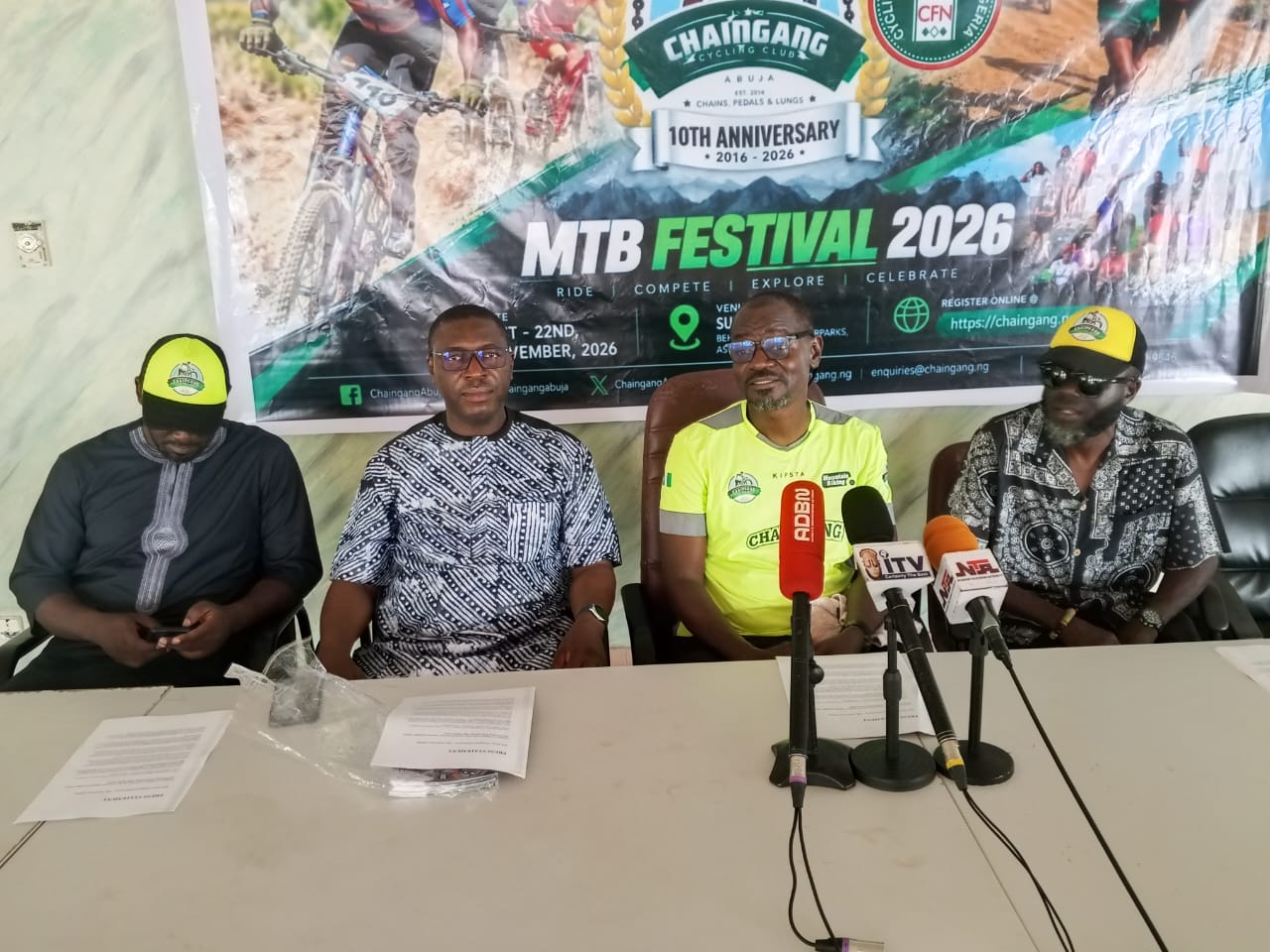
By Joel Ajayi
Cyclists, professional athletes and fitness enthusiasts are set to converge on Abuja for the 5th edition of the Abuja Chaingang Mountain Bike (MTB) Festival and 10th year anniversary of the the club scheduled for November 21–22, 2026, in the Federal Capital Territory.
Speaking at a press conference in Abuja on Friday, Chairman of the MTB Festival Organising Committee, Mr Olatunji Olanrewaju, said the event would mark a significant milestone in the development of competitive cycling in Nigeria.
Organised by the Chaingang Cycling Club Abuja in collaboration with the Cycling Federation of Nigeria (CFN), the festival will introduce Cross-Country Short Track (XCC) and Cross-Country Olympic (XCO) race courses, alongside the unveiling of the Sunrise Hills MTB Course in Asokoro, bordering Guzape.
The organisers said the new courses feature natural terrain, steep climbs, rocky descents, switchbacks and panoramic ridgelines designed to challenge riders and promote competitive mountain biking.
The festival, adopted as Nigeria’s national qualifier for international mountain biking competitions, will provide cyclists with opportunities to compete for qualification slots for major championships, with prize money available across race categories.
Olanrewaju disclosed that the festival had attracted several cycling teams over the years, including foreign participants in almost every edition, expressing optimism that the 2026 event would attract even greater participation.
He called on sponsors, government agencies, security institutions and multinational organisations to support the festival, noting that their participation would help strengthen Nigeria’s outdoor sports industry and enhance the country’s international sporting profile.
Also speaking, the Technical Director of the Cycling Federation of Nigeria, Bashiru Mohammed, described the festival as an important platform for developing cycling and strengthening the country’s cycling community.
Mohammed said the competition was open to cyclists and cycling groups across Nigeria and beyond, adding that the organisers would share information about the event with international partners to encourage wider participation.
He explained that the professional races would feature male and female competitors in the XCC and XCO categories, while the programme would also include activities for children.
According to him, the competition would help Nigerian cyclists prepare for next year’s championship for emerging countries, which he likened to an Olympic-style gathering of athletes from different sporting disciplines.
In his remarked, the CFN Secretary-General of the federation, Joel Akinuwa, said prize money remained an important feature of the festival, noting that participants in the previous edition received financial rewards in addition to opportunities to qualify for the African Championships and other major international competitions.
Akinuwa added that winners across the various categories in the 2026 edition would also receive prize money, providing further motivation for cyclists to compete.
Beyond the elite races, the two-day festival will feature a trail run, children’s mountain bike race, veterans’ recreational ride, city-wide fitness ride and hiking campout.
The event will also incorporate corporate social responsibility initiatives, including the Jigakushi School Restoration Project and the Road Safety Street Mural Initiative, aimed at promoting community development and road safety awareness.
The organisers said the festival would bring together professional athletes, recreational cyclists, families, young people, fitness enthusiasts, media organisations and international observers, while promoting tourism, youth development and community engagement.
They added that the long-term vision was to position Abuja and Nigeria as leading mountain biking destinations in Africa, capable of hosting international competitions and attracting athletes from across the continent and beyond.
Registration for the 2026 Abuja Chaingang MTB Festival is ongoing through the club’s website, www.chaingang.ng.
-
 Featured7 years ago
Lampard Names New Chelsea Manager
-
 Featured7 years ago
FG To Extends Lockdown In FCT, Lagos Ogun states For 7days
-
 Featured7 years ago
Children Custody: Court Adjourns Mike Ezuruonye, Wife’s Case To April 7
-
 Featured7 years ago
NYSC Dismisses Report Of DG’s Plan To Islamize Benue Orientation Camp
-

 Featured5 years ago
Transfer Saga: How Mikel Obi Refused to compensate me After I Linked Him Worth $4m Deal In Kuwait SC – Okafor
-
Featured7 years ago
Board urges FG to establish one-stop rehabilitation centres in 6 geopolitical zones
-
Sports4 years ago
TINUBU LAMBAST DELE MOMODU
-

 News2 years ago
Zulu to Super Eagles B team, President Tinubu is happy with you