
News
Raw Materials Submit To Showcase Africa’s Natural Endowments—FG
By Joel Ajayi
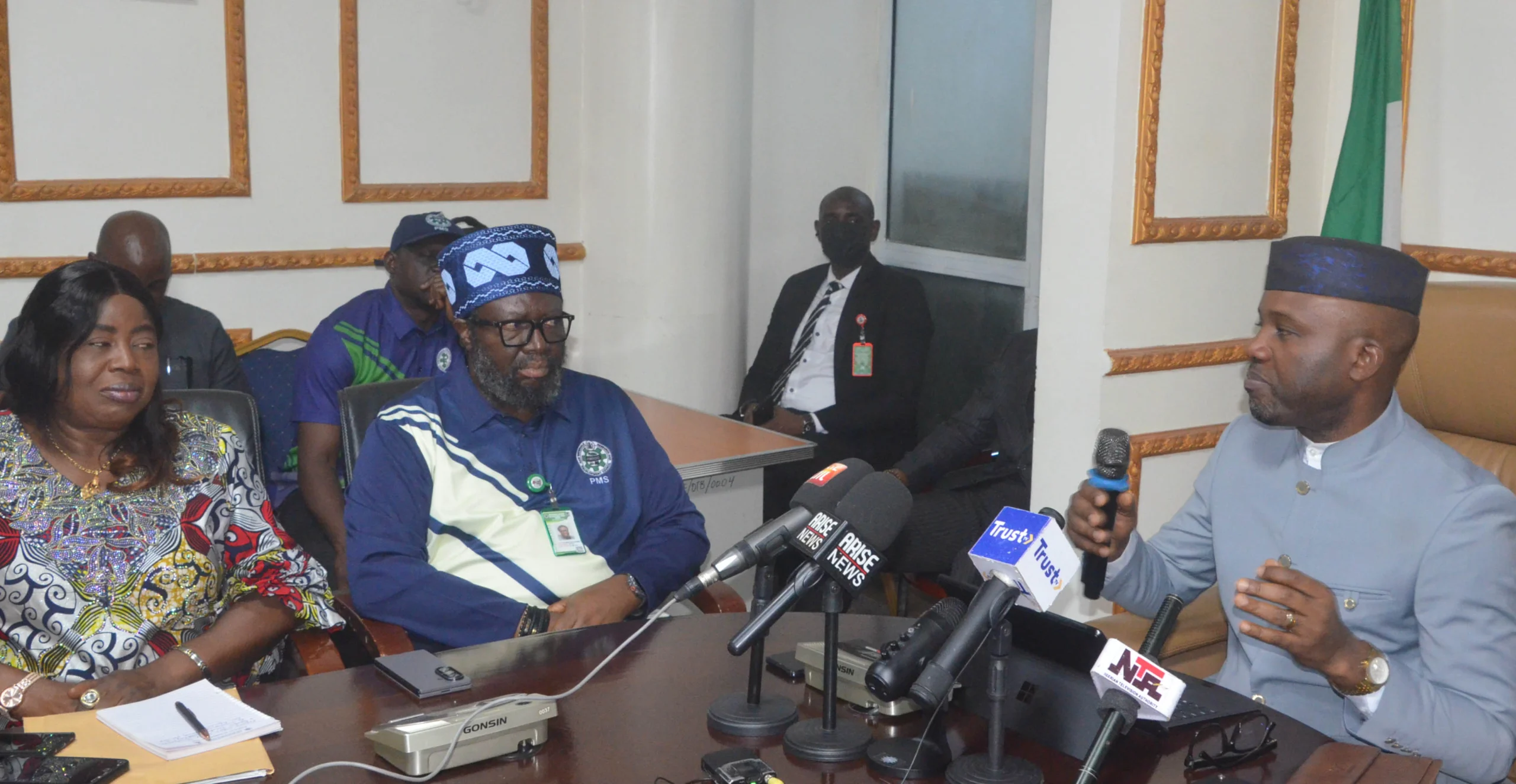
The Federal Government of Nigeria (FG) has announced that the upcoming Africa Raw Materials Summit (ARMS 2026) will serve as a premier platform to showcase and maximize the value of Africa’s vast natural endowments, strengthen Africa’s Science, Technology, and Innovation ecosystem.
Addressing newsmen in Abuja on Thursday ahead of the summit, the Minister of Innovation, Science and Technology, Dr Kingsley Udeh, said the platform would also be used to showcase Africa’s raw materials potential.
He said that the development of the continent’s raw materials sector was central to Africa’s overall economic transformation.
He emphasised that ARMS 2026 was designed as an indigenous forum for collaboration, coordination, and sharing of ideas across the continent.
“This summit is about identifying shared challenges, agreeing on practical solutions, reviewing progress, measuring impact, and clearly mapping out the gaps we must collectively address,” he said.
He said that Nigeria was actively building strong partnerships across the continent.
“We are networking with other African countries so that successful approaches can be replicated, and emerging technologies can be adapted within our African raw materials ecosystem for the benefit of all.
“One key focus of Nigeria’s presentation will be showcasing the country’s growing achievements in the sector,” he said.
The minister stressed the Federal Government’s clear vision was that the country would no longer export its resources merely as a raw commodity.
“We are determined to process them right here and export finished products instead,” he said.
He highlighted the urgent need to bridge the gap between research and the marketplace.
“ We must ensure that our research outputs are commercialised; the great ideas from in our laboratories should become products that serve our people and our industries,” he said.
The Minister said Raw Materials Research and Development Council, RMRDC, has projected that the proposed 30 per cent mandatory value addition to Nigerian raw materials before export could generate more than 1.2 million skilled jobs within five years.
The minister stressed that the proposed measure would also promote import substitution, conserve foreign exchange and strengthen local manufacturing.
The minister also said that the proposed bill mandating a minimum of 30 percent value addition to all exportable raw materials will boost Nigeria’s industrialization drive and economic growth stressing that the bill, initiated by the Council shortly after he assumed office, is currently receiving attention from the National Assembly, the Federal Ministry of Justice and the Presidency.
He expressed confidence that once the bill is accented to by the President after the rigorous work by the lawmakers, Nigeria’s industrialization will be accelerated in line with the Renewed Hope Agenda of President Bola Tinubu in his quest to improve the Nigerian economy.
“Eventually, it will become law, meaning that raw materials cannot be exported from Nigeria without value being added to them. This will lay the foundation for industrialisation because local processing will be significantly expanded,” he said.
He further asserted that the legislation would require exporters to add at least 30 percent value to raw materials before export.
This proposal aligns with the President’s position against exporting raw resources only to import finished products at much higher costs.”
According to him, the legislation would also attract foreign investment into local processing industries, as investors who currently process Nigerian raw materials abroad would be encouraged to establish processing facilities within the country.
He added that this value addition will facilitate technology transfer, strengthen local manufacturing, promote import substitution and create employment opportunities.
“Investors will be encouraged to process our raw materials locally. Scientists and researchers will also come to Nigeria to identify additional raw materials and develop new processing technologies.
“The bill also proposes restrictions on the importation of raw materials that are readily available in Nigeria in sufficient quantity and quality. This will guarantee adequate supplies for local industries, improve access to financing for industrial activities, create jobs and positively impact the value of the naira through improved foreign exchange earnings.”
The Director-General, Raw Materials Research and Development Council (RMRDC), Prof. Nnanyelugo Ike- Muonso, said the summit would highlight Nigeria’s growing role as a hub for innovation-driven resource utilisation.
He said ARMS 2026 was meant to foster partnerships among governments, researchers, industries, and investors.
He said the ultimate ambition was to grow local processing capacity, strengthen supply chains and ensure that African countries got value from their natural endowments.
He further said that this objective aligned with the Federal Government’s broader agenda of economic diversification, self-reliance, and sustainable development.
Ike-Muonso noted that the proposed Raw Materials 30% Mandatory Value Addition Bill seeks to establish a statutory minimum of 30 per cent domestic value addition to Nigerian raw materials before export. He said the bill was awaiting presidential assent.
According to RMRDC, the projected job creation is one of the expected benefits of implementing the proposed legislation, which forms part of efforts to shift Nigeria from exporting low-value primary commodities to higher-value industrial production.
The council also urged Nigeria to process its over $582.4 billion worth of documented non-renewable natural resources locally to boost manufacturing and create additional economic opportunities.
Ike-Muonso said Africa must move away from the “pit-to-port” model, in which raw materials are exported while finished products are imported at higher costs.
“What is extracted from African soil must increasingly be transformed on African soil,” he said.
He said ARMS 2026 would attract more than 1,800 delegates from all 54 African countries, alongside investors, manufacturers, technology companies and other industrial stakeholders.
The summit will focus on logistics and infrastructure, policy and value addition, circular economy and waste industrialisation, AfCFTA regional value chains, and technology commercialisation and capital linkage.
“Nigeria alone had more than $582.4 billion in documented non-renewable natural resources, while other African countries also possessed substantial deposits of critical minerals, agricultural commodities and industrial feedstock.
“Local processing would create jobs, strengthen manufacturing and reduce Africa’s vulnerability to fluctuations in international commodity prices,” he stated.



News
Civil Society Coalition Kicks Against Proposed 20% Deduction from NCDMB
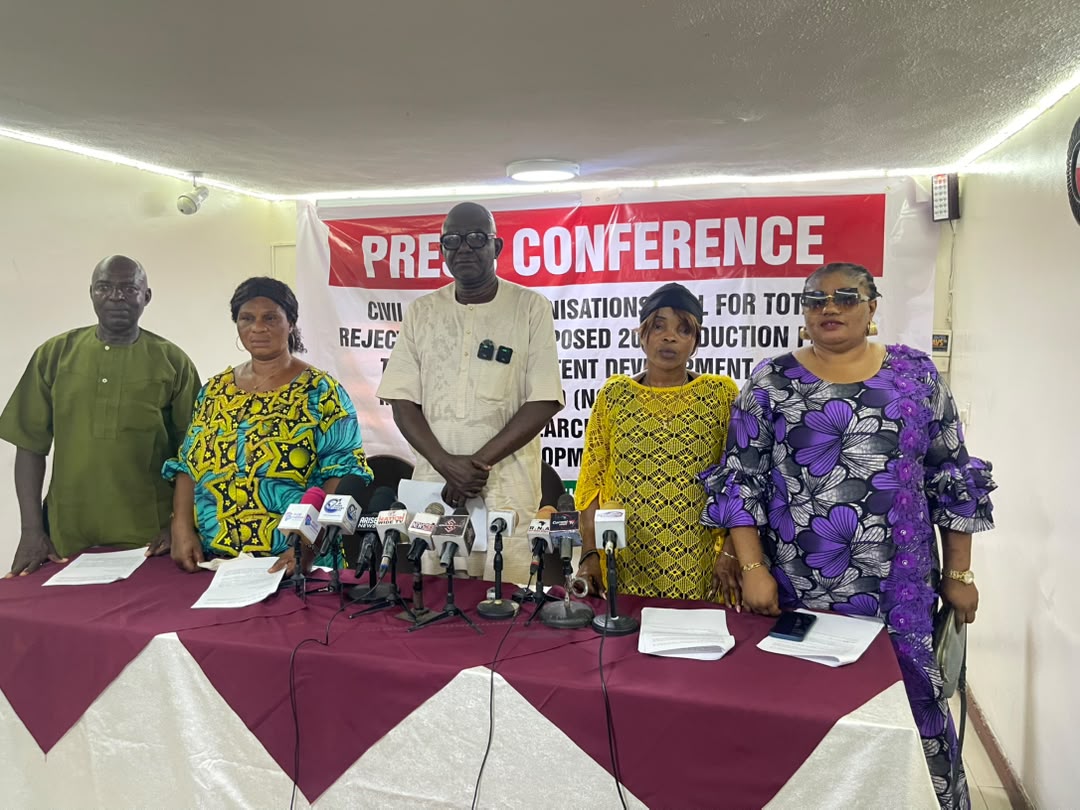
The Coalition of Civil Society Organisations in Nigeria (COCSON) has rejected a proposed 20 per cent deduction from the Nigerian Content Development and Monitoring Board (NCDMB) to finance the proposed National Research and Innovation Development Fund.
The coalition described the proposed funding arrangement as unacceptable, warning that it could undermine the development of indigenous capacity and local value addition in Nigeria’s oil and gas industry.
Speaking at a press conference in Abuja on Thursday, November 26, 2026, COCSON spokesperson, Tabuko Kennedy, said the coalition was not opposed to the establishment of a national research and innovation fund but strongly objected to the proposed funding mechanism.
Kennedy argued that funds allocated to the NCDMB were specifically meant to develop local capacity, support indigenous companies, train Nigerian engineers and promote value addition within the oil and gas sector.
He warned that diverting 20 per cent of the board’s revenue to finance another institution could weaken its ability to fulfil its statutory responsibilities.
According to him, the funds domiciled with the NCDMB are not surplus government revenue but contributions from companies operating in the oil and gas industry, specifically earmarked for local content development.
He maintained that diverting such funds without the consent of industry stakeholders would amount to a breach of trust and undermine the original purpose for which the resources were collected.
The coalition also warned that the proposed deduction could establish a dangerous precedent where financially viable government agencies would have portions of their revenues diverted to fund newly established institutions.
Kennedy questioned what would prevent similar deductions from other specialised intervention funds, including the Tertiary Education Trust Fund, the Universal Service Provision Fund and the Police Trust Fund.
He said such a practice could discourage revenue-generating agencies from improving their financial performance, create inter-agency rivalry and undermine long-term institutional planning.
COCSON further argued that the proposed deduction could violate the Nigerian Oil and Gas Industry Content Development Act, which provides the legal framework for the management and utilisation of funds accruing to the NCDMB.
The coalition maintained that the legislation did not envisage using the board’s resources to finance an unrelated research and innovation institution, describing the proposed diversion as inconsistent with the original statutory purpose of the funds.
Consequently, COCSON called on the leadership of the National Assembly, relevant committees and the Federal Executive Council to reject the proposed 20 per cent deduction.
It also appealed to President Bola Tinubu not to assent to the bill if the controversial funding provision remains in it.
The coalition disclosed that it had mobilised organised labour, pressure groups, religious organisations and other civil society groups to resist the proposed legislation.
It, however, stressed that it was not against research, innovation or the establishment of a national research funding institution, urging the government and lawmakers to explore alternative funding arrangements that would not undermine existing development agencies.
COCSON also called on Nigerians and industry stakeholders to oppose what it described as a legislative overreach, insisting that the country’s local content development programme should not be weakened to finance a new institution.
-
 Featured7 years ago
Lampard Names New Chelsea Manager
-
 Featured7 years ago
FG To Extends Lockdown In FCT, Lagos Ogun states For 7days
-
 Featured7 years ago
Children Custody: Court Adjourns Mike Ezuruonye, Wife’s Case To April 7
-
 Featured7 years ago
NYSC Dismisses Report Of DG’s Plan To Islamize Benue Orientation Camp
-

 Featured5 years ago
Transfer Saga: How Mikel Obi Refused to compensate me After I Linked Him Worth $4m Deal In Kuwait SC – Okafor
-
Featured7 years ago
Board urges FG to establish one-stop rehabilitation centres in 6 geopolitical zones
-

 News2 years ago
Zulu to Super Eagles B team, President Tinubu is happy with you
-
Sports4 years ago
TINUBU LAMBAST DELE MOMODU