
Featured
REJOINDER- ENUGU 2023: UGWUANYI, NWODO, UTAZI, OFOR, EDEOGA AND THE CONSPIRACY AGAINST ENUGU STATE

By Malachy Chuma Ochie
My attention has been drawn to an article published today (May 19, 2022) online in The Cable . The article written by one nondescript fellow called Godwin Udeh, who obviously is suffering from identity crisis, is ill-intentioned, full of his vain imaginations and can, at best, be described as a potpourri of falsehood, wickedness and divisiveness. The author, obviously, is not from Awgu area. I can swear on my father’s grave on this.
His mission, evidently, is to sow seeds of discord, create enmity and bad blood in the State. He also intends to pitch Nkanu against Isi-Uzo. This is lamentable.
That he could not even own up his article of mischief is a mark of his cowardice and inclination for treachery and evil. I have checked out the register of NBA and there’s no entry as Godwin Udeh. Albeit, you are an incorrigible liar; and that underscores the lie you dished out to the public.
The kernel of Godwin Udeh’s ill-fated essay is anchored on the following grounds: that Isi-Uzo is Nsukka and therefore unqualified to contest the governorship of Enugu State; that it will be unconscionable for Gov. Ugwuanyi to contemplate an Isi-Uzo person as his successor; that Chijioke Edeoga is the cousin of the Governor; that the Nwodos of Ukehe, Igbo-Etiti LG are playing a mischievous power game to install their in-law, Chijioke Edeoga, as governor of Enugu State.
Mr. Godwin Udeh, in trying to justify his irresponsibility and supine understanding of the political dynamics of Enugu State, used so many unedifying qualifiers to refer to the Nwodos, Chuka Utazi and any other person that catches his fancy.
He even alluded that Chijioke Edeoga is such a pauper that the aggregate of his salaries as a Commissioner cannot afford a Prado Jeep. Let me address these issues in their outline.
OF ISI-UZO, ENUGU-EAST ZONE AND NSUKKA
One conversant with the issues raised above would be forgiven if one runs away with the conclusion that Mr. Godwin Udeh is suffering from mental disorder bordering on schizophrenia. His assertion that Isi-Uzo is Nsukka is otiose, idiotic and maniacal.
Enugu State has three senatorial zones namely: Enugu-West, Enugu-East and Enugu-North. The Governorship, since 1999, has rotated among these senatorial zones.
Isi-Uzo is in Enugu-East senatorial zone. For the records, there is no senatorial zone in Nigeria known as or called Nkanu senatorial zone. I recall that recently, prominent Nkanu personalities, somebody like Chief Anike Nwoga and others, have at various times clarified this issue by reiterating the fact that Isi-Uzo is a bonafide LG in Enugu-East Zone; and that no LG in the zone is superior to the other.
Did Isi-Uzo force themselves into Enugu-East? The answer is No! It was Nkanu elders that made the move to excise Isi-Uzo from Nsukka into Enugu-East Senatorial zone on the grounds that they were their lost kiths and kin.
Nkanu had always depended on Isi-Uzo to win elections; why wouldn’t Nkanu reciprocate this gesture, especially when Isi-Uzo is presenting a credible and qualified candidate in Chijioke Edeoga?
Why all of a sudden should the Godwin Udehs of this world rise to trumpet the puerile assumption that Isi-Uzo is no longer in Enugu-East Zone?
Perhaps, Godwin Udeh does not realize that Anioma is Igbo, yet they are ruling in Delta State; the Ikwerres are Igbo but they are in-charge in Rivers State.
Until the Nigerian constitution affirms a new political delineation, Isi-Uzo remains in Enugu-East Senatorial Zone; and to that extent qualifies to enjoy all the benefits thereto including aspiring for the governorship of Enugu State.
*IS CHIJIOKE EDEOGA GOV. UGWUANYI’S COUSIN?
The allegation that Chijioke Edeoga is a cousin to Gov. Ifeanyi Ugwuanyi is ridiculous. First, both men are from two different senatorial zones; they are from different LGs and have no blood relationship. Please do your background checks and you will find out the lie in this claim.
Therefore, your crass reference to Dr. Okwy Nwodo, Nnia Nwodo, Chuka Utazi, Chris Ofor and Okey Ezea is unfortunate. Whereas the men you set out to malign and impugn are men who have distinguished themselves in various spheres of life and in nation-building, it smacks of disrespect for elders that you could stoop so low in portraying them in the most vile language merely to rationalize your pedantic ideology of nihilism and atavistic inclination towards the annihilation of Isi-Uzo.
Your pity-pat, thumb-sucking and naïve blackmail on Governor Ifeanyi Ugwuanyi is jaundiced and dead on arrival.
WHY CHIJIOKE EDEOGA STANDS OUT AMONGST THE REST
For the avoidance of doubt, Ugwuanyi has assured Ndi-Enugu that he would, at the appointed time “select a candidate from Enugu-East who will sustain his multiple legacies of peace, infrastructural development, industrialization and human capital development”.
The Governor would not want anyone with multiple baggage to succeed him. Look at the array of persons you mentioned and tell me which of them is not heavily ensconced in corruption and had been a regular visitor to EFCC, ICPC or Code of Conduct Bureau and other anti-graft agencies.
In other words, it is not Chijioke Edeoga that has unearthed the putrid deeds of these aspirants but like our people say, their day of reckoning has come and their sins have found them out. So, it is not the exposition of the burdens on these men that are necessarily the matter here, but rather people like you whose self-conceited sycophancy incapacitates to make objective analysis of how a combination of negative forces ushered your preferred men into the corridors of power, whereby they stumbled and fumbled with power, not knowing what to do with it.
FACTS ARE SACROSANCT
I will like to make one more point before I come to another issue you raised in your article (if an article it is): facts are very stubborn things; and they are never silenced by merely wishing them away.
Facts are facts, period – whether or not they are rooted in the purview of a man you despise. Governor Ugwuanyi cannot be maligned by people like you just because he believes in equity, justice, fairness and competence; neither can Chijioke be castigated because he boasts of immaculate track records far beyond the comprehension of his distant runners-up.
Rather, demagogues and liars like Godwin Udeh are identified against the factual background of the lies they tell; by reference to their lies- and you have them in plenty.
What becomes implicitly clear is that Chijioke Edeoga’s state-wide acceptance and marketability have become your greatest source of headache. But you know what? Our people say that a good product immediately commands extensive market share. That is the truth here.
Thus, your advocacy for the return of Enugu State to Egypt is an obvious call for the return of Hammer House of Horror in Enugu State, the preview of which we saw in the tragedy that befell Chiene I. Chiene few days ago.
It is therefore not surprising that in your article you regurgitated the advocacy for atavism in the state, which in blaming the governor and others, reinforced the fascist link between anti-democratic principles and a grim contempt for the people’s power.
CAMPAIGN OF CALUMNY
Your claims that “the devious schemes are being executed using the governor’s name to deceive and intimidate people”… and that “it is worrisome that Edeoga’s campaign activities bear the imprimatur and trappings of connivance with the highest level of authority in the state”, are understandable since they are the generic traits of Isi-Uzo haters, and advocates for the return of anarchy to Enugu State, which you recommend.
What is very clear from the above is that you have fallen into the same ditch as those who are “coming” and “going”, the same “man of the moment” and their cohorts – nothing but words everywhere; words anchored on frustration, failure and despair – “shenanigans”, “zoning”, political machinations”, “ mystical forces”, “politically jinxed”, “fatal tumble”.
The only solution in terms of practical strategy is another phrase: “Accept defeat and join the winning team”. I believe you fell into these errors because, even as a lawyer, which you claimed you are, you lacked an adequate understanding of Enugu state’s political dynamics rooted in our history.
ALLEGATIONS OF CAMPAIGN OF CALUMNY
Your accusation that Chijioke Edeoga has been conducting his campaign with malignity is pitiable because you know you are lying to yourself.
If any governorship aspirant has conducted his campaigns in civility and openness, that aspirant is Chijioke Edeoga.
Little wonder he has been accepted by the people of Enugu State as the next Governor. Mr. Godwin Udeh, you claim to be from Awgu, but I doubt your citizenship of Awgu LG.
FUNDING CHIJIOKE EDEOGA CAMPAIGN
Finally, it is a measure of your delusion to assume that Chijioke Edeoga cannot afford to conduct his campaign. In your own estimation, he cannot afford a Prado Jeep, not even with his accumulated salaries as a Commissioner. One thing you do not know is that Ka Isi-Uzo Jee Movement is a mass-based movement with men and women of means that are capable of the unexpected.
Chijioke Edeoga has enormous goodwill within and without; his goodwill is almost inexhaustible.
Let me shock you Sir, Chijioke Edeoga has been LG Chairman, Member, National Assembly, Special Adviser to the President and Commissioner.
But even with all these positions, Chijioke Edeoga has only two Prado jeeps, which he got in his two tenures as Commissioner in the state.
Remember, he was former Commissioner for LG Affairs and later the Commissioner for Environment. Each tenure of Commissionership ended with a Prado jeep.
Any other car in his convoy belongs to his friends and supporters with verifiable ownership. Barack Obama, whose election campaign was massively funded by the American people should be instructive here. God is not asleep.
BILLBOARDS
The billboards you refered to are not sponsored by the Government. A closer observation of the billboards will reveal the persons or groups that sponsored them.
Chijioke Edeoga may not be a money bag but has a massive war-chest anchored on his immense public goodwill.
I am sure you have not read Chijioke Edeoga’s profile. Please try and get a copy. I wish you luck.



Business
Turning Africa’s Raw Materials Into Wealth: The ARMS 2026 Industrial Agenda
By Joel Ajayi
For decades, Africa’s vast natural resources have powered industries and economies far beyond the continent, while many African countries have remained largely exporters of unprocessed commodities and importers of finished products.
That familiar pattern is now coming under renewed scrutiny as policymakers, researchers, investors and industrialists seek to change the direction of Africa’s resource economy.
At the centre of that conversation is the second edition of the Africa Raw Materials Summit (ARMS 2026), scheduled for October 19 and 20 at the Abuja Continental Hotel, Abuja, under the theme: “From African Feedstock to African Factories.”
Organised by the Raw Materials Research and Development Council (RMRDC), the summit is being positioned as more than another gathering of policymakers and industry stakeholders. It is intended to provide a platform for confronting the structural challenges that have kept African raw materials largely disconnected from local manufacturing.
Africa has for years operated largely within a “pit-to-port” economic model, exporting raw materials while importing expensive finished products.
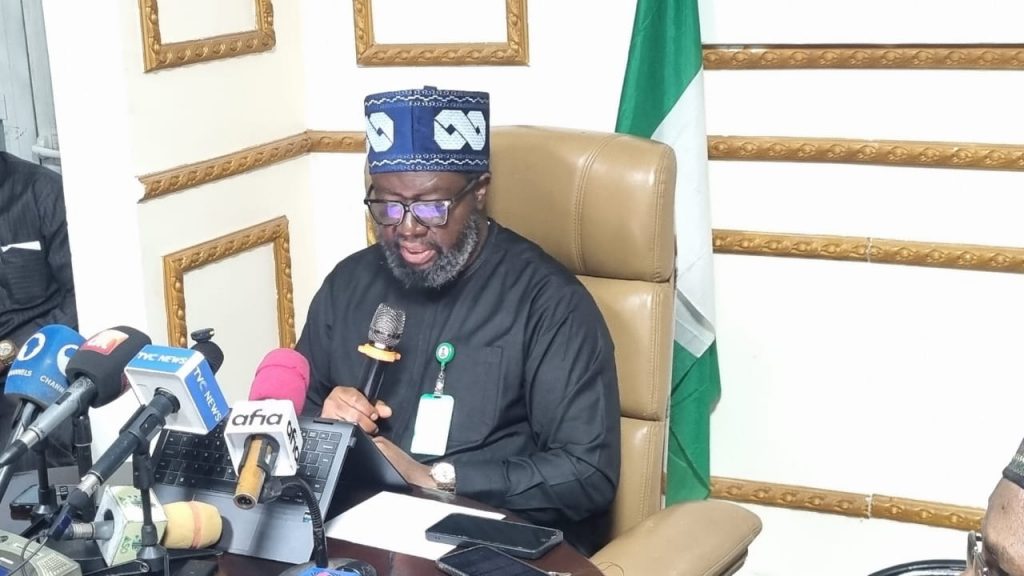
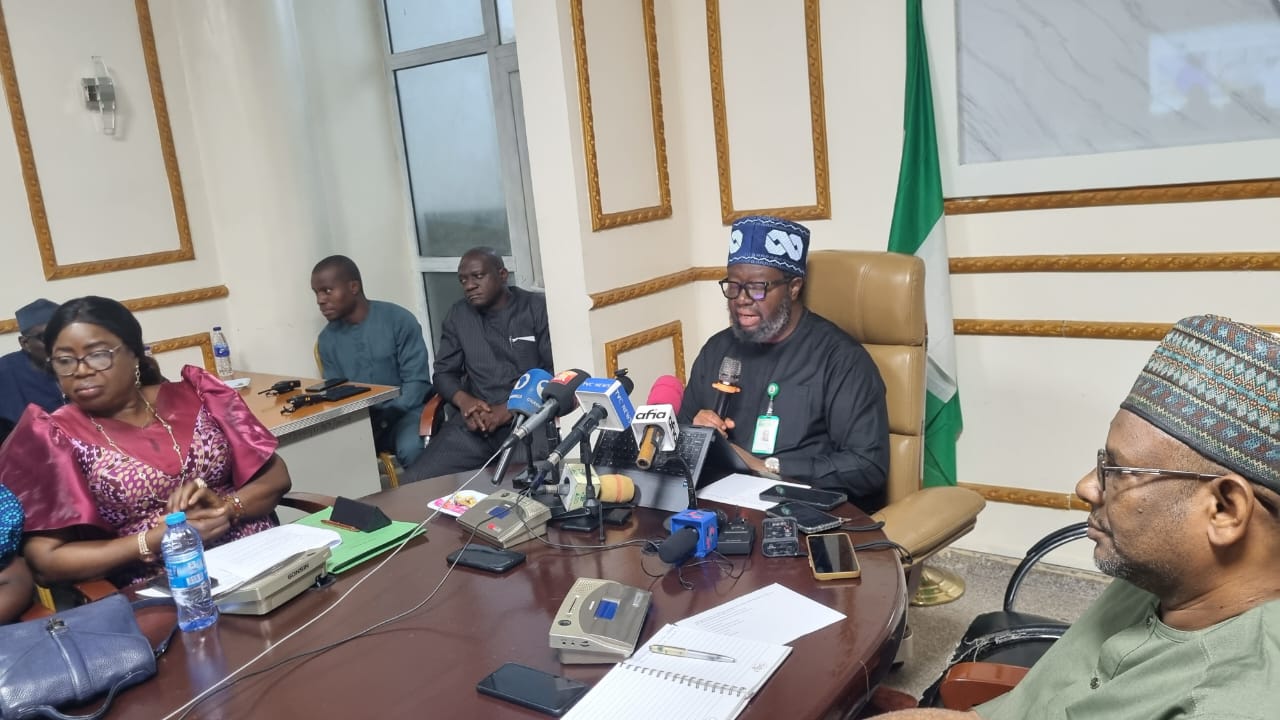
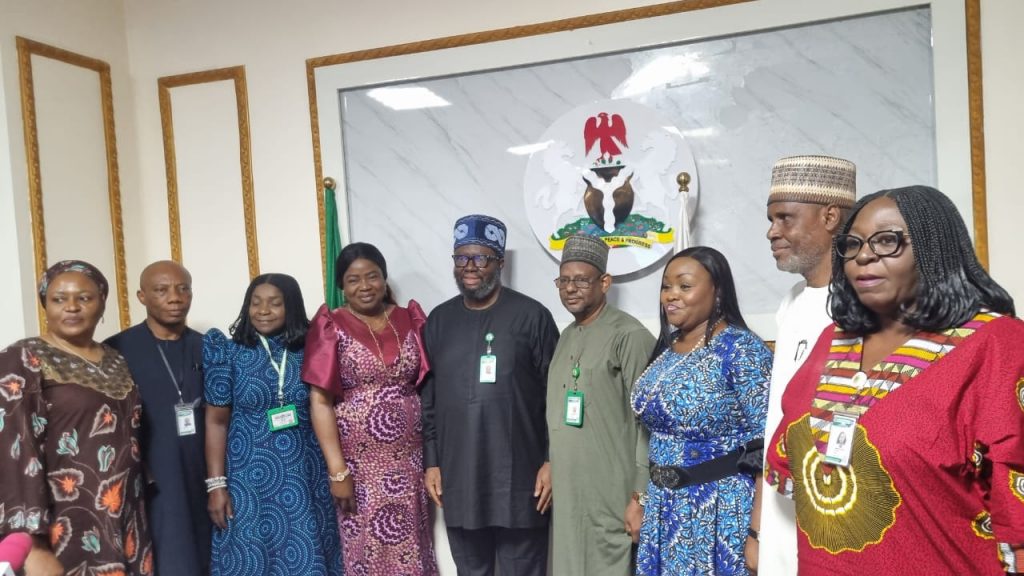
Speaking at a press conference ahead of the summit on Tuesday in Abuja, the Director-General and Chief Executive Officer of RMRDC, Prof. Nnanyelugo Martin Ike-Muonso, said the event would bring together policymakers, investors, researchers, technology providers and industrialists to develop practical strategies for transforming Africa’s abundant natural resources into industrial wealth.
The challenge, therefore, is not simply the abundance of resources, but the continent’s ability to transform those resources into industrial value, employment, technology and wealth within Africa.
Nigeria alone, according to the RMRDC, has more than $582.4 billion in documented non-renewable natural resources, while the wider continent possesses substantial deposits of critical minerals, agricultural raw materials and industrial feedstock.
Yet, the benefits of this resource endowment have often been constrained by inadequate processing capacity, weak infrastructure, limited technology, financing gaps and fragmented regional value chains.
From Dialogue to Industrial Action
ARMS 2026 builds on the maiden edition held in May 2025, which attracted more than 1,000 delegates from across the world.
The inaugural summit also witnessed the unveiling of the Ten-Year Raw Materials Transformation Roadmap (2025–2034) by the Minister of State for Industry, Senator John Owen Enoh.
The roadmap was designed around areas including technological capability, climate-resilient processing and backward integration, establishing a policy framework for greater domestic utilisation of Africa’s raw materials.
The second edition is expected to move the conversation further by bringing policy, capital, technology and industrial stakeholders around practical mechanisms for turning raw materials into locally manufactured products.
One of the major proposals highlighted by the RMRDC is the 30 per cent Mandatory Value Addition Bill, which seeks to establish a statutory minimum level of value addition to Nigerian raw materials before export.
The Council says the proposed framework could support job creation, import substitution, foreign-exchange conservation and increased manufacturing contribution to the economy.
Building the Infrastructure for Value Addition
The industrial transformation envisaged by ARMS 2026 goes beyond legislation.
A major concern is the “missing middle” between where raw materials are produced and where factories are located.
Poor transportation networks, inadequate cold-chain facilities, weak rural roads, limited testing and certification infrastructure and border-related delays can make locally sourced materials more expensive and less competitive.
Consequently, logistics and infrastructure constitute one of the five principal pillars of the summit.
The objective is to develop more reliable corridors connecting farms and mines with processing centres and manufacturing facilities, thereby reducing losses and improving the movement of industrial inputs.
The Digital Dimension
Technology is also becoming an important part of the Council’s strategy.
The RMRDC says it has developed the Nigeria Integrated Information Statistical System for Raw Materials and Products (NISSRAMP), described as a digital repository containing information on feedstock deposits, specifications, production outputs and industrial absorption rates.
The Council has also highlighted its transition towards paperless operations and its certification as a Data Controller/Processor of Major Importance by the Nigeria Data Protection Commission.
Such digital infrastructure could provide investors and manufacturers with better information about the availability and characteristics of raw materials while supporting more informed industrial planning.
Turning Waste Into Industrial Inputs
Another major component of ARMS 2026 is the proposed expansion of the circular economy.
The summit will examine how agricultural by-products, mine tailings, scrap metals and biomass can be recovered and reused as inputs for new production processes rather than being treated simply as waste.
The RMRDC argues that such an approach could lower raw-material costs while supporting more sustainable and climate-resilient manufacturing systems.
For Africa, where industrial expansion must increasingly balance economic development with environmental considerations, waste industrialisation could become an important part of the continent’s manufacturing conversation.
From National Production to African Value Chains
The African Continental Free Trade Area is another important element of the summit’s agenda.
The RMRDC sees AfCFTA as an opportunity to create regional value chains in which raw materials sourced in one African country can be processed and supplied to manufacturers in another.
Under such a model, Africa would move beyond simply exporting commodities to external markets and develop stronger internal networks for supplying chemicals, refined minerals, agricultural inputs and other industrial materials across national borders.
This approach places regional integration at the heart of Africa’s industrialisation strategy.
Bridging Research and Capital
A recurring weakness in many developing economies is the gap between research and commercialisation.
Innovations may emerge from universities, research institutions and laboratories without receiving the financing, equipment or market connections required to become commercially viable.
ARMS 2026 intends to address that gap through technology commercialisation and capital linkages, connecting research outputs with investors, development finance institutions and industrial off-takers.
The RMRDC has also cited partnerships with the Bank of Industry for commercial-scale post-harvest processing and a South-South technology-transfer partnership with the National Innovation Centre par Excellence in Shanghai, China.
A Larger Industrial Conversation
The scale of ARMS 2026 is expected to be significantly larger than the maiden edition.
The organisers project more than 1,800 delegates from all 54 African countries and global industrial partners.
The programme will feature high-level policy dialogues, technical panels, an advanced raw materials and technology exhibition, industrial site visits and the African Raw Materials Industry Awards.
The exhibition, in particular, is expected to showcase locally fabricated processing machinery, advanced domestic materials, green chemicals and engineered commercial inputs.
Beyond the speeches and exhibitions, however, the real significance of ARMS 2026 will ultimately depend on what happens after the summit.
Africa’s challenge has never been a shortage of raw materials. The more difficult question has been how to transform those resources into factories, products, skilled employment, technology and sustainable economic opportunities.
For Nigeria and the rest of the continent, the proposed shift from “pit-to-port” to “feedstock-to-factory” therefore represents a broader debate about the future structure of African economies.
ARMS 2026 seeks to place that debate firmly on the industrial agenda — with value addition, technology, finance, infrastructure, circular production and regional trade at the centre.
If the commitments and partnerships generated by the summit translate into measurable industrial activity, the event could provide another platform for Africa to examine how its enormous resource base can support stronger domestic manufacturing.
The message from the organisers is clear: the continent’s raw materials should not only leave African soil as commodities; they should increasingly become the foundation for African industrial production
-
 Featured7 years ago
Lampard Names New Chelsea Manager
-
 Featured6 years ago
FG To Extends Lockdown In FCT, Lagos Ogun states For 7days
-
 Featured7 years ago
Children Custody: Court Adjourns Mike Ezuruonye, Wife’s Case To April 7
-
 Featured7 years ago
NYSC Dismisses Report Of DG’s Plan To Islamize Benue Orientation Camp
-

 Featured5 years ago
Transfer Saga: How Mikel Obi Refused to compensate me After I Linked Him Worth $4m Deal In Kuwait SC – Okafor
-
Featured7 years ago
Board urges FG to establish one-stop rehabilitation centres in 6 geopolitical zones
-
Sports4 years ago
TINUBU LAMBAST DELE MOMODU
-

 News2 years ago
Zulu to Super Eagles B team, President Tinubu is happy with you