
Featured
Release of Convicted Drug Traffickers Police IRT arrested officially Transfered To NDLEA

By Emaluji Sunday Michael
We want to draw the attention of the public to the secretion of the judicial power, abuse of office, and deliberate manipulation of the public that there’s war against drug trafficking.
Just today, we learnt of the release of two convicted drug traffickers arrested by Police IRT and transferred to NDLEA namely Chibunna Patrick Umeibe and Emeka Alphonsus Ezenwanne, who through an intentioned plea bargain, were sentenced to six years in prison, 2yrs for each of the 3 counts.
Both Umeibe and Ezenwanne were arrested by the men of the Inspector General of Police called Intelligence Response Team (IRT) in connection to 21.25kg of cocaine in January 2022.
They had brought in the cocaine from Brazil through Ethiopia to Nigeria through the Enugu Airport.
The police acting on intelligence moved in and arrested the men with the contraband after they were cleared by Conniving Officers in the Enugu Airport and moved them to Abuja.
Despite repeated pleas by the drug traffickers who offered large sums of money in addition to telling the police IRT to take the drugs, the police refused to compromise and insisted on due process and prosecution.
After obtaining voluntary confession, Recorded Video Confessions and making of necessary entry at the police office in Abuja, the police subsequently Voluntarily moved the men and the seized suspected cocaine to the office of the National Drug Law Enforcement Agency and handed them over to the agency for further investigation without exposing the activities of the NDLEA Officers in Enugu Airport to the Media, as the Drug traffickers clearly indicted NDLEA Officers for conniving with International drug Cartel members in bringing Heavy drugs several times into Nigeria Via the Enugu International Airport.
Trouble started when the NDLEA deliberately set up the police to implicate them because of the powerful forces behind the illegal drug import, who were aggrieved that their operations were busted by the Police IRT.
While the case is in court to prove the innocence or culpability of the police officers on wether or not they tampered with parts of the drugs they arrested by themselves and transferred Voluntarily to NDLEA, we would reserve further details.
But suffice to raise key posers for the public to know because it borders on illegality, naked exercise of power especially from the powers that be and an abuse of the court process.
Having carefully explored key facts and the legal processes we are forced to state that, this is no longer a quest for justice but a clear case of dancing the beating of the drum being drummed by someone behind the scene and Vandetta.
The affected police officers have been in prison without bail more than 15 months now without bail on Bailable allegations, which the law says is Bailable. What are the issues? Deliberate use of judicial power to deny them bail despite repeated assurances that these are known men home and abroad that would not flee, especially with their international passports, will be in possession of the court.
Again, the Application of the Criminal Justice System calls for specific application of procedures in determining any case alleged to be criminal in nature.
Section 396 (3) provides that upon the arraignment of a defendant, trial shall proceed from day-to- day until the conclusion of the trial.
According to Sub section (4) of that section, it says “Where day-to-day trial is impracticable after arraignment, no party shall be entitled to more than five adjournments from arraignment to final judgement provided that the interval between each adjournment shall not exceed 14 working days.”
Subsection (5) says “Where it is impracticable to conclude a criminal proceeding after the parties have exhausted their five adjournments each, the interval between one adjournment to another shall not exceed seven days inclusive of weekends”
It leaves one to wonder why the judge has allowed long adjournment upon long adjournment, sometimes more than two months in a total of more than five times already.
It really begs the question as to what the target of the prosecution is.
The Center for Democracy and Human Rights sees this as not only an assault on the sensibilities of Nigerians but on the sanctity of the court as well as deliberate manipulation to hide the key actors behind these convicted felons who were caught by the Police IRT red handed trafficking drugs into the country.
If the ACJA provides for accelerated hearing and its guidelines, why have there been long adjournments in such a manner that is far behind the recommended time frame?
CEDEHUR makes bold to say that there’s more to this judicial process. Is the insinuation that there’s a finger of the Independent People of Biafra in this true?
Who’s an IPOB apologist in this case? The Super Cop who fought and dymystified the Armed IPOB fighters killing Police officers/Other Innocent Nigerians and burning Police stations all across Southeast didnt take himself to the Southeast but was Officially Ordered by the Police highest Authority to Proceed to Southeast and defend those Police Officers/Police Stations/Innocent Citizens in the Southeast and defeat the heavily armed attackers.
Or is it truly a fact that the Druglord whom these convicted drug traffickers work for is so powerful that he’s manipulating the NDLEA whom the drug Traffickers confessed in wriiten and on video that they are on his Payroll, That is why he was never arrested or declared wanted nothwithstanding his name, Phone number and address was given to NDLEA. Or is the Big Baron indirectly manipulating the judicial process, especially as he has not been arrested despite the voluntary confession from the convicts? We have also seen how the Big Baron indirectly manipulated his ways for the Confessed Multiple drug Traffickers to be released in prison after just 16 months.
We ask again, why has the sponsor of these drug traffickers not been arrested? Why are Big Drug Barons like Mallison Ukatu, Chief Ugoh etc arrested and announced to to world through NDLEA Press releases in 2022 for bringing in 22 billion and 8.9 billion Naira Drugs respectively into Nigeria are free after few months in custody and have all gone to their Families and Churches for Thanks Giving.
Nigerians must ask the questions because testimonies from these felons include name, contact address, phone number, dates and manner of operations in which they undertake drug trafficking for this highly placed person, that was never arrested or declared wanted.
Nigerians are asking why the Indicted NDLEA officers in Enugu Airport officially requested by the Police not handed over to the Police upto today?
We add that the NDLEA knows those collaborating with drug cartels much as they know the convicted felons were just accessories. Umeibe and Ezenwanne confessed in court that their pictures are sent to the NDLEA operatives in Enugu for easy clearance whenever they return with drugs and that was why they always pass with heavy drugs full to the brink in carry on bags many times through the Enugu Airport before Police IRT Arrested them at the Airport Car Park on the 19/1/2022.
So who are those helping them pass through the airport? Who are those international drug cartels that they mentioned to be collaborating with NDLEA which the NDLEA Refused to arrest for obvious reasons?
In fact during cross examination in Court, these convicted felons expressed disappointment with the police for not accepting their Pleas of collecting the drug and money to free them. They added that assuming the police IRT accepted their Plea in Enugu and also in IRT Office Abuja to take the drug and money and free them. they would have been freed that day, and no one would have known about this case.
Interestingly, no police officer was indicted as part of the drug cartel. As the Police IRT were the ones that Solely arrested the drug traffickers and refused to compromise and voluntarily transfered the Traffickers and drugs to NDLEA.
The fact we got is that the drug lord behind Umeibe and Ezenwanne has not been arrested or declared wanted because he will expose the NDLEA operatives right at the top down to the ones in Enugu Airport that were colluding with him, if he is arrested.
It’s interesting therefore to note that freeing Umeibe and Ezenwanne is to allow them to go back to their drug business while the police who arrested them, refused to compromise with them and transfered tbem to NDLEA are still being held in prison.
The public must also note that both Umeibe and Ezenwanne confessed in open Court that the 21.25kg was not tempered with by the Police anywhere in their Presence and Final Authentic Scientific test done at the NDLEA Lagos lab have also discredited the 17kg the NDLEA is claiming was tempared, The authentic test result is with the Court records. All these contradicted the complete falsehood and deceptive media trial embarked upon by the NDLEA.
One wonders therefore if it’s only the anger of the drug lord that his operation was busted that’s the cause of this seemingly miscarriage of justice.
We call on the NDLEA to do the needful and arrest the face behind these two drug traffickers among others or declare him wanted, as all the details of the Big Barons were given to them by the convicted drug traffickers.
We also call on the judge to adhere to the judicial process as provided by law and the ACJA instead of acting as if it’s a vendetta.



Business
Turning Africa’s Raw Materials Into Wealth: The ARMS 2026 Industrial Agenda
By Joel Ajayi
For decades, Africa’s vast natural resources have powered industries and economies far beyond the continent, while many African countries have remained largely exporters of unprocessed commodities and importers of finished products.
That familiar pattern is now coming under renewed scrutiny as policymakers, researchers, investors and industrialists seek to change the direction of Africa’s resource economy.
At the centre of that conversation is the second edition of the Africa Raw Materials Summit (ARMS 2026), scheduled for October 19 and 20 at the Abuja Continental Hotel, Abuja, under the theme: “From African Feedstock to African Factories.”
Organised by the Raw Materials Research and Development Council (RMRDC), the summit is being positioned as more than another gathering of policymakers and industry stakeholders. It is intended to provide a platform for confronting the structural challenges that have kept African raw materials largely disconnected from local manufacturing.
Africa has for years operated largely within a “pit-to-port” economic model, exporting raw materials while importing expensive finished products.
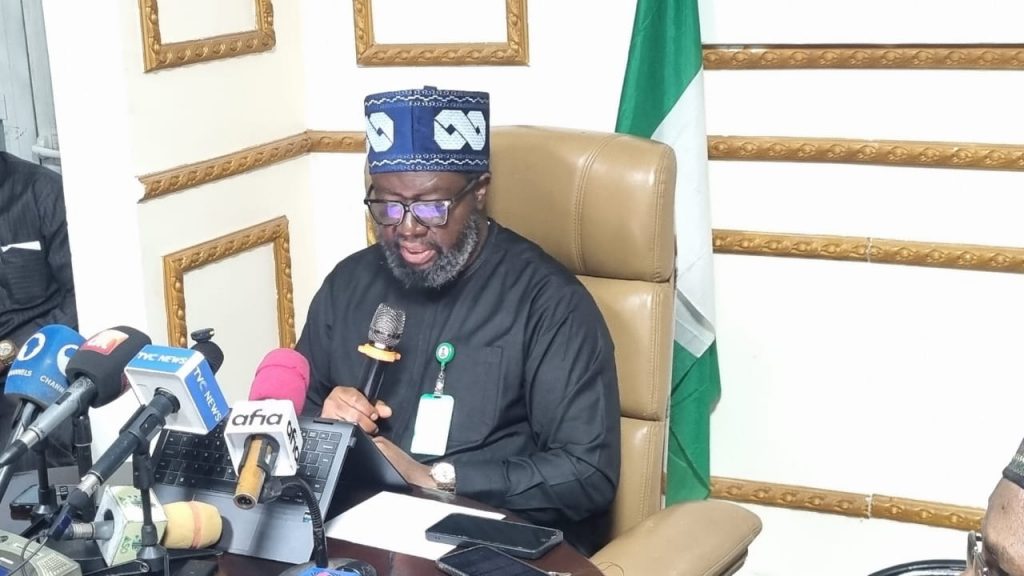
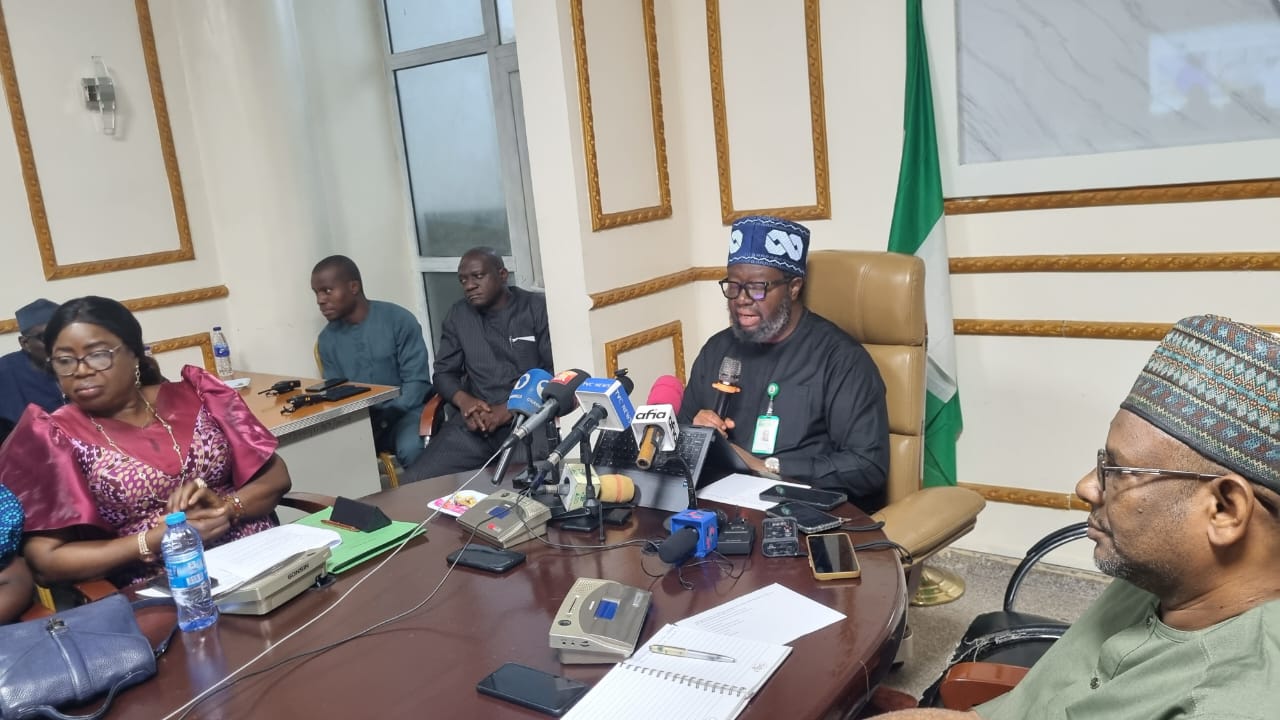
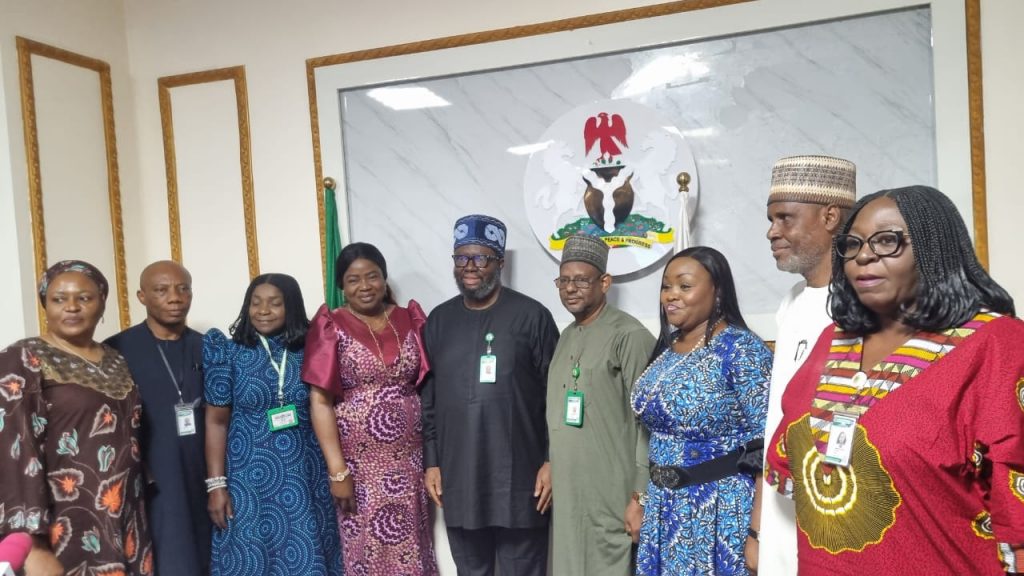
Speaking at a press conference ahead of the summit on Tuesday in Abuja, the Director-General and Chief Executive Officer of RMRDC, Prof. Nnanyelugo Martin Ike-Muonso, said the event would bring together policymakers, investors, researchers, technology providers and industrialists to develop practical strategies for transforming Africa’s abundant natural resources into industrial wealth.
The challenge, therefore, is not simply the abundance of resources, but the continent’s ability to transform those resources into industrial value, employment, technology and wealth within Africa.
Nigeria alone, according to the RMRDC, has more than $582.4 billion in documented non-renewable natural resources, while the wider continent possesses substantial deposits of critical minerals, agricultural raw materials and industrial feedstock.
Yet, the benefits of this resource endowment have often been constrained by inadequate processing capacity, weak infrastructure, limited technology, financing gaps and fragmented regional value chains.
From Dialogue to Industrial Action
ARMS 2026 builds on the maiden edition held in May 2025, which attracted more than 1,000 delegates from across the world.
The inaugural summit also witnessed the unveiling of the Ten-Year Raw Materials Transformation Roadmap (2025–2034) by the Minister of State for Industry, Senator John Owen Enoh.
The roadmap was designed around areas including technological capability, climate-resilient processing and backward integration, establishing a policy framework for greater domestic utilisation of Africa’s raw materials.
The second edition is expected to move the conversation further by bringing policy, capital, technology and industrial stakeholders around practical mechanisms for turning raw materials into locally manufactured products.
One of the major proposals highlighted by the RMRDC is the 30 per cent Mandatory Value Addition Bill, which seeks to establish a statutory minimum level of value addition to Nigerian raw materials before export.
The Council says the proposed framework could support job creation, import substitution, foreign-exchange conservation and increased manufacturing contribution to the economy.
Building the Infrastructure for Value Addition
The industrial transformation envisaged by ARMS 2026 goes beyond legislation.
A major concern is the “missing middle” between where raw materials are produced and where factories are located.
Poor transportation networks, inadequate cold-chain facilities, weak rural roads, limited testing and certification infrastructure and border-related delays can make locally sourced materials more expensive and less competitive.
Consequently, logistics and infrastructure constitute one of the five principal pillars of the summit.
The objective is to develop more reliable corridors connecting farms and mines with processing centres and manufacturing facilities, thereby reducing losses and improving the movement of industrial inputs.
The Digital Dimension
Technology is also becoming an important part of the Council’s strategy.
The RMRDC says it has developed the Nigeria Integrated Information Statistical System for Raw Materials and Products (NISSRAMP), described as a digital repository containing information on feedstock deposits, specifications, production outputs and industrial absorption rates.
The Council has also highlighted its transition towards paperless operations and its certification as a Data Controller/Processor of Major Importance by the Nigeria Data Protection Commission.
Such digital infrastructure could provide investors and manufacturers with better information about the availability and characteristics of raw materials while supporting more informed industrial planning.
Turning Waste Into Industrial Inputs
Another major component of ARMS 2026 is the proposed expansion of the circular economy.
The summit will examine how agricultural by-products, mine tailings, scrap metals and biomass can be recovered and reused as inputs for new production processes rather than being treated simply as waste.
The RMRDC argues that such an approach could lower raw-material costs while supporting more sustainable and climate-resilient manufacturing systems.
For Africa, where industrial expansion must increasingly balance economic development with environmental considerations, waste industrialisation could become an important part of the continent’s manufacturing conversation.
From National Production to African Value Chains
The African Continental Free Trade Area is another important element of the summit’s agenda.
The RMRDC sees AfCFTA as an opportunity to create regional value chains in which raw materials sourced in one African country can be processed and supplied to manufacturers in another.
Under such a model, Africa would move beyond simply exporting commodities to external markets and develop stronger internal networks for supplying chemicals, refined minerals, agricultural inputs and other industrial materials across national borders.
This approach places regional integration at the heart of Africa’s industrialisation strategy.
Bridging Research and Capital
A recurring weakness in many developing economies is the gap between research and commercialisation.
Innovations may emerge from universities, research institutions and laboratories without receiving the financing, equipment or market connections required to become commercially viable.
ARMS 2026 intends to address that gap through technology commercialisation and capital linkages, connecting research outputs with investors, development finance institutions and industrial off-takers.
The RMRDC has also cited partnerships with the Bank of Industry for commercial-scale post-harvest processing and a South-South technology-transfer partnership with the National Innovation Centre par Excellence in Shanghai, China.
A Larger Industrial Conversation
The scale of ARMS 2026 is expected to be significantly larger than the maiden edition.
The organisers project more than 1,800 delegates from all 54 African countries and global industrial partners.
The programme will feature high-level policy dialogues, technical panels, an advanced raw materials and technology exhibition, industrial site visits and the African Raw Materials Industry Awards.
The exhibition, in particular, is expected to showcase locally fabricated processing machinery, advanced domestic materials, green chemicals and engineered commercial inputs.
Beyond the speeches and exhibitions, however, the real significance of ARMS 2026 will ultimately depend on what happens after the summit.
Africa’s challenge has never been a shortage of raw materials. The more difficult question has been how to transform those resources into factories, products, skilled employment, technology and sustainable economic opportunities.
For Nigeria and the rest of the continent, the proposed shift from “pit-to-port” to “feedstock-to-factory” therefore represents a broader debate about the future structure of African economies.
ARMS 2026 seeks to place that debate firmly on the industrial agenda — with value addition, technology, finance, infrastructure, circular production and regional trade at the centre.
If the commitments and partnerships generated by the summit translate into measurable industrial activity, the event could provide another platform for Africa to examine how its enormous resource base can support stronger domestic manufacturing.
The message from the organisers is clear: the continent’s raw materials should not only leave African soil as commodities; they should increasingly become the foundation for African industrial production
-
 Featured7 years ago
Lampard Names New Chelsea Manager
-
 Featured7 years ago
FG To Extends Lockdown In FCT, Lagos Ogun states For 7days
-
 Featured7 years ago
Children Custody: Court Adjourns Mike Ezuruonye, Wife’s Case To April 7
-
 Featured7 years ago
NYSC Dismisses Report Of DG’s Plan To Islamize Benue Orientation Camp
-

 Featured5 years ago
Transfer Saga: How Mikel Obi Refused to compensate me After I Linked Him Worth $4m Deal In Kuwait SC – Okafor
-
Featured7 years ago
Board urges FG to establish one-stop rehabilitation centres in 6 geopolitical zones
-
Sports4 years ago
TINUBU LAMBAST DELE MOMODU
-

 News2 years ago
Zulu to Super Eagles B team, President Tinubu is happy with you