
News
RMAFC Receives Joint Revenue Board Delegation, Reaffirms Commitment To Revenue Reforms
Joel Ajayi
The Revenue Mobilization Allocation and Fiscal Commission (RMAFC) has reaffirmed its commitment to promoting transparency, fairness, accountability, and stakeholder collaboration in Nigeria’s revenue administration system.
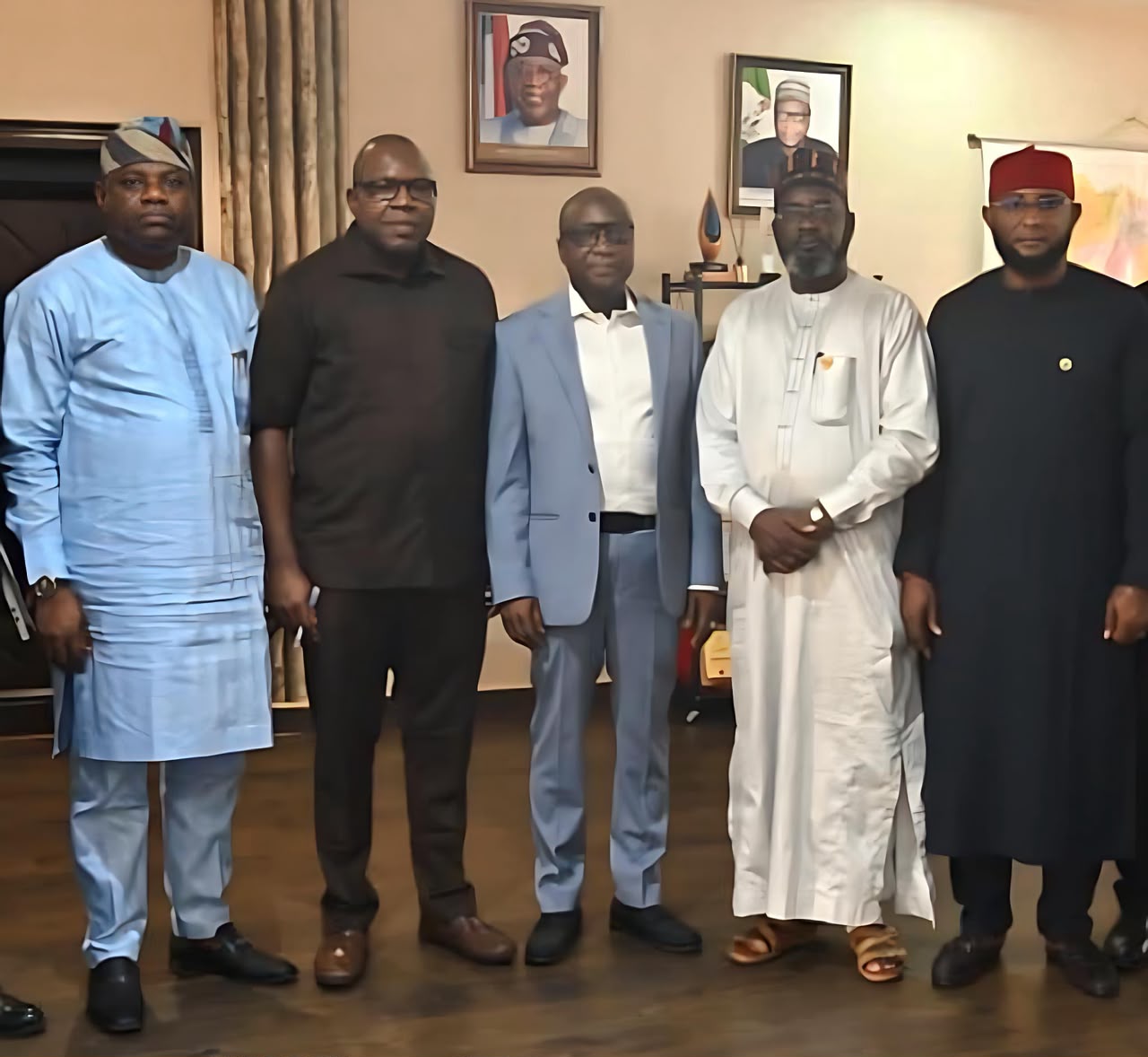
The RMAFC Chairman Dr. Mohammed Bello Shehu, made the reaffirmation while receiving a delegation from the Joint Revenue Board led by its Executive Secretary Mr. Olusegun Adesokan who paid him a courtesy visit on Tuesday , 9th June 2025
Dr Shehu emphasized the Commission’s dedication to ensuring that ongoing revenue reforms deliver positive outcomes for both government institutions and taxpayers across the federation. He noted that the success of the reforms depends largely on cooperation among all stakeholders involved in revenue generation and administration.
“The Revenue Mobilization, Allocation and Fiscal Commission remains committed to promoting transparency, fairness, and accountability in Nigeria’s revenue administration. As key stakeholders in the nation’s fiscal architecture, we must work together to ensure that ongoing revenue reforms protect the interests of taxpayers while guaranteeing equitable revenue allocation across all levels of government,” the Chairman stated.
Dr. Shehu further stressed that effective stakeholder engagement, policy harmonization, and institutional collaboration are essential for achieving the objectives of the ongoing reforms. According to him, the Commission will continue to support government initiatives that strengthen revenue generation while ensuring its allocation in accordance to extant rules.
Addressing concerns raised regarding aspects of the new tax regime, particularly issues relating to refunds, revenue allocation, and electronic transfer taxation, Dr. Shehu acknowledged the need for continued dialogue and technical engagement. He stated that such discussions were necessary to guarantee fairness, efficiency, and public confidence in the nation’s tax administration framework.
“The Commission is committed to supporting measures that enhance compliance, improve transparency, and foster public confidence in the nation’s tax administration framework. With sustained cooperation among federal and subnational governments, revenue institutions, and with proper implementation of the ongoing reforms, we expect to witness significant improvements in revenue collection and fiscal efficiency over the next five to six years,” he added.
Earlier, the Executive Director of the Joint Revenue Board, Mr. Olusegun Adesokan, disclosed that the visit was aimed at strengthening collaboration between the JRB and RMAFC towards the successful implementation of Nigeria’s ongoing revenue reforms. He noted that effective coordination among relevant institutions remained critical to achieving the objectives of the new tax framework.
Mr. Adesokan stated that the revenue reform framework was designed to promote fairness, equity, and transparency in tax administration while ensuring clearer revenue allocation mechanisms between the federal and subnational governments. He explained that the reforms seek to create a system that benefits taxpayers, government institutions, and the nation’s overall fiscal stability.
The Executive Secretary also acknowledged concerns raised by stakeholders regarding electronic money transfer levies, stamp duties, revenue allocation, refunds, and the treatment of advance tax payments. He gave the assurance that the Board would continue to engage relevant authorities and stakeholders to address these concerns through consultations and technical discussions.
According to him, the Joint Revenue Board remains committed to working closely with RMAFC and other stakeholders to ensure that revenues are properly attributed to the appropriate states and that taxpayers are treated fairly under the new tax framework. He further commended the Commission for its commitment to stakeholder harmonization and expressed confidence that sustained collaboration, information sharing, and stakeholder education would significantly improve revenue generation and compliance across the federation.
Mr. Adesoko pledged the Board’s continued support for all initiatives aimed at strengthening Nigeria’s revenue administration system. He assured the Commission that the JRB would continue to provide technical inputs, reports, and necessary support to ensure the successful implementation of the ongoing reforms.
The meeting ended with both organizations reaffirming their commitment to deepening collaboration, promoting taxpayer protection, enhancing revenue administration, and ensuring the successful implementation of reforms designed to strengthen Nigeria’s fiscal framework and accelerate national development.
The meeting was witnessed by the Chairman and vice Chairman of the Nigerian Revenue Service Monitoring Committee of the RMAFC, Hon. Daniel Kolade Abimbol and Hon. Abubakar Wamakko as well as the Secretary to the Commission, Joseph Nwaze Okechukwu.
Other officials of RMAFC in attendance were the Director, Federation Account Allocation Committee Department, Ahmed Rufai Gidado, Director, Inland Revenue Monitoring Department, Mohammed Hamis Ishaq, Ag.Director, Chairman’s office Gidado Muhammed Yahaya , Deputy Director Inland Revenue Monitoring Department, Ali Sagir and the Special Assistant to the Hon Chairman on Technical matters Professor Aliyu Idris.
The Executive Secretary of the JRB was accompanied on the visit by Mr. Matthew Emune and Mr. Collins Musu.



Foreign news
Algeria’s Glorious Revolution: Embassy Marks 72nd Anniversary in Abuja
Joel Ajayi
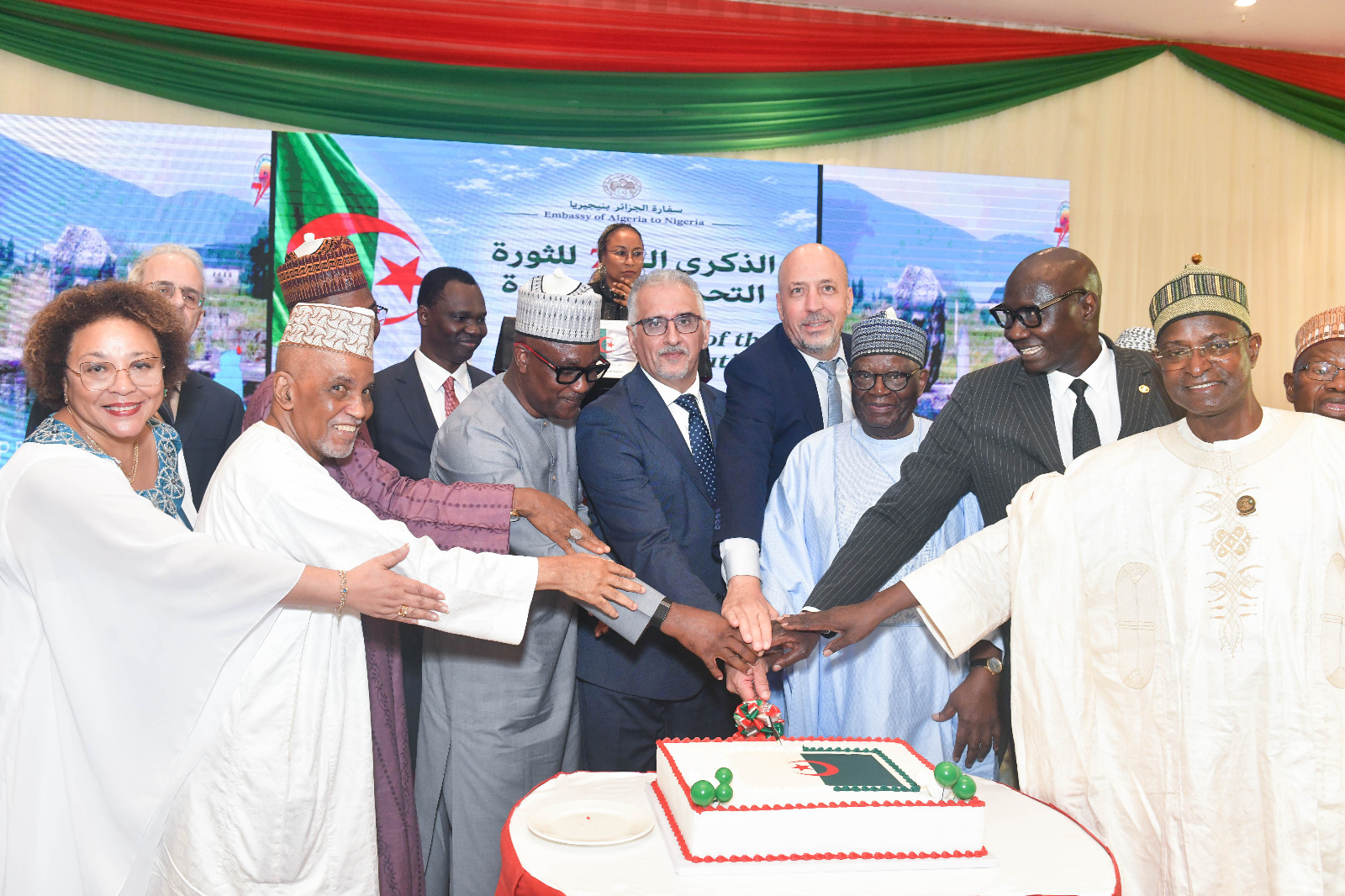
The Embassy of Algeria in Nigeria has commemorated the 72nd anniversary of the country’s Glorious Revolution of November 1, 1954, with a reception in Abuja, highlighting Algeria’s liberation struggle and strengthening diplomatic relations with Nigeria.
The event, held on November 9, 2026, at Continental Suites Hotel, attracted prominent personalities, including the Speaker of the House of Representatives, Dr Tajudeen Abbas, members of the Federal Government, senior government officials, heads of diplomatic missions and other friends of Algeria.
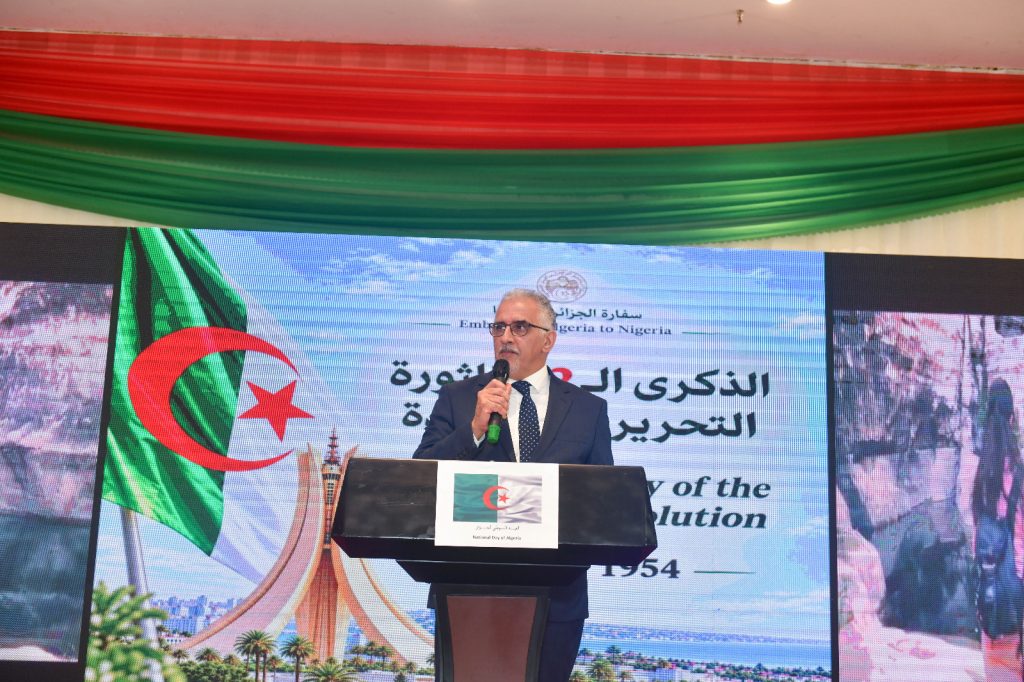
Speaking at the reception, Algeria’s Ambassador to Nigeria, Hocine Mezoued, welcomed guests and paid tribute to the country’s freedom fighters who sacrificed their lives during the struggle for independence.
He described the November 1, 1954 revolution as the foundation of modern Algeria, noting that the sacrifices of the nation’s martyrs made it possible for the country to reclaim its sovereignty.
On Algeria’s development agenda, Mezoued said President Abdelmadjid Tebboune’s administration had continued to pursue economic reforms, diversification and national development under its New Algeria vision.
He noted that the country was recording progress in non-hydrocarbon exports, while improvements in the business environment had boosted investor confidence and attracted significant foreign investments.
On foreign policy, the ambassador reaffirmed Algeria’s commitment to non-interference, respect for national sovereignty, peaceful conflict resolution and the right of peoples to self-determination.
Addressing security challenges in the Sahel, he stressed that lasting peace could not be achieved through military measures alone, insisting that economic development, inclusive dialogue and peaceful resolution of disputes remained essential.
Turning to Nigeria-Algeria relations, Mezoued described the partnership as one founded on shared values and the commitment of both countries’ leaders to advancing African development.
He identified the Trans-Saharan Highway, Trans-Saharan Gas Pipeline and Trans-Saharan Fibre Optic Backbone as major strategic projects receiving attention from both countries.
The ambassador also disclosed that Algeria had continued to provide scholarships to Nigerian students to strengthen human capital development and capacity building.
He further announced that Air Algérie expanded its Nigerian operations on October 26, 2026, with the introduction of two weekly flights to Lagos, expressing confidence that the service would boost trade and tourism.
Looking ahead, Mezoued said 2027 would offer fresh opportunities to deepen bilateral cooperation, particularly through the fifth Joint High Bi-National Commission scheduled to hold in Abuja.
He expressed optimism that the meeting would provide an opportunity to assess existing partnerships, identify new areas of cooperation and move Nigeria-Algeria relations towards a more practical and results-driven phase.
-
 Featured7 years ago
Lampard Names New Chelsea Manager
-
 Featured7 years ago
FG To Extends Lockdown In FCT, Lagos Ogun states For 7days
-
 Featured7 years ago
Children Custody: Court Adjourns Mike Ezuruonye, Wife’s Case To April 7
-
 Featured7 years ago
NYSC Dismisses Report Of DG’s Plan To Islamize Benue Orientation Camp
-

 Featured5 years ago
Transfer Saga: How Mikel Obi Refused to compensate me After I Linked Him Worth $4m Deal In Kuwait SC – Okafor
-
Featured7 years ago
Board urges FG to establish one-stop rehabilitation centres in 6 geopolitical zones
-
Sports4 years ago
TINUBU LAMBAST DELE MOMODU
-

 News2 years ago
Zulu to Super Eagles B team, President Tinubu is happy with you













