
Sports
Rwanda Now First Africa Country to host 2025 road world championship
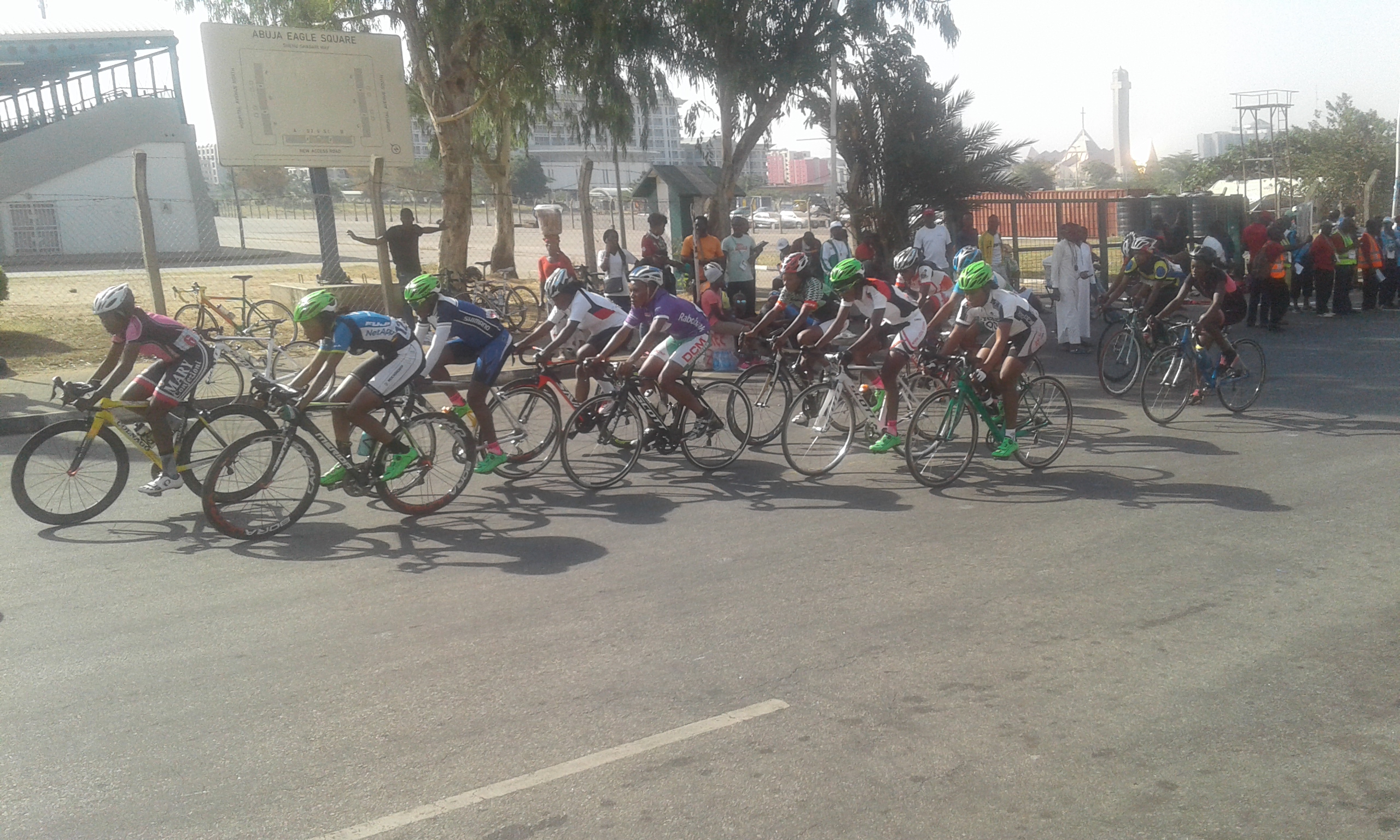
The Union Cycliste Internationale (UCI) on Friday gave Rwanda the right to host the 2025 road world championship.
The News Agency of Nigeria (NAN) reports that 190th Congress held in Flanders, Belgium, the world Cycling decided to give Africa the privilege to host the world championship.
NAN reports that this is the first time an African country has been given the chance to host road world championship, this going to Kigali, Rwanda.
Giandomenico Massari, the chairman, caretaker of committee of Nigeria Cycling Federation, congratulated the Rwanda Cycling Federation for getting the opportunity to host 2025 UCI world championship in Rwanda.
Massari said a new era had come for Africa to host world championships in cycling.
“This will be the first time for Africa to host this world event I congratulate Rwanda Cycling Federation for this great opportunity,” he said.
He added: “We continue to work tediously to make sure one day Nigeria will also have the opportunity and the right to host a world Cycling Championship.
“We have cyclists that can represent the country in International and world championships that will make the country capable of winning medals.
“Nigeria can be the next Africa country to host the world championship,” he said.
NAN report that in 2018, UCI called on all 50 National Federations of the African Cycling Confederation to submit bids for the 2025 edition, claiming it would help to “consolidate the growth” of the sport in the continent.
The 2022 Road World Championships are scheduled to be held in Wollongong, Australia, with Scottish city, Glasgow, and Zurich in Switzerland due to play host in 2023 and 2024 respectively.
(NAN)



Sports
AACT 2026: 31 Days to Africa’s Big Sporting Gathering in Abuja
Joel Ajayi
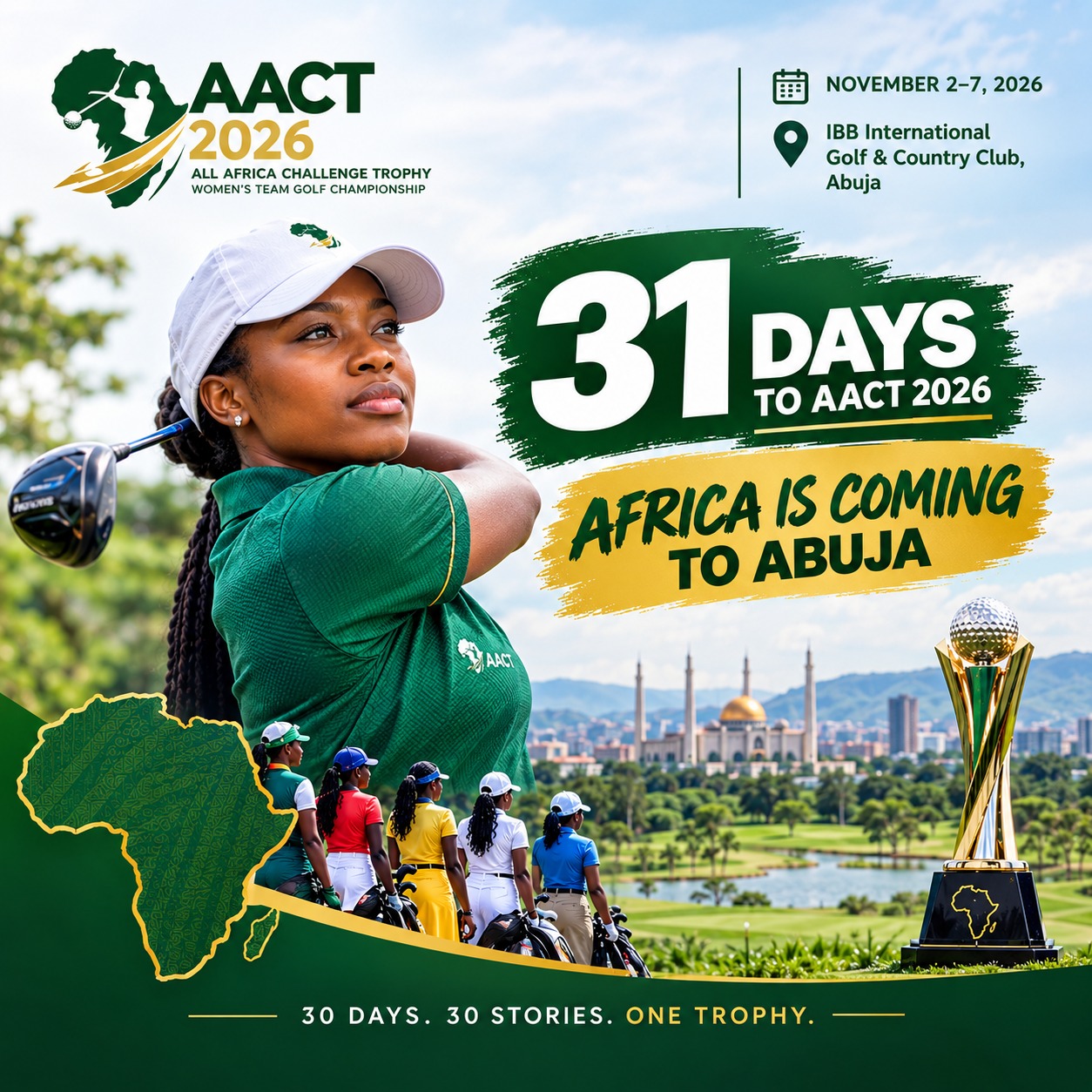
The countdown to the 2026 All Africa Challenge Trophy (AACT) has officially entered the final month, with just 31 days to go before Africa’s leading women’s team golf championship tees off at the IBB International Golf & Country Club in Abuja.
In a statement signed by the AACT 2026Director of Communication Kayode Adeniyi on Friday in Abuja.
Under the theme “Africa Is Coming to Abuja,” the countdown campaign will spotlight the championship, the participating nations, the players, the host venue and the growing development of women’s golf across the continent.
The 2026 AACT, scheduled for November 2–7, will bring together women’s golfing talent from across Africa for six days of continental competition in Nigeria’s capital.
As preparations continue at the IBB International Golf & Country Club, attention is increasingly turning to Abuja, where the championship will provide a platform for African golfers to compete while also showcasing Nigeria’s hospitality and the country’s growing profile as a destination for major sporting events.
The countdown will feature daily stories, interviews, player and country profiles, tournament facts, behind-the-scenes updates and features on the host venue as the championship draws closer.
The campaign will also highlight the role of the Ladies Golf Association of Nigeria (LGAN), the Local Organising Committee and other stakeholders in preparing for the continental championship.
With just 31 days remaining, anticipation is building across the African golfing community as Abuja prepares to welcome the continent’s leading women golfers.
Africa is coming to Abuja.
.
-
 Featured7 years ago
Lampard Names New Chelsea Manager
-
 Featured6 years ago
FG To Extends Lockdown In FCT, Lagos Ogun states For 7days
-
 Featured7 years ago
Children Custody: Court Adjourns Mike Ezuruonye, Wife’s Case To April 7
-
 Featured7 years ago
NYSC Dismisses Report Of DG’s Plan To Islamize Benue Orientation Camp
-

 Featured5 years ago
Transfer Saga: How Mikel Obi Refused to compensate me After I Linked Him Worth $4m Deal In Kuwait SC – Okafor
-
Featured7 years ago
Board urges FG to establish one-stop rehabilitation centres in 6 geopolitical zones
-
Sports4 years ago
TINUBU LAMBAST DELE MOMODU
-

 News2 years ago
Zulu to Super Eagles B team, President Tinubu is happy with you