
Featured
Sanusi Lamido and His Hallucinations
By Abdullahi and
What does one say about a man who is often full of himself and seeks undue relevance? What personality disorder is that called? Sanusi Lamido will not be the first and last false prophet of doom to talk about a Nigeria that will break or disintegrate. His forebears foresaw a disunited Nigeria before 2015. The year came to pass and the country is still one. Unsatisfied, Sanusi and his cohorts, from within and outside, are at it again. This time, Sanusi is trying, without any mandate, to declare fatwa on beloved country. According to him, Nigeria is on the brink or “living on extra time”. As a fortune teller or seer that he has become, he did not see his dethronement and banishment. But he is so pessimistic to see a collapsed nation.
When looking for a typical illustration of a hypocrite, Sanusi Lamido Sanusi fits the description perfectly. Sanusi has carved a niche for attacking and throwing tantrums against authorities to attract attention and sympathy to himself while covering up his antecedents of self-glorification, imprudence and perceived corruption. His entrance into limelight came after he got appointed as the Governor of the Central Bank of Nigeria in 2009 to serve under the Goodluck Jonathan’s administration. He was to descend on the President at any given opportunity.
As a seasoned economist and financial analyst, presenting an astute persona, Sanusi was quick to warm his way into the hearts of Nigerians who believed his wealth of experience would transform the country to a world class economy. Unbeknown to many, behind the eloquent exuberance and adornment of bespoke outfits, lies a controversial figure and intellectual nuisance who craves attention by inciting the public. Like the proverbial phrase that says “time reveals all things”, Sanusi’s actual character gradually unveiled with time. Sanusi is a loose cannon. He shoots without aiming. He is an unpatriotic citizen who continues to hurl baseless criticism against authorities even when he is part of it.
In the Jonathan era and under this administration, his condemnations were a defence against allegations of misconduct and abuse of office during his tenure as CBN Governor and Emir of Kano, both positions in which he was disgraced and shown the way out. It is widely known that under the Jonathan administration, he operated the CBN like his personal venture and allegedly committed humongous financial atrocities. Report of a panel set up in 2014 to probe him noted that Sanusi was indicted for being fraudulent, reckless and wasteful. He was fingered in the missing N38bn by the Financial Reporting Council of Nigeria in April 2013. The money was said to have been paid to Nigeria Security Printing and Minting Press, a subsidiary of the CBN. However, MINT account showed no evidence of such transaction. Between 2011 and 2012, he supposedly expended the outrageous sum of N5.3bn on legal and professional fees, private guards, lunch for security aides and promotional activities. Mr Saint indeed.
Accusations of recruiting staff into the CBN without following due process were also leveled against him. According to PremiumTimes report of 31 March, 2014, Sanusi was further suspected by Federal Government of being one of the financiers of boko haram terrorism in the country. This culture of impunity was quick to attract a query from the then government. Rather than answer to his financial impropriety and terrorism financing, he hastily went on the offensive and began making inconsistent public statements about financial indiscretions in the NNPC. After his disgraceful exit from the CBN and as trademark of his character, he cunningly lobbied his way to become the Emir of Kano to escape prosecution for his “crimes”. Sanusi was never a qualified candidate for the throne. Some quarters believe he (un)wittingly had long began scheming his way into the Kano emirate when he suspectedly arranged for Boko Haram members to attack the former Emir, Alhaji Ado Bayero who later died after succumbing to the injuries he sustained.
Sanusi of course, brought immense pressure on the Emir. He brought him to Abuja to support the third term bid of then President Obasanjo, a reason the ordinary Kano people, for the first time, stoned their Emir or his convoy. He never hid his likeness for the seat of the Emir and became desperate to occupy it even while the incumbent was alive. The Emir eventually died from mental harassment suffered from Sanusi. In connivance with Rabiu Kwankwaso and Abdullahi Ganduje both of whom, for political exigency, installed him as Emir. The duo of Kwankwaso and Ganduje were Governor and Deputy Governor of Kano State. Against popular demand, they conspired to make Sanusi Emir. And same people, at least Ganduje undid Sanusi. They realised that Sanusi is a dog which does not know its owner. Friendship with Sanusi is like buying a wild cat for a pet.
Even as Emir, he lacked respect for due process and constitutional authority while desecrating traditional institutions. To show his double standard, Sanusi continues to advocate the culture of family planning among northerners. He also condemns polygamy. Meanwhile, he is married to four wives with thirteen children as at last count. He preaches against corruption but in less than three weeks after ascension as Emir, Sanusi was accused of embezzling at least N4bn from the Emirate Council coffers and squandered over N37m on recharge cards. He politicised the emirate and created unnecessary tensions in Kano State and divisions among the populace. This led to him being disgraced once again, dethroned and banished from the State. Though some of the issues are under litigation, it is not probable he would ever win in the court of public opinion even if he wins in the Court of law.
As proof that he does not care about the people he claims to serve, Sanusi chose Lagos, a cosmopolitan state outside the conservative North to enable him get close to his local and foreign hostile allies. Reason for his choice of Lagos instead of Loko LGA of Nasarawa State where he is banished in disregard of customary rites daily manifests. It is obvious he is partisan. His public utterances betray him. He seeks to be among Lagos Big Boys as well as power brokers in the country. His preoccupation is to install a President of a South West extraction and he is assiduously working for this.
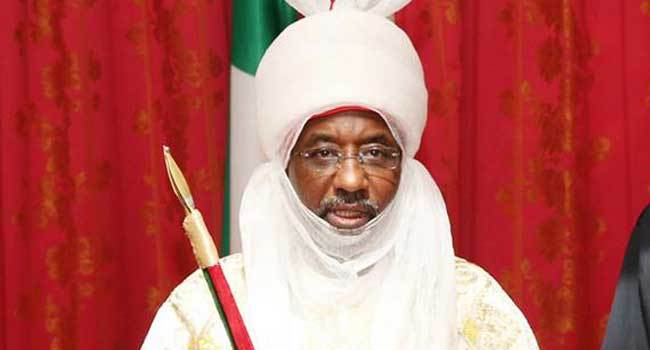
In his unending quest for power, influence and relevance, Sanusi again shamelessly bribed his way into becoming the leader of the Tijjaniyya sect in Nigeria and continues to appear in the full regalia of Emir and addresses himself as one. Luckily, the Tijjaniyya sect knows who its real leader is. Adorning the outfit of an Emir exemplifies his disrespect for the people. An insensitive man, Sanusi appears in full regalia of a sitting Emir simply to deceive the unsuspecting public. Deposed and banished, how does he think he can return to Kano to reclaim the seat? Kano people are not lily livered. And Sanusi knows he cannot test their resolve. Only a highly hallucinating person like Sanusi will decide to live in his dream world. Sanusi and his Hallucinations!
Sanusi is not the only Emir to have been deposed and banished. His grandfather was deposed. Then Sultan of Sokoto, Alhaji Ibrahim Dasuki and Emirs of Muri and Gwandu were once deposed and banished. They took it in good faith. Faced with their fate, they never constituted a nuisance as Sanusi has. They went about their normal businesses and did not incite the public against constituted authorities. They never sought to go back to their thrones. Sanusi’s desperation to sneak into Kano is an aberration. Why does he want to destabilise Kano? Is it a task from his Lagos sponsors so the authorities can be marked as failed.
Those who come to equity must do so with clean hands. While citizens have the right to advise and criticise, Sanusi Lamido Sanusi lacks that moral ground. Where the Judicial system works, Sanusi would be in jail serving time for his crimes. Rather, he continues to play victim by skewing narratives that project him as virtuous to divert attention from his indecorous personality. If Nigeria is on the brink, distressed, sinking or living on borrowed time, Sanusi and his wasteful lifestyle contributed immensely to it. Sanusi should do a soul searching and change for good, as a good Muslim, Sanusi should accept his fate and imbibe the teachings of Islam. He should adhere to the admonition of Quran that God gives power to whom He wishes and takes it away from whom He wants. Mallam Sanusi wake up and stop hallucinating.
Abdullahi Tahir, a public affairs commentator writes from Kano.



Business
Turning Africa’s Raw Materials Into Wealth: The ARMS 2026 Industrial Agenda
By Joel Ajayi
For decades, Africa’s vast natural resources have powered industries and economies far beyond the continent, while many African countries have remained largely exporters of unprocessed commodities and importers of finished products.
That familiar pattern is now coming under renewed scrutiny as policymakers, researchers, investors and industrialists seek to change the direction of Africa’s resource economy.
At the centre of that conversation is the second edition of the Africa Raw Materials Summit (ARMS 2026), scheduled for October 19 and 20 at the Abuja Continental Hotel, Abuja, under the theme: “From African Feedstock to African Factories.”
Organised by the Raw Materials Research and Development Council (RMRDC), the summit is being positioned as more than another gathering of policymakers and industry stakeholders. It is intended to provide a platform for confronting the structural challenges that have kept African raw materials largely disconnected from local manufacturing.
Africa has for years operated largely within a “pit-to-port” economic model, exporting raw materials while importing expensive finished products.
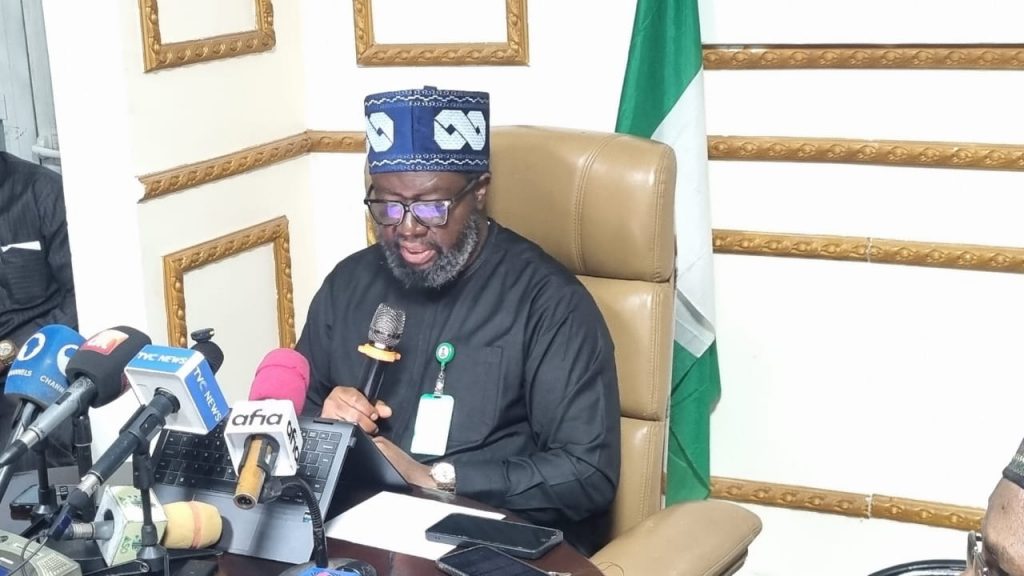
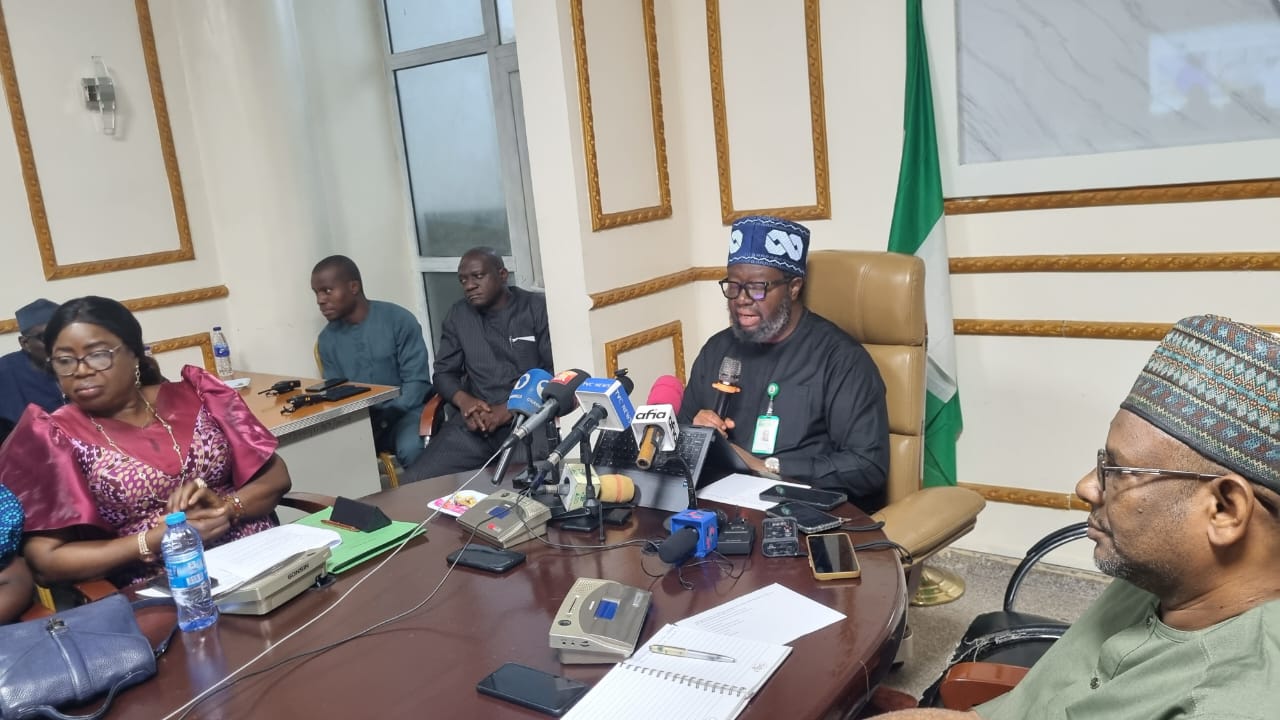
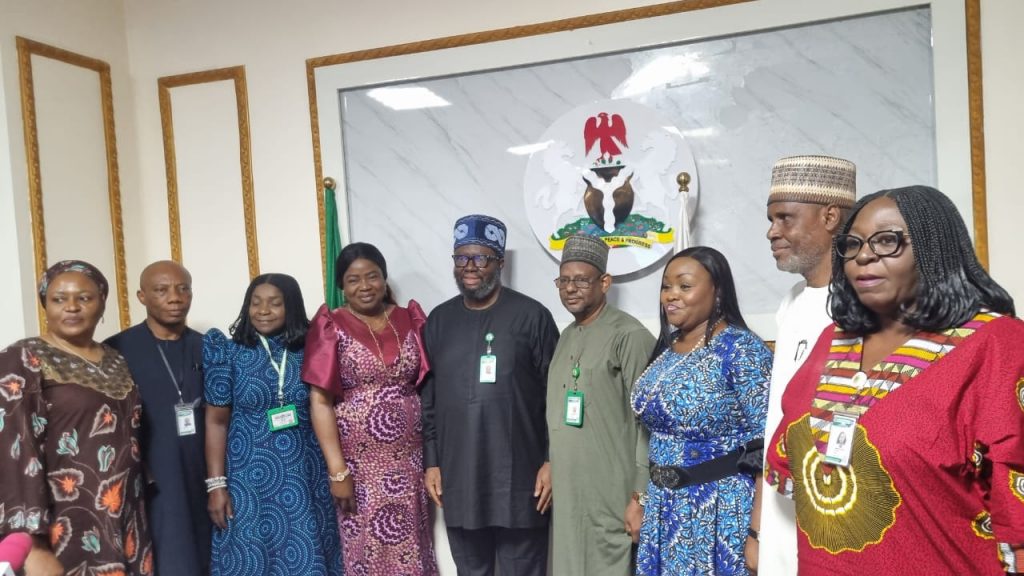
Speaking at a press conference ahead of the summit on Tuesday in Abuja, the Director-General and Chief Executive Officer of RMRDC, Prof. Nnanyelugo Martin Ike-Muonso, said the event would bring together policymakers, investors, researchers, technology providers and industrialists to develop practical strategies for transforming Africa’s abundant natural resources into industrial wealth.
The challenge, therefore, is not simply the abundance of resources, but the continent’s ability to transform those resources into industrial value, employment, technology and wealth within Africa.
Nigeria alone, according to the RMRDC, has more than $582.4 billion in documented non-renewable natural resources, while the wider continent possesses substantial deposits of critical minerals, agricultural raw materials and industrial feedstock.
Yet, the benefits of this resource endowment have often been constrained by inadequate processing capacity, weak infrastructure, limited technology, financing gaps and fragmented regional value chains.
From Dialogue to Industrial Action
ARMS 2026 builds on the maiden edition held in May 2025, which attracted more than 1,000 delegates from across the world.
The inaugural summit also witnessed the unveiling of the Ten-Year Raw Materials Transformation Roadmap (2025–2034) by the Minister of State for Industry, Senator John Owen Enoh.
The roadmap was designed around areas including technological capability, climate-resilient processing and backward integration, establishing a policy framework for greater domestic utilisation of Africa’s raw materials.
The second edition is expected to move the conversation further by bringing policy, capital, technology and industrial stakeholders around practical mechanisms for turning raw materials into locally manufactured products.
One of the major proposals highlighted by the RMRDC is the 30 per cent Mandatory Value Addition Bill, which seeks to establish a statutory minimum level of value addition to Nigerian raw materials before export.
The Council says the proposed framework could support job creation, import substitution, foreign-exchange conservation and increased manufacturing contribution to the economy.
Building the Infrastructure for Value Addition
The industrial transformation envisaged by ARMS 2026 goes beyond legislation.
A major concern is the “missing middle” between where raw materials are produced and where factories are located.
Poor transportation networks, inadequate cold-chain facilities, weak rural roads, limited testing and certification infrastructure and border-related delays can make locally sourced materials more expensive and less competitive.
Consequently, logistics and infrastructure constitute one of the five principal pillars of the summit.
The objective is to develop more reliable corridors connecting farms and mines with processing centres and manufacturing facilities, thereby reducing losses and improving the movement of industrial inputs.
The Digital Dimension
Technology is also becoming an important part of the Council’s strategy.
The RMRDC says it has developed the Nigeria Integrated Information Statistical System for Raw Materials and Products (NISSRAMP), described as a digital repository containing information on feedstock deposits, specifications, production outputs and industrial absorption rates.
The Council has also highlighted its transition towards paperless operations and its certification as a Data Controller/Processor of Major Importance by the Nigeria Data Protection Commission.
Such digital infrastructure could provide investors and manufacturers with better information about the availability and characteristics of raw materials while supporting more informed industrial planning.
Turning Waste Into Industrial Inputs
Another major component of ARMS 2026 is the proposed expansion of the circular economy.
The summit will examine how agricultural by-products, mine tailings, scrap metals and biomass can be recovered and reused as inputs for new production processes rather than being treated simply as waste.
The RMRDC argues that such an approach could lower raw-material costs while supporting more sustainable and climate-resilient manufacturing systems.
For Africa, where industrial expansion must increasingly balance economic development with environmental considerations, waste industrialisation could become an important part of the continent’s manufacturing conversation.
From National Production to African Value Chains
The African Continental Free Trade Area is another important element of the summit’s agenda.
The RMRDC sees AfCFTA as an opportunity to create regional value chains in which raw materials sourced in one African country can be processed and supplied to manufacturers in another.
Under such a model, Africa would move beyond simply exporting commodities to external markets and develop stronger internal networks for supplying chemicals, refined minerals, agricultural inputs and other industrial materials across national borders.
This approach places regional integration at the heart of Africa’s industrialisation strategy.
Bridging Research and Capital
A recurring weakness in many developing economies is the gap between research and commercialisation.
Innovations may emerge from universities, research institutions and laboratories without receiving the financing, equipment or market connections required to become commercially viable.
ARMS 2026 intends to address that gap through technology commercialisation and capital linkages, connecting research outputs with investors, development finance institutions and industrial off-takers.
The RMRDC has also cited partnerships with the Bank of Industry for commercial-scale post-harvest processing and a South-South technology-transfer partnership with the National Innovation Centre par Excellence in Shanghai, China.
A Larger Industrial Conversation
The scale of ARMS 2026 is expected to be significantly larger than the maiden edition.
The organisers project more than 1,800 delegates from all 54 African countries and global industrial partners.
The programme will feature high-level policy dialogues, technical panels, an advanced raw materials and technology exhibition, industrial site visits and the African Raw Materials Industry Awards.
The exhibition, in particular, is expected to showcase locally fabricated processing machinery, advanced domestic materials, green chemicals and engineered commercial inputs.
Beyond the speeches and exhibitions, however, the real significance of ARMS 2026 will ultimately depend on what happens after the summit.
Africa’s challenge has never been a shortage of raw materials. The more difficult question has been how to transform those resources into factories, products, skilled employment, technology and sustainable economic opportunities.
For Nigeria and the rest of the continent, the proposed shift from “pit-to-port” to “feedstock-to-factory” therefore represents a broader debate about the future structure of African economies.
ARMS 2026 seeks to place that debate firmly on the industrial agenda — with value addition, technology, finance, infrastructure, circular production and regional trade at the centre.
If the commitments and partnerships generated by the summit translate into measurable industrial activity, the event could provide another platform for Africa to examine how its enormous resource base can support stronger domestic manufacturing.
The message from the organisers is clear: the continent’s raw materials should not only leave African soil as commodities; they should increasingly become the foundation for African industrial production
-
 Featured7 years ago
Lampard Names New Chelsea Manager
-
 Featured7 years ago
FG To Extends Lockdown In FCT, Lagos Ogun states For 7days
-
 Featured7 years ago
Children Custody: Court Adjourns Mike Ezuruonye, Wife’s Case To April 7
-
 Featured7 years ago
NYSC Dismisses Report Of DG’s Plan To Islamize Benue Orientation Camp
-

 Featured5 years ago
Transfer Saga: How Mikel Obi Refused to compensate me After I Linked Him Worth $4m Deal In Kuwait SC – Okafor
-
Featured7 years ago
Board urges FG to establish one-stop rehabilitation centres in 6 geopolitical zones
-
Sports4 years ago
TINUBU LAMBAST DELE MOMODU
-

 News2 years ago
Zulu to Super Eagles B team, President Tinubu is happy with you













