
News
Senate President Akpabio urged to reposition Public Complaint Commission
By Abdulateef Bamgbose
The Senate President, Godswill Akpabio has been called.upon to come to the rescue of the public complaint commission (PCC).
The National coordinator of the Network for Peoples Congress (NPC), Malam Ladan Mohammed who made the call argued that there is the need to reposition the PCC to ensure service delivery to Nigerians.
The right group maintained that the PCC has not lived up to its mandate basically as a result of poor funding and management.
The group noted: “No doubt, the 10th Assembly is facing numerous challenges as the Legislature tries to settle down to face the business of law making and preservation of the constitution.
“However, the quiet and of most important task before Akpabio is helping Nigerians get Justice. Justice is not only served at the courts of law but total adherence to laid down rules and principles in all sphere guarantees Justice, most especially social justice.
“The National Assembly is the protector and custodian of democracy, democratic values and social justice. The National Assembly is open to complaints from Nigerians from every part via their representatives in the Senate and the Federal House of Representatives.
“These complaints are brought before the National Assembly and are discussed and looked into in the chambers of National Assembly or at ad-hoc committee levels.
“These channel is not easily accessible to generality of Nigerians who have myriad of Complaints. This is because most people do not have easy access to their representatives.
“The National Assembly in its efforts to resolve complaints from Nigerians in every sphere, has an agency which is constitutionally mandated to address cases of maladministration and proffer solutions to this complaints.
“The Public Complaints Commission is the National Assembly agency mandated to investigate cases of social and administrative injustice for Nigerians, free of charge.
The Commission is empowered to help Nigerians get justice perpetrated by either government official or authority, private organisation or between persons.
Our checks revealed that apart from funding, the Commission has been plaqued with bad leadership over the years. Leadership of the National Assembly also contributed to the poor state of the Commission as a result of their neglect of an agency which is an extension of the National Assembly.
“In the last 8 years, the Commission’s staff under their Labour Unions has embarked on about 4 industrial strike actions demanding for payment of their promotional arrears, better welfare and better workplace condition.
“The 10th Assembly under the leadership of Senator Godswill Akpabio unarguably has a lot to do in order to revive the almost dead Ombudsman of the country. This will boost the confidence of the ordinary Nigerians in getting social Justice in this renewed hope administration.
“Strengthening the Public Complaints Commission by the Akpabio led 10th Assembly in all ramifications will go a long way in calming the already highly tensed and negative perception of the 10th Assembly.
“The Public Complaints Commission is not just an agency supervised by the National Assembly but totally belongs to the National Assembly In all ramifications and the neglect it has faced over the years largely contributes to its comatose state.
“Senator Godswill Akpabio as the chairman of the 10th National Assembly has a date with destiny. It’s up to him to take charge and control of the Public Complaints Commission for efficient service delivery to Nigerians.
“This task must be fulfilled now and not later. The importance of efficient and responsive Ombudsman institution can not be overemphasized. Tik tok says the clock!!”



News
AWESSA 2026: Customs Assures Border Cooperation for Women Entrepreneurs
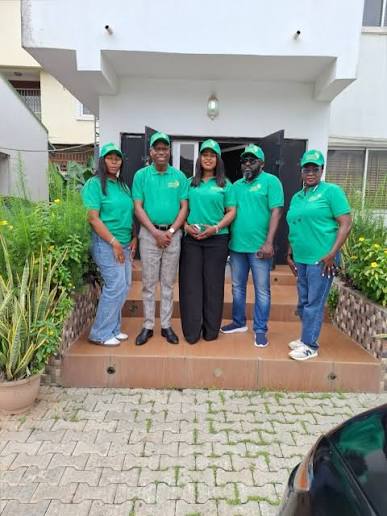
By James Samuel, Abuja
The Nigeria Customs Service has said the nation’s borders must become gateways of opportunity for African women entrepreneurs, not obstacles that kill their businesses.
This was disclosed at the African Women’s Economic Sovereignty Summit and Awards (AWESSA) 2026 held at the Customs House, corporate headquarters of the Nigeria Customs Service in Abuja.
Representing the Comptroller-General of Customs, Bashir Adewale Adeniyi, MFR, his representative, an Assistant Controller, said hosting the summit inside Customs premises was deliberate.
“That this summit holds within the Customs premises is no accident. It is a statement of intent,” he said.
“The border is where the promise of every African trader either comes alive or dies quietly. And the men and women of this Service have resolved that for every woman entrepreneur of this continent, that promise will never die.”
He said women account for an estimated 70% of informal cross-border trade in Africa and over half of agricultural labour, yet they face documentation, standards, finance and harassment challenges.
“Too often she meets the border as an obstacle rather than a gateway. Because she trades in small volumes, in cash, in informality without formal papers, capable business women are now trapped in informality, invisible to trade statistics,” he noted.
He added: “AfCFTA will not be delivered by treaties alone. It will be delivered at border posts, in conference halls, and in market stores.”
Also speaking, the Executive Director of the Nigerian Export Promotion Council, Mrs. Nonye Ayeni, represented by a Director, said women are central to Nigeria’s non-oil export sector.
According to her, NEPC’s focus is now on building export- ready competitive enterprises through programmes like the Women in Export Initiative, Export Clinic, and Zero to Export.
“Our focus is no longer on encouraging exports alone, it is on building competitive export-ready enterprises. We are supporting women to move beyond production into value addition, quality assurance, standard compliance, branding and market positioning,” she said.
She said AfCFTA offers a market of over one billion people, but women need knowledge, certifications and institutional support.
“Empowering women economically is one of the most effective tools for achieving poverty reduction, food security, job creation and inclusive growth,” she stated.
The Convener, Helen Okon, who is the Publisher of Business Review Africa & Africa Today Magazine, as well as representatives of NAFDAC DG and NEXIM Bank MD, reaffirmed commitment to supporting women-owned businesses access standards, certification and finance.
The summit, with the theme of positioning women as drivers of trade and sustainable development, is part of activities marking the International Year of the Women Farmer.
-
 Featured7 years ago
Lampard Names New Chelsea Manager
-
 Featured7 years ago
FG To Extends Lockdown In FCT, Lagos Ogun states For 7days
-
 Featured7 years ago
Children Custody: Court Adjourns Mike Ezuruonye, Wife’s Case To April 7
-
 Featured7 years ago
NYSC Dismisses Report Of DG’s Plan To Islamize Benue Orientation Camp
-

 Featured5 years ago
Transfer Saga: How Mikel Obi Refused to compensate me After I Linked Him Worth $4m Deal In Kuwait SC – Okafor
-
Featured7 years ago
Board urges FG to establish one-stop rehabilitation centres in 6 geopolitical zones
-
Sports4 years ago
TINUBU LAMBAST DELE MOMODU
-

 News2 years ago
Zulu to Super Eagles B team, President Tinubu is happy with you













