
Law & Crime
Sexual, Gender-Based Violence: Still Causing Havoc

_Sexual and Gender-Based Violence, SGBV, has remained a significant and persistent issue in Nigeria despite various interventions by a number of dedicated organisations that have remained committed to reducing it to its barest minimum, *DAUDA ISAMIL* writes._
Amina Ibrahim (not real names), is the first daughter of her father’s third wife. Despite showing signs of academic excellence early in her primary school, her education was cut short in her JSS2 when she was 14 years old. Her parents had betrothed to Aliyu Usman, a son to her father’s business partner since she was five years old and now had to marry him.
She cried and wailed, begging to be allowed to continue her education, but all her pleas fell on the deaf ears of her parents whose mind was made up; Amina is a girl child whose duty it is to learn to wait on and please her husband, breed babies, and do his every bidding.
That was her place.When she was eventually married off to Usman, she realised how worthless her place in society was – she had no say even in her personal matters like dressing, food, entertainment, rest and virtually everything else.
In addition to that, the man who she was married to, would use her as a punching bag over the flimsiest of excuses, yet she couldn’t complain. This is the fate of many women and girls across the nooks and crannies of Nigeria.Over the years, quite a number of organisations have undertaken to enlighten women and girls to speak up, seek redress and demand respect.
But despite their efforts, Sexual and Gender Based Violence, SGBV, is yet to be seen to reduce across Nigerian societies.
According to Madam Christina Uzo-Okamgba, Founder and Executive Director, Tabitha Empowerment Centre, TEC, “At TEC, we remain committed to confronting the scourge of Sexual and Gender-Based Violence, SGBV, in all its forms – whether physical, emotional, psychological, or structural.
This includes deeply harmful practices such as female genital mutilation, child and forced marriage, and rape – acts that undermine the dignity, agency, and future of countless women and girls across Nigeria.
“Despite increasing awareness campaigns, SGBV persists in part because it is entrenched in the very fabric of our society. Cultural and patriarchal norms continue to reinforce gender inequality, often excusing or normalizing violence against women and girls. Victims, fearing isolation, stigmatization, or retribution, are often silenced.
The prevailing culture of victim-blaming and shaming only compounds the trauma survivors endure and discourages them from seeking help.”Moreover, while Nigeria has made commendable strides in enacting legislative frameworks – such as the Violence Against Persons (Prohibition) Act of 2015, the Child Rights Act, and the National Gender Policy (2022) – implementation remains sorely inadequate. Many states have yet to domesticate key legislation like the VAPP Act. Even where laws exist, enforcement is weak, under-resourced, and often compromised by corruption, bureaucracy, or sociocultural resistance.To her, “ending SGBV in Nigeria requires more than awareness.
It demands a sustained, coordinated response from government, civil society, traditional and religious institutions, and community members. Only then can we begin to dismantle the structural violence embedded in everyday life.
”When asked if the organisation’s message has been permeating the minds of the oppressors, Gladys Emmanuel Esq. Advocacy Officer and In-house Lawyer at TEC responded: “While it is difficult to measure the internal impact of our messaging on perpetrators – owing to the complex nature of identifying and tracking them – there is undeniable evidence of a shift in societal attitudes.
Through our advocacy efforts, communities are increasingly acknowledging the gravity of SGBV. Traditional and religious gatekeepers are not only engaging in dialogue but also nominating community members to be trained as champions against SGBV.”Parents and community leaders are beginning to understand that these issues are not “private matters” to be hidden in homes or settled in silence.
We have witnessed a rise in “reportage by proxy,” where individuals report cases on behalf of others – an indication that collective responsibility is taking root. These developments mark a significant cultural shift and represent a major milestone in our mission.
”The UN, through various agencies, has continued to strongly condemn SGBV in Nigeria and actively works to eliminate it. They recognise the devastating impact SGBV has on individuals, communities, and the country’s development, highlighting the link between SGBV and achieving equality, development, and peace.
To this end, in November last year, the UN Women in partnership with African Development Bank launched a High-level Working Group on Gender Response Budgeting, Policies and Institutions, to address the pressing issue of gender-based violence in Nigeria.
The UN Women Country Representative in Nigeria and ECOWAS, Beatrice Eyong, said GBV was not just a human rights issue but also an economic issue as that is costing the Nigerian government 1.5% of its Gross Domestic Product.”We are talking in terms of billions of dollars that the country is losing every year because of Gender Based Violence. So Gender Based Violence is linked to the achievement of Sustainable Development Goals. So if we do nothing, we will not get out of poverty and we will not get sustainable development.
“The World Economic Forum estimated in its global gender gaps report of 2022 that it will take about 132 years for the world to achieve gender equality. What does this mean for Nigeria? At this space, some of us, including our daughters might not experience gender equality in their time.”This is therefore a call for collective actions by all international organisations, government agencies, community stakeholders and even the private sector to address the under-representation of women and barriers to gender equality,”she noted.
Also speaking, the Director General, Nigerian Country Department, African Development Bank, Dr Abdul Kamara has said the bank has a very clear stance on Gender Based Violence, GBV, stating that in 2024, AfDB celebrated 25 years of gender mainstreaming in all its operations geared towards evidence based reduction in gender gaps and more importantly, in accelerating gender equality.
“One area where the bank has made a very visible impact in the economic empowerment in the last seven years is increasing access to finance through a special initiative called AFAWA which is an acronym for Affirmative Finance Action for Women in Africa. In the context of this Pan African Initiative, the African Development Bank seeks to bridge the financing gap of $42 billion currently hindering women-owned and women-led enterprises across the continent and I am glad to report that we disbursed over a billion dollars of this across Africa, seeking to increase access to finance for women”, he said.
The SGBV is a growing concern that requires immediate attention and collective action. Despite the progress made toward dealing with violence, women and girls continue to face violence, discrimination and marginalisation.Speaking further on how TEC intends to make people change such ways of life that have continued for generations that have in turn made the menace thrive, Gladys Emmanuel Esq said: “Changing deeply ingrained cultural beliefs is no small feat, but it is not impossible.
At TEC, we recognise that culture is dynamic, and meaningful change requires intentional, community-centered engagement. Our approach begins with respect—acknowledging the uniqueness of each community and tailoring our interventions accordingly. Before implementing any project, we engage traditional and religious leaders through advocacy visits to secure their buy-in.
Sensitisation follows, using trusted local platforms: town-hall meetings, subgroup discussions, storytelling, sports (e.g., football tournaments), traditional communication methods like local drumming, and mass media campaigns via radio, television, newspapers and social media.
“We produce information materials in multiple local languages – English, Hausa, Yoruba, Igbo, Pidgin, and Gbagyi – ensuring our messages are accessible and culturally relevant. Crucially, we also train local Anti-SGBV Community Champions who serve as on-ground advocates and response coordinators.
“By integrating anti-SGBV education into schools and religious spaces, and establishing clubs and peer-learning groups, we instill gender equality values in young people. These multi-pronged strategies are breaking the silence, shifting norms, and laying the foundation for a safer, more just society.
”In spite of this, she continues: “While it is difficult to measure the internal impact of our messaging on perpetrators – owing to the complex nature of identifying and tracking them there is undeniable evidence of a shift in societal attitudes.
Through our advocacy efforts, communities are increasingly acknowledging the gravity of SGBV. Traditional and religious gatekeepers are not only engaging in dialogue but also nominating community members to be trained as champions against SGBV.”Parents and community leaders are beginning to understand that these issues are not “private matters” to be hidden in homes or settled in silence. We have witnessed a rise in “reportage by proxy,” where individuals report cases on behalf of others—an indication that collective responsibility is taking root.
These developments mark a significant cultural shift and represent a major milestone in our mission.”Speaking to Nigerians in general, Mrs Uzo-Okangba said: “We urge every Nigerian – whether man or woman, young or old—to speak up and take action.
If you witness abuse, report it immediately to the appropriate authorities, including the Nigeria Police Force (Gender Desk), the National Agency for the Prohibition of Trafficking in Persons, NAPTIP, the Nigeria Security and Civil Defence Corps, NSCDC, or a trusted civil society organisation. Community leaders, traditional rulers, and religious authorities must stop treating SGBV as a private or family affair.
These are criminal offenses and should be treated with the seriousness they deserve.”



Law & Crime
Tributes as NAN Editor Offor Bids Farewell to Educationist Mother
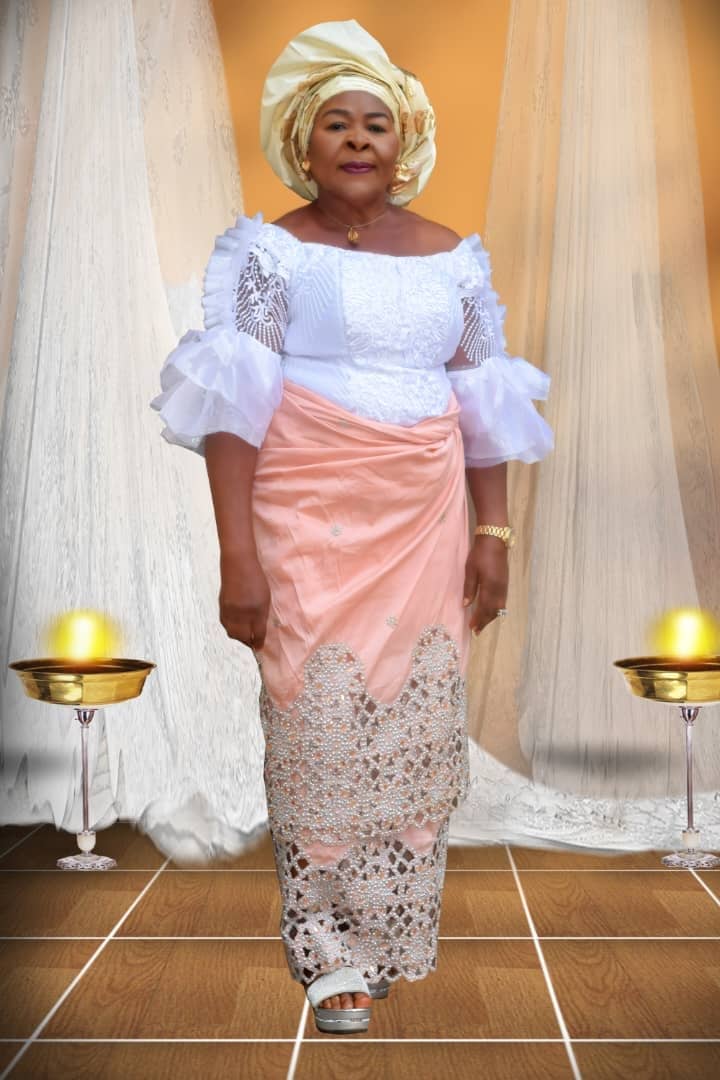
Chinenye Offor, a multimedia editor with the News Agency of Nigeria (NAN), has buried her mother, Lady Eunice Chintua Offor, an educationist and entrepreneur who died aged 72.
The burial service was held at St. Mary’s Anglican Church, Ohokobe/Umuohu Ndume Ibeku, Umuahia North LGA, Abia State.
The funeral programme started with a service of songs by the Knights and Ladies (KSC), family and friends who gathered at her residence, and later a Christian wake on Sept. 3.
The deceased was laid to rest on Friday, Sept. 4, 2026, at her country home in Umuohu Ndume Ibeku, Umuahia.
The funeral service was officiated by the Anglican Communion Bishop Umuahia Diocese, His Lordship, Rt. Rev. Goeffery Ibeabuchi, and attracted many dignitaries, including government officials.
Rev. Canon Adolphous Baba, who preached at the funeral service, said the greatest decision one can make is to make peace and maintain a good relationship with God while alive, adding that death was a reminder that life is short.
He described the late Lady Eunice Offor as a woman who feared and loved God, noting that her service to God and humanity was worthy of emulation.
According to him, death is inevitable, but when a saint dies like Lady Offor, “it’s a plus to heaven because heaven gained a soul.”
Baba, therefore, enjoined people to live a life worthy of emulation, adding that it was the best legacy to leave behind.
The deceased’s first child /daughter, Nnenna Offor, described her as a woman with many sides — a home builder, lover of God and humanity, prayer warrior, peace maker, courageous, bold and a counsellor.
She added that Lady Offor was a philanthropist, a giver, and a compassionate person with a love that transcended far above the realm.
According to her, Lady Offor was her first teacher. She recounted how she taught her how to cook at age 12.
She added that she also taught her kindness, how to pray, have faith in God, to love without restrictions, and to always stand on the side of truth.
Also speaking, Chinenye Offor of NAN described her late mum as a virtuous woman, a pace setter, goal getter, and a woman per excellence.
She said her mum was her first teacher and attributed her resilience, straightforwardness, and strong-willed attitude to the virtues her mum instilled in her.
She recounted how her late mum always encouraged her and ensured that she became independent, saying that “an independent woman is a valued currency.”
“My mum taught me how to save, do business, and invest, telling me that nothing is small when it comes to starting a business or buying stocks and shares.
“I remember when I visited Abuja for the first time, in 2000 it was courtesy of my mum. She used 100 dollars to register for a conference , International Association for Volunteer Effort (IAVE) my older sister and I attended.
“When I wanted to travel to the US in 2015, I had no money. She volunteered to pay for my fare and other expenses.
“My mum lived a life worthy of emulation, and emulating her lifestyle in all ramifications was the first certificate I obtained, and that certificate has shaped the exceptional woman I have become.
“Her passing is painful, but my assurance is that she has gone to be with the Lord because heaven gained a soul,” she said.
In the same vein, her first son, Mr. Chigozie Offor described his mum as a woman full of empathy and a lover of God who impacted many lives throughout her lifetime.
He added that his mother taught him how to pray, be courageous, and always stand for the truth.
According to him, no matter how busy the mother was, she made out time for her children, offering wise words and prayers.
“I will miss my mum’s prayers, calls, and words of encouragement. She always worked tirelessly to make sure each and every one of us was safe, healthy, and thriving.
“Though you are no longer with us, your presence is still felt every day. Your laughter, wisdom, and love are woven into my life, echoing in my thoughts and actions.
“In my actions, I carry forward your legacy, honouring the lessons you taught me and striving to live in a way that would make you proud,” he added.
Also, Mr. Piri Diepiri, son-in-law to the deceased, said he was blessed to have Mama as his mother-in-law, adding that she was not just a mother-in-law, but he saw her as his real mother.
According to him, “My wife and I learnt teachable life lessons from Mama, who called and treated me as her son. From her, we learnt several secrets that have made our marriage exemplary and anchored on God’s grace and foundation.
“Mama taught us to avoid pitfalls associated with exposing our marriage to third parties’ influence. Consequently, our two families are so closely knit, and in my wife, I see Mama’s legacy of a home builder, a peace maker, a God-sent, and a gifted counsellor.
“From Mama, we also picked up a key lesson in parenting — that is to always correct our children with love and pray for them at all times.
“My wife is inconsolable that her best friend and confidant has gone, but we take comfort that Mama lived and died in Christ Jesus.
“A devoted, peaceful, and God-fearing servant of the Most High. Mama lived a fulfilled life and has joined her beloved husband in the bosom of the Lord,” he stated.
Also, Chief M. Adebayo, another son-in-law, said Lady Offor was not a mother-in-law to him but a mother, as she never saw him as a son-in-law but called him “my son” adding that anytime she had the opportunity to introduce him to anyone its always meet my son
He added that even in far away overseas where he resides, Mama would always ensure she called him on every first day of the month to offer prayers, not minding the difference in time zones.
According to him, Mama’s lifestyle of sacrifice, love, kindness, and hard work were attributes she had embedded in his wife.
“It’s really hard for me, I am heartbroken because Mama and I had plans this year that didn’t come to fruition. I will miss Mama’s kindness, generosity, and benevolence.
“I will miss her presence, prayers, and the local delicacies she prepared for me whenever I am in Nigeria, like Ukazi soup and Ugba served with stockfish.
“My consolation is that she lived a good life and left a lasting legacy that has transcended into her children and beyond,” he added.
Lady Offor was born in January 1954 to the late Mr and Mrs Nzewata Onyenweama of Ohokobe Ndume in Umuahia North. She died on May 18, 2026, at the age of 72.
Lady Offor was a devoted member of the Order of Knights and Ladies of St. Christopher, Umuahia Diocese. She also served as a Lay Reader in the church.
She was known for her generosity, compassion, and commitment to the vulnerable, particularly women, the elderly, and widows.
She was married to the late Sir Jonah Offor, KSC, of Umuohu Ndume Ibeku.
She is survived by eight children, 12 grandchildren, sons-in-law, a daughter-in-law, siblings, and other relatives.
As a teacher, Lady Offor devoted her professional life to educating and mentoring young people.
She was passionate about women empowerment and encouraged them to pursue self-reliance.
The deceased will be remembered for her dedication to education, entrepreneurship, Christian service, and support for vulnerable people, particularly the elderly, widows, and women.
Her life was defined by service to God and humanity, and she would be greatly missed by her family, friends, and community.
The Editor, on behalf of her family, has expressed appreciation to friends and well-wishers who came from far and near to join them in paying their final respects to the deceased during the funeral.
-
 Featured7 years ago
Lampard Names New Chelsea Manager
-
 Featured7 years ago
FG To Extends Lockdown In FCT, Lagos Ogun states For 7days
-
 Featured7 years ago
Children Custody: Court Adjourns Mike Ezuruonye, Wife’s Case To April 7
-
 Featured7 years ago
NYSC Dismisses Report Of DG’s Plan To Islamize Benue Orientation Camp
-

 Featured5 years ago
Transfer Saga: How Mikel Obi Refused to compensate me After I Linked Him Worth $4m Deal In Kuwait SC – Okafor
-
Featured7 years ago
Board urges FG to establish one-stop rehabilitation centres in 6 geopolitical zones
-
Sports4 years ago
TINUBU LAMBAST DELE MOMODU
-

 News2 years ago
Zulu to Super Eagles B team, President Tinubu is happy with you













