
Health
Stakeholders Applaud A360 Impact On Adolescent Health
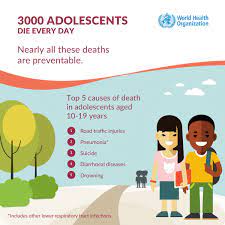
Stakeholders in Nigeria’s health and development sector say the institutionalisation and scale-up of the Adolescent 360 (A360) Amplify project have greatly improved adolescent sexual and reproductive health outcomes in participating states.
They made this known at a dissemination meeting on the project on Thursday in Abuja.
It was implemented by the Society for Family Health (SFH) and partners, and later adopted into government systems following documented successes.
Launched in 2020, the A360 project was designed to provide adolescent girls with access to sexual and reproductive health information, youth-friendly services and economic empowerment opportunities.
The programme was implemented in Kano, Jigawa, Kaduna and Nasarawa States using a human-centred design approach that engaged governments, communities and young people to improve uptake of family planning and maternal health services.
Dr Aisha Sadiq, Permanent Secretary, Kaduna State Ministry of Health, said institutionalising A360 had delivered measurable improvements in adolescent health indicators and community wellbeing.
She said Kaduna currently provides A360 youth-friendly services in 623 Primary Health Care (PHC) centres.
The Matasan Mata Arewa (MMA) initiative, she added, had reached 75 communities and empowered more than 15,000 girls with entrepreneurship skills and seed capital.
According to her, more than 60,000 girls have accessed contraceptives through the programme, with a reduction in discontinuation rates as more young women sustain use and transition to maternal and child health services.
“These changes have shown a marked reduction in maternal mortality among those communities. It has also reduced negative neonatal outcomes,” she said.
Sadiq recounted an elderly woman’s remarks from a programme community, calling them a strong reflection of the project’s success.
“These girls have spent their whole lives believing they will remain tolerable liabilities to the husbands they marry, but now they are realising the value of becoming appreciated assets,” she quoted.
Sadiq added that Kaduna’s 16 per cent health budget allocation and the integration of A360 activities into the state’s 2025 Annual Operational Plan demonstrated sustained political commitment.
Also speaking, Dr Omokhudu Idogho, Managing Director, SFH, said the four implementing states had successfully embedded A360 approaches into government systems, community structures and routine health practices.
He was represented by Dr Kenechukwu Erichalo, Deputy Managing Director, Project Delivery.
Idogho said the project had reached more than one million adolescent girls with family planning services and engaged over 500,000 others with comprehensive sexuality education messaging.
“We recorded more than 50,000 antenatal care visits, ensuring that girls received skilled care that saved lives, and supported over half a million girls to learn income-generating skills,” he said.
He said A360 pioneered the MMA and Niger Girls models, demonstrating that culturally sensitive, human-centred programmes can succeed even in conservative communities.
“Our most significant achievement is institutionalisation. Today, all 1,750 A360-supported facilities are fully government-led,” he added.
Mrs Roselyn Odeh, A360 Project Lead, said the initiative was developed in response to poor adolescent health indices in the country.
She said the programme ensured respectful, youth-friendly services at PHCs and supported school reintegration and entrepreneurship for girls.
She said the decision to scale the programme in northern states was based on data.
“When you look at maternal mortality among young people, you know the section of the country it is coming from. Data drove our decisions in alignment with government priorities,” she said.
Odeh identified challenges including weak PHC infrastructure, funding gaps, commodity shortages and the need to engage husbands in conservative communities.
“But creatively, we worked with governments to mobilise domestic funding through health revolving funds and the Basic Healthcare Provision Fund,” she said.
Mr Sagir Musa, Commissioner for Youth, Jigawa State, assured of continued commitment from implementing states to sustain and expand the project’s gains.
“This project may be nearing closure, but for us, it has just begun. We have gone beyond its life cycle to embed its approaches in the things we do,” he said.
The dissemination meeting brought together policymakers, community leaders, development partners and beneficiaries to review lessons learned and outline future priorities for scaling adolescent health interventions nationwide.
(NAN)



Health
FMC Abuja mourns nurse killed, dumped by roadside

By Folasade Akpan
The Federal Medical Centre (FMC), Abuja, is mourning the tragic killing of 28-year-old nurse Chinemerem Chuwumeziem, describing the incident as gruesome and devastating for the entire hospital community.
The Medical Director, Prof. Saad Ahmed, told the News Agency of Nigeria (NAN) on Thursday in Abuja that staff were still in shock, describing Chuwumeziem as a rising star whose future held great promise.
Chuwumeziem, who joined FMC Abuja in 2025, quickly distinguished herself through dedication and compassion, earning admiration from colleagues and patients.
She was named Best Nurse of the Year 2025 at the hospital’s award programme.
A single lady, she lived with her aunt in Wuse, Abuja, and hailed from Orlu, Imo State.
Her death has deeply affected staff and triggered widespread mourning at the hospital.
Ahmed said Chuwumeziem finished her afternoon shift on Saturday and left the hospital at 6:13 p.m., as captured on CCTV. That was the last time she was seen alive.
He said concern was raised early Sunday when her family reported she had not returned home.
“The hospital immediately mobilised staff to search nearby areas and hospitals, but nothing was found.
“The hospital alerted its Chief Security Officer, who contacted security agencies.
“The police later discovered her body around Bolingo Hotel Junction and took it to the mortuary. Her family buried her in Imo State.
“The incident was reported to the Federal Ministry of Health, the Department of State Services, and the police, who have assured the hospital that investigations are ongoing to identify those responsible.”
Ahmed said measures were being taken to support staff and reduce risks, including reviewing shift schedules, improving the hospital shuttle bus system, and enhancing staff safety arrangements.
He prayed for the repose of Chuwumeziem’s soul and for strength for her family and colleagues to bear the painful loss.
Also speaking, Head of Nursing Services Mrs Abigail Gwimi, described the nurse as gentle, dutiful, and deeply committed to patient care.
“Her disappearance triggered frantic searches through the night.”
Gwimi said the police found the body with her bag, containing personal items, including a Bible, while her phone was missing. The cause of death was reported as asphyxiation.
“The killing has heightened fears among nurses and health workers who often work long shifts and commute late, affecting morale and creating anxiety about personal safety.”
She added that hospital management was engaging staff for emotional support and reviewing duty schedules and security measures to reassure workers and prevent a recurrence of such incidents. (NAN) (www.nannews.ng)
-
 Featured7 years ago
Lampard Names New Chelsea Manager
-
 Featured6 years ago
FG To Extends Lockdown In FCT, Lagos Ogun states For 7days
-
 Featured6 years ago
Children Custody: Court Adjourns Mike Ezuruonye, Wife’s Case To April 7
-
 Featured7 years ago
NYSC Dismisses Report Of DG’s Plan To Islamize Benue Orientation Camp
-

 Featured4 years ago
Transfer Saga: How Mikel Obi Refused to compensate me After I Linked Him Worth $4m Deal In Kuwait SC – Okafor
-
Sports3 years ago
TINUBU LAMBAST DELE MOMODU
-

 News1 year ago
Zulu to Super Eagles B team, President Tinubu is happy with you
-
Featured6 years ago
Board urges FG to establish one-stop rehabilitation centres in 6 geopolitical zones