
News
Stronger Mission Synergy Key to Advancing Nigeria’s Technical Aid Policy – NTAC DG

..Says Nigerian Missions Abroad are the Oxygen that Sustains the NTAC Mandate_
Joel Ajayi
Director General of the Nigerian Technical Aid Corps,Rt. Hon.Yusuf Buba Yakub, has reiterated the pivotal role Nigeria’s Missions abroad play in enhancing the implementation and global reach of the country’s Technical Aid Policy.
Buba,who made this assertion in Abuja, Thursday,while delivering a detailed presentation titled “Nigeria’s Technical Aid Policy: Role of Mission” to participants of the 26th Regular Course of the Foreign Service Academy at the Public Service Institute, described the Missions as the Oxygen that sustains the Technical Aid Corps mandate.
The DG, in his paper, outlined the framework and objectives of the Technical Aid Corps Scheme, designed as a strategic component of Nigeria’s foreign policy to strengthen South-South Cooperation, promote African and global solidarity, and project Nigeria’s image as a responsible global partner.
The former federal lawmaker noted that since its inception, the TAC Scheme has continued to deploy highly skilled Nigerian professionals—particularly in Education, Health, Agriculture, Engineering, and Legal Services—to requesting African, Caribbean, and Pacific countries on the basis of the assessed needs and request of those countries.
Buba emphasized that the success and sustainability of the Technical Aid Scheme to the ACP countries largely depend on the active involvement of Nigeria’s Diplomatic Missions. He stressed that Missions serve as the first point of contact with host countries, playing critical roles in identifying areas of need, liaising with partner governments, monitoring volunteers’ welfare, and ensuring alignment with national foreign policy objectives.
“Without the Missions we cannot breathe.They initiate all the meetings we have in host countries and are part of them all.They follow up on decisions taken in those meetings and ensure that we keep a two-way track on developments between NTAC and the countries.
“In fact,the Head of Chancery at the Mission and the Financial Attache are the only signatories to the NTAC Account in every recipient country we have TAC Volunteers,”Buba emphasized.
Aligning with President Bola Ahmed Tinubu’s Renewed Hope Agenda as expressed in his 4-D Foreign Policy Thrust—Democracy, Development, Demography, and Diaspora—the DG reaffirmed that the Technical Aid Corps Scheme serves as a vital instrument of development diplomacy, saying it fosters not only people-to-people connections but also strengthens institutional capacity in partner nations while enhancing Nigeria’s standing in the international community.
As a former Chairman of the House of Representatives’ Committee on Foreign Affairs and that of Nigeria/China Relations in his two tenures in Parliament,Buba also highlighted several practical experiences that demonstrated the greater role soft power and cultural diplomacy play in today’s global community,averring that ,in the words of Ken Blanchard,the famous American cerebral author,”the key to successful leadership(today) is influence,not authority”.
To drive home the above,the DG also shared the remarkable story of a TAC Volunteer, Mr.Lukman Omotayo Alao,deployed to Jamaica, who introduced the traditional Yoruba textile known as “Adire” to the country. The Volunteer’s creativity and expertise captivated the Jamaican authorities to the extent that they coined a new name—Jadire—to reflect their admiration and local connection to the fabric.
“The authorities of the host country was so impressed, they simply renamed it “Jadire”,to reflect the “J” in the name “Jamaica” and went on to build a full-fledged industry for the textile product headed by Mr.Omotayo.This has spread the use and patronage of (J)adire today to as far as the United States, besides other Caribbean nations.That is the power of what Technical Aid diplomacy or soft power achi,” the DG remarked, illustrating how Nigerian values and culture are positively shaping narratives abroad.
He encouraged the foreign service trainees to embrace their future diplomatic roles with a clear understanding of the broader developmental impact of the nation’s technical aid policy,which he described as purely altruistic. “As a Big-brother African country and emerging giant across the globe,our Missions must not only pursue traditional diplomacy but must also champion technical partnerships as part of our national interest abroad,” Buba stated.
While conveying his gratitude to the NTAC DG for his quick response to the invitation to share his rich experience, expertise and personal perspectives on the topic of the day,Director of the Foreign Service Academy,Amb.Chimezie Ogu lauded Buba’s passion, competence and the energy with which he drives the NTAC mandate and other activities of the Ministry of Foreign Affairs for many years now.
He commended the DG’s visionary reforms at NTAC and the synergistic co-operation his appointment as DG has engendered between NTAC and other MDAs of Government in the last two years.The Director’s gratitude was also corroborated by Mr.Stanley Emmanuel,one of the participants in the Course 26 of the Academy,who gave a vote of thanks on behalf of his colleagues.
The presentation concluded with an engaging interactive session, allowing participants to ask questions and explore practical dimensions of Nigeria’s Technical Aid Policy and the roles being played by our Missions abroad in its implementation.
The session underscored the need for enhanced synergy between NTAC, the Ministry of Foreign Affairs, and the nation’s Missions in advancing Nigeria’s foreign policy goals through meaningful efforts that are committed to service-driven diplomacy.
The NTAC DG was accompanied to the programme by the Agency’s Director of Programmes,Amb.Zakari Usman,a Fellow of the Defense College,who also made contributions to the discourse of the day.



Foreign news
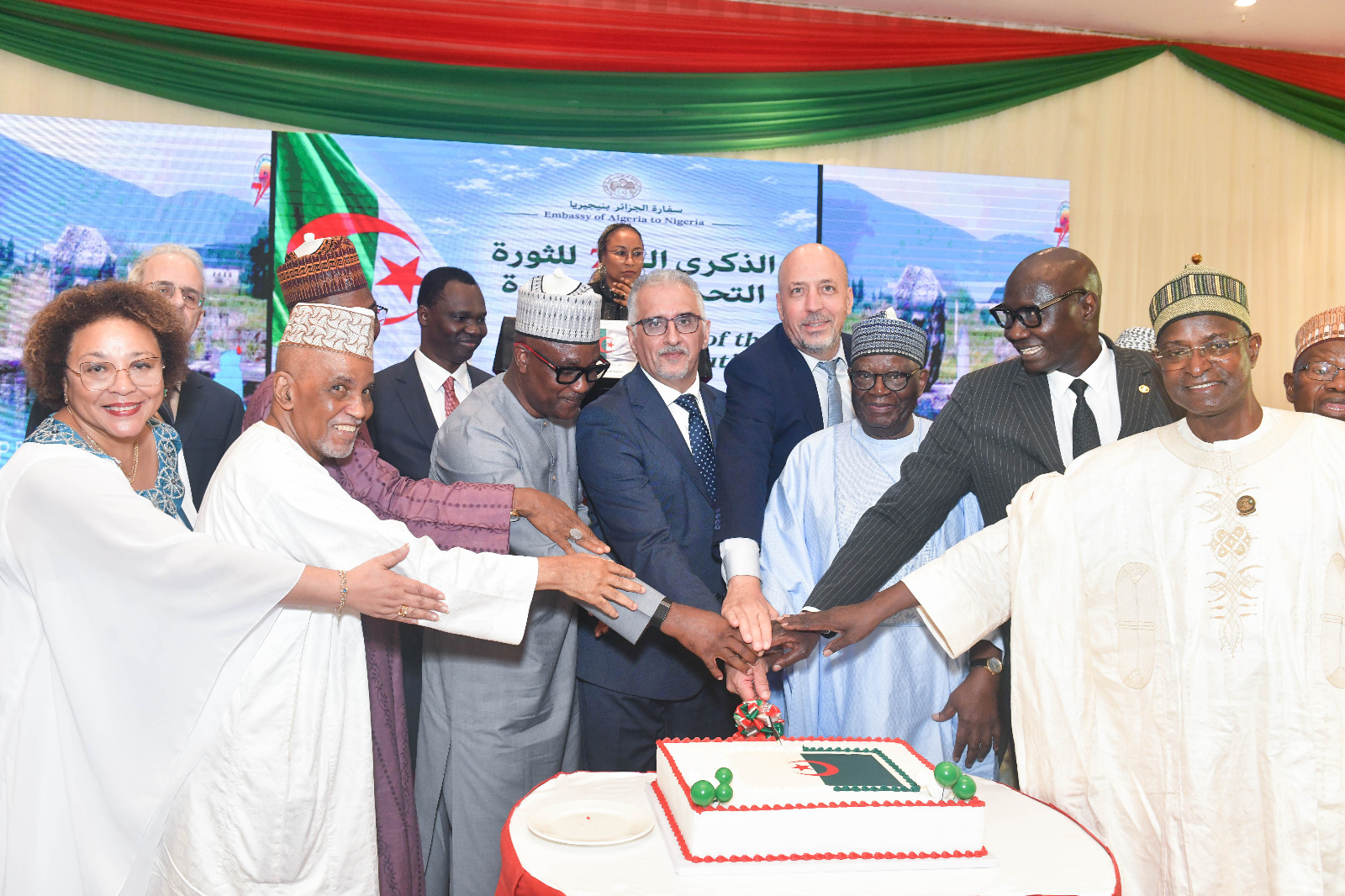
Algeria’s Glorious Revolution: Embassy Marks 72nd Anniversary in Abuja
Joel Ajayi
The Embassy of Algeria in Nigeria has commemorated the 72nd anniversary of the country’s Glorious Revolution of November 1, 1954, with a reception in Abuja, highlighting Algeria’s liberation struggle and strengthening diplomatic relations with Nigeria.
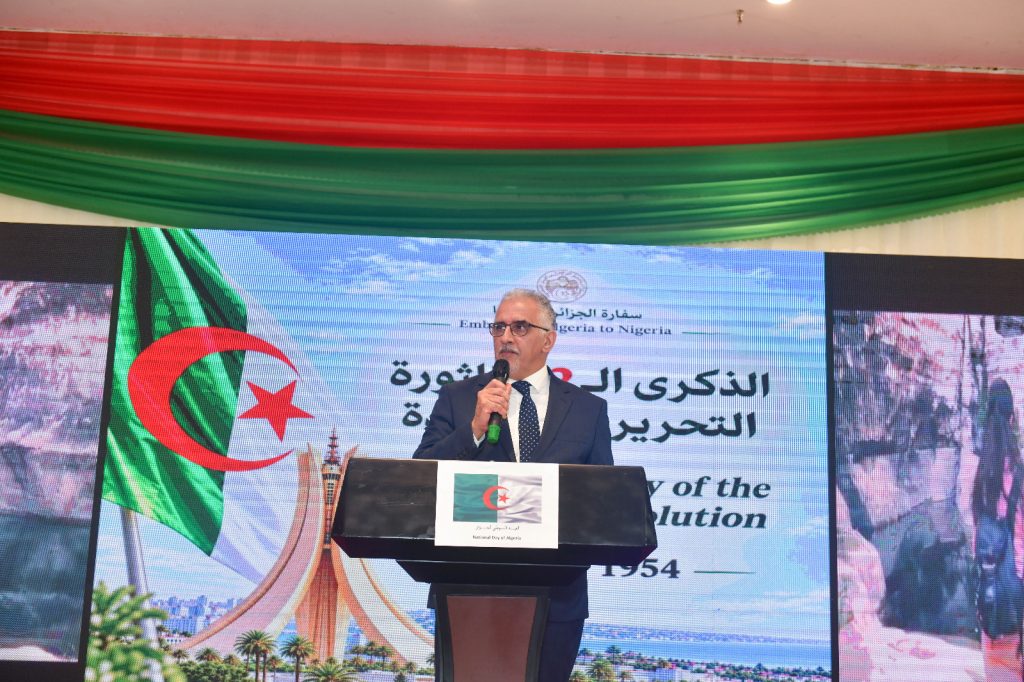
The event, held on November 9, 2026, at Continental Suites Hotel, attracted prominent personalities, including the Speaker of the House of Representatives, Dr Tajudeen Abbas, members of the Federal Government, senior government officials, heads of diplomatic missions and other friends of Algeria.
Speaking at the reception, Algeria’s Ambassador to Nigeria, Hocine Mezoued, welcomed guests and paid tribute to the country’s freedom fighters who sacrificed their lives during the struggle for independence.
He described the November 1, 1954 revolution as the foundation of modern Algeria, noting that the sacrifices of the nation’s martyrs made it possible for the country to reclaim its sovereignty.
On Algeria’s development agenda, Mezoued said President Abdelmadjid Tebboune’s administration had continued to pursue economic reforms, diversification and national development under its New Algeria vision.
He noted that the country was recording progress in non-hydrocarbon exports, while improvements in the business environment had boosted investor confidence and attracted significant foreign investments.
On foreign policy, the ambassador reaffirmed Algeria’s commitment to non-interference, respect for national sovereignty, peaceful conflict resolution and the right of peoples to self-determination.
Addressing security challenges in the Sahel, he stressed that lasting peace could not be achieved through military measures alone, insisting that economic development, inclusive dialogue and peaceful resolution of disputes remained essential.
Turning to Nigeria-Algeria relations, Mezoued described the partnership as one founded on shared values and the commitment of both countries’ leaders to advancing African development.
He identified the Trans-Saharan Highway, Trans-Saharan Gas Pipeline and Trans-Saharan Fibre Optic Backbone as major strategic projects receiving attention from both countries.
The ambassador also disclosed that Algeria had continued to provide scholarships to Nigerian students to strengthen human capital development and capacity building.
He further announced that Air Algérie expanded its Nigerian operations on October 26, 2026, with the introduction of two weekly flights to Lagos, expressing confidence that the service would boost trade and tourism.
Looking ahead, Mezoued said 2027 would offer fresh opportunities to deepen bilateral cooperation, particularly through the fifth Joint High Bi-National Commission scheduled to hold in Abuja.
He expressed optimism that the meeting would provide an opportunity to assess existing partnerships, identify new areas of cooperation and move Nigeria-Algeria relations towards a more practical and results-driven phase.
-
 Featured7 years ago
Lampard Names New Chelsea Manager
-
 Featured7 years ago
FG To Extends Lockdown In FCT, Lagos Ogun states For 7days
-
 Featured7 years ago
Children Custody: Court Adjourns Mike Ezuruonye, Wife’s Case To April 7
-
 Featured7 years ago
NYSC Dismisses Report Of DG’s Plan To Islamize Benue Orientation Camp
-

 Featured5 years ago
Transfer Saga: How Mikel Obi Refused to compensate me After I Linked Him Worth $4m Deal In Kuwait SC – Okafor
-
Featured7 years ago
Board urges FG to establish one-stop rehabilitation centres in 6 geopolitical zones
-
Sports4 years ago
TINUBU LAMBAST DELE MOMODU
-

 News2 years ago
Zulu to Super Eagles B team, President Tinubu is happy with you













