
Featured
Tax Reform Bills: Extricating Nigeria From Economic Cesspit

By Arabinrin Aderonke Atoyebi
On March 13, 2025, the House of Representatives passed the Tax Reform Bills. The Senate is expected to debate the bills after its current recess, resuming plenary on April 29, 2025. Once the Senate passes them, they will be sent to the President for assent. This is the final stretch.
What comes to mind when you hear the word reform? What do you think of when you hear Tax Reform Bill? After all this time, many Nigerians now have a clearer understanding of what is happening. But when you think of it, who do you envision? There is no other person than the man of the people: Dr. Zacch Adedeji, Executive Chairman of the Federal Inland Revenue Service (FIRS).
After taking office in May 2023, President Bola Ahmed Tinubu inherited a situation that required urgent action. Our tax system had been plagued by inefficiencies, low compliance rates, and inadequate coverage. The country also faced challenges like the need for more transparency, improved coordination between federal and state tax authorities, and the lack of a clear, modernized tax framework to support long-term economic growth.
President Tinubu was fully aware of these shortcomings before and after assuming office. The one thing he could do was put a capable man in charge: the Tax Boss. The government made tax reform a priority in its broader economic agenda, and Dr. Zacch has demonstrated commitment in ensuring these reforms are efficiently implemented.
The Tax Boss knew that no matter how brilliant the reform looked on paper, it had to work in practice. Under his leadership, FIRS accelerated internal reforms, digitized processes, automated over 80 percent of returns processing, and integrated new modules into the TaxProMax system to make compliance easier and smarter. This is what Nigerians needed: we are not waiting for change; we are making it happen.
By the end of 2024, four draft bills emerged: the Nigeria Revenue Service Bill, the Nigeria Tax Administration Bill, the Nigeria Taxation (Consolidation) Bill, and the Joint Tax Board Bill. Each was designed to streamline laws, harmonize tax administration, and expand the tax base without overburdening taxpayers. The National Assembly opened its doors to scrutiny with public hearings, tough questions, governors’ perspectives, and expert feedback. Some proposals were revised, such as the decision to retain the current VAT rate.
On March 13, 2025, the House of Representatives passed the Tax Reform Bills. The Senate is expected to debate the bills after its current recess, resuming plenary on April 29, 2025. Once the Senate passes them, they will be sent to the President for assent. This is the final stretch.
But let’s not forget how we got here. It took presidential will, expert input, and above all, Dr. Zacch, the Tax Boss himself. The Tax Boss has not only championed this process; he has owned it with clarity, purpose, and results. With continued execution and the right structures in place, the tax reforms will build a stronger system for everyone, from government to everyday Nigerians.
Tax Reform Bill is not just another trend. It’s the change we have been asking for. Most importantly, it is here to stay.
Arabinrin Aderonke Atoyebi is the technical assistant on broadcast media to the executive chairman of the Federal Inland Revenue Service



Featured
NELFUND: The Renewed Hope Engine Propelling Nigeria’s Youth into Tomorrow
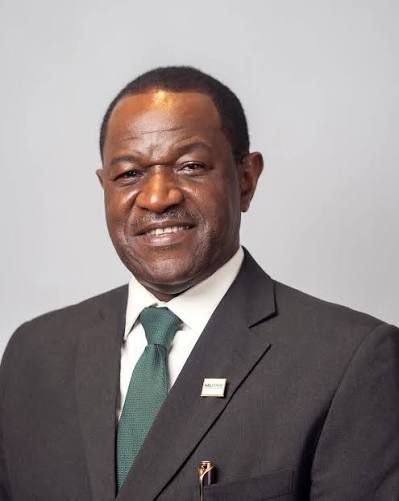
By Dayo Israel, National Youth Leader, APC
As the National Youth Leader of the All Progressives Congress, I have spent most of my tenure fighting for a Nigeria where every young person, regardless of their ward or local government, family income, or circumstance, can chase dreams without the chains of financial despair.
Today, that fight feels like victory, thanks to the Nigerian Education Loan Fund (NELFUND). Launched as a cornerstone of President Bola Ahmed Tinubu’s Renewed Hope Agenda, this initiative isn’t just a policy tweak; it’s a revolution. And under the steady, visionary hand of Managing Director Akintunde Sawyerr, NELFUND has transformed from a bold promise into a roaring engine of opportunity, disbursing over ₦116 billion to more than 396,000 students and shattering barriers for over a million applicants.
Let’s be clear: NELFUND was always destined to be a game-changer. Signed into law by President Tinubu on April 3, 2024, it repealed the outdated 2023 Student Loan Act, replacing it with a modern, inclusive framework that covers tuition, upkeep allowances, and even vocational training—ensuring no Nigerian youth is left on the sidelines of progress.
But what elevates it from groundbreaking to generational? Leadership. Enter Akintunde Sawyerr, the diplomat-turned-executioner whose career reads like a blueprint for results-driven governance. From co-founding the Agricultural Fresh Produce Growers and Exporters Association of Nigeria (AFGEAN) in 2012—backed by icons like former President Olusegun Obasanjo and Dr. Akinwumi Adesina—to steering global logistics at DHL across 21 countries, Sawyerr brings a rare alchemy: strategic foresight fused with unyielding accountability.
As NELFUND’s pioneer MD, he’s turned a fledgling fund into a finely tuned machine, processing over 1 million applications since May 2024 and disbursing ₦116 billion—₦61.33 billion in institutional fees and ₦46.35 billion in upkeep—to students in 231 tertiary institutions nationwide. That’s not bureaucracy; that’s brilliance.
Sawyerr’s touch is everywhere in NELFUND’s ascent. Since the portal’s launch, he’s overseen a digital ecosystem that’s as transparent as it is efficient—seamless verification, BVN-linked tracking, and real-time dashboards that have quashed misinformation and built trust. In just 18 months, the fund has empowered 396,252 students with interest-free loans, many first-generation learners who might otherwise have dropped out.
Sensitization drives in places like Ekiti and Ogun have spiked applications — 12,000 in a single day in one instance, while expansions to vocational centers in Enugu pilot the next wave of skills-based funding. And amid challenges like data mismatches and fee hikes, Sawyerr’s team has iterated relentlessly: aligning disbursements with academic calendars, resuming backlogged upkeep payments for over 3,600 students, and even probing institutional compliance to safeguard every kobo. This isn’t management; it’s mastery—a man who doesn’t just lead but launches futures.
Yet, none of this happens in a vacuum. President Tinubu’s alliance with trailblazers like Sawyerr is the secret sauce securing Nigeria’s tomorrow. The President’s Renewed Hope Agenda isn’t rhetoric; it’s resources—₦100 billion seed capital channeled into a system that prioritizes equity over elitism. Together, they’ve forged a partnership where vision meets velocity: Tinubu’s bold repeal of barriers meets Sawyerr’s boots-on-the-ground execution, turning abstract policy into tangible triumphs. It’s a synergy that’s non-discriminatory by design—Christians, Muslims, every tribe and tongue united in access—fostering national cohesion through classrooms, not courtrooms.
As Sawyerr himself notes, this is “visionary leadership” in action, where the President’s political will ignites reforms that ripple across generations.
Why does this matter to us, Nigeria’s youth? Because NELFUND isn’t handing out handouts—it’s handing out horizons. In a country where 53% of us grapple with unemployment, these loans aren’t just funds; they’re fuel for innovation, entrepreneurship, and endurance.
Picture it: A first-generation polytechnic student in Maiduguri, once sidelined by fees, now graduates debt-free (repayments start two years post-NYSC, employer-deducted for ease) and launches a tech startup. Or a vocational trainee in Enugu, equipped with skills funding, revolutionizing local agriculture. This is quality education that endures—not fleeting certificates, but lifelong launchpads. Sawyerr’s focus on human-centered design ensures loans cover not just books, but bread—upkeep stipends of ₦20,000 monthly keeping hunger at bay so minds can soar. Under his watch, NELFUND has debunked doubts, refuted fraud claims, and delivered results that scream sustainability: Over ₦99.5 billion to 510,000 students by September, with 228 institutions on board.
As youth leaders, we see NELFUND for what it is: A covenant with our future. President Tinubu and MD Sawyerr aren’t just allies; they’re architects of an educated, empowered Nigeria—one where poverty’s grip loosens with every approved application, and innovation blooms from every funded desk. This isn’t charity; it’s an investment in the 70 million of us who will lead tomorrow.
We’ve crossed one million applications not because of luck, but leadership—a duo that’s turning “access denied” into “future unlocked.”
To President Tinubu: Thank you for daring to dream big and backing it with action.
To Akintunde Sawyerr: You’re the executor we needed, proving that one steady hand can steady a nation.
And to every Nigerian youth: Apply. Graduate. Conquer.
Because with NELFUND, your generation isn’t just surviving—it’s thriving, enduring, and eternal.
The Renewed Hope isn’t a slogan; it’s our story, now written in scholarships and success. Let’s keep turning the page.
Dayo Israel is the National Youth Leader of the All Progressives Congress (APC).
-
 Featured6 years ago
Lampard Names New Chelsea Manager
-
 Featured6 years ago
FG To Extends Lockdown In FCT, Lagos Ogun states For 7days
-
 Featured6 years ago
Children Custody: Court Adjourns Mike Ezuruonye, Wife’s Case To April 7
-
 Featured6 years ago
NYSC Dismisses Report Of DG’s Plan To Islamize Benue Orientation Camp
-

 Featured4 years ago
Transfer Saga: How Mikel Obi Refused to compensate me After I Linked Him Worth $4m Deal In Kuwait SC – Okafor
-
Sports3 years ago
TINUBU LAMBAST DELE MOMODU
-

 News11 months ago
Zulu to Super Eagles B team, President Tinubu is happy with you
-
Featured6 years ago
Board urges FG to establish one-stop rehabilitation centres in 6 geopolitical zones