
News
The Case for New Security Agencies: Why Nigeria Needs Forest Guards to Protect Ungoverned Territories and Boost Economic Development

By Amah A. Amah, Editor-in-Chief, African Writers’ Centre (AWC)
Nigeria’s need for Forest Guards through the transition of the Nigerian Hunter and Forest Security Service (NHFSS) into the Nigeria Forest Guards Service (NFGS) cannot be overlooked. Amb. Dr. Johnny Metchie, Deputy Commandant-General of Intelligence for the NHFSS, strongly advocates for this transition, asserting that it will significantly address the threats posed by kidnappers, bandits, separatists, and other criminals exploiting Nigeria’s vast ungoverned territories.
These regions, often forests and remote terrains, have become a refuge for criminal elements, undermining Nigeria’s security and economic progress.
Dr. Metchie highlighted the economic impact of these unguarded areas, noting that each kidnapping incident not only results in human suffering but also tarnishes Nigeria’s image, deterring foreign investment and costing the nation billions in lost opportunities. He expressed concern that security gaps have led many businesses to exit Nigeria, further harming the economy.
Acknowledging the government’s ongoing efforts to bolster security, including discussions around new security agencies, Metchie voiced surprise at recent comments from Dr. Ahmed Abubakar Audi, Commandant-General of the Nigeria Security and Civil Defense Corps (NSCDC). Audi suggested funding for new agencies should instead support the NSCDC’s budget, a view Metchie criticized as narrow-sighted given the extent of the nation’s security challenges. Citing a recent exchange at a National Assembly hearing, Metchie pointed to the public consensus on the NSCDC’s limited success in securing remote areas and argued for additional support to manage the growing insecurity.
Amb. Metchie urged the NSCDC leadership to prioritize national security over personal interests and endorse a strategy that increases manpower and resources to secure ungoverned territories. According to Metchie, the NHFSS’s transition into the NFGS is critical to covering the expansive and rugged terrains across Nigeria, including forests, deserts, and swamps, where NHFSS personnel already have extensive experience.
He elaborated on the NHFSS’s structure, which is built to operate at the grassroots level, making use of personnel with in-depth knowledge of challenging terrains. These officers, trained in both modern security practices and traditional survival skills, stand ready to combat crimes and safeguard these remote areas with federal backing. The proposed NFGS would enhance Nigeria’s ability to secure all national territories, preventing criminals from exploiting these areas as safe havens.
Further, Metchie underscored the economic advantages of establishing the NFGS. Once formalized, the NFGS would curb illegal resource exploitation in forests and creeks, currently costing Nigeria billions annually. By securing these areas, the government could boost employment in local communities and support legitimate economic activities, thereby expanding its revenue base.
Dr. Metchie praised the NHFSS’s collaborations with agencies like the Nigeria Police, NDLEA, and the NSCDC. He assured that the NFGS would complement rather than compete with existing security agencies, leveraging shared intelligence and coordinated operations to address crimes in Nigeria’s most inaccessible regions.
Closing his remarks, Metchie expressed confidence that with legislative support, the NHFSS could evolve into a national security agency with the mandate to secure Nigeria’s ungoverned spaces, tackling criminal activities, and reinforcing Nigeria’s sovereignty. He assured that this transition would have widespread economic benefits, reducing crime rates, protecting vital resources, and ensuring a sustainable future for Nigeria’s economy.



Foreign news
Algeria’s Glorious Revolution: Embassy Marks 72nd Anniversary in Abuja
Joel Ajayi
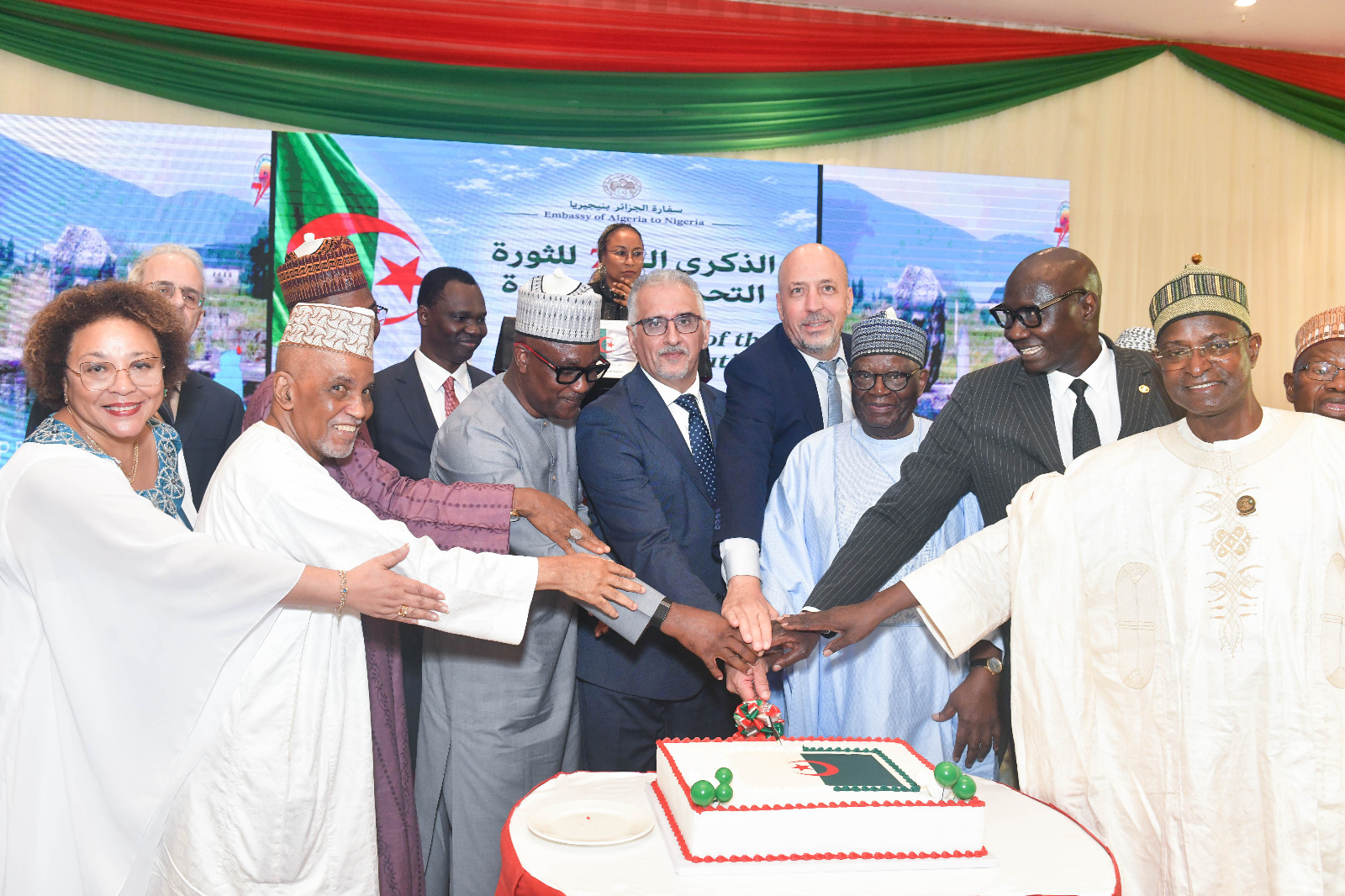
The Embassy of Algeria in Nigeria has commemorated the 72nd anniversary of the country’s Glorious Revolution of November 1, 1954, with a reception in Abuja, highlighting Algeria’s liberation struggle and strengthening diplomatic relations with Nigeria.
The event, held on November 9, 2026, at Continental Suites Hotel, attracted prominent personalities, including the Speaker of the House of Representatives, Dr Tajudeen Abbas, members of the Federal Government, senior government officials, heads of diplomatic missions and other friends of Algeria.
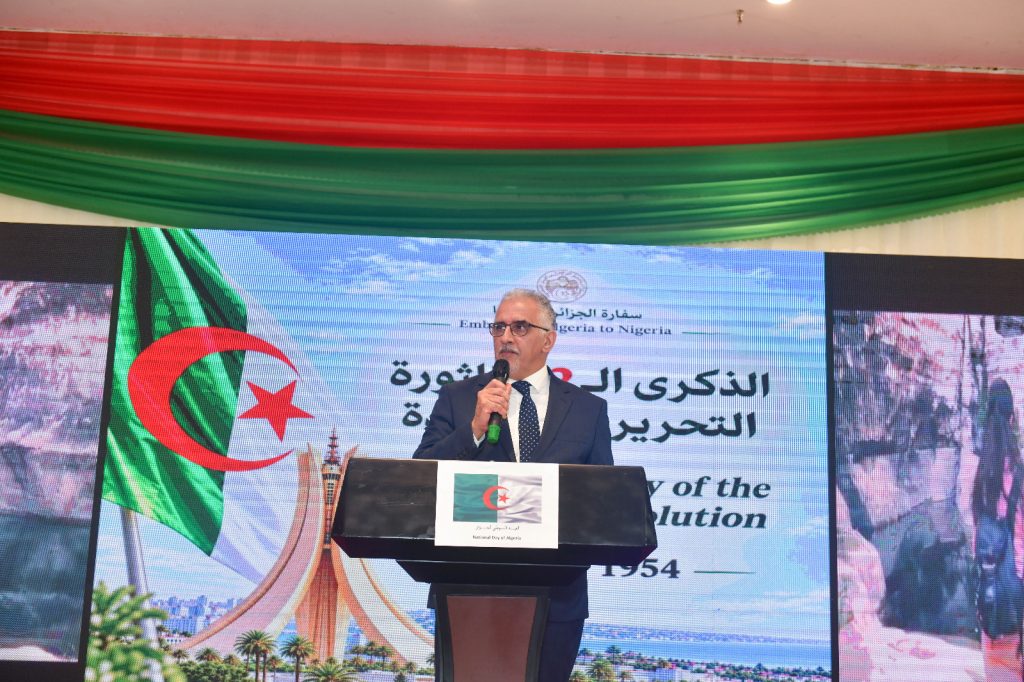
Speaking at the reception, Algeria’s Ambassador to Nigeria, Hocine Mezoued, welcomed guests and paid tribute to the country’s freedom fighters who sacrificed their lives during the struggle for independence.
He described the November 1, 1954 revolution as the foundation of modern Algeria, noting that the sacrifices of the nation’s martyrs made it possible for the country to reclaim its sovereignty.
On Algeria’s development agenda, Mezoued said President Abdelmadjid Tebboune’s administration had continued to pursue economic reforms, diversification and national development under its New Algeria vision.
He noted that the country was recording progress in non-hydrocarbon exports, while improvements in the business environment had boosted investor confidence and attracted significant foreign investments.
On foreign policy, the ambassador reaffirmed Algeria’s commitment to non-interference, respect for national sovereignty, peaceful conflict resolution and the right of peoples to self-determination.
Addressing security challenges in the Sahel, he stressed that lasting peace could not be achieved through military measures alone, insisting that economic development, inclusive dialogue and peaceful resolution of disputes remained essential.
Turning to Nigeria-Algeria relations, Mezoued described the partnership as one founded on shared values and the commitment of both countries’ leaders to advancing African development.
He identified the Trans-Saharan Highway, Trans-Saharan Gas Pipeline and Trans-Saharan Fibre Optic Backbone as major strategic projects receiving attention from both countries.
The ambassador also disclosed that Algeria had continued to provide scholarships to Nigerian students to strengthen human capital development and capacity building.
He further announced that Air Algérie expanded its Nigerian operations on October 26, 2026, with the introduction of two weekly flights to Lagos, expressing confidence that the service would boost trade and tourism.
Looking ahead, Mezoued said 2027 would offer fresh opportunities to deepen bilateral cooperation, particularly through the fifth Joint High Bi-National Commission scheduled to hold in Abuja.
He expressed optimism that the meeting would provide an opportunity to assess existing partnerships, identify new areas of cooperation and move Nigeria-Algeria relations towards a more practical and results-driven phase.
-
 Featured7 years ago
Lampard Names New Chelsea Manager
-
 Featured7 years ago
FG To Extends Lockdown In FCT, Lagos Ogun states For 7days
-
 Featured7 years ago
Children Custody: Court Adjourns Mike Ezuruonye, Wife’s Case To April 7
-
 Featured7 years ago
NYSC Dismisses Report Of DG’s Plan To Islamize Benue Orientation Camp
-

 Featured5 years ago
Transfer Saga: How Mikel Obi Refused to compensate me After I Linked Him Worth $4m Deal In Kuwait SC – Okafor
-
Featured7 years ago
Board urges FG to establish one-stop rehabilitation centres in 6 geopolitical zones
-
Sports4 years ago
TINUBU LAMBAST DELE MOMODU
-

 News2 years ago
Zulu to Super Eagles B team, President Tinubu is happy with you













