
Featured
THE TWO-THIRD MAJORITY RULE IN PRESIDENTIAL ELECTIONS IN NIGERIA; A REBUTTAL
The interpretation of Section 134 of the 1999 Const (as Amended) has generated quite a furore, in light of the fact that only one candidate secured more than 25% of the votes cast in the Federal Capital Territory. I believe if we critically examine why this requirement was made in the first place, one would easily understand the true purpose of the legislation.
Section 134(1) (b) of the 1999 Const. (as Amended) places an onerous task on a presidential contestant, demanding that not only would he have more votes, but he will also have to have at least one-quarter (25%) of all the votes cast in all the states of the federation and the FCT.
Now this seemingly comprehendible provision has come under immense scrutiny, owing to the heated nature of the ongoing 2023 Presidential elections.For those of us who have refused to gain mastery in mathematics, since Nigeria has 36 States, 2/3 of states would simply be 24 states. Most Political actors over the years have held on to the 24 states rule.
The issue for determination now is, ‘does the constitution demand 25% in 24 states or 25% in 25 states with or without the FCT; in other words, if a contestant has 25% in 30 states excluding the FCT has he met up with this stringent constitutional demands?
For an answer to this, we may need to reproduce the entirety of section 134(b).Has not less than one-quarter if the votes cast at the election in each of at least two-third of all states in the Federation AND the Federal Capital Territory, but where the only candidate fails to be elected in accordance with this section, then there shall be fresh nominations. (Emphasis: Mine).
The crucial word in contention is ‘AND’. I am sure very few people have ever paid attention to this everyday word; yet this word may very well be in the center of our political balance.
From your released result, only one party scored more than 25% in the FCT so we appreciate the sudden interest in this inconspicuous word.
Gladly the Court of Appeal in DASUKI v. DIRECTOR GENERAL STATE SECURITY & ORS (2019) LPELR-48113(CA) dissected the meaning and usage of the word when it held that “In ordinary usage, the word “and” is a conjunctive. Black’s Law Dictionary 6th Edition, described the word “and” as “A conjunction connecting words or phrase expressing the idea that the latter is to be added to or taken along with the first.
Added to; together with, joined with as well as, (Emphasis Mine)Without doubt, the mischief rule of interpretation is apposite in understanding and dissecting the intentions of the drafters. In simply terms, what was the mischief that was intended to be cured by this provision?
The answer is clear and unarguable. The constitution needs a candidate with national spread that reflects acceptance in different areas of the nation; therefore the constitution is looking for bridge builders’ and not a local champion.
The argument for 25 States with or without getting 25% of the FCT takes root in Section 299 of the Constitution which reads ‘the provision of this constitution shall apply to the Federal Capital Territory Abuja as if it were one of the States of the Federation’.
The weakness of this argument however is that it seems to be over stretched.
Without doubt, the entirety of Chapter VIII of the constitution, centers on the general legal framework and administration of the FCT for administration sake, the FCT is deemed and governed as a state, this much is unarguable.
The Courts had held time without numbers that when a specific and a general provisions of the law conflicts the general bows for the specific. Generally Abuja should be administered as a state; this provision cannot take precedence over a specific provisions. See Ibori V Ogboru (2004)15NWLR (PT 895).
Whereas the FCT is generally seen as a state, section 299 does not in any way obviate section 134 (1) (b), otherwise the section in contention would very easily reads, ‘not less than one-quarter of the votes cast in each of at least two-third states of the Federation’ as was the case in Section 132 (4).
Where the Drafters did not see any need to specifically mentioned FCT since same is deemed as a state already.
The argument that 25% in 25 States will cut it, further falls flat on its face when compared to section 132 (4) for instance which states that ‘ For the purpose of this election the whole federation shall be regarded as on constituency’. Without doubt by virtue of section 299, the FCT is deniably deemed as a state in this equation, the same can be said for section 134(2) (b) which reads inter alia ‘one amongst the remaining candidates who had the majority of votes in the highest number of states’ although the FCT was not specifically mentioned in this provision, but by virtue of Sec 299 however, it will be a sail against common sense to suggest that the FCT should be omitted from this equation.
The reason why the FCT was not specifically mentioned in the afore instances is simply because it needed not to be; there were no specific stipulation for the FCT.
However as far as assessing the national acceptance of a candidate is concerned, which is the real ‘intent, purport and essence’ of the requirement of 25% in 2/3 of the States; the FCT as a geographical expression becomes especially and uniquely importance. No other state or city can boasts of being a nicely distilled cocktail of Nigerian cultures like the FCT.
The Supreme Court in Orakul Resources Ltd & Anor V NCC & Ors. (2022) LPELR 56602 (SC) held that ‘in the construction of a statute, all the provisions dealing with the subject matter and the overall context, the intendment or purport of the stature are to be considered together, holistically and not in isolation in order to identify the real intention of the legislature. Section 130 – 134 of the Constitution must be given a compound interpretation to adequately sieve the spirit of the law.
What then is the spirit of the law? Well it become discernable if we understand that the Federal Capital Territory was purposefully created as a melting pot of all cultures and people of the nation; Abuja is in effect a microcosm of Nigeria hence the voters in Abuja would largely reflect the will of the totality of Nigerians. Consequently, it makes sense that Abuja is seen as a special requirement by itself and not lumped with other states.
It appears that the Supreme Court in Buhari V Obasanjo (2003) All NLR 168 did not elaborately examine the essence of the 25% requirement for presidential contestants in the first place. Clearly, the Drafters of the Constitution intended that a president must emerge not merely by large numbers, but numbers from a cross spectrum of the nation. It is the latter that the constitution favors.
If the Supreme Court had factored this intent, it won’t be difficult to see why the specific requirement of 25% in Abuja, a city purposefully made up of citizens from the 36 states of the federation is indeed sacrosanct.
In Any case, a President in Abuja doubles for all intent and purpose as the Governor of the State of Abuja Aside executing national duties; he also has local obligations to the residents of Abuja. This has to be factored into consideration also.
I have often argued that Nigeria is not a strict democratic nation, social justice is as important as democracy in line with Section 14 of the constitution. Our nation is founded on Democracy AND Social Justice another word for social justice is national spread or inclusivity.
It is my settled understanding that any candidate who fails to score 25% in 24 states as well as 25% in the FCT has fallen short of the constitutional requirement and ought not to be declared winner of the election regardless of the number of votes that he might have acquired in the election process.
Osigwe Ahmed Momoh Writes from Abuja



Featured
NELFUND: The Renewed Hope Engine Propelling Nigeria’s Youth into Tomorrow
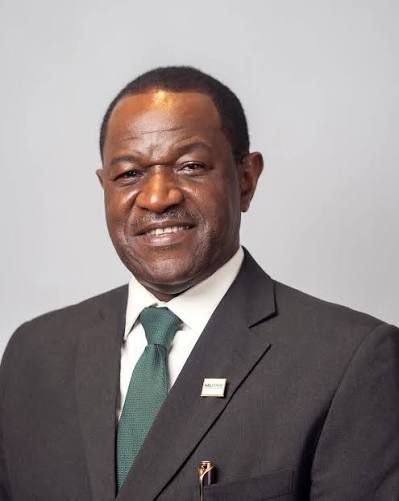
By Dayo Israel, National Youth Leader, APC
As the National Youth Leader of the All Progressives Congress, I have spent most of my tenure fighting for a Nigeria where every young person, regardless of their ward or local government, family income, or circumstance, can chase dreams without the chains of financial despair.
Today, that fight feels like victory, thanks to the Nigerian Education Loan Fund (NELFUND). Launched as a cornerstone of President Bola Ahmed Tinubu’s Renewed Hope Agenda, this initiative isn’t just a policy tweak; it’s a revolution. And under the steady, visionary hand of Managing Director Akintunde Sawyerr, NELFUND has transformed from a bold promise into a roaring engine of opportunity, disbursing over ₦116 billion to more than 396,000 students and shattering barriers for over a million applicants.
Let’s be clear: NELFUND was always destined to be a game-changer. Signed into law by President Tinubu on April 3, 2024, it repealed the outdated 2023 Student Loan Act, replacing it with a modern, inclusive framework that covers tuition, upkeep allowances, and even vocational training—ensuring no Nigerian youth is left on the sidelines of progress.
But what elevates it from groundbreaking to generational? Leadership. Enter Akintunde Sawyerr, the diplomat-turned-executioner whose career reads like a blueprint for results-driven governance. From co-founding the Agricultural Fresh Produce Growers and Exporters Association of Nigeria (AFGEAN) in 2012—backed by icons like former President Olusegun Obasanjo and Dr. Akinwumi Adesina—to steering global logistics at DHL across 21 countries, Sawyerr brings a rare alchemy: strategic foresight fused with unyielding accountability.
As NELFUND’s pioneer MD, he’s turned a fledgling fund into a finely tuned machine, processing over 1 million applications since May 2024 and disbursing ₦116 billion—₦61.33 billion in institutional fees and ₦46.35 billion in upkeep—to students in 231 tertiary institutions nationwide. That’s not bureaucracy; that’s brilliance.
Sawyerr’s touch is everywhere in NELFUND’s ascent. Since the portal’s launch, he’s overseen a digital ecosystem that’s as transparent as it is efficient—seamless verification, BVN-linked tracking, and real-time dashboards that have quashed misinformation and built trust. In just 18 months, the fund has empowered 396,252 students with interest-free loans, many first-generation learners who might otherwise have dropped out.
Sensitization drives in places like Ekiti and Ogun have spiked applications — 12,000 in a single day in one instance, while expansions to vocational centers in Enugu pilot the next wave of skills-based funding. And amid challenges like data mismatches and fee hikes, Sawyerr’s team has iterated relentlessly: aligning disbursements with academic calendars, resuming backlogged upkeep payments for over 3,600 students, and even probing institutional compliance to safeguard every kobo. This isn’t management; it’s mastery—a man who doesn’t just lead but launches futures.
Yet, none of this happens in a vacuum. President Tinubu’s alliance with trailblazers like Sawyerr is the secret sauce securing Nigeria’s tomorrow. The President’s Renewed Hope Agenda isn’t rhetoric; it’s resources—₦100 billion seed capital channeled into a system that prioritizes equity over elitism. Together, they’ve forged a partnership where vision meets velocity: Tinubu’s bold repeal of barriers meets Sawyerr’s boots-on-the-ground execution, turning abstract policy into tangible triumphs. It’s a synergy that’s non-discriminatory by design—Christians, Muslims, every tribe and tongue united in access—fostering national cohesion through classrooms, not courtrooms.
As Sawyerr himself notes, this is “visionary leadership” in action, where the President’s political will ignites reforms that ripple across generations.
Why does this matter to us, Nigeria’s youth? Because NELFUND isn’t handing out handouts—it’s handing out horizons. In a country where 53% of us grapple with unemployment, these loans aren’t just funds; they’re fuel for innovation, entrepreneurship, and endurance.
Picture it: A first-generation polytechnic student in Maiduguri, once sidelined by fees, now graduates debt-free (repayments start two years post-NYSC, employer-deducted for ease) and launches a tech startup. Or a vocational trainee in Enugu, equipped with skills funding, revolutionizing local agriculture. This is quality education that endures—not fleeting certificates, but lifelong launchpads. Sawyerr’s focus on human-centered design ensures loans cover not just books, but bread—upkeep stipends of ₦20,000 monthly keeping hunger at bay so minds can soar. Under his watch, NELFUND has debunked doubts, refuted fraud claims, and delivered results that scream sustainability: Over ₦99.5 billion to 510,000 students by September, with 228 institutions on board.
As youth leaders, we see NELFUND for what it is: A covenant with our future. President Tinubu and MD Sawyerr aren’t just allies; they’re architects of an educated, empowered Nigeria—one where poverty’s grip loosens with every approved application, and innovation blooms from every funded desk. This isn’t charity; it’s an investment in the 70 million of us who will lead tomorrow.
We’ve crossed one million applications not because of luck, but leadership—a duo that’s turning “access denied” into “future unlocked.”
To President Tinubu: Thank you for daring to dream big and backing it with action.
To Akintunde Sawyerr: You’re the executor we needed, proving that one steady hand can steady a nation.
And to every Nigerian youth: Apply. Graduate. Conquer.
Because with NELFUND, your generation isn’t just surviving—it’s thriving, enduring, and eternal.
The Renewed Hope isn’t a slogan; it’s our story, now written in scholarships and success. Let’s keep turning the page.
Dayo Israel is the National Youth Leader of the All Progressives Congress (APC).
-
 Featured6 years ago
Lampard Names New Chelsea Manager
-
 Featured6 years ago
FG To Extends Lockdown In FCT, Lagos Ogun states For 7days
-
 Featured6 years ago
Children Custody: Court Adjourns Mike Ezuruonye, Wife’s Case To April 7
-
 Featured6 years ago
NYSC Dismisses Report Of DG’s Plan To Islamize Benue Orientation Camp
-

 Featured4 years ago
Transfer Saga: How Mikel Obi Refused to compensate me After I Linked Him Worth $4m Deal In Kuwait SC – Okafor
-
Sports3 years ago
TINUBU LAMBAST DELE MOMODU
-

 News11 months ago
Zulu to Super Eagles B team, President Tinubu is happy with you
-
Featured6 years ago
Board urges FG to establish one-stop rehabilitation centres in 6 geopolitical zones