
News
The vital necessity of stopping oil production decline in Equatorial Guinea
By Leoncio Amada NZE NLANG)
The discovery of oil in Equatorial Guinea in the mid-1990s constituted an undoubted turning point in the country’s history. The country’s economy had previously been based on agriculture (largely coffee and cocoa) and the export of wood, until the dawn of the oil era.
The influx of multinationals (oil majors) in Equatorial Guinea’s energy sector was due to the attractiveness of the fiscal terms and the prospectivity that the country offered for foreign direct investment (FDI) compared to other countries in the region; so much so that the nation occupied the third place among Sub-Saharan African oil-producing countries in for many years, behind Nigeria and Angola.
In effect, the discovery of oil put an end to the economic primacy of the agricultural sector and promoted the activities of the oil industry, which very soon began to attract foreign investment, allowing the enrichment and financial autonomy of the country. Oil activities led to the implementation of other related industries, thus allowing the development of other economic sectors.
This was made possible through the country’s infrastructure investments and social projects, which in turn had a new, reliable source of finance. Prior to that, traditional products like coffee, cocoa, and wood made the Equatoguinean economy largely dependent on the economic aid it received from the great powers and international financial institutions (including the World Bank, International Monetary Fund, etc.). But the discovery and exploitation of national oil deposits allowed the country to free itself from foreign economic influence. As such, Equatorial Guinea was able to undertake a huge public infrastructure investment program that covered the entire national territory and oversaw the construction of roads, bridges, ports, airports, public housing, power plants, urban districts, hospitals, university campuses, and new cities, as well as the creation of new ministry buildings and town halls. At the same time, oil wealth led to a growth in public savings and investment, reaching the record figure of 3,784 million euros in 2009.
To delve into the details, 534 million euros were invested in social infrastructure, 1,322 million euros in civil infrastructure, 997 million euros in productive investment, and 930 million euros in investment for public administration. Social investment grew by 116% in 2009, compared to an overall growth of 78%.
At the same time, the country’s oil boom has generated other complementary industries, including the construction of a liquefied natural gas (LNG) plant, a methanol plant, a liquid petroleum gas (LPG) plant, among others. These developments have given Equatorial Guinea business opportunities across the economy and have played an important role in the diversification of economic activities, promoting investment in diverse sectors of society and giving the state control over the country’s affairs.
The current situation:
After years of frenetic activity in the energy sector, the country today faces a sharp drop in oil production, which has put it at the bottom of the production rankings of OPEC countries, as can be seen in the following chart:
The reasons for this decrease in production are manifold, but foremost among them is a lack of new discoveries. The last discovery made was in 2007 at the Aseng site. If constant exploratory activity is not maintained, new deposits will not be discovered, and production levels will become volatile.
Natural gas has performed relatively better, despite being a more mature industry than oil. The gas era began with the discovery of the Alba field in 1984, with production coming online in 1991, ahead of oil production. The field still accounts for approximately 45% of the country’s daily production and is a large supplier of feed gas for its LNG (EG LNG) plant, which has been operational since 2007.
The aging of the Alba field has reduced the country’s total production, which peaked in 2013. But the decline has been gentler compared to the precipitous decline in oil production. However, growing domestic demand for gas is further reducing the country’s export capacity.
Hoping to safeguard Equatorial Guinea’s gas exports and attract international interest, the government has set out a vision of establishing the country as a regional gas liquefaction hub, receiving gas from domestic fields, as well as from neighboring Cameroon and Nigeria, to process it and export it to international markets. Such a plan would extend the lifespan of our EG LNG facility, which has been in difficulty since gas supplies from the Alba field began to decline. The project is progressing at a slow pace due to obstacles like negotiations with neighboring countries on developing cross-border oil and gas fields, securing potential supplies, and building connecting pipelines.
In 2019, the country launched a licensing round to auction 27 oil and gas blocks. In the end, three blocks were awarded to small players. In 2023, the government adopted an “open door” policy, whereby any company could express interest and enter into direct negotiations with the government. In 2023, a block was awarded to Panoro Energy as a result of these negotiations.
An open-door strategy is generally adopted when the success of a bidding round is in doubt. Indeed, bidding rounds are the superior and most widely used strategy for allocating oil and gas licenses. However, their success depends on several factors, some of which go beyond a country’s borders, such as prevailing oil and gas prices, while others are related to the country’s potential. When prices are high and the country’s oil and gas sector has promising prospects, competition among bidders tends to be strong, resulting in a windfall for the government. A failed bidding round that does not attract enough interest can damage a government’s negotiating position. To avoid such an outcome, governments use direct negotiations.
With aging assets, technically challenging small fields, and high exploitation costs, Equatorial Guinea is among the producers that are particularly exposed to the pressures of the energy transition. The government’s priority should be to extend the lifespan of its hydrocarbon sector, which represents around 85% of its GDP and just over 75% of its tax revenue, by remaining open to offers from smaller players. Governments usually prefer to work with large industry players that have a presence on their home soil, given that smaller players lack adequate financial and technical resources. It also makes it easier to negotiate new agreements. However, a change in the structure of the industry is expected as producing oil fields become more mature. The government should adopt measures that will help it adapt to this new phase.
To improve the attractiveness of investing in the country, the government announced several tax incentives, effective from early 2024, including reducing the corporate income tax rate from 35% to 25%. These measures could help but are not enough to offset the limited potential needed to generate the kind of rewards big players typically require. In fact, we believe that the measures adopted are too timid and that more forceful actions should be implemented in the short term to save and reactivate the sector that constitutes the backbone of the country’s economy.
There are no miracles in the oil industry, the only alternative is to apply the “Drill baby Drill” theory, which means drilling and drilling more exploratory wells to maintain or increase production levels. For this, certain incentive actions are necessary:
- Resolve the problem of the New BEAC Change Regulation. This highly bureaucratic and suffocating process has become the biggest obstacle and brake on foreign direct investment in Equatorial Guinea’s oil sector.
- Tax incentives.
- Exemption from payment of tax on assignments and transfers of assets in the oil sector for companies in the exploration and development phases. This measure would revive the appetite of independent companies to invest in the Equatoguinean oil sector and would revive exploratory activity in the country, motivating agile companies dedicated to exploration, thus favoring the farm-in and farm-out processes.
- Tax holidays on the payment of corporation tax (IS) for a negotiable period for new deepwater gas field contracts.
- Tax holidays on the payment of corporation tax (IS) for a negotiable period for new contracts for gas fields in shallow waters.
- Tax holidays on the payment of corporation tax (IS) for a negotiable period for deepwater crude oil field contracts.
- Tax holidays on the payment of corporation tax (IS) for a negotiable period for crude oil field contracts in shallow waters.
- Tax credits for operating companies that train Guineans and whose management positions are occupied by nationals for contracted companies as follows:
- Exemption from the payment of customs and parafiscal duties on the import of equipment and machinery intended for oil operations in favor of local companies operating in the sector.
- Tax credits for operating companies that partner with local companies for the establishment of research and development (R&D) centers in Equatorial Guinea.
- Although the issue of transfers abroad is not a tax issue, we appeal to the Ministry of Finance and Budgets to take action on the matter because this issue has become one of the greatest obstacles to foreign investment into Equatorial Guinea.
- Regulatory and legal stability. Investors seek stability in the regulations and laws that govern the oil sector. Constant changes in regulations can increase uncertainty and deter investment.
- Ease of acquiring permits and regulations. Simplify the processes of obtaining permits and licenses, streamline bureaucratic procedures, and reduce the regulatory burden for companies in the oil sector.
- Training and education. Promote training and specialized training programs in the oil sector to guarantee the availability of qualified labor.
- Legal security. Ensure a stable and predictable legal environment to attract long-term investments in the oil sector.
- Incentives for innovation and technology. Stimulate the adoption of innovative technologies in the oil industry through financial incentives or R&D support programs.
- Promotion of sustainability. Promote sustainable practices in oil extraction and production.
The role of Gepetrol.
With the transfer of MEGI’s assets to Gepetrol SA, the company has the opportunity and potential to become one of the most vibrant national oil companies (NOCs) in Sub-Saharan Africa. Its association with PETROFAC as a technical partner for the operation of the ZAFIRO field will not only allow the company to acquire the experience and technical and operational capacity necessary to effectively and efficiently manage Block B, but also to be an active partner in the operation of other oil fields to represent the interests of the state.
Equatorial Guinea is in a transitional phase of formulating projects and transformative strategies aimed at diversifying its economy, the results of which have yet to be felt, but which will considerably reduce its high dependence on the oil sector.
The fact remains that more than 80% of the country’s GDP comes from the hydrocarbon sector and this scenario is not expected to change in the medium term. It is for this reason that we invite all actors in the sector to adopt whatever measures are necessary to save “the goose that lays the golden eggs.”
Distributed by APO Group on behalf of African Energy Chamber.
SOURCE
African Energy Chamber



Health
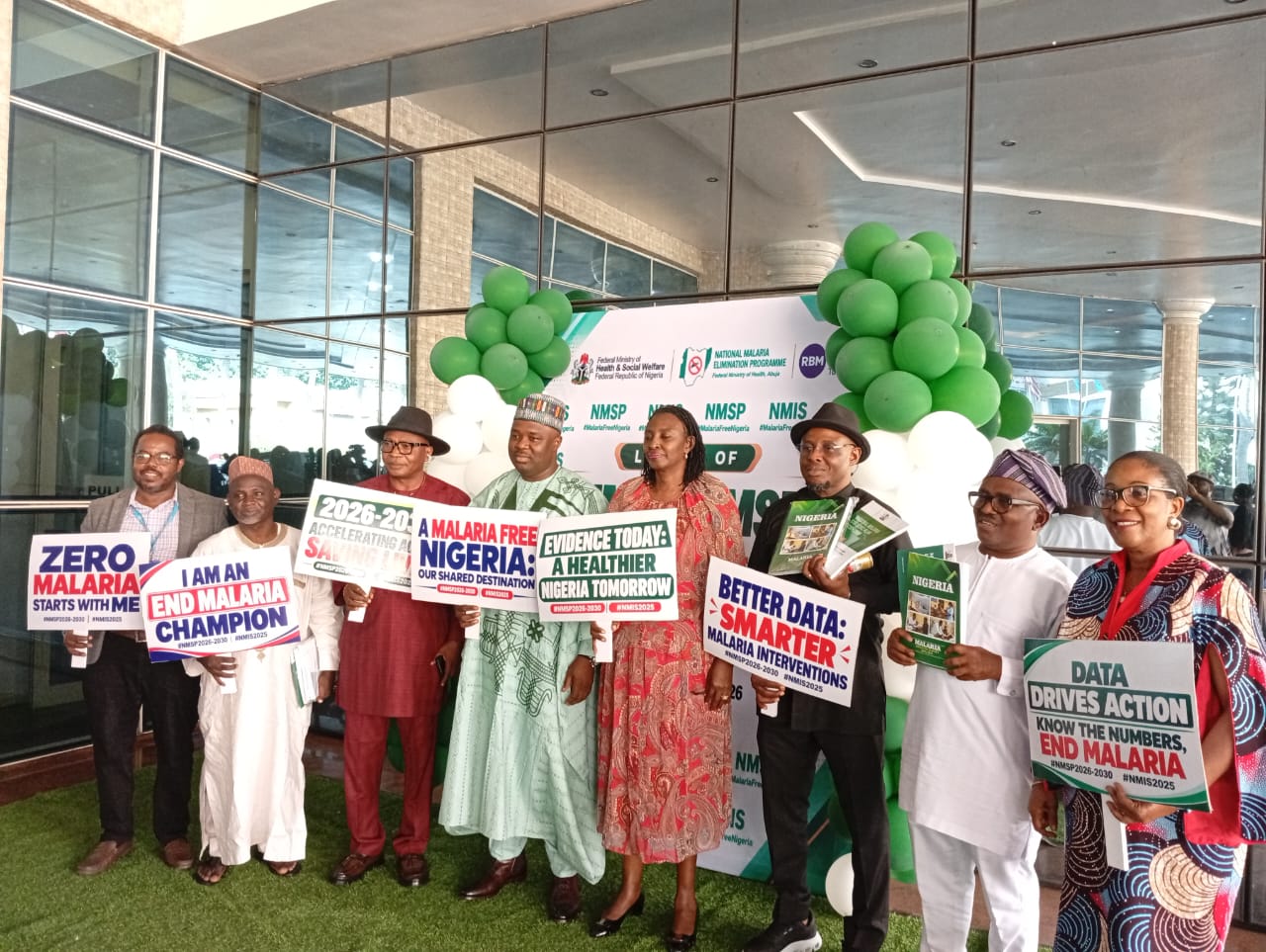
New Malaria Plan Puts States, Local Data At Centre Of Nigeria’s 2030 Response
Cyril Ogar
Nigeria’s latest malaria data point to a country making progress overall but facing sharply different disease burdens from one state to another, prompting health authorities to shift emphasis towards locally tailored interventions under a new five-year strategy.
The National Malaria Strategic Plan (NMSP) 2026–2030, launched alongside the 2025 Nigeria Malaria Indicator Survey (NMIS) report, seeks to cut malaria parasite prevalence and deaths by 50 per cent from 2025 levels by 2030.
Rather than applying a uniform national response, the plan prioritises interventions based on local epidemiological evidence, while also calling for stronger domestic financing, improved diagnosis and treatment, better surveillance and clearer accountability.
The Coordinating Minister of Health and Social Welfare, Prof. Muhammad Ali Pate, represented by the ministry’s Permanent Secretary, Mrs Daju Kachallom, presented the government’s position at the joint launch in Abuja.
Pate described the survey and strategic plan as essential tools for identifying weaknesses in malaria control and directing resources towards areas with the greatest need.
He said the survey’s findings on prevalence, prevention, diagnosis and treatment would support policy development, programme implementation, resource allocation and performance assessment.
The minister said the strategic plan was designed to accelerate progress towards a malaria-free Nigeria while remaining consistent with national health priorities and the World Health Organisation’s global malaria strategy.
He commended the National Malaria Elimination Programme (NMEP), the National Population Commission (NPC), development partners and other stakeholders involved in producing the survey and plan.
Pate also called for a shared national effort involving federal and state governments, the private sector, communities and households, stressing that malaria elimination could not be achieved by government alone.
The 2025 NMIS shows that malaria parasite prevalence among children aged six to 59 months, measured through microscopy, fell from 42 per cent in 2010 to 23 per cent in 2018, 22 per cent in 2021 and 15 per cent in 2025.
However, the national improvement masks substantial differences between states. Prevalence among children in the same age group ranged from two per cent in Lagos State to 31 per cent in Ebonyi State.
The figures indicate that progress has not been evenly distributed and that malaria control efforts must be adapted to the conditions in individual states and communities.
Earlier, the National Coordinator of NMEP, Dr Nnenna Ogbulafor, said the NMSP was developed from the 2025 NMIS findings and other programme data.
She said the evidence would help policymakers locate high-burden areas, improve the design of interventions and direct limited resources to communities most in need.
Ogbulafor said the plan was aligned with Nigeria’s health sector priorities and the WHO Global Technical Strategy for Malaria 2016–2030.
She identified policy alignment, state-level leadership, domestic financing, partnerships and accountability as central to implementation.
The national coordinator urged state governments, civil society organisations and development partners to take ownership of the plan and support coordinated, adequately funded malaria programmes.
She said the differences in prevalence across states made subnational planning indispensable to meeting the national targets.
Ogbulafor called on states to develop comprehensive malaria control programmes reflecting local disease burdens, epidemiological evidence and available resources.
She also stressed the need for sustained domestic financing and partnerships to close funding gaps and maintain implementation through 2030.
NMEP, she said, would work with the National Malaria Working Group and international partners to track implementation, assess performance and review results regularly.
The plan aims to raise access to and use of preventive interventions to at least 80 per cent, achieve at least 90 per cent effective coverage of malaria diagnosis and appropriate treatment among at-risk populations, and improve surveillance performance from a baseline of 47 per cent to 70 per cent by 2030.
It also targets stronger governance and organisational capacity, with at least 60 per cent of malaria programme resources expected to come from domestic sources by 2030.
The survey data show that prevention remains uneven. Only 54 per cent of households had at least one insecticide-treated net, while 45 per cent of children under five and 54 per cent of pregnant women aged 15–49 slept under a net on the night before the survey.
Protection during pregnancy was also incomplete. Among women aged 15–49 who had a live birth in the preceding two years, 62 per cent received at least one dose of sulphadoxine-pyrimethamine during their last pregnancy, but only 33 per cent received three or more doses.
The findings point to the need to expand access to insecticide-treated nets and intermittent preventive treatment for pregnant women.
Diagnosis is another major gap. Of children under five who had a fever in the two weeks before the survey, 59 per cent had advice or treatment sought, but only 18 per cent had blood taken for malaria testing.
The strategic plan therefore places emphasis on prompt testing, appropriate treatment, preventive services and public awareness.
In his remarks, the Director-General of NPC, Dr Abubakar Muhammed, pledged the commission’s continued support for credible demographic and health data to guide policymaking and malaria elimination efforts.
Muhammed said the survey reflected the partnership between the Federal Ministry of Health and Social Welfare, through NMEP, and the NPC.
He said the collaboration brought together expertise in malaria control, demographic surveys and data management to produce information for national planning and development.
The NPC director-general said the commission would continue to modernise its survey operations through technologies such as the Global Positioning System (GPS) and spatial techniques.
He urged policymakers, programme managers, researchers and development partners to use the findings to refine strategies, improve implementation and target communities where interventions were most needed.
Muhammed commended the ministry, NMEP, technical consultants, state enumerators and field teams for their roles in conducting the survey.
He said the report would provide a strong evidence base for a coordinated national malaria response.
The launch of the NMIS report and NMSP 2026–2030 places the next phase of Nigeria’s malaria response on a clearer understanding of where the disease remains most entrenched, while challenging states and partners to convert that evidence into measurable local action.
-
 Featured7 years ago
Lampard Names New Chelsea Manager
-
 Featured7 years ago
FG To Extends Lockdown In FCT, Lagos Ogun states For 7days
-
 Featured7 years ago
Children Custody: Court Adjourns Mike Ezuruonye, Wife’s Case To April 7
-
 Featured7 years ago
NYSC Dismisses Report Of DG’s Plan To Islamize Benue Orientation Camp
-

 Featured5 years ago
Transfer Saga: How Mikel Obi Refused to compensate me After I Linked Him Worth $4m Deal In Kuwait SC – Okafor
-
Featured7 years ago
Board urges FG to establish one-stop rehabilitation centres in 6 geopolitical zones
-
Sports4 years ago
TINUBU LAMBAST DELE MOMODU
-

 News2 years ago
Zulu to Super Eagles B team, President Tinubu is happy with you