
Sports
Three Years of Ibrahim Gusau at the Helm of the NFF: Key Achievements, Progress and Challenges
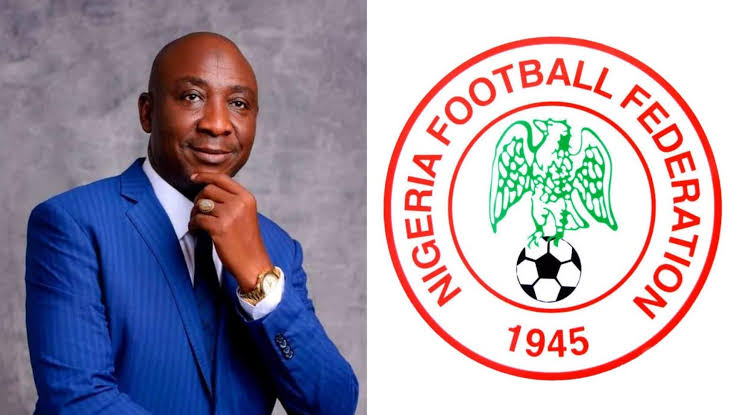
By Odogwu Patrick Ngwaogu
When Ibrahim Musa Gusau was elected President of the Nigeria Football Federation (NFF) in Benin City on 30th September 2022, many expected change; few might have foreseen the breadth of reforms and initiatives his leadership would usher in. Now, three years into his tenure, Gusau has presided over a period of modernization, infrastructural investment, stakeholder re-engagement, and grassroots revitalization. While there remains much to be done, his record so far furnishes lessons and reasons both for optimism and critique.
There are standout achievements of Gusau’s administration, organized by thematic areas, followed by reflections on ongoing challenges and prospects.
Grassroots Football Development & Domestic League Reforms
•   One of Gusau’s earliest and most consistent priorities has been to develop football from the grassroots. He has repeatedly emphasized that sustainable success at national and international levels must begin with strong youth, school, and area council systems.

In line with this, there has been increased encouragement and recognition of youth and women’s tournaments at the local level. For example, the FCT FA Women’s Inter-Area Councils Football Tournament is one such project, giving young female players exposure and competitive match experience.
Similarly, Gusau’s administration has worked to bring the domestic leagues (across men’s and women’s tiers) into better alignment with international calendars. This helps in planning, in player management, and in ensuring that Nigeria teams are competitive with clubs elsewhere.
 Gusau has foregrounded accountability. There have been efforts to ensure that finances are more transparently managed, and that welfare issues — payments of allowances, salaries, and bonuses — are better handled for players, coaches, match officials, and other stakeholders. While not perfect, there is general consensus (among sports media and industry watchers) that these areas have improved from prior periods.
An open-door approach to state football associations, clubs, and other partners seem more evident under his leadership. There have been more consultations, more recognition of regional and state-level concerns, and less of the centralized, opaque decision‑making that often dogged previous administrations.

The performance of Nigeria’s national teams has seen signs of resurgence. As of Gusau’s second year, the Super Eagles qualified for the 2024 Africa Cup of Nations (AFCON) and made a strong showing, reaching the final.
The women’s teams and youth teams have also had highlights. Under Gusau, the NFF has put greater emphasis on ensuring Super Falcons and younger female sides have better preparation and support, though some critics say there is still a long way to go.
On the regional/international administration front, Gusau was elected President of WAFU Zone B, enhancing Nigeria’s influence in West Africa’s football politics. This gives him greater leverage to shape regional tournaments, youth competitions, refereeing assignments, and solidarity among neighboring football federations.
One of the signature promises of Gusau was the construction (or commencement thereof) of improved facilities, including camping and accommodation facilities (“hostels”) for youth national teams, and standard pitches at major centers like the Moshood Abiola National Stadium (Abuja), especially aimed at U15, U17, U20 teams (boys and girls). This is a long‑term investment aimed at enabling better training and preparation.
Such infrastructural plans are still in progress in many cases, but breaking ground or mobilizing contractors/formalizing plans for these facilities mark an important shift from mere promise to action.
Gusau has worked to ensure that less visible parts of the football ecosystem get attention: referees, match officials, women’s football, and physically challenged players. For example, the NFF under Gusau has begun to improve welfare and recognition for referees and officials. The NFF also engaged with and honoured the Special Eagles (Nigeria’s amputee footballers), promising greater collaboration and institutional support. In youth development, in cooperation with schools and state FAs, there are more tournaments, more opportunities for exposure to professional scouts, and more awards to motivate performance. Gusau’s election as President of WAFU Zone B (West African Football Union — Zone B) is not only a personal accolade but strategically boosts Nigeria’s voice in regional policy, competitions, funding, and coordination. This role can unlock synergies with CAF (Confederation of African Football) programs, and help Nigerian referees, clubs, and national teams benefit from Zone B’s pooled resources and regional tournaments. It also signals confidence from peers in the region.
While a number of achievements stand out, a balanced account must recognize areas where progress has been slower, or where expectations remain high. Implementation vs. Promise: Several projects (e.g., facilities, hostels, standard pitches, certain league reforms) are ongoing or still in early phases. Realizing them fully will require consistent funding, good project management, and avoiding delays.
Many NPFL clubs still lack basic infrastructure (stadiums, training fields), financial stability, and capable management. Media coverage, club licensing, and competitive balance remain areas needing attention.
Women’s Football: Although there has been positive movement, inequality in allocation of resources, visibility, and investment remains a concern among stakeholders.Referees & Match Officials: While welfare and training have improved, officiating standards (especially consistency), technology adoption, and perception still need more work.
Given Nigeria’s complex football politics, any perceived opacity, favoritism, or delay tends to generate distrust. Maintaining trust among clubs, private sector partners, fans, and FA bodies will be essential.
Given what has been achieved so far, Gusau’s next priorities likely include:
1. Completing Infrastructure Projects: Ensuring hostels, pitches, and camping facilities are fully delivered and maintained. Also, improving stadia and training centers across states for both youth and professional clubs.
2. Strengthening Domestic Leagues: Enhancing club licensing, improving broadcast and media rights deals, ensuring regular, timely completion of NPFL, NWFL, NNL, and other affiliated leagues. Encouraging private investment in clubs.
3. Elevating Women’s Football: More investment, better league structures, stronger visibility, and support for female coaches and administrators. Development of youth pathways for girls.
4. Referee Development & Technology: Embracing VAR, better match officiation infrastructure, continuous training, welfare systems to attract and retain high-quality referees.
5. Youth Talent Pipeline: Expanding school tournaments, secondary/primary school engagement, partnerships with academies, overseas exposure, scouting systems across more states, to maximise talent identification.
6. Sustainable Financial Management & Sponsorships: Retaining transparency, seeking diverse income sources (broadcast, sponsorship, merchandise), and ensuring financial sustainability of the federation and member associations.
Ibrahim Musa Gusau’s first three years as NFF President have been marked by a combination of visionary policy, grassroots emphasis, structural reforms, and improved stakeholder relations. The shift toward transparency, accountability, youth development, and domestic league alignment has set a new tone for Nigerian football governance. While many of the promises are still in process, and many systemic hurdles remain, his administration’s momentum suggests a solid foundation has been laid — one that future achievements can build upon if followed by consistent execution, sufficient resourcing, and inclusive management.
As Nigeria’s football lovers watch closely, the coming seasons will test whether Gusau can translate these reforms into sustained performance at club, national, and international levels. If his past three years are any guide, he may well have both the resolve and appetite to rise to the challenge.



Sports
Montage Community Football Tourney Registration Ends October 30
Cyril Ogar
Registration for the 2026 edition of the Montage Community Football Tournament will close on Friday, October 30, organisers have announced.
The tournament coordinator, Mr Raphael Ekpang, disclosed this on Thursday, urging interested teams across the six Area Councils of the Federal Capital Territory (FCT) to take advantage of the remaining days to register.
Ekpang said registration had been ongoing since Monday, encouraging eligible teams to complete the process before the deadline.
The tournament, themed “Montage FM 99.7: Empowering Youth, Uniting Communities Through Football,” is scheduled to kick off on November 3, 2026, with playoffs across the six Area Councils of the FCT.
The grand finale will hold on December 5, 2026, at the Old Parade Ground, Garki Area 10, Abuja, where the top four teams will compete for first-, second- and third-place honours.
A total of 48 teams will participate in the competition, with eight teams representing each of the six Area Councils.
The participating teams will compete for cash prizes worth over ₦2 million and other valuable rewards.
-
 Featured7 years ago
Lampard Names New Chelsea Manager
-
 Featured7 years ago
FG To Extends Lockdown In FCT, Lagos Ogun states For 7days
-
 Featured7 years ago
Children Custody: Court Adjourns Mike Ezuruonye, Wife’s Case To April 7
-
 Featured7 years ago
NYSC Dismisses Report Of DG’s Plan To Islamize Benue Orientation Camp
-

 Featured5 years ago
Transfer Saga: How Mikel Obi Refused to compensate me After I Linked Him Worth $4m Deal In Kuwait SC – Okafor
-
Featured7 years ago
Board urges FG to establish one-stop rehabilitation centres in 6 geopolitical zones
-
Sports4 years ago
TINUBU LAMBAST DELE MOMODU
-

 News2 years ago
Zulu to Super Eagles B team, President Tinubu is happy with you